• KGS/USD = 0.01144 0%
  • KZT/USD = 0.00216 0%
  • TJS/USD = 0.10456 0%
  • UZS/USD = 0.00008 0%
  • TMT/USD = 0.28571 0%
  • KGS/USD = 0.01144 0%
  • KZT/USD = 0.00216 0%
  • TJS/USD = 0.10456 0%
  • UZS/USD = 0.00008 0%
  • TMT/USD = 0.28571 0%
  • KGS/USD = 0.01144 0%
  • KZT/USD = 0.00216 0%
  • TJS/USD = 0.10456 0%
  • UZS/USD = 0.00008 0%
  • TMT/USD = 0.28571 0%
  • KGS/USD = 0.01144 0%
  • KZT/USD = 0.00216 0%
  • TJS/USD = 0.10456 0%
  • UZS/USD = 0.00008 0%
  • TMT/USD = 0.28571 0%
  • KGS/USD = 0.01144 0%
  • KZT/USD = 0.00216 0%
  • TJS/USD = 0.10456 0%
  • UZS/USD = 0.00008 0%
  • TMT/USD = 0.28571 0%
  • KGS/USD = 0.01144 0%
  • KZT/USD = 0.00216 0%
  • TJS/USD = 0.10456 0%
  • UZS/USD = 0.00008 0%
  • TMT/USD = 0.28571 0%
  • KGS/USD = 0.01144 0%
  • KZT/USD = 0.00216 0%
  • TJS/USD = 0.10456 0%
  • UZS/USD = 0.00008 0%
  • TMT/USD = 0.28571 0%
  • KGS/USD = 0.01144 0%
  • KZT/USD = 0.00216 0%
  • TJS/USD = 0.10456 0%
  • UZS/USD = 0.00008 0%
  • TMT/USD = 0.28571 0%

Viewing results 1903 - 1908 of 2886

Gazprom to Ensure Reliable Natural Gas Supplies to Central Asia

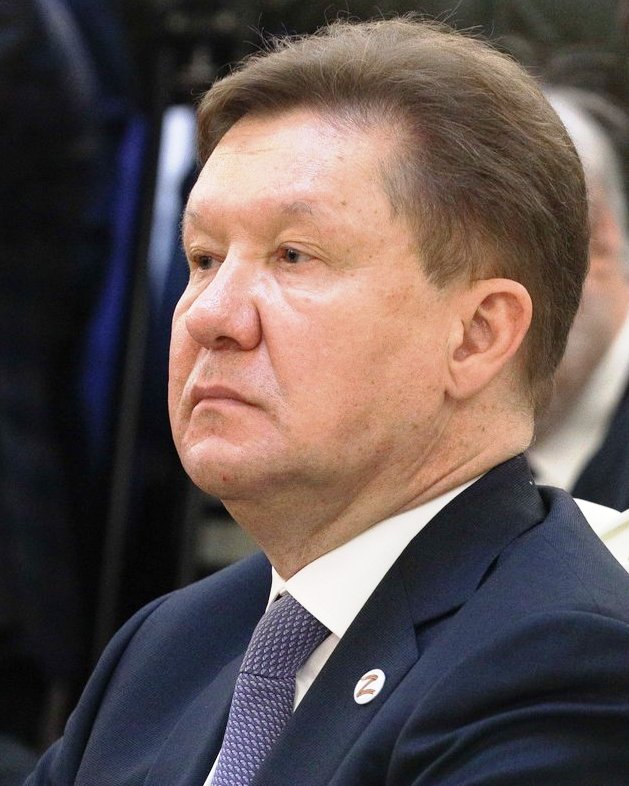
Russian energy company Gazprom has agreed with partners in Kazakhstan, Kyrgyzstan, and Uzbekistan on fifteen-year contracts for natural gas supplies. The contracts are to be concluded in mid-2024 at the St. Petersburg International Economic Forum, Gazprom’s CEO, Alexey Miller said at the company’s meeting late in December. Gazprom’s press service quoted Miller as saying that “reliable, stable deliveries under these contracts” to the Central Asian countries will begin on November 1st, 2025. Miller also pointed out an increase in the current natural gas supplies to Uzbekistan. As winter frosts came at the beginning of December, Gazprom supplied twice as much gas to Uzbekistan as the company’s daily contractual obligations, Miller stated. The Gazprom CEO also said that in just over three months in 2023, the idle gas transportation system, “Central Asia – Center,” was switched to work in reverse mode. Thanks to such joint work with our colleagues from Kazakhstan and Uzbekistan, Miller said, we implemented this project in the shortest possible time, and this winter, these countries in Central Asia are more reliably provided with gas supplies. In recent years, Uzbekistan’s natural gas industry has experienced problems due to the depletion of reserves at existing gas fields. This prompted Uzbekistan to start importing natural gas from Russia through Kazakhstan in 2023. The Uzbek Statistics Agency said last month that natural gas production had fallen by more than 4.5 billion cubic meters from January-November 2023 as compared to the same period in the previous year. From January-November, 42.7 billion cubic meters of gas was produced, compared to 47.3 billion cubic meters in 2022.

Uzbekistan and Turkey Aim to Increase Bilateral Trade to $5 Billion

Over the past five years, trade turnover between Uzbekistan and Turkey has grown 1.5-fold, and the leaders of the two countries have set the task of increasing bilateral trade up to $5 billion. This was stated during an Uzbek–Turkish business forum held in Ankara earlier this week, the Uzbek Ministry of Economy and Finance reported. The event gathered together around 300 representatives of the business community from both countries and was attended by Vice President of Turkey, Cevdet Yilmaz, President of the Association of Chambers and Commodity Exchanges of Turkey, Rifat Hisarciklioglu, President of the Council for Foreign Economic Relations, Nail Olpak, and Deputy Prime Minister–Minister of Economy and Finance of Uzbekistan, Jamshid Kuchkarov. Speaking at the forum, Turkish Vice President Yilmaz said that Turkish-Uzbek trade reached $3.5 billion in 2022, and Turkish investments in Uzbekistan amounted to $1.5 billion, Turkish media reported. At the forum, the Uzbek side, represented by the Ministry of Mining and Geology, the Agency for State Asset Management, the Ministry of Health, and the Chamber of Commerce and Industry, held presentations about opportunities created in Uzbekistan for foreign entrepreneurs, the Uzbek ministry said. The forum participants agreed that among the promising areas for cooperation between the two countries were pharmaceuticals, the leather and shoe industry, the jewelry industry, and the production of building materials, furniture and glass products. Today, approximately 1,800 enterprises with the participation of Turkish capital are operating in Uzbekistan. On the same day, the 7th meeting of the Uzbekistan-Turkey Intergovernmental Commission was held in Ankara, co-chaired by Uzbekistan's Deputy Prime Minister–Minister of Economy and Finance, Jamshid Kuchkarov, and Turkey's Vice President, Cevdet Yilmaz.

Uzbekistan to Cover Growing Demand with Green Energy Sources

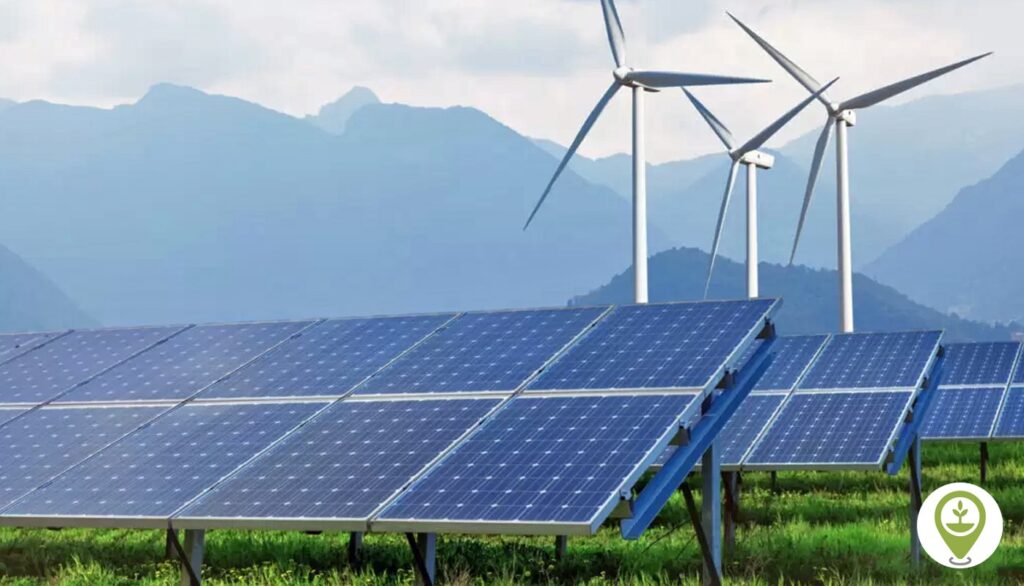
Uzbekistan has set a goal of doubling its industrial production by 2030 and plans to implement more than 500 major industrial and infrastructure projects worth $150 billion. To accomplish these ambitious goals, the country needs to have guaranteed and stable energy resources, President Shavkat Mirziyoyev said on December 27th, at the launch ceremony of major projects in the field of green energy. “We estimate that in the next six years, our country's electricity demand will increase from the current 83 billion to 120 billion kilowatt hours. We will cover this primarily through renewable energy sources,” Mirziyoyev said. Uzbekistan will continue its active investment policy to increase the capacity of green energy sources to 27 gigawatts by 2030, he said, adding that the country possesses enormous potential for green energy. “In order to encourage the industry, we have launched the ‘Solar House’ system to provide preferential loans and subsidies for the installation of solar panels and ensure the guaranteed purchase of generated electricity. This year alone, 50,000 households and entrepreneurs have installed solar panels in our country,” Mirziyoyev said. Currently, Uzbekistan is implementing projects for the construction of 22 solar and wind power stations with a total capacity of 9 gigawatts, and the government will create all the necessary conditions and preferences for foreign investors to implement such priority projects, Mirziyoyev concluded.

President Launches Six Green Power Plants with Total Capacity of 2.4 Gigawatts

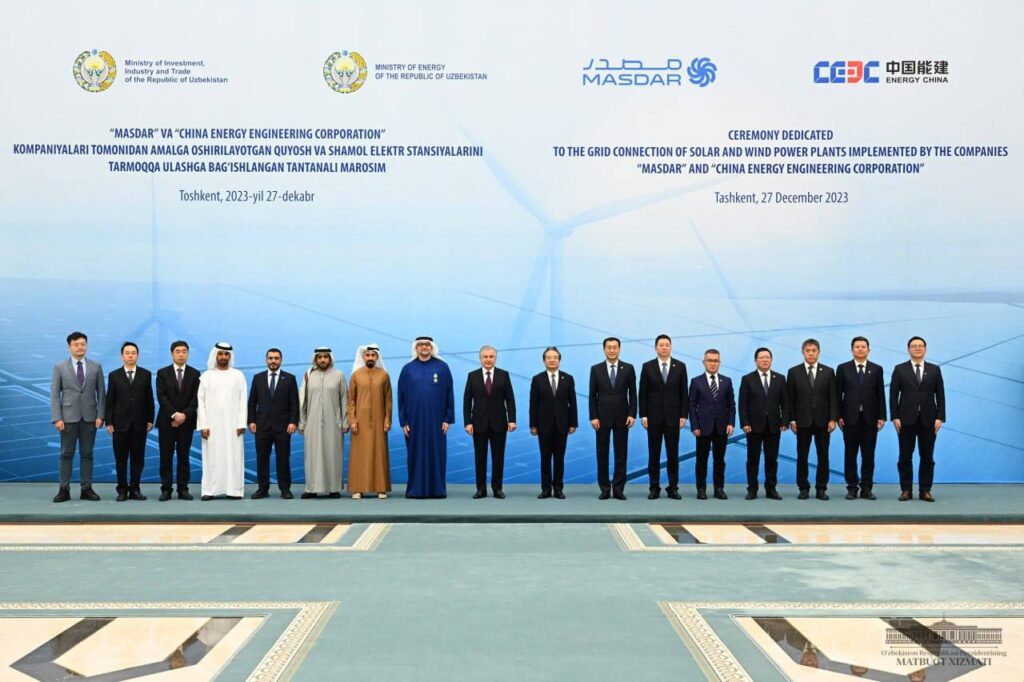
On December 27th, President of Uzbekistan, Shavkat Mirziyoyev took part in a ceremony of commissioning and connecting to the power grid of five solar and one wind power plants in six regions of the country. The event was attended by top executives from Masdar, China Energy Engineering Corporation, China Energy International Group, China Gezhouba Group, SEPCO III, and Dongfang Electric Corporation, which implemented the investment projects. Speaking at the launch ceremony, Mirziyoyev said that today, “we are standing at an important event, which opens yet another bright page in the history of our country: six large solar and wind plants with a total capacity of 2,400 megawatts are to be connected to the grid”. The first phase of the three solar power plants has been built in Jizzakh, Samarkand and Surkhandarya regions by the UAE-based company Masdar. This company has also built a modern wind power station in the Tomdi district, and its 100-megawatt capacity was also commissioned during the ceremony. Gezhouba Group launched the construction of the first 400-megawatt solar power plants in Bukhara and Kashkadarya. Once commissioned, the President said, these projects worth $2 billion will generate six billion kilowatt-hours of electricity and save up to two billion cubic meters of natural gas. Moreover, two million homes in Uzbekistan will be provided with an uninterrupted and guaranteed electric energy supply.

Gazprom Eyes Central Asia Amid European Sanctions

Facing a shortfall in European gas exports due to Western sanctions, Gazprom anticipates it will sell 34 billion cubic meters of unexported gas to Central Asia, according to recent reports. "In light of the ongoing changes in the global energy market, Gazprom remains committed to ensuring a reliable gas supply to Russian consumers and bolstering export capabilities. A key focus for the company in this regard has been fostering collaboration with Kazakhstan, Uzbekistan, and Kyrgyzstan," Gazprom stated in a press release. The company confirmed a drop in gas exports to Europe of 34 billion cubic meters in the first eleven months of 2023, marking levels not seen since 1996. An earlier announcement by the Ministry of Energy of Uzbekistan unveiled a 15-year gas purchase agreement with Gazprom, extending the deal to include Kazakhstan, which involves a new pipeline construction. In October, reports indicated the commencement of Russian gas deliveries to Uzbekistan through Kazakhstan. However, the specifics of this arrangement have not been disclosed to date. Alexey Miller, Gazprom's chief, outlined plans to expand the Central Asia gas pipeline system in November, highlighting memoranda signed with Uzbekistan, Kazakhstan, and Kyrgyzstan, and expressing optimism that the project will rejuvenate this pipeline network. During the Soviet era, gas from the region was transported to Russia via the Central Asia–Center gas pipeline. After the USSR's dissolution, the pipeline ceased operations and deteriorated, requiring substantial refurbishment to enable gas supplies from Russia to Central Asia. Miller noted the completion of the initial repair stage of the Central Asia-Center gas pipeline, facilitating gas delivery to Uzbekistan via Kazakhstan. Earlier this year, Tashkent inked a two-year gas supply contract with Gazprom amounting to approximately 2.8 billion cubic meters annually. Despite these developments, details regarding the pricing of the purchased gas remain undisclosed. Which according to Uzbekistan's Energy Minister, Zhurabek Mirzamakhmudov, is “in alignment with national interests and market dynamics.”

Group-IB Opens First Digital Crime Resistance Center in Central Asia

TASHKENT - On December 26th, Group-IB, a leading force in cybersecurity technology combating digital crime, revealed the inauguration of its pioneering Digital Crime Resistance Center (DCRC) in Central Asia. Located in Tashkent, this state-of-the-art facility marks Group-IB’s expansion strategy, aimed at proactively confronting cyber threats worldwide, notably those originating from Russian-speaking hacker communities. Choosing Tashkent for their newest DCRC underlines Group-IB’s recognition of Uzbekistan’s economic significance and its potential to emerge as a global cybersecurity hub. The memorandum signed between the Central Bank of Uzbekistan and Group-IB in August 2023 further emphasizes the collaboration to counter cyberattacks and elevate cybersecurity measures. Group-IB plans to fortify its engagement with Uzbekistan’s higher education sector, emphasizing investment in the country's youth and its tech industry. Dmitry Volkov, CEO of Group-IB, highlighted, “Selecting Tashkent, Uzbekistan as the site for our fifth Digital Crime Resistance Center globally is a strategic move to heighten our understanding of Russian-speaking threat actors. Cybercrime knows no borders, necessitating a comprehensive approach. By establishing a DCRC in Tashkent, Group-IB aims to elevate cybersecurity standards not only in Uzbekistan but across the broader Central Asian region.”