• KGS/USD = 0.01144 0%
  • KZT/USD = 0.00208 0%
  • TJS/USD = 0.10439 0%
  • UZS/USD = 0.00008 0%
  • TMT/USD = 0.28571 0%
  • KGS/USD = 0.01144 0%
  • KZT/USD = 0.00208 0%
  • TJS/USD = 0.10439 0%
  • UZS/USD = 0.00008 0%
  • TMT/USD = 0.28571 0%
  • KGS/USD = 0.01144 0%
  • KZT/USD = 0.00208 0%
  • TJS/USD = 0.10439 0%
  • UZS/USD = 0.00008 0%
  • TMT/USD = 0.28571 0%
  • KGS/USD = 0.01144 0%
  • KZT/USD = 0.00208 0%
  • TJS/USD = 0.10439 0%
  • UZS/USD = 0.00008 0%
  • TMT/USD = 0.28571 0%
  • KGS/USD = 0.01144 0%
  • KZT/USD = 0.00208 0%
  • TJS/USD = 0.10439 0%
  • UZS/USD = 0.00008 0%
  • TMT/USD = 0.28571 0%
  • KGS/USD = 0.01144 0%
  • KZT/USD = 0.00208 0%
  • TJS/USD = 0.10439 0%
  • UZS/USD = 0.00008 0%
  • TMT/USD = 0.28571 0%
  • KGS/USD = 0.01144 0%
  • KZT/USD = 0.00208 0%
  • TJS/USD = 0.10439 0%
  • UZS/USD = 0.00008 0%
  • TMT/USD = 0.28571 0%
  • KGS/USD = 0.01144 0%
  • KZT/USD = 0.00208 0%
  • TJS/USD = 0.10439 0%
  • UZS/USD = 0.00008 0%
  • TMT/USD = 0.28571 0%

Viewing results 85 - 90 of 944

Uzbekistan Expands Nuclear Energy Cooperation with Italy’s Ansaldo Energia

Uzbekistan and Italy are deepening their cooperation in the field of nuclear energy, according to a statement from the press service of the Uzatom Agency. A delegation led by Uzatom Director Azim Akhmedkhadjaev has just returned from a working visit to Genoa, Italy, where talks focused on advancing Uzbekistan’s first nuclear power plant project. The visit included meetings with representatives of the regional government, the Genoa Chamber of Commerce, leading universities, and major Italian energy firms. A key session was held with Ansaldo Energia and its nuclear subsidiary, Ansaldo Nucleare, one of Europe’s leading providers of power generation technologies. Discussions focused on integrating Italian technical solutions into Uzbekistan’s planned nuclear facility, with particular emphasis on adapting auxiliary systems to local climatic and geological conditions. The Italian side shared its experience in safety system design, nuclear software development, and fuel management, expertise gained through projects in China, Belgium, Slovenia, Hungary, and Ukraine. Both sides explored the potential role of Italian companies as technical consultants during construction, ensuring the project aligns with international safety standards. Cooperation in radioactive waste management and deployment of advanced Italian fuel-handling technologies was also discussed. Italy also expressed readiness to support Uzbekistan in developing a national regulatory framework for nuclear energy and licensing procedures. Further, the two parties considered launching joint research and engineering initiatives to train Uzbek nuclear specialists, part of a broader effort to build local capacity and ensure the safe, long-term operation of the country’s future nuclear infrastructure. The talks come as Uzbekistan diversifies its energy portfolio. Energy Minister Jurabek Mirzamahmudov recently announced that Saudi-based Pemco will begin constructing a 200-megawatt gas-piston power plant in Samarkand. Meanwhile, Uzbekistan continues to expand its solar and wind capacity through ongoing projects with ACWA Power.
Trade in Central Asia: China Deepens Influence, Europe Expands Presence, Region Seeks New Markets

Central Asia remains a theater of active economic competition, with countries in the region striving to diversify external partnerships and reduce dependence on traditional power centers, Russia and China. While both continue to dominate foreign trade, Kazakhstan, Uzbekistan, Kyrgyzstan, and Tajikistan are increasingly exploring new directions. The region’s evolving trade dynamics reflect each country's economic characteristics. Kazakhstan is driven by energy and metals exports, Uzbekistan by manufacturing and resource processing, while Kyrgyzstan and Tajikistan rely heavily on remittances and raw material exports. Amid global shifts and intensified competition for markets, Central Asian states are gradually shaping more multipolar trade strategies, opening up new routes and partnerships. Turkmenistan is excluded from this analysis due to the opacity of its national statistics. Kazakhstan As Central Asia’s largest economy, Kazakhstan relies heavily on natural resource extraction. Its main exports include oil, gas, metals, coal, grain, and agricultural products. Imports consist primarily of machinery, chemicals, vehicles, and consumer goods. Key export partners include Italy (21.6%), China (18.6%), Russia (10.2%), the Netherlands (7.4%), Turkey (4.7%), and Uzbekistan (4.3%). On the import side, China (29%) and Russia (28.8%) dominate, followed by Germany (4.8%), South Korea (3.7%), the United States (3.6%), and Turkey (2.5%). Kazakhstan has maintained a positive trade balance, buoyed by consistent demand for raw materials. In January-July 2025, the country’s foreign trade turnover totaled $78.18 billion, down 2.6% from the same period in 2024. Exports declined by 6.4% to $43.58 billion, while imports rose by 2.6% to $34.6 billion. Uzbekistan Uzbekistan's economy is focused on agriculture, textiles, natural resources, and manufacturing. Major exports include textiles, gold, gas, automobiles, cotton, and fruit. Imports are led by machinery, equipment, chemicals, and petroleum products. In the first half of 2025, foreign trade turnover reached $44.4 billion, up 19.9% year-on-year. Exports rose 34.9% to $20.1 billion, while imports increased 9.9% to $24.29 billion, leaving a trade deficit of $4.18 billion. Uzbekistan trades with 197 countries. Its largest trade partners are China (18.2%), Russia (16.1%), Kazakhstan (5.9%), Turkey (3.6%), and South Korea (2.2%). Export destinations include Russia (12.3%), China (5.5%), Kazakhstan (4.0%), Afghanistan (3.7%), Turkey (3.0%), France (2.6%), the UAE (1.8%), Kyrgyzstan (1.6%), Tajikistan (1.4%), and Pakistan (1.2%). Imports mainly come from China (28.7%), Russia (19.3%), Kazakhstan (7.6%), Turkey (4.1%), South Korea (3.9%), Germany (2.8%), and India (2.6%). Kyrgyzstan Kyrgyzstan, with limited natural resources, is heavily dependent on foreign trade. Its economy is rooted in agriculture, mining, and textiles. Key exports include gold and agricultural products, while imports are dominated by machinery, vehicles, petroleum products, and chemicals. From January to June 2025, foreign trade turnover fell 12.4% year-on-year to $6.99 billion. Exports made up only 15% of total trade, underscoring a continued trade deficit. Main partners remain Kazakhstan, Russia, and China. Tajikistan Tajikistan’s economy is centered on agriculture, hydropower, textiles, and mining. In January-August 2025, foreign trade turnover rose 16.8% year-on-year to $6.73 billion. Exports totaled $1.63 billion, while imports reached $5.1 billion, more than triple the export volume. Main exports are aluminum, textiles, agricultural goods, and minerals; imports...

Saudi Company to Launch 200 MW Power Plant in Samarkand

Saudi private company Pemco is set to begin construction of a new 200-megawatt gas-piston power plant in Samarkand by the end of this year, Uzbekistan’s Minister of Energy Jurabek Mirzamahmudov announced in an interview with the “Uzbekistan 24” TV channel. “The new power station will significantly strengthen the energy supply in the Samarkand region and support Uzbekistan’s efforts to ensure a stable electricity supply amid growing demand,” Mirzamahmudov said, following President Shavkat Mirziyoyev’s recent meeting with leading Saudi business representatives. The minister also outlined a range of ongoing energy projects in partnership with Saudi firms. “Together with ACWA Power, we have launched the first major thermal power plant,” he said. “Additionally, a solar power facility is operating in the Qibray district of Tashkent region, two large wind farms have started operations in Bukhara, and the first 100-megawatt wind power plant has been commissioned in Karakalpakstan.” Several new renewable energy initiatives are also in progress. “We have already begun practical steps on new wind and solar stations, and we plan to launch the first large-scale battery storage system in Parkent,” Mirzamahmudov added. He further noted that Uzbekistan is preparing to support operations at the new Tashkent airport with the production of renewable aviation fuel. This will be facilitated through a partnership between Saudi Arabia’s Vision Invest and U.S.-based Air Products, who have signed an agreement to develop a sustainable aviation fuel (SAF) plant. These developments come as Uzbekistan works to diversify its energy mix in anticipation of future demand. As previously reported by The Times of Central Asia, the country aims to bring a high-capacity nuclear power plant fully online by 2035. The first small modular reactor is expected to begin operations in 2029 in the Jizzakh region, followed by additional units in the early 2030s, according to Uzatom Director Azim Akhmedkhadjaev.

Russia Overtakes Central Asian Suppliers in China’s Gas Market

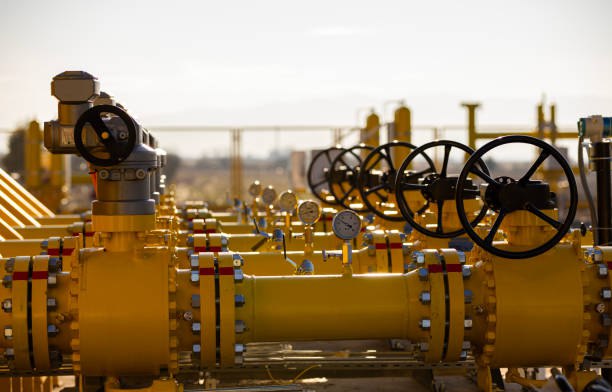
While Central Asian nations remain major suppliers of natural gas to China, newly released data indicates that Russia is rapidly expanding its market share and has now overtaken traditional exporters from the region. According to figures from China’s General Administration of Customs, as reported by Russian state media TASS, Turkmenistan, Kazakhstan, and Uzbekistan together supplied more than $7.9 billion worth of pipeline gas to China between January and September 2025. Turkmenistan, historically China’s leading gas supplier, exported $6.46 billion worth of pipeline gas during the nine-month period, representing a 12.7% decline year-on-year. Kazakhstan followed with gas exports totaling $854.7 million, while Uzbekistan supplied approximately $629.8 million. Russia, however, has emerged as the largest single supplier, exporting $7.29 billion worth of pipeline gas to China in the same period, an 18.9% increase compared to the previous year. In September alone, Russian gas exports reached $802.2 million, slightly exceeding August’s figures. The surge follows an agreement signed during President Vladimir Putin’s visit to Beijing in late August and early September, under which Russia committed to supplying 106 billion cubic meters of gas annually to China. In 2024, China’s total pipeline gas imports rose by 8.6% to $21.1 billion, with Russian imports growing by 25% to $8.03 billion. Russia’s growing footprint in the Chinese gas market aligns with its broader strategy to deepen energy cooperation across Eurasia. In February, Moscow announced plans to construct a new trunk pipeline to supply gas to northern and northeastern Kazakhstan. The pipeline, which will pass through Russia’s Tyumen region, is designed to transport 10 billion cubic meters of gas per year and will be supported by compressor stations generating 50 megawatts.

The Industrial Map of Central Asia: Projects That Could Reshape the Region’s Economy

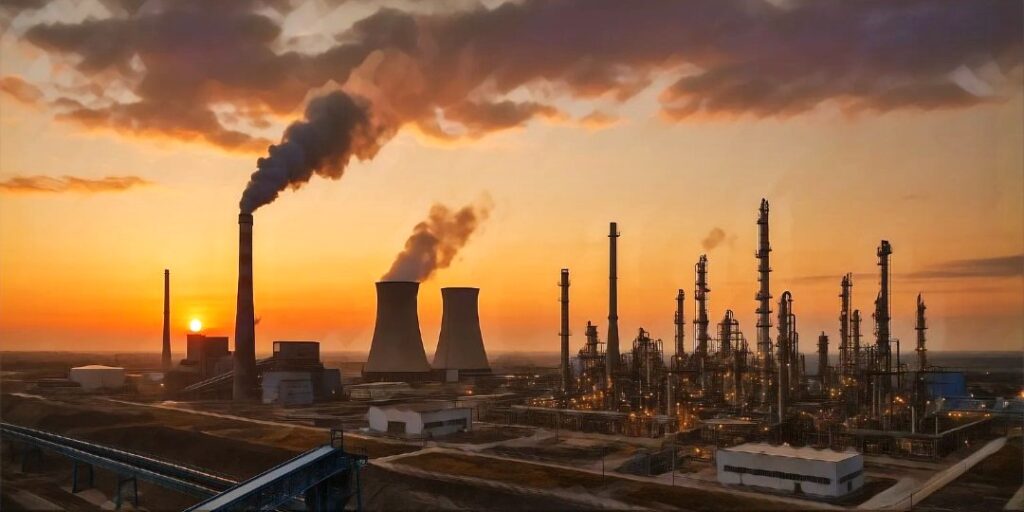
Over the next decade, the countries of Central Asia are preparing to launch a wave of industrial projects: copper mines, gas-chemical complexes, hydropower and nuclear plants, fertilizer factories, and others. The largest initiatives, valued at tens of billions of dollars, could significantly alter the balance of global markets. Uzbekistan: Betting on Metallurgy and Gas Chemistry Uzbekistan has been particularly active in launching new industrial projects. The largest initiative is the $15 billion expansion of the Almalyk Mining and Metallurgical Combine (AMMC), designed to increase copper cathode production from 148,000 to 400,000 tons annually by 2030. This more than two-fold increase is driven by strong global demand for copper. In May 2024, prices exceeded $11,000 per ton due to anticipated shortages linked to the energy transition and rising consumption in green technologies. Copper has become a key metal for electrification, and Uzbekistan’s copper megaproject fits squarely into this global trend, positioning the country as an emerging player in the market. Another strategic direction is the deep processing of natural gas into chemical products. In spring 2024, construction began on a $5 billion methanol-to-olefins gas-chemical complex in Bukhara. The plant, located in the Karakul Free Economic Zone, will process 1.3 billion m³ of gas and 430,000 tons of naphtha per year, producing up to 1.1 million tons of polymers. Completion is expected in 2027. The facility will create 2,000 direct jobs, and about 4,000 more in related industries such as construction materials, textiles, automotive, and electronics. Equipment suppliers include companies from the United States, Germany, and China, and the project is led by Uzbekistan’s largest oil and gas company, Sanoat Energetika Guruhi (Saneg). An even larger $10 billion MTO project is planned for completion by 2028, creating about 3,000 jobs and further expanding polymer production based on methanol. Uzbekistan is also investing in modernizing existing facilities. The $1.8 billion expansion of the Shurtan Gas Chemical Complex is under way, and preparations are being made for the privatization of the $3.4 billion Uzbekistan GTL plant launched in 2021. In renewables, a 250 MW solar power plant with Masdar is being built in Bukhara region with UAE partner Masdar, scheduled to come online by late 2025. Turkmenistan: Fuel, Energy, and the Chemical Industry Turkmenistan, which holds the world’s fourth-largest natural gas reserves, is focusing on export-oriented energy projects and the development of gas-chemical production. A key regional initiative is the TAPI pipeline (Turkmenistan–Afghanistan–Pakistan–India), valued at more than $7 billion. In 2024, work began on the Turkmen segment from Serhetabat on the Afghan border to Herat, forming the central section of the route. TAPI aims to deliver Turkmen gas to South Asian markets and enhance regional energy security. Despite geopolitical challenges, construction continues under the government’s “Arkadag Bright Path” energy development strategy. The country is also expanding its domestic processing capacity. In 2019, Turkmenistan launched the world’s first industrial gas-to-gasoline (GTG) plant in Ovadan Depe, a $1.7 billion facility that converts 1.8 billion m³ of gas into 600,000 tons of A-92 gasoline annually. The fuel...

World Bank Approves $800 Million Loan for Uzbekistan’s Economic Reforms

The World Bank has approved an $800 million concessional loan package to support Uzbekistan’s ongoing structural reforms, aimed at reducing poverty, creating jobs, and expanding private sector-led growth. The financing is designed to help the government enhance competition, strengthen social protections, and foster a more dynamic economic environment. The financial support will fund a broad set of policy initiatives, including mitigating the impact of energy tariff increases on low-income households, advancing gender equality in the workplace, and expanding access to social services for vulnerable populations. The package also targets reforms in key sectors such as telecommunications, agriculture, and energy, while supporting greater integration of Uzbekistan into global trade networks. With favorable long-term repayment terms, the loan will reduce the country’s debt servicing costs and free up government resources for economic and social development. One of the central measures backed by the package is a significant boost in financial assistance for low-income families. Annual cash transfers per household will increase from UZS 270,000 to UZS 1 million to offset the rising costs of electricity, heating, and gas. The World Bank package will also support legislation to protect women from sexual harassment and workplace discrimination, including safeguards against employment bias related to pregnancy or childcare responsibilities. Reforms will open the provision of social services to private and non-governmental organizations, enabling greater coverage and efficiency. Among other key initiatives is the establishment of a National Investment Fund to manage and privatize state-owned enterprises. The creation of an independent telecommunications regulator is expected to promote competition, while new agricultural risk insurance schemes and liberalized cotton pricing aim to strengthen resilience and market access for farmers. Textile companies will be permitted to buy cotton directly from producers at flexible prices. The reform agenda also focuses on trade liberalization, including the removal of exclusive rights in strategic sectors such as energy, oil and gas, and agriculture. Export procedures will be simplified, and new regulations will promote private participation in electricity distribution and allow renewable energy producers to sell directly to consumers. Energy efficiency and climate policy are integral to the package. Uzbekistan plans to establish a National Energy Efficiency Agency and introduce incentives for solar power, heat pumps, and energy-efficient building retrofits. Public procurement processes will incorporate environmental criteria to support sustainable products and services. According to a World Bank report released in July, Uzbekistan’s economy grew steadily between 2010 and 2022, with per capita GDP rising by an average of 4.2% a year, outpacing the regional average. However, the report noted that growth has relied heavily on capital investment rather than productivity gains, and that deeper reforms are needed to build a more competitive private sector.