• KGS/USD = 0.01144 0%
  • KZT/USD = 0.00212 0%
  • TJS/USD = 0.10720 0%
  • UZS/USD = 0.00008 0%
  • TMT/USD = 0.28490 0%
  • KGS/USD = 0.01144 0%
  • KZT/USD = 0.00212 0%
  • TJS/USD = 0.10720 0%
  • UZS/USD = 0.00008 0%
  • TMT/USD = 0.28490 0%
  • KGS/USD = 0.01144 0%
  • KZT/USD = 0.00212 0%
  • TJS/USD = 0.10720 0%
  • UZS/USD = 0.00008 0%
  • TMT/USD = 0.28490 0%
  • KGS/USD = 0.01144 0%
  • KZT/USD = 0.00212 0%
  • TJS/USD = 0.10720 0%
  • UZS/USD = 0.00008 0%
  • TMT/USD = 0.28490 0%
  • KGS/USD = 0.01144 0%
  • KZT/USD = 0.00212 0%
  • TJS/USD = 0.10720 0%
  • UZS/USD = 0.00008 0%
  • TMT/USD = 0.28490 0%
  • KGS/USD = 0.01144 0%
  • KZT/USD = 0.00212 0%
  • TJS/USD = 0.10720 0%
  • UZS/USD = 0.00008 0%
  • TMT/USD = 0.28490 0%
  • KGS/USD = 0.01144 0%
  • KZT/USD = 0.00212 0%
  • TJS/USD = 0.10720 0%
  • UZS/USD = 0.00008 0%
  • TMT/USD = 0.28490 0%
  • KGS/USD = 0.01144 0%
  • KZT/USD = 0.00212 0%
  • TJS/USD = 0.10720 0%
  • UZS/USD = 0.00008 0%
  • TMT/USD = 0.28490 0%

Viewing results 1 - 6 of 14

Kazakhstan to Build Eight New Power Plants by 2030

Kazakhstan plans to build eight new power plants and modernize 11 existing facilities by 2030 as part of a national project to expand coal-fired power generation. The project, approved in March, aims to meet growing electricity demand and modernize the country’s energy infrastructure, strengthening the stability of the Unified Power System. According to Kazakhstan’s Ministry of Energy, 7.8 GW of new and upgraded capacity is scheduled to be commissioned by 2030. This includes both newly constructed plants and modernisation of existing facilities . The new construction program, with a total capacity of 5.3 GW, includes projects in several key regions. Plans include a 700 MW condensing power plant in Kurchatov; the Ekibastuz GRES-3 plant with a capacity of 2,640 MW; thermal power plants in Karaganda (350 MW) and Ekibastuz (180 MW); as well as combined heat and power plants in Zhezkazgan (500 MW), Kokshetau (240 MW), Semey (360 MW), and Ust-Kamenogorsk (360 MW). The project also aims to improve the efficiency of existing capacity. According to ministry estimates, modernization will reduce equipment wear by 13%. The Ministry of Energy stated that the initiative is expected to provide a reliable energy base for industrial growth, support the development of the digital economy, and facilitate the adoption of AI technologies. Coal-fired generation, if modernized and compliant with environmental standards, will continue to play a key role in ensuring the country’s energy security. The Times of Central Asia previously reported that Kazakhstan plans to attract at least $15.5 billion in investment for the development of coal-fired power generation. The country is expected to fully meet domestic electricity demand by 2027 and achieve a sustainable surplus by 2029, enabling it to begin exporting electricity. At the same time, the government plans to create a “data center valley” in Pavlodar powered by coal-fired energy.
Kazakhstan’s Rust Belt: Why Modernized Power Plants Aren’t Stopping Urban Decline

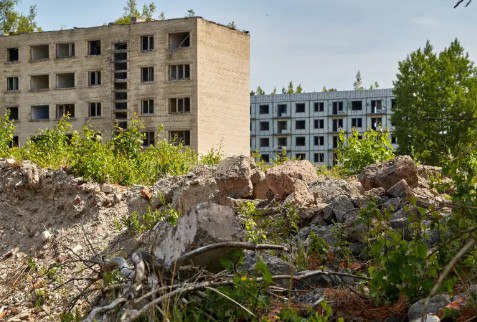
The onset of winter in 2025 served as a stress test for Kazakhstan’s industrial north, and by most measures, the country passed. After high-profile heating system failures in cities such as Ekibastuz and Ridder in previous years, when entire neighborhoods were left without heat in temperatures as low as minus 30 degrees Celsius, the authorities were forced to move beyond piecemeal repairs toward large-scale emergency interventions. The state invested unprecedented resources into overhauling heating networks and modernizing thermal power plants in single-industry cities and smaller industrial settlements across the region. Significant budget allocations helped stabilize the most vulnerable infrastructure. Emergency repair calls gave way to routine updates from local authorities, and utility breakdowns shifted from the realm of crisis to that of manageable risk. By this winter, the basic issue of urban survival had been resolved. For regions with aging infrastructure and high industrial dependency, this marked a crucial transition from systemic failure to fragile stability. The Future Votes with Its Feet Yet behind the upgraded pipes and boilers lies a deeper structural issue. Cities such as Ekibastuz, Rudny, Temirtau, Balkhash, and many others were pillars of Soviet-era industrialization. In today’s market-driven Kazakhstan, many are rapidly losing both economic relevance and population. The term “rust belt,” borrowed from post-industrial regions of the United States, has increasingly entered national discourse. While the state focuses on fixing infrastructure, residents are asking a more fundamental question: do these industrial cities have a future? The answer, many argue, lies not in kilometers of new piping but in people, and the data is clear. Single-industry cities are aging and shrinking. Even where wages exceed 1,200 dollars per month, well above the national average, young people are still leaving. The issue is less about income than about quality of life. A stable job is no longer enough for younger generations. They also want livable cities, modern schools, safety, leisure opportunities, and green spaces, amenities these places often lack. As a result, migration from northern and eastern regions to Astana and Almaty continues, fueling an imbalance. The megacities are overstretched, while industrial cities face growing labor shortages. Exceptions to the Rule Amid the general decline, the city of Saran in the Karaganda Region stands out as a rare success story. Just a decade ago, it was a struggling mining city facing significant population outflow. Today, it is a flagship of Kazakhstan’s single-industry city revitalization program. Saran’s turnaround hinged on radical economic diversification. The establishment of an industrial zone and the arrival of new anchor investors not tied to coal mining fundamentally changed the employment landscape. The launch of the KamaTyresKZ plant, along with household appliance manufacturers and the QazTehna bus assembly plant, has stimulated both economic and social development. Authorities now point to Saran as proof that a single-industry city can transition into a manufacturing hub under the right conditions. However, its success is also attributed to unique logistical advantages, notably proximity to Karaganda and substantial state support. Replicating the Saran effect in more remote cities such as...

Uzbekistan’s Green Energy Output Hits 9 Billion kWh in 2025

Uzbekistan’s solar and wind power plants generated a record 9 billion kilowatt-hours (kWh) of electricity in 2025, according to data released by the Ministry of Energy on October 22. The milestone reflects the country’s growing commitment to renewable energy and aligns with the strategic goals outlined by President Shavkat Mirziyoyev in his addresses to the 78th and 80th sessions of the United Nations General Assembly. Uzbekistan aims to adapt its economy to climate change, achieve carbon neutrality, and expand the share of renewables in its energy mix. The country currently operates 12 solar photovoltaic plants and five wind farms with a combined capacity of 4,682 megawatts. These facilities have saved approximately 2.73 billion cubic meters of natural gas and prevented the emission of nearly 4 million tons of pollutants. As of October 22, total electricity generation from hydro, solar, and wind sources reached 14.52 billion kWh for the year. Renewable energy now accounts for about 23% of Uzbekistan’s total electricity output. Officials estimate that the 9 billion kWh produced by solar and wind facilities alone could meet ten months of electricity demand for 7.5 million households or provide a full year’s supply for 6 million homes. The figure highlights the country’s accelerating transition toward a more sustainable energy future.

Saudi Company to Launch 200 MW Power Plant in Samarkand

Saudi private company Pemco is set to begin construction of a new 200-megawatt gas-piston power plant in Samarkand by the end of this year, Uzbekistan’s Minister of Energy Jurabek Mirzamahmudov announced in an interview with the “Uzbekistan 24” TV channel. “The new power station will significantly strengthen the energy supply in the Samarkand region and support Uzbekistan’s efforts to ensure a stable electricity supply amid growing demand,” Mirzamahmudov said, following President Shavkat Mirziyoyev’s recent meeting with leading Saudi business representatives. The minister also outlined a range of ongoing energy projects in partnership with Saudi firms. “Together with ACWA Power, we have launched the first major thermal power plant,” he said. “Additionally, a solar power facility is operating in the Qibray district of Tashkent region, two large wind farms have started operations in Bukhara, and the first 100-megawatt wind power plant has been commissioned in Karakalpakstan.” Several new renewable energy initiatives are also in progress. “We have already begun practical steps on new wind and solar stations, and we plan to launch the first large-scale battery storage system in Parkent,” Mirzamahmudov added. He further noted that Uzbekistan is preparing to support operations at the new Tashkent airport with the production of renewable aviation fuel. This will be facilitated through a partnership between Saudi Arabia’s Vision Invest and U.S.-based Air Products, who have signed an agreement to develop a sustainable aviation fuel (SAF) plant. These developments come as Uzbekistan works to diversify its energy mix in anticipation of future demand. As previously reported by The Times of Central Asia, the country aims to bring a high-capacity nuclear power plant fully online by 2035. The first small modular reactor is expected to begin operations in 2029 in the Jizzakh region, followed by additional units in the early 2030s, according to Uzatom Director Azim Akhmedkhadjaev.

Chinese Power Plant for Western Kazakhstan

On July 2, Kazakhstan’s MAEK LLP and China Huadian Corporation Ltd., represented by Huadian Kazakhstan Energy, signed an agreement for the joint construction of a combined-cycle gas plant in Aktau. The plant, aimed to meet the growing demand for electricity in Western Kazakhstan, is scheduled for commission in December 2026. As reported by Kazakh Invest, the Chinese State Bank has pledged finance for the project for up to 15-25 years at a rate below 5%. China Huadian Corporation is currently implementing the build of a combined-cycle gas plant in the Mangystau region of Kazakhstan. The $190 million project, which has the potential to integrate renewable energy sources,  will serve as the primary supplier of power and help regulate peak loads at a local level.    

Uzbekistan Launches Construction of New Power Plants

On March 25th, Uzbekistan President Shavkat Mirziyoyev pressed a symbolic button to launch the construction of new power plants in the country’s Namangan region. Today, the Namangan region has 913 megawatts of generating capacity. Over the past three years, electricity consumption in the region has increased by 24 percent and to meet the ever-growing demand, three projects have been launched with a total capacity of 1,228 megawatts at a cost of $1.1 billion. The projects comprise a cascade of hydroelectric power plants and two solar power plants. The Uzbekhydroenergo joint stock company will invest $434 million in a cascade of 6 hydroelectric power stations. With a total capacity of 228 megawatts, the plants will generate 1 billion kilowatt-hours of electricity per year, saving 310 million cubic meters of gas and providing electricity to 430 thousand households. The German company Hyper Partners GmbH will build a solar power plant with a capacity of 500 megawatts. The cost of the project is $350 million and the annual capacity, 1.095 billion kilowatt-hours. Another solar power plant will be built in cooperation with Tepelen Group Holding Limited from the United Arab Emirates. Its cost will also be $350 million and its capacity, 500 megawatts. The connection of the above power plants to the power grid is scheduled for completion by the end of this year. Combined, the projects will provide the Namangan region with an annual generating capacity of 2141 megawatts and 7.8 billion kilowatt-hours of electricity. Since this is more than enough to cover the region's need for 5.5 billion kilowatt-hours, any excess electricity will be sent to neighbouring Andijan and Fergana.