• KGS/USD = 0.01144 0%
  • KZT/USD = 0.00208 0%
  • TJS/USD = 0.10443 0.19%
  • UZS/USD = 0.00008 0%
  • TMT/USD = 0.28490 0%
  • KGS/USD = 0.01144 0%
  • KZT/USD = 0.00208 0%
  • TJS/USD = 0.10443 0.19%
  • UZS/USD = 0.00008 0%
  • TMT/USD = 0.28490 0%
  • KGS/USD = 0.01144 0%
  • KZT/USD = 0.00208 0%
  • TJS/USD = 0.10443 0.19%
  • UZS/USD = 0.00008 0%
  • TMT/USD = 0.28490 0%
  • KGS/USD = 0.01144 0%
  • KZT/USD = 0.00208 0%
  • TJS/USD = 0.10443 0.19%
  • UZS/USD = 0.00008 0%
  • TMT/USD = 0.28490 0%
  • KGS/USD = 0.01144 0%
  • KZT/USD = 0.00208 0%
  • TJS/USD = 0.10443 0.19%
  • UZS/USD = 0.00008 0%
  • TMT/USD = 0.28490 0%
  • KGS/USD = 0.01144 0%
  • KZT/USD = 0.00208 0%
  • TJS/USD = 0.10443 0.19%
  • UZS/USD = 0.00008 0%
  • TMT/USD = 0.28490 0%
  • KGS/USD = 0.01144 0%
  • KZT/USD = 0.00208 0%
  • TJS/USD = 0.10443 0.19%
  • UZS/USD = 0.00008 0%
  • TMT/USD = 0.28490 0%
  • KGS/USD = 0.01144 0%
  • KZT/USD = 0.00208 0%
  • TJS/USD = 0.10443 0.19%
  • UZS/USD = 0.00008 0%
  • TMT/USD = 0.28490 0%

Viewing results 91 - 96 of 953

Russia Overtakes Central Asian Suppliers in China’s Gas Market

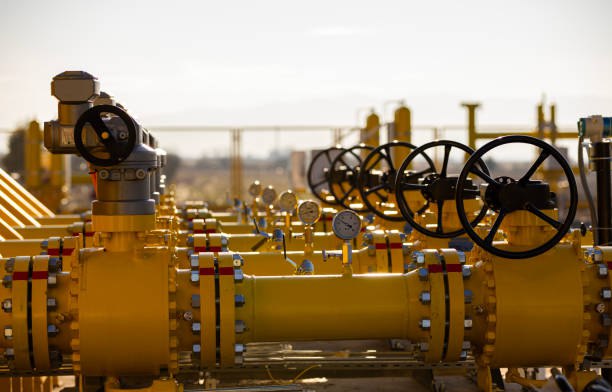
While Central Asian nations remain major suppliers of natural gas to China, newly released data indicates that Russia is rapidly expanding its market share and has now overtaken traditional exporters from the region. According to figures from China’s General Administration of Customs, as reported by Russian state media TASS, Turkmenistan, Kazakhstan, and Uzbekistan together supplied more than $7.9 billion worth of pipeline gas to China between January and September 2025. Turkmenistan, historically China’s leading gas supplier, exported $6.46 billion worth of pipeline gas during the nine-month period, representing a 12.7% decline year-on-year. Kazakhstan followed with gas exports totaling $854.7 million, while Uzbekistan supplied approximately $629.8 million. Russia, however, has emerged as the largest single supplier, exporting $7.29 billion worth of pipeline gas to China in the same period, an 18.9% increase compared to the previous year. In September alone, Russian gas exports reached $802.2 million, slightly exceeding August’s figures. The surge follows an agreement signed during President Vladimir Putin’s visit to Beijing in late August and early September, under which Russia committed to supplying 106 billion cubic meters of gas annually to China. In 2024, China’s total pipeline gas imports rose by 8.6% to $21.1 billion, with Russian imports growing by 25% to $8.03 billion. Russia’s growing footprint in the Chinese gas market aligns with its broader strategy to deepen energy cooperation across Eurasia. In February, Moscow announced plans to construct a new trunk pipeline to supply gas to northern and northeastern Kazakhstan. The pipeline, which will pass through Russia’s Tyumen region, is designed to transport 10 billion cubic meters of gas per year and will be supported by compressor stations generating 50 megawatts.
The Industrial Map of Central Asia: Projects That Could Reshape the Region’s Economy

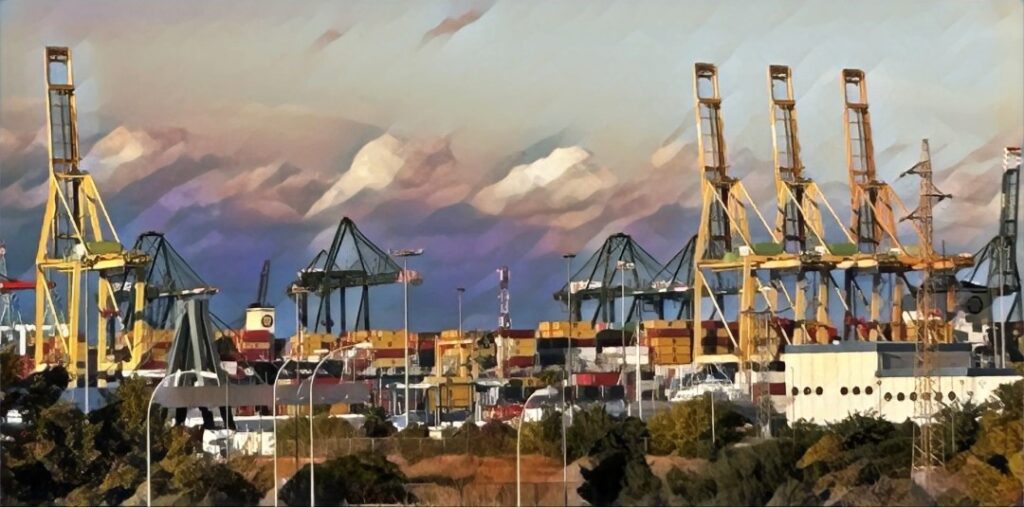
Over the next decade, the countries of Central Asia are preparing to launch a wave of industrial projects: copper mines, gas-chemical complexes, hydropower and nuclear plants, fertilizer factories, and others. The largest initiatives, valued at tens of billions of dollars, could significantly alter the balance of global markets. Uzbekistan: Betting on Metallurgy and Gas Chemistry Uzbekistan has been particularly active in launching new industrial projects. The largest initiative is the $15 billion expansion of the Almalyk Mining and Metallurgical Combine (AMMC), designed to increase copper cathode production from 148,000 to 400,000 tons annually by 2030. This more than two-fold increase is driven by strong global demand for copper. In May 2024, prices exceeded $11,000 per ton due to anticipated shortages linked to the energy transition and rising consumption in green technologies. Copper has become a key metal for electrification, and Uzbekistan’s copper megaproject fits squarely into this global trend, positioning the country as an emerging player in the market. Another strategic direction is the deep processing of natural gas into chemical products. In spring 2024, construction began on a $5 billion methanol-to-olefins gas-chemical complex in Bukhara. The plant, located in the Karakul Free Economic Zone, will process 1.3 billion m³ of gas and 430,000 tons of naphtha per year, producing up to 1.1 million tons of polymers. Completion is expected in 2027. The facility will create 2,000 direct jobs, and about 4,000 more in related industries such as construction materials, textiles, automotive, and electronics. Equipment suppliers include companies from the United States, Germany, and China, and the project is led by Uzbekistan’s largest oil and gas company, Sanoat Energetika Guruhi (Saneg). An even larger $10 billion MTO project is planned for completion by 2028, creating about 3,000 jobs and further expanding polymer production based on methanol. Uzbekistan is also investing in modernizing existing facilities. The $1.8 billion expansion of the Shurtan Gas Chemical Complex is under way, and preparations are being made for the privatization of the $3.4 billion Uzbekistan GTL plant launched in 2021. In renewables, a 250 MW solar power plant with Masdar is being built in Bukhara region with UAE partner Masdar, scheduled to come online by late 2025. Turkmenistan: Fuel, Energy, and the Chemical Industry Turkmenistan, which holds the world’s fourth-largest natural gas reserves, is focusing on export-oriented energy projects and the development of gas-chemical production. A key regional initiative is the TAPI pipeline (Turkmenistan–Afghanistan–Pakistan–India), valued at more than $7 billion. In 2024, work began on the Turkmen segment from Serhetabat on the Afghan border to Herat, forming the central section of the route. TAPI aims to deliver Turkmen gas to South Asian markets and enhance regional energy security. Despite geopolitical challenges, construction continues under the government’s “Arkadag Bright Path” energy development strategy. The country is also expanding its domestic processing capacity. In 2019, Turkmenistan launched the world’s first industrial gas-to-gasoline (GTG) plant in Ovadan Depe, a $1.7 billion facility that converts 1.8 billion m³ of gas into 600,000 tons of A-92 gasoline annually. The fuel...

World Bank Approves $800 Million Loan for Uzbekistan’s Economic Reforms

The World Bank has approved an $800 million concessional loan package to support Uzbekistan’s ongoing structural reforms, aimed at reducing poverty, creating jobs, and expanding private sector-led growth. The financing is designed to help the government enhance competition, strengthen social protections, and foster a more dynamic economic environment. The financial support will fund a broad set of policy initiatives, including mitigating the impact of energy tariff increases on low-income households, advancing gender equality in the workplace, and expanding access to social services for vulnerable populations. The package also targets reforms in key sectors such as telecommunications, agriculture, and energy, while supporting greater integration of Uzbekistan into global trade networks. With favorable long-term repayment terms, the loan will reduce the country’s debt servicing costs and free up government resources for economic and social development. One of the central measures backed by the package is a significant boost in financial assistance for low-income families. Annual cash transfers per household will increase from UZS 270,000 to UZS 1 million to offset the rising costs of electricity, heating, and gas. The World Bank package will also support legislation to protect women from sexual harassment and workplace discrimination, including safeguards against employment bias related to pregnancy or childcare responsibilities. Reforms will open the provision of social services to private and non-governmental organizations, enabling greater coverage and efficiency. Among other key initiatives is the establishment of a National Investment Fund to manage and privatize state-owned enterprises. The creation of an independent telecommunications regulator is expected to promote competition, while new agricultural risk insurance schemes and liberalized cotton pricing aim to strengthen resilience and market access for farmers. Textile companies will be permitted to buy cotton directly from producers at flexible prices. The reform agenda also focuses on trade liberalization, including the removal of exclusive rights in strategic sectors such as energy, oil and gas, and agriculture. Export procedures will be simplified, and new regulations will promote private participation in electricity distribution and allow renewable energy producers to sell directly to consumers. Energy efficiency and climate policy are integral to the package. Uzbekistan plans to establish a National Energy Efficiency Agency and introduce incentives for solar power, heat pumps, and energy-efficient building retrofits. Public procurement processes will incorporate environmental criteria to support sustainable products and services. According to a World Bank report released in July, Uzbekistan’s economy grew steadily between 2010 and 2022, with per capita GDP rising by an average of 4.2% a year, outpacing the regional average. However, the report noted that growth has relied heavily on capital investment rather than productivity gains, and that deeper reforms are needed to build a more competitive private sector.

Uzbekistan Begins Construction of New International Airport Near Tashkent

Uzbekistan has launched one of its largest infrastructure initiatives to date, the construction of a new international airport in the Tashkent region. President Shavkat Mirziyoyev inaugurated the project, which is being implemented by an international consortium of investors. A National-Scale Project The new airport is intended to strengthen Uzbekistan’s aviation sector and establish the country as a key transit hub between East and West. “Ultimately, our goal is to turn Uzbekistan into a major aviation hub connecting East and West, North and South,” Mirziyoyev stated. He underscored that developing transport infrastructure and modernizing air traffic management remain strategic priorities. The project is being led by a consortium comprising Vision Invest (Saudi Arabia, 45%), Sojitz (Japan, 30%), Incheon International Airport Corporation (South Korea, 15%), and Uzbekistan Airports (10%). Construction will unfold in four phases. The first stage, with an estimated cost of $2.5 billion, includes building the terminal complex and airfield. Once completed, the airport will have the capacity to handle up to 20 million passengers annually, process 129,000 tons of cargo, and support up to 30 take-offs and landings per hour. It will feature 14 telescopic ramps and parking for 62 aircraft across a 1,300-hectare site in the Urtachirchik and Kuyichirchik districts of the Tashkent region. Technology, Sustainability, and Connectivity Designed to fully comply with International Civil Aviation Organization (ICAO) standards, the airport will incorporate state-of-the-art air navigation and meteorological systems to ensure operational reliability in all weather conditions. Environmental sustainability is a key focus. It will be the first airport in Central Asia constructed in line with “green” building principles. The passenger terminal will house a 46,000 square meter duty-free zone. The facility will serve as part of a broader multimodal transport hub. It will connect directly to major regional highways, Tashkent-Samarkand, Tashkent-Andijan, and Tashkent-Bostanlyk and will feature a dedicated high-speed rail station and a shuttle service linking Tashkent and the planned city of New Tashkent. Officials project that the new airport could generate more than $27 billion in revenue and create thousands of jobs across sectors including construction, tourism, and logistics. Strengthening Uzbekistan’s Regional Aviation Role Passenger traffic in Tashkent has tripled over the past eight years, reaching 9 million annually. By 2040, it is expected to rise to 24 million. The current airport, limited to 11 million passengers and constrained by its urban location, cannot be expanded, prompting the decision to pursue the new megaproject. Nationwide, Uzbekistan is upgrading seven international airports and has built new terminals in Muynak, Kokand, Zaamin, Shakhrisabz, Saryasyk, and Sohe. The aviation sector has also seen increased competition: the number of airlines has grown to 15, and the aircraft fleet has expanded from 26 to 105 units. Within five years, officials aim to boost the fleet to 180 aircraft, expand routes to 230 destinations, and increase annual flights to 200,000.

Central Asia’s Rail Corridors: U.S. and Chinese Partnerships in Perspective

Kazakhstan’s railways are modernizing with a U.S. supplier, while Kyrgyzstan and Uzbekistan are advancing a new trans‑mountain link with China. On September 22, 2025, Wabtec and KTZ announced a multi‑year locomotive and services package worth about $4.2 billion, described by the company as its “largest” agreement. In parallel, China, Kyrgyzstan, and Uzbekistan formalized a joint company to build the long-planned CKU railway, with China holding a 51% stake. Central Asia’s rail networks are thus being reshaped by two major partnerships - one with the United States and one with China. Rather than a zero-sum rivalry, these projects show how regional governments are pursuing different infrastructure strategies to expand connectivity. Kazakhstan and Wabtec: Modernizing an Existing Network In September 2025, Kazakhstan’s railway operator KTZ signed a $4.2 billion agreement with U.S.-based Wabtec for 300 Evolution Series ES44ACi locomotives. The diesel-electric engines are tailored for Kazakhstan’s 1,520 mm gauge network and harsh climate, replacing aging Soviet-era stock. Wabtec finalized full ownership of the Astana locomotive plant in late 2023; production and services for 1,520-mm stock are now fully under Wabtec’s Kazakhstan subsidiary. Local manufacturing and long-term service contracts are expected to expand domestic engineering capacity. The locomotives’ digital diagnostic systems should improve fuel efficiency and maintenance intervals. According to the official Wabtec press release, the agreement “strengthens KTZ’s role as a critical and reliable hub for the Middle Corridor,” while KTZ CEO Talgat Aldybergenov said it “confirms our commitment to advanced technologies in the transport sector”. Rail accounts for about 64% of Kazakhstan’s freight turnover (2024), so locomotive performance directly affects Middle Corridor throughput. Financing details have not been disclosed, but the purchase appears to be domestically funded through KTZ and state support. For Astana, the order fits its multi-vector foreign-policy approach: Kazakhstan continues its partnerships with France’s Alstom, China’s CRRC, and Russia, maintaining balance across suppliers. While the locomotives are diesel, Kazakhstan is also electrifying key lines with European partners. Diesels provide an immediate boost without new catenary investment, and Wabtec claims lower emissions than previous models. Over time, expanded electrification could complement this upgrade. Overall, the Wabtec partnership represents incremental modernization. This is an interoperability-based approach that strengthens existing routes rather than building new corridors from scratch. [caption id="attachment_37655" align="aligncenter" width="950"] Image: trains.com - One of Kazakhstan’s modern Evolution Series diesel locomotives (model TE33A) produced through a partnership with U.S. firm Wabtec. Kazakhstan’s railways carry about 64% of the country’s freight, making such upgrades crucial for trade connectivity.[/caption] The China–Kyrgyzstan–Uzbekistan (CKU) Railway: Building a New Corridor After nearly three decades of discussion, China, Kyrgyzstan, and Uzbekistan launched construction of the CKU railway in late 2024. The 523 km line will run from Kashgar (Xinjiang) through the Kyrgyz mountain ranges to Andijan, Uzbekistan. It will provide a second direct China–Central Asia connection, bypassing reliance on Kazakhstan’s network. The CKU is designed with dual gauges: standard (1,435 mm) in China and broad (1,520 mm) in Kyrgyzstan and Uzbekistan, with a dry-port transshipment hub in Makmal, Kyrgyzstan. This compromise allows integration with existing Central...

Kyrgyzstan, Uzbekistan, Kazakhstan Move Forward with $4.2 Billion Kambarata-1 Hydropower Project

The Kambarata-1 Hydropower Plant (HPP), a landmark energy project jointly developed by Kyrgyzstan, Uzbekistan, and Kazakhstan, is gaining international momentum, with strong backing from global financial institutions. Uzbek Minister of Energy Jorabek Mirzamahmudov announced that the plant’s projected construction cost stands at $4.2 billion, while pledged financing has already reached $5.6 billion. In an interview with Uzbekistan 24 TV, Mirzamahmudov said the most recent trilateral ministerial dialogue was held in Brussels in late September, under the auspices of the World Bank. It marked the third high-level discussion between the participating states and brought together representatives from 10 major financial institutions, including the European Bank for Reconstruction and Development (EBRD), the European Investment Bank (EIB), the OPEC Fund, the Asian Infrastructure Investment Bank (AIIB), the Asian Development Bank (ADB), and several Italian financial entities. The project has been widely recognized as a model for regional cooperation. According to Mirzamahmudov, multiple international lenders have expressed readiness to support Kambarata-1 even before the technical documentation is finalized. “In the past, such projects couldn’t even be discussed, they were off the table. Now they are being supported at the highest level,” he said. “They see this as a regional cooperation project and believe in its long-term economic potential.” Governance and Sustainability Standards Implementation of the project will be managed through an intergovernmental agreement, a joint operator, and a new project-specific venture. The minister emphasized that construction will adhere to international best practices in environmental protection, safety, and financial transparency, while taking into account the national interests of all three countries. Mirzamahmudov described the project as both an energy and environmental milestone. Kambarata-1 will utilize renewable hydropower from the Naryn River and improve transboundary water management across the region. Unlike many large-scale dam projects, the design of Kambarata-1 minimizes environmental and social disruption and does not require resettlement of communities. It is also expected to support regional agriculture by enabling controlled water releases during the summer growing season. Ownership and Output Under the proposed ownership structure, Kyrgyzstan will hold a 34% stake in the project, with Uzbekistan and Kazakhstan each holding 33%. Electricity will be distributed proportionally, though countries will have flexibility to purchase additional power based on demand and market conditions. “Since this is a commercial project, countries will have the flexibility to buy more or less electricity depending on consumption levels,” the minister explained. To be constructed on the upper reaches of the Naryn River in Kyrgyzstan, Kambarata-1 will have a planned capacity of 1,860 megawatts, a dam height of 256 meters, and a reservoir volume of 5.4 billion cubic meters. Upon completion, it is expected to generate an average of 5.6 billion kilowatt-hours annually, making it Kyrgyzstan’s largest hydropower facility and a cornerstone in addressing Central Asia’s energy deficit.