• KGS/USD = 0.01143 0%
  • KZT/USD = 0.00207 0%
  • TJS/USD = 0.10465 0.1%
  • UZS/USD = 0.00008 0%
  • TMT/USD = 0.28571 0.28%
  • KGS/USD = 0.01143 0%
  • KZT/USD = 0.00207 0%
  • TJS/USD = 0.10465 0.1%
  • UZS/USD = 0.00008 0%
  • TMT/USD = 0.28571 0.28%
  • KGS/USD = 0.01143 0%
  • KZT/USD = 0.00207 0%
  • TJS/USD = 0.10465 0.1%
  • UZS/USD = 0.00008 0%
  • TMT/USD = 0.28571 0.28%
  • KGS/USD = 0.01143 0%
  • KZT/USD = 0.00207 0%
  • TJS/USD = 0.10465 0.1%
  • UZS/USD = 0.00008 0%
  • TMT/USD = 0.28571 0.28%
  • KGS/USD = 0.01143 0%
  • KZT/USD = 0.00207 0%
  • TJS/USD = 0.10465 0.1%
  • UZS/USD = 0.00008 0%
  • TMT/USD = 0.28571 0.28%
  • KGS/USD = 0.01143 0%
  • KZT/USD = 0.00207 0%
  • TJS/USD = 0.10465 0.1%
  • UZS/USD = 0.00008 0%
  • TMT/USD = 0.28571 0.28%
  • KGS/USD = 0.01143 0%
  • KZT/USD = 0.00207 0%
  • TJS/USD = 0.10465 0.1%
  • UZS/USD = 0.00008 0%
  • TMT/USD = 0.28571 0.28%
  • KGS/USD = 0.01143 0%
  • KZT/USD = 0.00207 0%
  • TJS/USD = 0.10465 0.1%
  • UZS/USD = 0.00008 0%
  • TMT/USD = 0.28571 0.28%

Viewing results 139 - 144 of 962

Uzbekistan and Belarus Deepen Nuclear Energy Cooperation

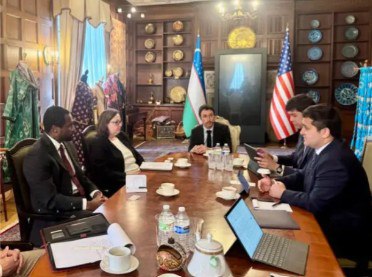
Uzbekistan and Belarus are moving to strengthen bilateral cooperation in nuclear energy, following a high-level meeting in Minsk on August 5. The talks were hosted by Belarusian Energy Minister Denis Moroz and attended by a delegation from Uzbekistan’s Uzatom Atomic Energy Agency, led by Director Azim Akhmedkhadjaev. Discussions covered a broad range of potential collaboration areas, including nuclear infrastructure development, specialist training, radioactive waste and spent fuel management, and integration of nuclear power into national energy systems. “We welcome Uzbekistan’s decision to join the club of states using atomic energy for peaceful purposes and implementing a national nuclear program,” Moroz said, expressing Belarus’s readiness to share its experience. The Uzbek delegation is expected to visit the Belarusian Nuclear Power Plant in Ostrovets, where technical teams from both countries will explore concrete areas for cooperation. Moroz emphasized that the launch of the Belarusian plant has bolstered national energy security and driven innovation in sectors such as electric transport and housing electrification. “The nuclear power plant has become a springboard for Belarus to reach a new technological level,” he said, adding that the facility complies fully with international safety standards. Uzatom Director Akhmedkhadjaev commended Belarus’s progress in the nuclear sector, calling it “advanced and highly successful.” He expressed interest in involving Belarusian experts in Uzbekistan’s nuclear development efforts. The Uzbek delegation also visited the dispatch control center of Belenergo, Belarus’s national energy company, to observe nuclear grid integration in practice. Uzbekistan signed a contract with Russia’s Atomstroyexport, a subsidiary of Rosatom, in May 2024 to build a small modular nuclear power plant in the Jizzakh Region. The design includes six 55 MW reactors with a combined capacity of 330 MW. In February 2025, Uzatom also formed an international consortium to expand its nuclear capacity, incorporating technologies from Russia, China, Europe, and the United States.

Economist Raises Concerns Over $5 Billion Sea Breeze Resort Project at Charvak

The Uzbek government has approved the construction of the Sea Breeze Uzbekistan resort complex along the Charvak Reservoir, granting the investor 577 hectares of land on a 25-year lease at a sharply reduced rate. According to a Cabinet resolution, construction may begin even before the completion of project documentation. Tree relocation is expected as part of the development process. The project, led by Russian-Azerbaijani developer Emin Agalarov, envisions a new lakeside tourist destination complete with hotels, villas, swimming pools, sports facilities, restaurants, shops, and a bridge linking both sides of the reservoir. Financial Concerns Raised by Local Economist Uzbek economist and blogger Otabek Bakirov has voiced strong concerns over the project, arguing that while public debate has focused on environmental issues, the financial aspects have not been adequately examined. After reviewing the Cabinet resolution, he raised several questions about investor selection, project financing, lease terms, and the shifting of infrastructure costs onto the state. Questions About Investor Selection The government resolution names Sea Breeze Uzbekistan, a joint venture involving Agalarov’s development firm, as the winner of the site through what it describes as the “best proposal.” Bakirov questioned whether other bids were solicited or evaluated and whether any Uzbek partners hold ownership in the project. He noted that the resolution lacks information about the local share. Skepticism Over Project Financing Bakirov expressed doubt about the reported $5 billion investment figure, suggesting the Agalarov family likely lacks the capital to fund the project independently. “The Agalarovs don’t have their own $5 billion, which means the money will be borrowed,” he wrote. He questioned the source of financing, the terms of any loans, and what guarantees would be provided. He also pointed to a provision allowing the land to be subdivided and released without restrictions, warning that this could lead to speculation rather than real development. Concerns About Lease Pricing The land was leased for 17 billion soms (approximately $1.4 million), to be paid in installments over five years. This price reflects a 0.01 coefficient discount granted as an incentive. Bakirov argued that such a deeply discounted lease is inappropriate for a large-scale commercial venture. “Why has such a drastically reduced price been set for a commercial project, when this is a major business venture and not a social initiative?” he asked. He called for comparisons with other tourism projects to determine whether similar incentives were offered. “Mr. Agalarov is not building a hospital; he is building a commercial enterprise,” he added. Public Funding for Private Infrastructure According to Bakirov, the resolution assigns responsibility for essential infrastructure—such as access roads, utilities, and the reservoir bridge—to the Uzbek government. He argued that these should be covered by the investor. “Weren’t sewage treatment and bridge construction supposed to be the investor’s responsibility? Or were the public presentations misleading?” he asked. He emphasized the contradiction between promoting Sea Breeze as a $5 billion private investment and then shifting core expenses to the public sector. Fast-Tracked Construction Raises Red Flags Bakirov also criticized the decision to...

Uzbek Trade Delegation Visits U.S. to Promote “Made in Uzbekistan” Exports

From July 23 to 29, a delegation from Uzbekistan’s Ministry of Investment, Industry and Trade (MIIT) visited the United States to promote Uzbek-produced goods, expand export channels, and strengthen bilateral trade ties, according to the ministry’s press service. As part of the mission, 25 Uzbek textile companies showcased their products under the national “Made in Uzbekistan” brand at three major trade exhibitions in New York: Texworld NYC, Apparel Sourcing USA, and Home Textiles Sourcing Expo. Delegates met with industry leaders and trade associations, including Bunzl plc, Levi Strauss & Co., PVH Corp., GIII Apparel Group, Kontoor Brands, American Eagle Outfitters, Tapestry Inc., Macy’s, the American Apparel & Footwear Association (AAFA), and the United States Fashion Industry Association (USFIA), to discuss integrating Uzbek brands into U.S. sourcing channels. In Washington, ministry representatives met with the U.S. Department of Commerce to explore opportunities for enhancing trade, reducing regulatory barriers, and increasing investment cooperation. They also engaged with the Commercial Law Development Program (CLDP) under the Commerce Department, agreeing to organize webinars and seminars aimed at helping Uzbek firms meet U.S. certification and packaging standards. A separate meeting with the U.S. Department of Agriculture and the U.S. Cotton Association addressed expanding Uzbekistan’s access to the GSM-102 export credit guarantee program, increasing credit limits, and launching a “Made from U.S. Cotton” initiative. The proposed initiative would allow processed Uzbek goods made from American cotton to carry the label in international markets. The delegation also explored ways to deepen investment cooperation with U.S. industry associations and develop mechanisms to integrate more Uzbek products into American retail and sourcing ecosystems. As previously reported by The Times of Central Asia, on April 30, U.S. Labor Secretary Lori Chavez-DeRemer announced the termination of more than $38 million in foreign aid programs during a cabinet meeting at the White House. This included funding for a labor rights initiative in Uzbekistan’s cotton sector. The program, launched in 2022 and scheduled to run through 2026, aimed to improve labor conditions and prevent forced labor. It received $2 million in its first year, with $1 million earmarked for 2025.

Central Asia Grapples with Fuel Shortages Amid Market Volatility

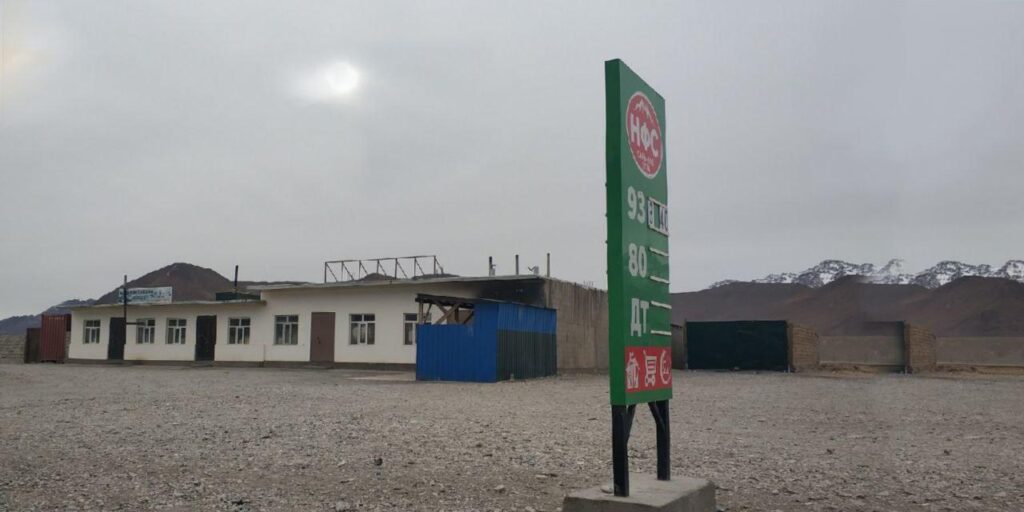
The heavy reliance on fuel imports from Russia is placing Central Asian countries in an increasingly precarious position. Disparities in pricing and exchange rates are driving a surge in illicit fuel resales, exacerbating supply challenges across the region. Gasoline and diesel prices continue to climb, and shortages are being felt widely. This dependence on Russian supplies is particularly concerning following U.S. President Donald Trump's ultimatum to Moscow: end the war in Ukraine within ten days or face 100% tariffs on countries trading oil and petroleum products with Russia. The tariffs could take effect as early as next week, placing Central Asian states in a hugely vulnerable position. Kazakhstan: Shortages and Shadow Exports In early July, motorists across Kazakhstan reported widespread shortages of AI-95 gasoline, particularly along the Karaganda-Balkhash and Astana-Pavlodar highways and in the country’s western regions. Some filling stations restricted purchases of AI-95 to 30 liters per vehicle, and AI-98 was only available via coupons. The Ministry of Energy attributed the shortages to increased tourist and transit traffic. Price caps on gasoline were lifted in January 2025, after which they began to steadily rise. According to the Ministry of Energy, fuel in Kazakhstan remains significantly cheaper than in other Eurasian Economic Union (EAEU) member states, prompting the government to gradually align prices with the regional market. Forecasts suggest gasoline prices could rise by up to 50%, further fueling inflation and impacting all sectors of the economy. The government argues that maintaining artificially low fuel prices would require substantial budget subsidies. The resulting price differentials have made illegal fuel exports more profitable, aggravating domestic shortages. To combat speculation, Kazakhstan imposed a ban in January on exporting gasoline and diesel by road and rail. Despite the country’s ongoing efforts to expand domestic production, Kazakhstan is expected to import substantial volumes from Russia in 2025: 285,000 tons of motor gasoline, 300,000 tons of jet fuel, 450,000 tons of diesel, and 500,000 tons of bitumen. Experts caution that significant increases in domestic output may not materialize until 2030. Russia’s decision on July 28 to tighten its gasoline export ban to include large producers is further complicating the situation. The embargo, introduced amid record-high exchange prices, is expected to last through August. Nevertheless, Energy Minister Erlan Akkenzhenov insists the Russian export restrictions will not affect Kazakhstan, citing a standing intergovernmental agreement that exempts the country from such measures. The Rise of Grey Market Schemes Despite official reassurances, fuel prices continue to rise. Energy expert Olzhas Baidildinov warns of a growing shadow market, driven in part by the weakening of the Kazakh tenge against the Russian ruble. With the exchange rate at 6.6 tenge per ruble, the economic incentive for illicit exports from Kazakhstan remains strong. Baidildinov predicts further shortages by the autumn if this trend continues. Kyrgyzstan: Growing Dependence Kyrgyzstan, which has faced repeated fuel shortages in recent years, has seen prices rise sharply. Over the past decade, the cost of AI-92 has climbed by 52%, AI-95 by 57%, and diesel, used in agriculture...

Halyk Bank Buys 49% Stake in Uzbekistan’s Click in Landmark Fintech Deal

Almaty - Kazakhstan’s Halyk Bank has announced it will acquire a 49% stake in Uzbek digital payments company Click for $176.4 million, marking one of the largest cross-border banking investments in Central Asia to date. The deal values Click at approximately $360 million, highlighting the growing importance of digital finance in the region’s rapidly evolving financial landscape. With over 20 million customers, Click is one of Uzbekistan’s most widely used payment providers. As part of the agreement, Click will also take a 49% stake in Tenge Bank, Halyk’s Uzbek subsidiary, for $60.76 million. The reciprocal structure of the deal is designed to foster tighter operational integration and shared technological infrastructure between the two institutions – a significant step toward regional financial harmonization. “This is a historic moment for Click. Partnering with Halyk Bank and expanding our capabilities through Tenge Bank represents a major step forward in delivering world-class digital financial services to millions of users,” said Ulugbek Rustamov, CEO of Click. “At the same time, the structure of the deal ensures Click retains its independence, continues to shape its strategic vision, and remains a proud national brand.” Strategic Push Toward Integration The announcement comes as both Kazakhstan and Uzbekistan continue efforts to modernize their financial systems and ease cross-border payments. Regional trade between the two nations has grown steadily in recent years, with bilateral trade turnover reaching $4.22 billion in 2024, up from $2.9 billion in 2020. Halyk Bank, already Kazakhstan’s dominant financial institution with a 29% market share and more than 10.9 million active retail clients, views the investment as a strategic step towards capturing Uzbekistan’s booming digital economy. Click, meanwhile, gains regulatory grounding via Tenge Bank and access to Halyk’s technology and ability to raise capital from its public listing on the London Stock Exchange. Uzbekistan, whose GDP grew by 7.2% in the first half of 2025, continues to open its financial sector to foreign capital – a key pillar of President Shavkat Mirziyoyev’s economic reform program. Competing Power Structures? This fintech alliance also throws an intriguing light on Central Asia’s most influential business families. Halyk Bank is majority-owned by Timur Kulibayev and his wife Dinara, the daughter of former Kazakh president Nursultan Nazarbayev, widely viewed as Kazakhstan’s most powerful couple. Their expanding presence in Uzbekistan via Click and Tenge Bank may once have had the potential to ruffle feathers amongst Uzbekistan’s elite. The fact that the deal has been allowed to proceed this far is in itself an acknowledgement of the shared interests of regional powerbrokers. A Shift in Regional Strategy The deal represents a strategic reversal for Halyk Bank. In recent years, the bank has divested from its Kyrgyz and Tajik operations, selling 100% of its Kyrgyz subsidiary to oligarch Aidan Karibzhanov in 2024 and liquidating its Tajik entity in 2022. The Click acquisition signals a renewed focus on Uzbekistan, with the potential to make the country Halyk’s primary external growth market. This renewed push comes as Halyk cements its dominance in Kazakhstan, where it controls...

Kazakhstan to Build Strategic Railway Bridge Across Syr Darya River

Kazakhstan will construct a 500-meter railway bridge over the Syr Darya River as part of a strategic infrastructure initiative to bolster transport links with Uzbekistan, Kazakhstan Temir Zholy (KTZ), the national railway company, has announced. Preparatory works are already underway, with construction progressing on a 152-kilometer segment of the new Darbaza-Maktaaral railway line, stretching from Erdaut station to the Syr Darya floodplain. The full project will include 35 bridges in total. The Darbaza-Maktaaral line is seen as vital for strengthening Kazakhstan’s transport and transit infrastructure. It is expected to ease pressure on the congested Saryagash-Tashkent rail corridor and the heavily utilized Saryagash border station, enabling a significant increase in freight traffic to Uzbekistan and beyond-to Tajikistan, Afghanistan, and Iran. Once operational, the railway is projected to carry over 20 million tons of cargo annually. In addition to its international significance, the project is poised to stimulate economic development in southern Kazakhstan. By directly linking the Maktaaral and Zhetysai districts to the national rail network, it will eliminate the need to transit through Uzbek territory, streamlining domestic logistics and enhancing regional accessibility. Completion of the Darbaza-Maktaaral railway is scheduled for 2026.