• KGS/USD = 0.01144 0%
  • KZT/USD = 0.00211 0%
  • TJS/USD = 0.10515 0.48%
  • UZS/USD = 0.00008 0%
  • TMT/USD = 0.28530 0%
  • KGS/USD = 0.01144 0%
  • KZT/USD = 0.00211 0%
  • TJS/USD = 0.10515 0.48%
  • UZS/USD = 0.00008 0%
  • TMT/USD = 0.28530 0%
  • KGS/USD = 0.01144 0%
  • KZT/USD = 0.00211 0%
  • TJS/USD = 0.10515 0.48%
  • UZS/USD = 0.00008 0%
  • TMT/USD = 0.28530 0%
  • KGS/USD = 0.01144 0%
  • KZT/USD = 0.00211 0%
  • TJS/USD = 0.10515 0.48%
  • UZS/USD = 0.00008 0%
  • TMT/USD = 0.28530 0%
  • KGS/USD = 0.01144 0%
  • KZT/USD = 0.00211 0%
  • TJS/USD = 0.10515 0.48%
  • UZS/USD = 0.00008 0%
  • TMT/USD = 0.28530 0%
  • KGS/USD = 0.01144 0%
  • KZT/USD = 0.00211 0%
  • TJS/USD = 0.10515 0.48%
  • UZS/USD = 0.00008 0%
  • TMT/USD = 0.28530 0%
  • KGS/USD = 0.01144 0%
  • KZT/USD = 0.00211 0%
  • TJS/USD = 0.10515 0.48%
  • UZS/USD = 0.00008 0%
  • TMT/USD = 0.28530 0%
  • KGS/USD = 0.01144 0%
  • KZT/USD = 0.00211 0%
  • TJS/USD = 0.10515 0.48%
  • UZS/USD = 0.00008 0%
  • TMT/USD = 0.28530 0%

Viewing results 451 - 456 of 992

Nuclear Race: Will Central Asia Build a Nuclear Power Plant?

The answer to the question posed in the title remains uncertain. While Uzbekistan has plans to construct a nuclear power plant and Kazakhstan is set to hold a referendum this fall to gauge public opinion on building one, progress is sluggish. Tashkent has postponed the start of construction, and the issue sparks heated debate in Kazakhstan. The First Nuclear Power Plant in Central Asia Historically, Central Asia did host a nuclear facility. Located on the shore of the Caspian Sea in Kazakhstan, this was not a conventional nuclear power plant but a fast neutron reactor known as BN-350. The reactor was the core of the Mangistau Nuclear Power Plant, designed to transform the Mangyshlak Peninsula by providing energy to the city of Aktau (formerly Shevchenko) and powering large-scale desalination plants that supplied drinking water to the arid region. [caption id="attachment_20031" align="aligncenter" width="366"] BN-350[/caption] Operational from 1973 until its shutdown in 1999, the BN-350 reactor was decommissioned due to the allocation of U.S. funds for new desalination and heating equipment and the disposal of its remaining fuel. The extensive maintenance and decommissioning work on the BN-350 have given Kazakhstani nuclear physicists significant experience with such complex and hazardous technology. However, younger generations in Kazakhstan are largely unaware of the BN-350 reactor’s existence. Their knowledge of nuclear physics is often limited to the harrowing stories passed down about nuclear warhead tests at the Semipalatinsk test site and their devastating effects. Fear and Nuclear Power: Kazakhstan's Dilemma The societal fear surrounding nuclear energy in Kazakhstan is deeply intertwined with political concerns. For a long time, the leadership in Kazakhstan has hesitated to move beyond merely discussing the need for a nuclear power plant (NPP) to actually initiating the project. President Kassym-Jomart Tokayev recently announced that a referendum would take place in the fall of 2024. However, Ministry of Energy's officials avoided mentioning the word "referendum" until the last moment, previously asserting it was unnecessary. Public hearings were held last year in the village of Ulken, Zhambyl district, Almaty region, a proposed site for the nuclear plant. The Ministry of Energy’s press release stated that the local populace supported developing nuclear power, highlighting its significance for regional socio-economic growth. However, media reports revealed that the hearings were contentious, with opposing viewpoints almost disrupting the speech of Nurlan Ertas, the head (akim) of the Zhambyl district. Activists even displayed banners and posters against the plant's construction. Certain groups have exploited the population's fear of another disaster like Chernobyl. Additionally, the government has struggled to convince the public that nuclear technologies are becoming safer. In contrast, Europe now includes nuclear power plants in its list of green energy sources, similar to other renewable energy sources (RES). In Kazakhstan, renewable energy accounts for only 5% of the total energy produced. The introduction of NPPs could significantly enhance the country’s position in reducing carbon emissions. The government faces a growing electricity shortage that can be addressed either harmfully or fearfully. The harmful options are coal-fired thermal power plants...
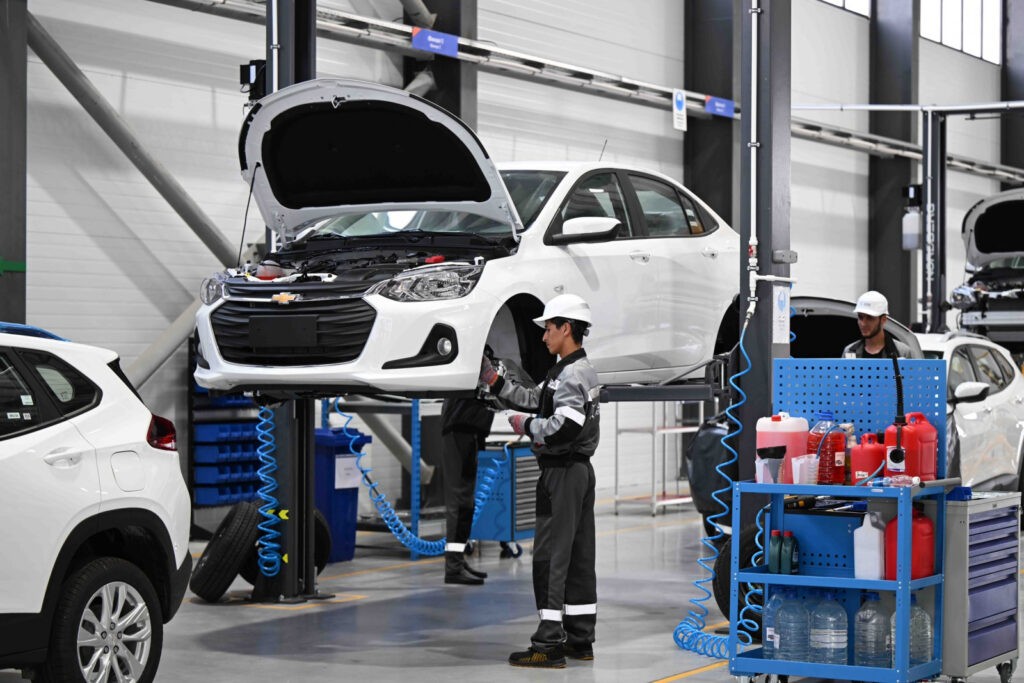
Kyrgyz-Uzbek Automobile Plant Imports Components from Uzbekistan

On July 5, Chairman of the Cabinet of Ministers of the Kyrgyz Republic, Akylbek Japarov visited the northern Chui region to inspect the Tulpar Motors assembly plant, a joint Kyrgyz-Uzbek enterprise for the manufacture of Chevrolet and Isuzu vehicles. Construction of the plant began in May 2023 and the first car rolled off its assembly line in May 2024. Already in operation, the plant will be officially opened in July-August by the president of Kyrgyzstan. According to plans, within five years, the number of employees at the plant will reach 1,400 and the total investment in the project, will amount to $110 million. During the first year, Uzbekistan’s UzAuto Motors will invest $50 million in the assembly of 10,000 cars, beginning with the Chevrolet Nexia R3. At the initial stage, components will be provided by Uzbekistan but thereafter, will be produced inhouse to enable the Kyrgyz plant's manufacture of some 20,000 vehicles per year. During his visit, the head of the Cabinet of Ministers noted that the cars, trucks, and buses produced by the plant will meet the demand in Kyrgyzstan and be available for export to other Central Asian countries.  

Tokayev Calls For Expanded SCO to Play Greater Role on Global Stage

A meeting entitled “Strengthening Multilateral Dialogue – Striving for Sustainable Peace and Development” was held to conclude the Shanghai Cooperation Organization summit in Astana on July 4. The meeting was was held in the "SCO Plus" format. and was attended by the leaders of the SCO full member states who participated in the Summit earlier in the day, plus leaders of the organization's observer countries and dialogue partners. These included the UN Secretary-General António Guterres, presidents Recep Tayyip Erdoğan of Turkey and Ilham Aliyev of Azerbaijan, and the Emir of Qatar, Sheikh Tamim bin Hamad Al Thani. The SCO Plus session of the Summit took on greater importance this year, amid suggestions that the alliance is primed to expand next year. Countries interested in joining the SCO as full members include Turkey, Qatar and Egypt.  In his speech at the meeting, Kazakhstan's President Kassym-Jomart Tokayev emphasized the role that the SCO can play as a stabilizing force in the international arena. “Today the world is faced with serious challenges caused by unprecedented geopolitical contradictions and growing conflict potential,” said Tokayev. “The international security architecture is under threat, which could lead to dire consequences for all of humanity. In such a fateful period, we are entrusted with a huge responsibility for strengthening peace, stability, and security through collective efforts at the regional and global levels. The Shanghai Cooperation Organization, taking into account its authority, significant economic and human resources, is capable of developing effective solutions to achieve sustainable development goals and overcome modern challenges.”  Concerning the role of the United Nations, Tokayev said that its potential is far from being exhausted. “Our common task is to strengthen the role of the UN as the main international institution for ensuring global security, capable of effectively confronting the challenges of the 21st century. The voice of the SCO should and will sound louder in the international arena, promoting a consolidated position on various problems of our time,” he emphasized. In his own speech, Gutteres referred to the SCO as "a valuable partner of the United Nations". With reference to strengthening trade and economic ties, Tokayev said: “At the current stage, the economies of the SCO member countries are demonstrating high growth rates of 4% to 9%. The share of the SCO states in global GDP is 30% already. Today, the foreign trade of the SCO participating countries exceeds $8 trillion, which is equivalent to a quarter of all world trade.”  Tokayev emphasized the fact that economic growth in Asia is largely due to the SCO states. On behalf of Kazakhstan, he also welcomed China’s intention to expand access for SCO countries to its market, and increase trade turnover with the SCO member states to $3 trillion. “It is important for us to fully unleash the colossal economic potential of the SCO. The interaction of the SCO with such integration associations as the EAEU, BRICS and ASEAN opens up broad prospects. A powerful driver for sustainable growth in global trade is further strengthening of transport connectivity. More than...

Case Opened Against Subsidiary of Russia’s Lukoil in Uzbekistan

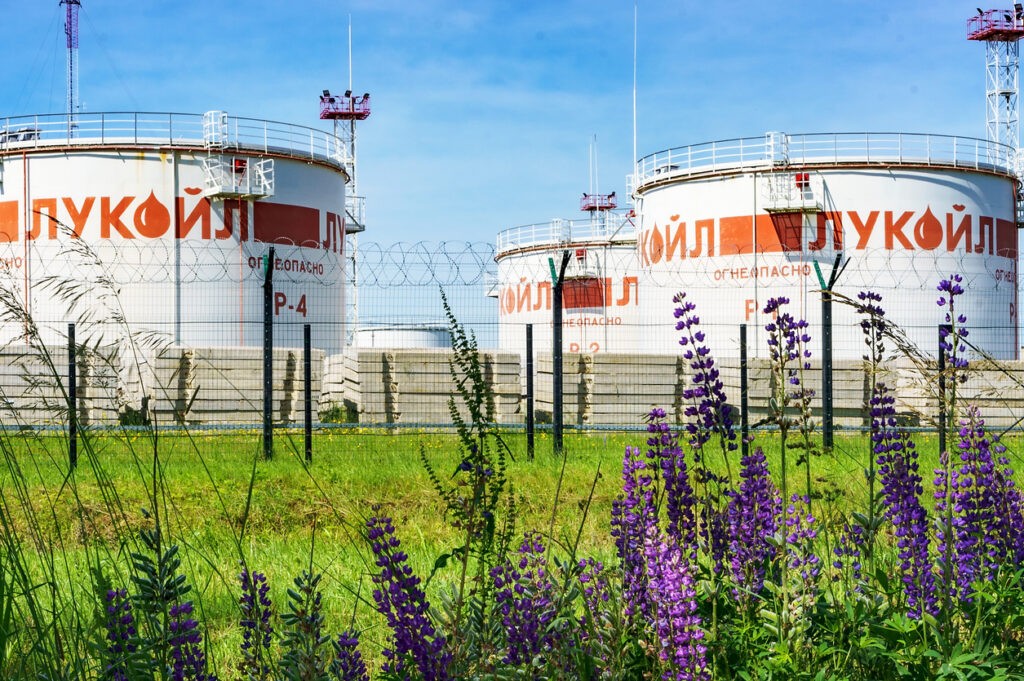
The Committee for the Development of Competition and Consumer Protection of Uzbekistan has initiated a case against Lukoil Overseas Supply and Trading Ltd, a subsidiary of Russia's Lukoil, the Committee's press service has reported. The Committee's staff state that they identified signs of the manipulation of the price of technical sulfur by Lukoil in their selling of products through exchange trading. As a result, the price of technical sulfur rose between 10 to 50%, meaning the company violated the law "on competition." Additional information will be made available once the Committee reaches a decision on how it will proceed. Lukoil Overseas Supply and Trading Ltd was established in April 2010 as part of a marketing campaign for the sale of joint products during the implementation of production sharing agreements in respect to several gas fields. It entered the exchange-trade market for technical sulfur in Uzbekistan in 2015. Today, the company and Uzbekneftegaz dominate the technical sulfur market.

Drop in Uzbekistan’s Gold Sales

 In April, Uzbekistan's sales of gold dropped significantly, according to data published by the World Gold Council (WGC). In the same month,  the total gold reserves held by the world’s central banks increased by 33 tons and volumes of purchases and sales amounted 36 tons and 3 tons respectively. The most active buyers of precious metals during the reporting period were the Central Banks of Turkey (8 tons), Kazakhstan (6 tons), and India (6 tons). Meanwhile,  the Central Bank of China greatly reduced its gold purchases , while increasing its reserves by 2 tons to 2,264 tons; the lowest figure since November 2022. A significant decrease in precious metal sales occurred at the expense of Uzbekistan and Jordan, whose reserves decreased by only 1 ton. In May, the world central banks' reserves  increased by 10 tons, the volume of purchases was 23 tons, and that of sales, totalled 12 tons. During that month, Kazakhstan took the lead in sales of 10 tons of gold. A previous report, posted by the TCA, provided data for Uzbekistan’s gold exports in February and March.

SCO Summit: Eurasian Alliance Signs Security Agreements; Welcomes Belarus

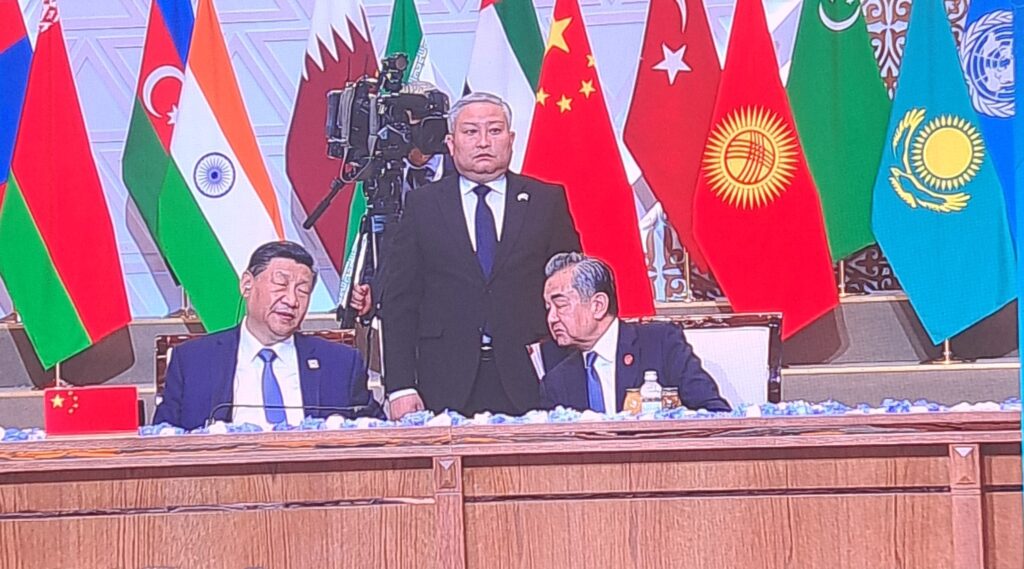
By Jonathan Campion, reporting from the SCO Summit in Astana   At the Shanghai Cooperation Organization (SCO) Summit in Astana this morning, leaders from the bloc’s member states signed a host of agreements intended to promote cohesion in the Eurasia region. The first session, which was held behind closed doors, had begun with the signing of the document that accepted Belarus as the SCO’s 10th full member. The SCO is a political, security and economic alliance, of which Kazakhstan, Kyrgyzstan, Tajikistan and Uzbekistan are founding members. The group also includes China, Russia, Iran, India, Pakistan, and now Belarus. The organization has four observer states and 14 dialogue partners, covering half of the world’s population, and almost a third of global GDP.  The first agreement signed was a document outlining the Shanghai Cooperation Organization’s development strategy for the next 12 months. In 2025 Kazakhstan will pass chairmanship of the alliance to China, and there is speculation that the SCO may grow further next year, to include at least one new member. With security a growing concern for members, particularly in light of the March terrorist attack outside Moscow, for which the terror group Islamic State Khorasan Province (ISIS-K) have claimed responsibility, leaders approved the SCO’s latest three-year Cooperation Program to counter terrorism, separatism and extremism. The parties also signed an agreement on the organization’s regional anti-drug strategy. Another high-profile document is the SCO’s development strategy for cooperation in the energy sphere. Kazakhstan is at the forefront of the region’s transition to green energy, with Chinese leader Xi Jinping mentioning the country’s new Zhanatas wind farm and the Turgusun hydropower station as key joint projects with China in an article published in the Kazakh press this week. The heads of state were welcomed to the Summit by Kazakh President Kassym-Jomart Tokayev, with his Russian counterpart Vladimir Putin, Aleksandr Lukashenko of Belarus and Chinese leader Xi Jinping the last to arrive, ten minutes after the other dignitaries. Some leaders did not arrive at all: India’s Narendra Modi is not attending this year’s SCO Summit, and has sent the country’s external affairs minister Subrahmanyam Jaishankar in his place.  The Summit's afternoon session is styled as "SCO Plus". In attendance are the heads of state of the alliance's dialogue partners, including the presidents of Turkey and Azerbaijan, Recep Tayyip Erdogan and Ilham Aliyev. Turkmenistan – which is not affiliated to the SCO but which is invited as a guest – is led not by its President Serdar Berdimuhamedov, but by his father Gurbanguly Berdimuhamedov, the former leader who is now the chairman of the country’s People’s Council.