• KGS/USD = 0.01144 0%
  • KZT/USD = 0.00210 0%
  • TJS/USD = 0.10528 0%
  • UZS/USD = 0.00008 0%
  • TMT/USD = 0.28571 0%
  • KGS/USD = 0.01144 0%
  • KZT/USD = 0.00210 0%
  • TJS/USD = 0.10528 0%
  • UZS/USD = 0.00008 0%
  • TMT/USD = 0.28571 0%
  • KGS/USD = 0.01144 0%
  • KZT/USD = 0.00210 0%
  • TJS/USD = 0.10528 0%
  • UZS/USD = 0.00008 0%
  • TMT/USD = 0.28571 0%
  • KGS/USD = 0.01144 0%
  • KZT/USD = 0.00210 0%
  • TJS/USD = 0.10528 0%
  • UZS/USD = 0.00008 0%
  • TMT/USD = 0.28571 0%
  • KGS/USD = 0.01144 0%
  • KZT/USD = 0.00210 0%
  • TJS/USD = 0.10528 0%
  • UZS/USD = 0.00008 0%
  • TMT/USD = 0.28571 0%
  • KGS/USD = 0.01144 0%
  • KZT/USD = 0.00210 0%
  • TJS/USD = 0.10528 0%
  • UZS/USD = 0.00008 0%
  • TMT/USD = 0.28571 0%
  • KGS/USD = 0.01144 0%
  • KZT/USD = 0.00210 0%
  • TJS/USD = 0.10528 0%
  • UZS/USD = 0.00008 0%
  • TMT/USD = 0.28571 0%
  • KGS/USD = 0.01144 0%
  • KZT/USD = 0.00210 0%
  • TJS/USD = 0.10528 0%
  • UZS/USD = 0.00008 0%
  • TMT/USD = 0.28571 0%

Viewing results 169 - 174 of 326

EU to Allocate €600,000 to Uzbekistan for Green Budgeting

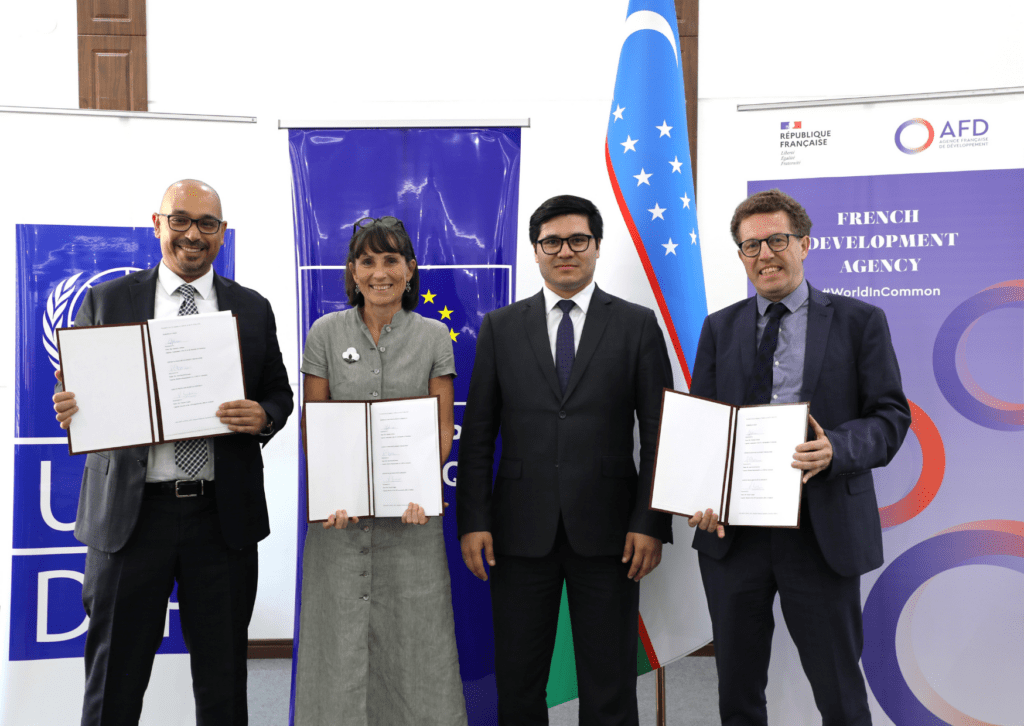
An agreement on financing a new project in support of green development in Uzbekistan was signed on May 6 by representatives of the French Development Agency (AFD), the European Union, and the United Nations Development Program (UNDP). According to the UNDP's press service, the project aims to assist the Uzbek government in financing green development across the country through the effective use of public finance, integrating green priorities into the budgeting process (green budgeting), and introducing innovative financial instruments to attract investments in green projects. The Ministry of Economy and Finance is expected to act as the cabinet-level partner in this project. Under the agreement, grant funds in the amount of €600,000 provided by the EU will be directed by AFD and the UNDP to provide technical assistance to the government under the project "Supporting Green Development Financing in Uzbekistan" for the period 2024-2026. The new project will build on the results and achievements of the previous joint initiative by AFD and the UNDP to introduce budgeting methodologies and practices based on the Sustainable Development Goals (SDGs), which were successfully implemented in 2022-2023. At that time, the Ministry of Economy and Finance was supported in designing and developing methodologies based on international best practices, conducting research and capacity building of national partners in the field of SDGs and green budgeting. Key results of that project included climate budget labeling -- implemented for the first time in Uzbekistan -- and the presentation of its results in the "Budget for Citizens" publication.
Favorable Water Volumes Forecast for Uzbekistan’s Amu Darya and Syr Darya Rivers

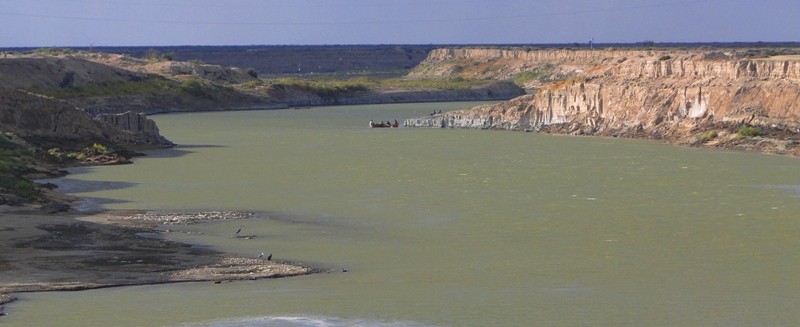
 According to the news agency UzA, Uzbekistan's Minister of Water Management Shavkat Hamroyev told a parliamentary hearing that watersheds from the Amu Darya and Syr Darya rivers are forecast as favorable this year. The announcement was made in response to Muqaddas Tirkasheva, a member of the lower house of parliament, who inquired, "water limits are agreed with Central Asian countries every year. Today, when we meet with voters, they often refer to the water shortage. There are concerns about whether the construction of the Qosh Tepa canal will affect the water of Amu Darya. How does this year's forecast volume of water in the Amu Darya, Syr Darya, Zarafshan rivers  compare to previous years? What measures are being taken to ensure guaranteed water supply to economic sectors?” Minister Hamroyev continued, "there are agreements among five countries regarding water allocations. Our recent meeting in Shymkent addressed reservoir water levels. Due to this year's precipitation, it's anticipated that water levels in the Amu Darya and Syr Darya rivers will match last year's levels. Projections suggest 85–90% water in the Syr Darya and 90–95% in the Amu Darya compared to historical averages. Our reservoirs currently hold 1.5 billion cubic meters more water than last year."

Tashkent Investment Forum Focus on Kyrgyzstan’s Kambarata HPP-1

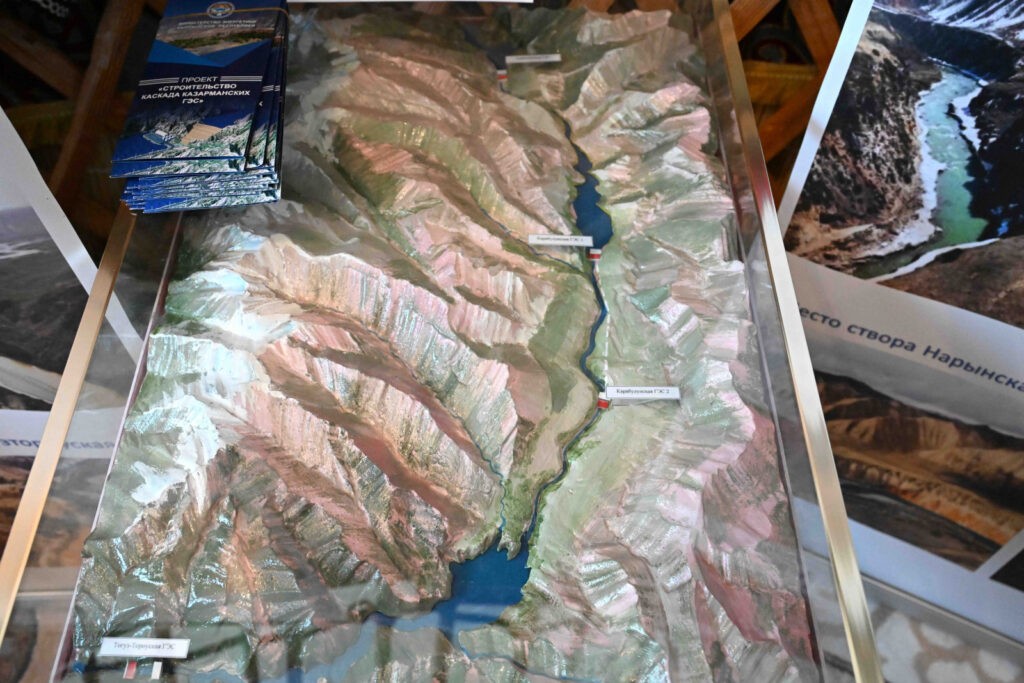
The construction of the Kambarata hydroelectric power plant (HPP)-1 on Kyrgyzstan’s Naryn River was at the forefront at the Third Tashkent International Investment Forum attended by Uzbekistan’s Prime Minister Abdulla Aripov and representatives of international organizations and financial institutions. At the panel session on energy, on 2 May, Chairman of the Cabinet of Ministers of the Kyrgyz Republic Akylbek Japarov, outlined the master plan behind Kambarata HPP-1, investment indicators,  and its potential benefits to water resources management and Central Asia’s electricity market. Japarov explained that generated by hydropower, almost all electricity in Kyrgyzstan is green, but stated, “We have so far used only about 13% of our existing potential. Taking into account global challenges and trends in the development of green energy, the Cabinet of Ministers of the Kyrgyz Republic has actively begun to implement infrastructure energy projects. The large-scale construction of Kambarata HPP-1, strategically important for the entire region, will up the pace of development in this field.” Kyrgyzstan, Kazakhstan, and Uzbekistan recently signed a Roadmap for joint construction of Kambarata HPP-1. If completed, Kambarata HPP-1 will have a capacity of 1860 MW and will generate 5.6 billion kWh of electricity per year. A forum for further discussions on foreign investment in the project is scheduled for early June in Vienna . Turning to plans for hydroelectric power plants elsewhere in the country, Kyrgyzstan’s Prime Minister, stated, “Work is underway to implement projects for the construction of a cascade of hydroelectric power plants on the Chatkal River, as well as a cascade of Kazarman hydroelectric power plants on the Naryn River. Our country needs foreign investment to develop energy, which is the main sector of the economy. We invite foreign companies to consider the possibility of participating in the construction of small and medium-sized hydroelectric power stations and renewable energy sources in Kyrgyzstan.”    

EU and FAO Aid Uzbekistan’s Management of Hazardous Chemicals

On 1 May, the Food and Agriculture Organization of the United Nations (FAO) and the Ministry of Ecology, Environmental Protection and Climate Change of Uzbekistan held an inception workshop in Tashkent on technical assistance for the sound management of hazardous chemicals. The joint venture, implemented with financial support from the European Union, is designed to enhance the effectiveness of mechanisms and tools for the management of hazardous chemicals and related waste. A key goal cited by the EU Delegation to Uzbekistan, is to reduce the use of dangerous pesticides in agriculture, through the introduction and promotion of alternative methodologies amongst farmers. Aziz Abdukhakimov, Minister of Ecology, Environmental Protection and Climate Change, stressed that by actively striving to reduce the use of highly hazardous pesticides, Uzbekistan aims to lower their adverse impact on the nation’s health and environment, in addition to making a significant contribution to  UN Sustainable Development Goals. Regarding plans to address the issue, he  announced, “We need to revise our inventory of contaminated areas of former agricultural airfields and other sites, the last of which, was carried out in the ‘90s when more than 450 former agricultural airfields were identified.” Praising the move, Wim Riepma, Head of Cooperation Section, EU Delegation to Uzbekistan, stated: "Our partnership with the Government of Uzbekistan and FAO exemplifies a collective commitment to protecting the environment and public health, by cleaning up legacy waste, by improving waste management, and by reducing pesticide waste production. Integrated pest management and awareness of health and environmental risks are key to a healthier, environment- friendly and economically viable agriculture sector.” Sherzod Umarov, Assistant FAO Representative in Uzbekistan, likewise emphasized, "The project implementation will enable an improved institutional capacity for sound pesticide management and better data on hazardous wastes in agriculture allowing development of a national waste management strategy. The project also aims to scale up green practices in the agricultural sector leading to reduced risks to farmers and consumers from the use of pesticides and to food production relying on less toxic pesticides and biological protection tools.”  

Azerbaijan, Kazakhstan and Uzbekistan to Export Green Power to Europe

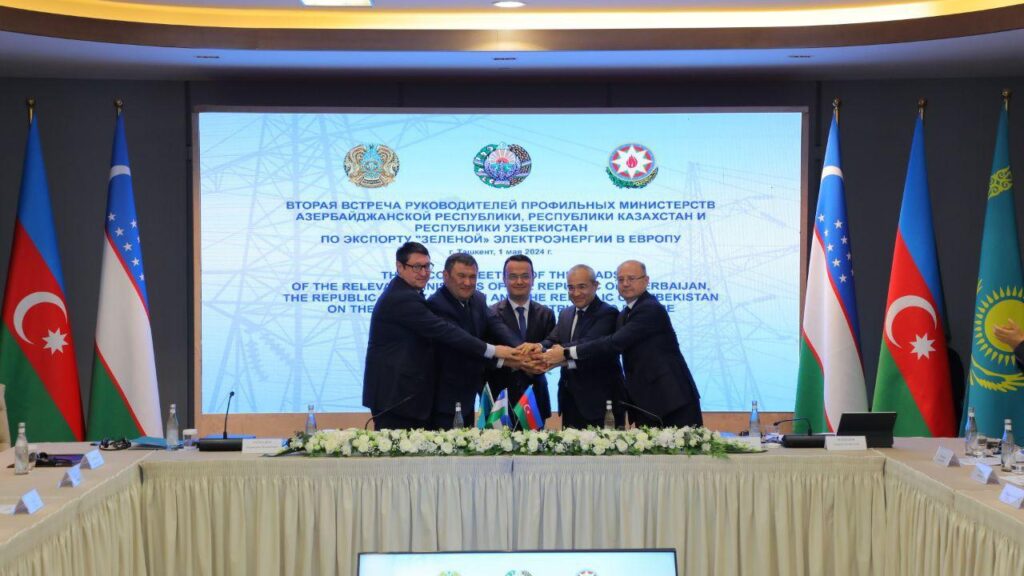
On 1 May , Azerbaijan, Kazakhstan, and Uzbekistan’s ministers of energy gathered in Tashkent to sign a memorandum of cooperation aimed at connecting their countries’ energy systems. The focus of the initiative is to explore means of connecting energy systems via a high-voltage cable embedded in the Caspian Sea to enable further export of green energy from Azerbaijan, Kazakhstan, and Uzbekistan to European Union countries. Referencing the parties’ earlier draft technical specification for the deep-sea cable, Kazakhstan’s Minister of Energy Almasadam Satkaliev stated, “A proposed business model will be prepared for the development of international transmission corridors - financing, revenue, ownership - and the sale of green energy to European Union countries.” Meanwhile, Asiaplustj.info reports that Tajikistan is still not being envisioned as a part of the system. As that publication notes, Uzbekistan's energy system currently operates in parallel with the energy systems of Kyrgyzstan and Kazakhstan within the framework of the United Energy System of Central Asia (UES CA), which was created under the Soviet Union. This system was abandoned by Turkmenistan in 2003 because Uzbekistan refused to allow transit of Turkmen-produced electricity through its infrastructure. "In November 2009, after a major accident in Tajikistan's energy system, Uzbekistan unilaterally left the UES CA, which automatically left Tajikistan out of this system as well. In 2018, Uzbekistan restored parallel operation within the regional system. Since 2019, with financial support from the Asian Development Bank, work has been underway to bring Tajikistan back into the unified energy ring of Central Asia. The Ministry of Energy of Tajikistan last summer reported on its intentions... to join the regional system by the end of 2023. but this has not happened so far," the report noted.  

EU Gives Uzbekistan’s Agriculture Another Boost

On April 25 the European Union presented €6 million ($6.4 million) to the Uzbek government to support the country's National Food Security and Healthy Nutrition Strategy. Alongside the grant the EU has also provided funds to help the Ministry of Agriculture to carry out its planning reforms. Further funding of €20 million ($21.4 million) will be issued later this year and next, in support of Uzbekistan's National Agriculture Development Strategy for 2020-2030. The overall objective is the establishment of more market-orientated and sustainable agriculture and food sectors, and subsequently, the creation of more jobs and better access to safe and nutritious food for people in Uzbekistan. “The agri-food sector is critical for Uzbekistan’s economy and is a major source of employment,” commented the EU's ambassador to Uzbekistan Charlotte Adriaen. “Family-run or ‘dekhan’ farms produce most of the meat and vegetables consumed by Uzbek citizens. Our focus is therefore on those reforms that enable these farms to prosper, adapt to a changing climate, protect the environment, produce healthy food, and become part of local and global value chains. The grant funding together with other European Union initiatives such as GSP+ will also help to boost exports to the EU.” The European Union is Uzbekistan’s main funder of developments in the agriculture and food sectors. Between 2020-2023 it provided grants totaling €32.5 million ($35 million).