• KGS/USD = 0.01144 0%
  • KZT/USD = 0.00216 0%
  • TJS/USD = 0.10659 0%
  • UZS/USD = 0.00008 0%
  • TMT/USD = 0.28530 0%
  • KGS/USD = 0.01144 0%
  • KZT/USD = 0.00216 0%
  • TJS/USD = 0.10659 0%
  • UZS/USD = 0.00008 0%
  • TMT/USD = 0.28530 0%
  • KGS/USD = 0.01144 0%
  • KZT/USD = 0.00216 0%
  • TJS/USD = 0.10659 0%
  • UZS/USD = 0.00008 0%
  • TMT/USD = 0.28530 0%
  • KGS/USD = 0.01144 0%
  • KZT/USD = 0.00216 0%
  • TJS/USD = 0.10659 0%
  • UZS/USD = 0.00008 0%
  • TMT/USD = 0.28530 0%
  • KGS/USD = 0.01144 0%
  • KZT/USD = 0.00216 0%
  • TJS/USD = 0.10659 0%
  • UZS/USD = 0.00008 0%
  • TMT/USD = 0.28530 0%
  • KGS/USD = 0.01144 0%
  • KZT/USD = 0.00216 0%
  • TJS/USD = 0.10659 0%
  • UZS/USD = 0.00008 0%
  • TMT/USD = 0.28530 0%
  • KGS/USD = 0.01144 0%
  • KZT/USD = 0.00216 0%
  • TJS/USD = 0.10659 0%
  • UZS/USD = 0.00008 0%
  • TMT/USD = 0.28530 0%
  • KGS/USD = 0.01144 0%
  • KZT/USD = 0.00216 0%
  • TJS/USD = 0.10659 0%
  • UZS/USD = 0.00008 0%
  • TMT/USD = 0.28530 0%

Viewing results 241 - 246 of 371

Ministry Looks to Tackle Air Pollution in Tashkent Amid Flash Mob Protest

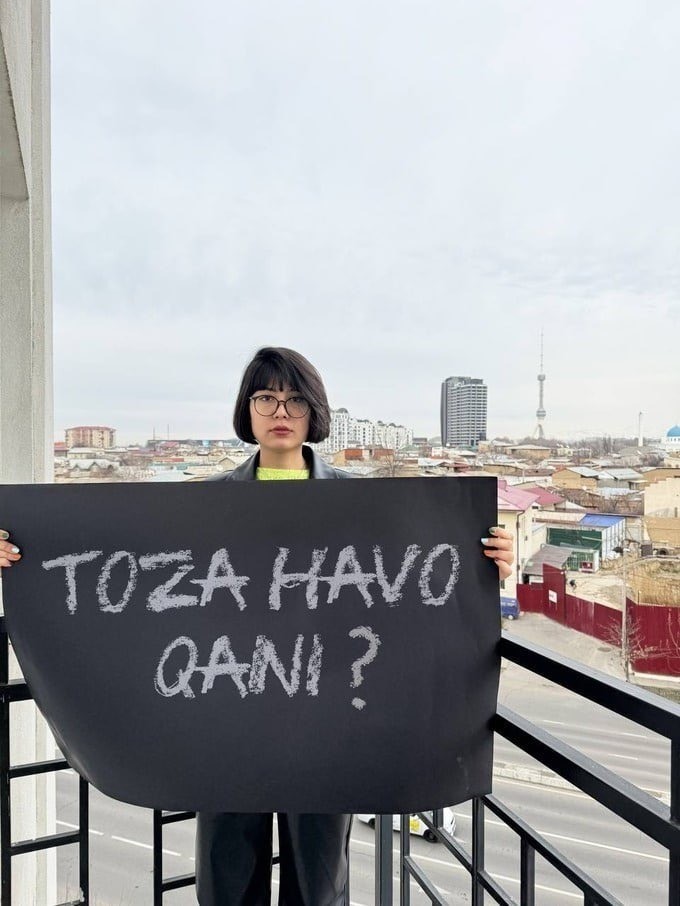
Uzbekistan’s capital, Tashkent, has long been ranked among the worst cities in the world with the highest levels of air pollution by the international service, IQAir. In 2022, the portal ranked Tashkent as the worst in the world in terms of air pollution based on data from Uzhydromet (State Hydrometeorological Service). Tashkent is particularly prone to fine particles of PM-2.5, which is the most dangerous indicator for health, according to the World Health Organization. On January 12th, the Ministry of Ecology, Environmental Protection and Climate Change of Uzbekistan stated that increasing levels of air pollution in Tashkent are caused by emissions from coal-burning heat and power plants, and from motor vehicles. The levels of air pollution are also due to the illegal felling of 49,000 trees and construction work being carried out without planning permission. Another contributing factor is an increase in the amount of pollutants being emitted by vehicles, the number of which is growing rapidly. In 2021, there were 3.14 million cars, but by 2023 there were 4.6 million, an increase of 32%. On average, 730,000 vehicles are on the move in Tashkent every day, with between 160,000 to 300,000 entering the capital from the regions. Cars using A-80 gasoline, which does not meet international standards, emit more harmful substances into the atmosphere. The burning of coal to generate electricity is also on the rise. In 2019, 3.9 million tons of coal were used; by 2022, this had increased to 5.3 million tons, and by the end of 2023 it was 6.7 million tons, the ministry stated. The levels of air pollution are also due to the fact that Tashkent is located is surrounded by mountains, meaning the wind cannot circulate, and the polluted air is not blown away. In order to reduce air pollution in Tashkent, the ministry proposed the following measures: – a ban on motor fuel below the Euro-4 standard (AI-80 gasoline); – a restriction on the movement of cargo vehicles in Tashkent weighing more than 3.5- and 12-tons during rush hour (from 07:00 to 10:00 and from 17:00 to 20:00); – a ban on vehicles manufactured before 2010; - providing preferential treatment and subsidies to owners of electric vehicles; – a scheme to reduce congestion wherein vehicles with odd number plates are allowed to drive on odd days, and those with even numbers on even days; – pedestrianized zones in the center of the city; – the transfer of public transport to the use of electric and gas-cylinder fuel; – a moratorium on construction except for facilities of social and state significance; – a ban in the Tashkent region on the use of coal for industrial purposes; – the creation of a “green belt” around the city. Meanwhile, on the same day, activists in Tashkent staged a flash mob to protest about the state of affairs. Among those fighting for the right to life and health were eco-blogger, Mutabar Khushvaktova (Urikguli), the singer, Konsta, stand-up comedian, Mirshakar Faizullaev, bloggers Umid Gafurov and Mirzayor Erkinov,...

Uzbekistan to Boost Development in Karakalpakstan

On January 10th, the President of Uzbekistan, Shavkat Mirziyoyev held a government meeting on the socioeconomic development of the Republic of Karakalpakstan, an impoverished autonomous region in the northwest of the country. In recent years, Karakalpakstan has made headlines as a politically volatile area which saw deadly unrest break out in July 2022. The region has also suffered acutely from the consequences of the Aral Sea ecological disaster. At the meeting, it was stated that over the past seven years, Karakalpakstan has undergone unprecedented changes. Twelve of the autonomous republic’s fifteen districts were formerly subsidized by the central government, but now they have begun to bring in revenues to the state budget. More than 5,300 projects have been implemented through investment. Forest plantations covering 1.8 million hectares have been sown on the desiccated bed of the former Aral Sea, and living conditions for 51,000 families have been improved. In Karakalpakstan, there are incentives and opportunities for doing business which are not available in any other parts of Uzbekistan - taxes on profit, turnover, land and property have all been lowered twofold, and social tax has been set at 1%. Over the past two years, seven decrees and resolutions have been adopted on the development of industry, agriculture, entrepreneurship, and the improvement of the infrastructure in mahallas (local neighborhoods) in Karakalpakstan, with a total of $400 million and 250 billion Uzbek som have been allocated for these purposes. Today, the population of Karakalpakstan exceeds two million, and every year 50,000 citizens enter the region’s labor market. At the meeting, the President emphasized the need to train them in modern professions, and provide them with gainful employment and decent conditions. In 2024, the government plans to attract $2.1 billion in foreign investment to the region. This injection of funds will help implement 206 projects in industry, 240 in the services sector, and 34 in agriculture, creating 13,000 jobs. The head of state pointed out that tourism can become a driver of economic growth in Karakalpakstan, and set the task of developing a program to kick-start tourism in the region, with a focus on environmental, ethnographic, and pilgrimage destinations. The establishment of a tourism cluster and attracting foreign experts to the local tourist industry were also discussed.

Uzbekistan and China: Cooperation in Ecology

A meeting was held at the Ministry of Ecology, Environmental Protection and Climate Change to discuss the prospects of cooperation and strategic partnership between China and Uzbekistan in the field of ecology and environmental protection. Important issues, including a number of promising projects based on the idea of constructing buildings that meet the principles of energy efficiency and environmental cleanliness were deliberated upon. In addition, the active introduction of green technologies and the development of strategies to recycle household and solid waste, including the recycling of batteries and the prevention of air pollution were proposed. Such projects are oriented towards the creation of a sustainable and environmentally friendly infrastructure, and reducing the negative impact on the climate. The meeting also focused on the establishment of global environmental standards, the widespread use of digital technologies, and studying China's experience in the field of ecology and creating mechanisms for environmental protection. At the meeting, China's best practices in the greening of barren desert areas was discussed. China is successfully implementing innovative methods, including the creation of specialized farms for planting seedlings. Measures to attract investors to implement the latest technologies in the systematic treatment of urban wastewater was also on the agenda. The Ministry of Environment and Natural Resources provided valuable information on the activities the government is actively pursuing to ensure the sustainable development of various sectors, including important work on environmental protection. In addition, the parties discussed the establishment of a national taxonomy of green projects and the establishment of a Green Fund. As a result of the meeting, the parties agreed to hold additional negotiations on these issues, emphasizing their intent and commitment to find the best solutions available.

Uzbekistan: Successful Reforms in Environmental Protection and Waste Management

Uzbekistan is carrying out consistent and effective reforms in the field of waste management, improving the quality of services provided to the population and combating environmental pollution. The Decree of the President “On measures to improve the waste management system and reduce its negative impact on the environmental situation” is a significant step that will become the starting point for a new stage of development in this area, Minister of Ecology, Environmental Protection and Climate Change, Aziz Abdukhakimov emphasized. “The main goal is to further improve the quality of household waste management services, bringing the level to international standards, increasing the level of waste processing, preventing accumulation in landfills, minimizing the negative impact on the environment, achieving the ‘zero waste’ principle and other tasks. This decree is very important today, when environmental problems associated with climate change are escalating," he stated. According to the decree, a number of measures will be taken to further improve waste management and prevent environmental pollution. In particular, as part of the integrated Safe City system, the detection of environmental violations using cameras will be introduced. Entrepreneurs will be given the right to photograph and video record environmental violations and be able to report this to the state environmental control inspectorate in a manner similar to the right to identify violations of traffic rules. Citizens will have the opportunity to independently install photographic and video recording equipment at the sites of spontaneous landfills at their own expense. Reports of violations will be encouraged with a reward of 20% of any fine levied. From the beginning of 2024, minimum tariffs for waste collection will be regularly reviewed, and services will be combined into a single system. It is expected that there will be a substantial increase in liability for violating the rules on the dumping of waste, with the possibility of confiscation of items and devices used to carry out such violations written into the measures. The document also establishes administrative responsibility for the use of chemical, biological and bacteriological agents during the construction or reconstruction of buildings which leads to damage to the environment. In order to improve sanitary and hygienic conditions for residents, increase the attractiveness of tourist areas and reduce the negative impact on the environment, entrepreneurs will be allowed to install sanitary and hygiene points in public places, social buildings, and specially designated areas. The distribution of permits for the installation of such points will be carried out through electronic auctions. Entrepreneurs who process or dispose of waste in an environmentally friendly way will be allocated “green subsidies.”

New Multi-Story Buildings in Uzbekistan Now Have to Install Solar Panels

According to the law, there is now a requirement to install solar panels on at least 50% of the free part of roofs of new multi-story buildings, the Ministry of Energy of Uzbekistan has stated. The government recently announced a program to encourage the installation of low-power solar panels (up to 50 kW) in households in the regions of the nation. The program provides subsidies to citizens for electrical energy produced by their solar panels. In addition, persons who have installed renewable energy sources are also exempt from land and property tax on plots occupied by such renewable energy devices. In recent years, Uzbekistan has experienced increasing electricity shortages, especially in the cold winter months, against the background of the country’s growing population and depleting natural gas reserves. This has prompted the government to embark on a large-scale program to introduce wind and solar power plants. In 2024, Uzbekistan plans to increase the total capacity of solar power plants to 2.6 gigawatts, wind farms to 900 megawatts, and launch energy storage devices with a capacity of 400 megawatts.

Illegally Captured Migratory Birds Set Free

The Department of Ecology in Tashkent's Ohangaron district uncovered the illegal capture of eleven migratory birds. The investigation revealed that individuals had engaged in unlawful bird hunting within the Geolog mahalla area of the Ohangaran district. Subsequent inquiries led to the identification of the perpetrators. Each individual involved was issued an administrative protocol under part 1 of Article 90 of the Administrative Code, resulting in a fine of 3.4 million som ($275). Ongoing raids will continue to address such activities.[/vc_column_text][vc_single_image image="13537" img_size="full" el_class="scond-image" parallax_scroll="no" woodmart_inline="no"][vc_column_text woodmart_inline="no" text_larger="no"]Previously, in November, activists highlighted an incident involving the unlawful hunting of a protected bird of prey within mountain reserves. In a message posted on its Telegram channel, the Ekologuz group urged the Committee for Ecology and Environmental Protection of Uzbekistan and the Ministry of Internal Affairs to identify the individuals responsible and provide an official response regarding the situation. The Taskara bird involved in this incident holds a place in Uzbekistan's Red Data Book, signifying its endangered status and the need for stringent conservation measures.