• KGS/USD = 0.01144 0%
  • KZT/USD = 0.00210 0%
  • TJS/USD = 0.10553 0.19%
  • UZS/USD = 0.00008 0%
  • TMT/USD = 0.28530 0%
  • KGS/USD = 0.01144 0%
  • KZT/USD = 0.00210 0%
  • TJS/USD = 0.10553 0.19%
  • UZS/USD = 0.00008 0%
  • TMT/USD = 0.28530 0%
  • KGS/USD = 0.01144 0%
  • KZT/USD = 0.00210 0%
  • TJS/USD = 0.10553 0.19%
  • UZS/USD = 0.00008 0%
  • TMT/USD = 0.28530 0%
  • KGS/USD = 0.01144 0%
  • KZT/USD = 0.00210 0%
  • TJS/USD = 0.10553 0.19%
  • UZS/USD = 0.00008 0%
  • TMT/USD = 0.28530 0%
  • KGS/USD = 0.01144 0%
  • KZT/USD = 0.00210 0%
  • TJS/USD = 0.10553 0.19%
  • UZS/USD = 0.00008 0%
  • TMT/USD = 0.28530 0%
  • KGS/USD = 0.01144 0%
  • KZT/USD = 0.00210 0%
  • TJS/USD = 0.10553 0.19%
  • UZS/USD = 0.00008 0%
  • TMT/USD = 0.28530 0%
  • KGS/USD = 0.01144 0%
  • KZT/USD = 0.00210 0%
  • TJS/USD = 0.10553 0.19%
  • UZS/USD = 0.00008 0%
  • TMT/USD = 0.28530 0%
  • KGS/USD = 0.01144 0%
  • KZT/USD = 0.00210 0%
  • TJS/USD = 0.10553 0.19%
  • UZS/USD = 0.00008 0%
  • TMT/USD = 0.28530 0%

Viewing results 625 - 630 of 1166

SCO Summit in Astana: Correspondents from China Global Television Network, Times of Central Asia Discuss Upcoming Meeting

National leaders and other dignitaries from over 20 countries will be in the Kazakh capital of Astana this week for the annual summit of the Shanghai Cooperation Organization (SCO). The Times of Central Asia will be covering the SCO Summit live on 3 and 4 July from the city’s Palace of Peace and Reconciliation. The SCO is a political, security and economic alliance in the wider Eurasia region. This year’s Summit host Kazakhstan was a founding member of the Organization in 2001, alongside China and Russia, and its Central Asian neighbors Kyrgyzstan, Tajikistan and Uzbekistan. The last time the Summit was held in Astana, in 2017, India and Pakistan became full members. There are currently nine full member states, four observer states, and 14 dialogue partners, covering half of the world’s population, and almost a third of global GDP. This year's Summit will have significant implications for regional and global affairs. It is likely to produce initiatives aimed at reducing trade barriers, and promoting investments between SCO member states. High on the agenda will be the Belt and Road Initiative (BRI) – a crucial framework for enhancing connectivity and economic ties between China and its Central Asian partners. Other anticipated outcomes include new initiatives on climate change and sustainable development, as well as strengthened cultural and educational exchanges. Upon the initiative of Kazakhstan’s President Kassym-Jomart Tokayev, 2024 has been named the SCO “Year of Ecology”. Ahead of the Astana Summit, The Times of Central Asia’s senior editor Jonathan Campion spoke with an anchor from China Global Television Network, Mr Zhong Shi, about the role of the Shanghai Cooperation Organization plays in the Central Asia region. Their talk can be viewed in full in the videos below. In response to The Times of Central Asia’s question about what makes the SCO different from other alliances that the countries of Central Asia are aligned with, Mr Zhong explained that: “The SCO has been truly effective in combatting what we call the three enemies of all members, namely terrorism, extremism and separatism. There have been joint military drills conducted to enhance the coordination among armed forces”. Listen to Mr Zhong’s full response below: [video width="1920" height="1080" mp4="https://timesca.com/wp-content/uploads/2024/06/fullscreen-Zhong-Shi-answer-2-questions.mp4"][/video]   [video width="1920" height="1080" mp4="https://timesca.com/wp-content/uploads/2024/06/tw0-windows-Zhong-Shi-answer-2-questions.mp4"][/video] In turn, Mr Campion gave The Times of Central Asia’s perspective on the upcoming Summit. Asked about the impact that the Belt and Road Initiative has had on Central Asia, he replied: "Central Asia is evolving as a land bridge component to the Belt and Road Initiative linking China to the Caspian Sea. We’re seeing that investments in transport infrastructure are unlocking the region’s vast natural resources. With the world making a green transition, Kazakhstan stands out, as it has an abundance of critical materials – or green metals as they are known – that are used in the components of green technologies.” Listen to Mr Campion’s full response below: [video width="1920" height="1080" mp4="https://timesca.com/wp-content/uploads/2024/06/Jonathon-answer-Q2.mp4"][/video]   [video width="1920" height="1080" mp4="https://timesca.com/wp-content/uploads/2024/06/Jonathon-answer-Q3.mp4"][/video]  
Uzbekistan: Deaf Photographers Document the World Around Them

The assignment for the Uzbek deaf photographers’ workshop: cover a game of kupkari, in which horse-riders jostle for a goat carcass and hustle it to a goal amid shouting, shoving and swirling dust. It didn’t go well for student Murod Yusupov, who arrived late at the event in Piskent, in the Tashkent region, and then struggled to orient himself in the boisterous crowds watching the maelstrom on the field. [caption id="attachment_19449" align="aligncenter" width="599"] Crowds watch a game of kupkari, a traditional sport in Uzbekistan (Photo: Khuvaido Fatihojayeva)[/caption] “Unfortunately, I was a little late, and I had to stay among the fans. Communication with the teacher and participants was almost non-existent. But it was a big problem to take pictures there, there were too many people who came to watch the kupkari, I didn’t have enough experience to find a convenient place and opportunity to take pictures,” Yusupov said through a sign language interpreter in an interview with The Times of Central Asia. He learned from the experience, though. With the help of workshop director Husniddin Ato, 21-year-old Yusupov got accredited for the Asian Weightlifting Championships in Tashkent in February and delivered strong images. Best of all, he enjoyed the assignment. [caption id="attachment_19450" align="aligncenter" width="615"] Uzbek athlete performs during the Asian Weightlifting Championships in Tashkent in February. (Photo: Murod Yusupov)[/caption] --- One recent evening, at the Bon Cafe in Tashkent, Ato, Yusupov and several other participants in the “Deaf Photographers” workshop talked about their experiences and hopes to a correspondent from The Times of Central Asia. Ma’mur Akhlidinov, a sign language teacher at the University of Uzbek Language and Literature who is also deaf, helped to interpret. Cups of sea buckthorn tea were served during a conversation lasting two and a half hours. The deaf photographers were upbeat, often smiling, communicating with each other through hand gestures and showing photos on their phones to each other. --- A decade ago, Ato, a professional photographer, wanted to report on deaf people. Then he decided to let deaf people show in pictures how they feel about the world. While in quarantine during the pandemic, he consulted Akhlidinov, a member of the Deaf Society of Uzbekistan. For many years, Akhlidinov worked as a designer in the editorial office of Ma’rifat, an Uzbek publication, and as the editor-in-chief of the MediaPlus project. Akhlidinov was surprised by the fact that there wasn’t a single internet resource about deaf people and their rights in Uzbekistan. In 2017, he launched a blog for deaf people, their parents and educators. Akhlidinov supported Ato’s proposal for an initial three-month course. and announced the project on the Deaf Society blog, which has more than 1,000 subscribers. An age requirement (18-25) was set for the participants. Nine people signed up. In the fall of 2021, the teaching started. It was slow going at first because of scheduling conflicts and other obstacles. “Later, their interest and enthusiasm wasn’t always there, they didn’t complete their assignments on time, and I had to explain some...

Testing Limits: Marathoners Head For the Shrinking Aral Sea to Run in the Desert

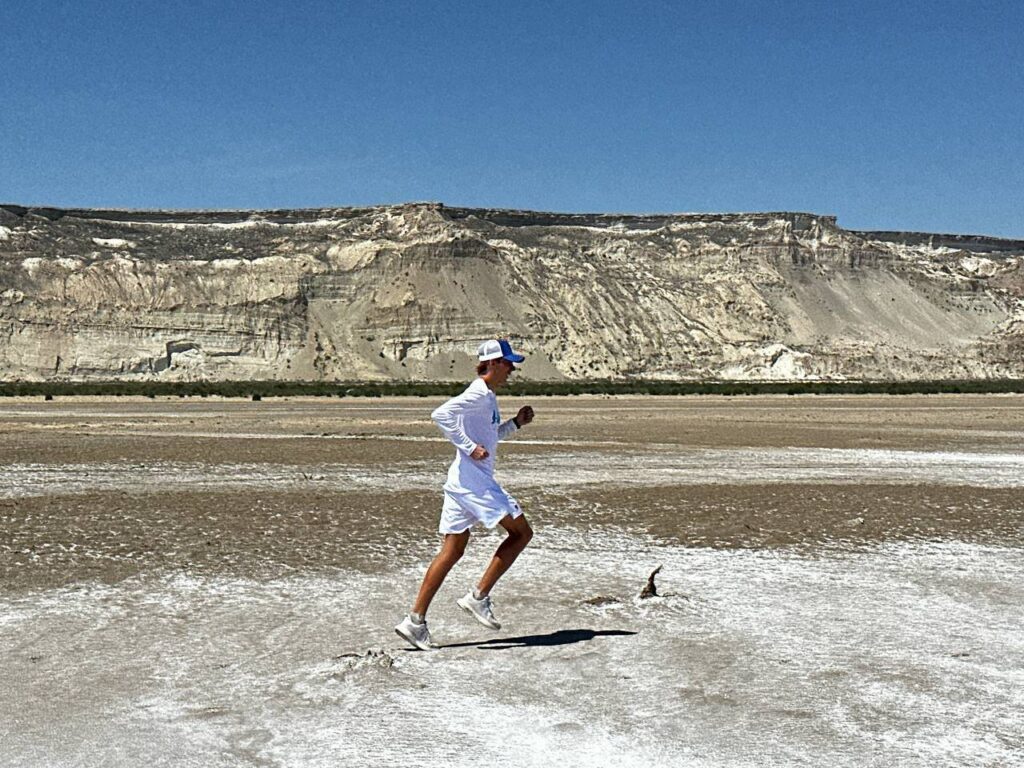
The dry bed of the Aral Sea, a symbol of ecological disaster in Central Asia, will host one of the world’s more extreme marathons on Sunday. Supported by aid stations and medical staff, a small band of athletes will run on sand, gravel and stones, inhaling salty air in scorching temperatures and bracing themselves against strong winds. The Aral Sea Eco Marathon is being held in Karakalpakstan, Uzbekistan and planners aim to draw attention to what was once the fourth biggest saltwater lake and is now about 10 percent of its original size. Race promoters also want to highlight the need for sustainable use of water. The marathon roughly coincides with the United Nations-designated day to combat desertification and drought, which falls on June 17.  Andrey Kulikov, founder of the ProRun running school in Uzbekistan, ran a marathon distance in the area last year with American ultramarathoner Dean Karnazes in 4:51:18. Kulikov planned this year’s event with the help of Aziz Abdukhakimov, Uzbekistan’s minister of ecology, environmental protection and climate change. A limit of 100 runners was set, though far fewer signed up. Still, Kulikov said participants are from countries including Japan, China, France, Pakistan, Kenya, Togo and the Philippines. He hopes to expand the event next year. Uzbek participant Denis Mambetov said in a text interview on Telegram that he is taking part because of “a passion for adventure, for something new and unusual, to test one’s strength, and, of course, to draw the attention of others to an environmental problem of global proportions.” The Aral Sea, which lies between northern Uzbekistan and southern Kazakhstan, began shrinking significantly in the 1960s when water from the rivers that fed it was rerouted for Soviet-led agricultural irrigation. The subsequent emergency of the Aralkum Desert and the sand and dust storms arising from the world’s newest desert have polluted the environment and severely affected health in local communities. There are regional and international efforts to restore the Aral Sea ecosystem, including seed-planting and the implementation of water-saving technologies. The five Central Asian countries - Uzbekistan, Kazakhstan, Kyrgyzstan, Tajikistan and Turkmenistan – formed a group three decades ago, soon after independence from Soviet rule, to address the problem. The gap between goals and results is wide, though the countries are recognizing the wider threat of water scarcity as the planet becomes hotter.  “Colleagues are well aware that the problem of water shortage in Central Asia has become acute and irreversible and will only worsen in the future,” Uzbek President Shavkat Mirziyoyev said at a regional meeting on the Aral Sea last year. “Experts believe that in some regions of Central Asia pressure on water resources will increase three times by 2040. Economic damage could eventually reach 11 percent of regional gross product.” Nurbek Khusanov, who will run the marathon on Sunday,  works at SQB, a top bank in Uzbekistan, and is a leader of its efforts to promote “green” policies that aid the environment. The marathon will “attract more people to the Aral...

Kazakhstan and Uzbekistan: A Partnership Born From Rivalry

Kazakhstan and Uzbekistan are the largest countries in Central Asia in terms of their economy, population, and vital infrastructure. In the first decades after the collapse of the USSR, the two republics visibly competed for regional supremacy, but this situation has changed dramatically. A Test of Sovereignty Uzbeks and Kazakhs are related Turkic peoples who have lived side by side for centuries, and, therefore, have experienced many mutual offenses from each other in their shared history. Perhaps this is the semi-official explanation for the rivalry between Tashkent and Astana during the reigns of the first presidents of these republics - Islam Karimov and Nursultan Nazarbayev. Another explanation for the struggle for leadership in Central Asia between Nazarbayev and Karimov lies in an old Kazakh proverb: "Two heads (of sheep) cannot fit in one pot." The implication is that there cannot be two leaders in one region at this level of multiple countries and personalities. Nazarbayev and Karimov, out of rivalry between the Soviet party nomenklatura, to which they both belonged, could not allow either of the other to rise. In the end, Moscow chose closer relations with Astana, which led to Tashkent withdrawing from the Collective Security Treaty Organization. Kazakh political scientist Maxim Kaznacheev has stated that this happened because Kazakhstan participated in various alliances, whilst Uzbekistan refused to do so, an indication that Tashkent had passed the sovereignty test, to the chagrin of Russia. "The ability of the government to pursue a sovereign policy should be put at the top of the list when determining a real regional leader. Uzbekistan has done better on this exam. Over the past decades, officially Tashkent has relied mainly on bilateral arrangements, avoiding active participation in multilateral integration formations," the political scientist stated. The Devil in the Details Despite these characteristics, Tashkent does not appear to have gained any advantages from this strategy, whether forced or chosen, due to a weak diplomatic corps. However, perhaps an Uzbek renaissance is yet to come. In late 2022, the Eurasian Development Bank published a report, "Central Asia's Economy: A New Look," which analyzed the prospects for interaction between Central Asian countries and the potential for the region to become a significant player in the world's economic map. According to this document, Kazakhstan remains the leading Central Asian economy, with its nominal 2021 GDP of $197.1 billion, 1.3 times the combined volume of the other four countries in the region. The report noted that by the end of 2022, Kazakhstan accounted for almost 60% of the total GDP of Central Asia. At the same time, GDP growth at the end of 2022 amounted to 3.2% compared to an average annual growth rate of 3.9% from 2010-2021. Uzbekistan is the next-largest economy in Central Asia after Kazakhstan, with a GDP of $69.2 billion in 2021, and $80.4 billion by the end of 2022. Although its nominal GDP is far smaller than Kazakhstan's, and its annual growth rate ($11 billion vs. $27 billion) does not seem to threaten Kazakhstan's...

Eurasian Connectivity Comes One Step Closer at the 2024 CAMCA Forum in Bishkek

The wider Eurasia region took another step towards cooperation and connectivity last week, as the 10th annual CAMCA Regional Forum was held in Bishkek. CAMCA – standing for Central Asia, Mongolia, the Caucasus and Afghanistan – is an initiative to accelerate dialogue between governments, private enterprises and media figures from these ten nations. Organized by the Washington, D.C.-based Central Asia-Caucasus Institute and the Rumsfeld Foundation, this year’s Forum – the first such event to take place in Kyrgyzstan – featured over 300 delegates across its two days, and presented insights from over 70 speakers. Attendees came from 25 countries in total. Professor Frederick Starr, the Central Asia-Caucasus Institute’s chairman, used his opening address to call on the countries of the region to start preparing for a future within a cohesive international bloc. Dr Starr reasoned that Russia and China, imperial powers that have traditionally had a controlling presence in Central Asia, may see their global influence wane in the coming decade. This would give the countries of Central Asia, and their neighbors, more space to create projects that serve their economies directly. A leading CAMCA regional project is the ‘Middle Corridor’ trade route, which bypasses Russia to transport goods more efficiently between Europe and China. Discussions are also taking place concerning the creation of single business and tourist visas for the whole Central Asia region. The importance of collaboration between countries in the Caucasus and Central Asia to mitigate the impact of climate change has never been so great. Addresses by senior members of the Kyrgyz government highlighted the progress that Kyrgyzstan has made since the administration of president Sadyr Japarov began its work in 2021. The country’s deputy prime minister Edil Baisalov reported that Kyrgyzstan is on track to double its GDP to $30 billion by 2030, while the minister for digital development, Nuria Kutnaeva, spoke about the rapid digitalization of the country’s government services.  In a noticeably warm and collaborative atmosphere, the event nonetheless highlighted the barriers that prevent the ten countries from forming a tangible ‘CAMCA’ space in the present. A key goal is the harmonization of their legislation and policy directions; however, no delegates from Tajikistan could travel to Bishkek for the Forum, as otherwise solid relations between Tajikistan and Kyrgyzstan are still strained by a dispute over their common border. Likewise, Armenian voices were also absent this time, in light of several of the sessions featuring Azerbaijani speakers and talking points. The event featured only one guest from Turkmenistan.  Even in these conflicts, however, Central Asian diplomacy is at work. The conflict on the Kyrgyz-Tajik border, mainly in Tajikistan’s Vorukh district, is being resolved through negotiations between the two countries’ governments, which would have been unthinkable even five years ago. Meanwhile, Kazakhstan is acting as a mediator between Baku and Yerevan in the aftermath of the war in Nagorno-Karabakh. Other topics on the agenda included security priorities for Central Asia, digital innovation in business, cooperation with Afghanistan, transitions in global energy markets, and infrastructure projects...

Women and Girls in Central Asia in Need of Protection from Violence

 Central Asian Countries are seeing a new wave of violence against women and girls, and the fight against their long-standing powerlessness is just beginning. In 2023, the Women, Peace and Security Index (WPS Index), published by the Georgetown Institute for Women, Peace and Security and the PRIO Centre on Gender, Peace and Security, found Kyrgyzstan and Uzbekistan the most dangerous countries in Central Asia for women. Things were deemed slightly better in Kazakhstan, Tajikistan, and Turkmenistan. The challenges faced by women in the region result from a combination of factors: the low number of women in government and law enforcement, women’s lack of financial independence, especially in rural areas, a distorted understanding of traditions across populations, and a mentality in society that often denies or covers up flagrant cases of injustice.   The law is written in blood: the case of Kazakhstan According to WPS experts, Kazakhstan has progressed further than its neighbors toward equality. Still, according to Kazakhstan’s Ministry of Internal Affairs, 69 women and seven children died in 2023 in domestic conflicts alone. It is believed that, on average, at least 80 women die every year at the hands of those they live with; every day, the police receive hundreds of calls, while thousands of women need the help of specialized protection and support centers. According to the Prosecutor General, last year 150 women sustained severe injuries and 200 moderate injuries in marital conflicts, with another 4,000 suffering minor bruises. This year, however, marked a turning point for Kazakhstani society – more and more women are recording videos with marks from beatings, posting the videos on social media, and calling on the police to punish their abusers. Even high-profile domestic abusers can now be exposed. The trigger for these changes was the trial of former Nazarbayev-era Minister of the National Economy, Kuandyk Bishimbayev, who beat his wife, Saltanat Nukenova, to death last November. Following a live-streamed trial, this May, Bishimbayev was sentenced to 24 years in prison for her murder. Even during the Bishimbayev trial, Karina Mamash, the wife of a Kazakh diplomat in the UAE, went public with allegations about systematic abuse, calling on the state to help. The Ministry of Foreign Affairs urgently recalled her husband, Embassy Counselor Saken Mamash, who may be fired. Karina is now at home with her children while a criminal case has been opened against her husband. She has since reported threats from her husband's relatives. Also in May, Akmaral Umbetkalieva, a resident of Atyrau, alleged that her ex-husband, Rinat Ibragimov – the akim (mayor) of Makat District in Atyrau Region – had beaten her for eleven years and taken away their children. Ibragimov called the allegations slander. The month before, former Taldykorgan police chief, Marat Kushtybaev was sentenced to eleven years for raping a girl in his office in November 2023. Another headline from April was that a security guard at an Almaty bar who had been convicted of raping a girl at knifepoint would serve eight years in prison. The...