• KGS/USD = 0.01144 0%
  • KZT/USD = 0.00212 0%
  • TJS/USD = 0.10456 0%
  • UZS/USD = 0.00008 0%
  • TMT/USD = 0.28490 0%
  • KGS/USD = 0.01144 0%
  • KZT/USD = 0.00212 0%
  • TJS/USD = 0.10456 0%
  • UZS/USD = 0.00008 0%
  • TMT/USD = 0.28490 0%
  • KGS/USD = 0.01144 0%
  • KZT/USD = 0.00212 0%
  • TJS/USD = 0.10456 0%
  • UZS/USD = 0.00008 0%
  • TMT/USD = 0.28490 0%
  • KGS/USD = 0.01144 0%
  • KZT/USD = 0.00212 0%
  • TJS/USD = 0.10456 0%
  • UZS/USD = 0.00008 0%
  • TMT/USD = 0.28490 0%
  • KGS/USD = 0.01144 0%
  • KZT/USD = 0.00212 0%
  • TJS/USD = 0.10456 0%
  • UZS/USD = 0.00008 0%
  • TMT/USD = 0.28490 0%
  • KGS/USD = 0.01144 0%
  • KZT/USD = 0.00212 0%
  • TJS/USD = 0.10456 0%
  • UZS/USD = 0.00008 0%
  • TMT/USD = 0.28490 0%
  • KGS/USD = 0.01144 0%
  • KZT/USD = 0.00212 0%
  • TJS/USD = 0.10456 0%
  • UZS/USD = 0.00008 0%
  • TMT/USD = 0.28490 0%
  • KGS/USD = 0.01144 0%
  • KZT/USD = 0.00212 0%
  • TJS/USD = 0.10456 0%
  • UZS/USD = 0.00008 0%
  • TMT/USD = 0.28490 0%

Viewing results 139 - 144 of 1139

From Glaciers to Green Goals: Central Asia at COP30

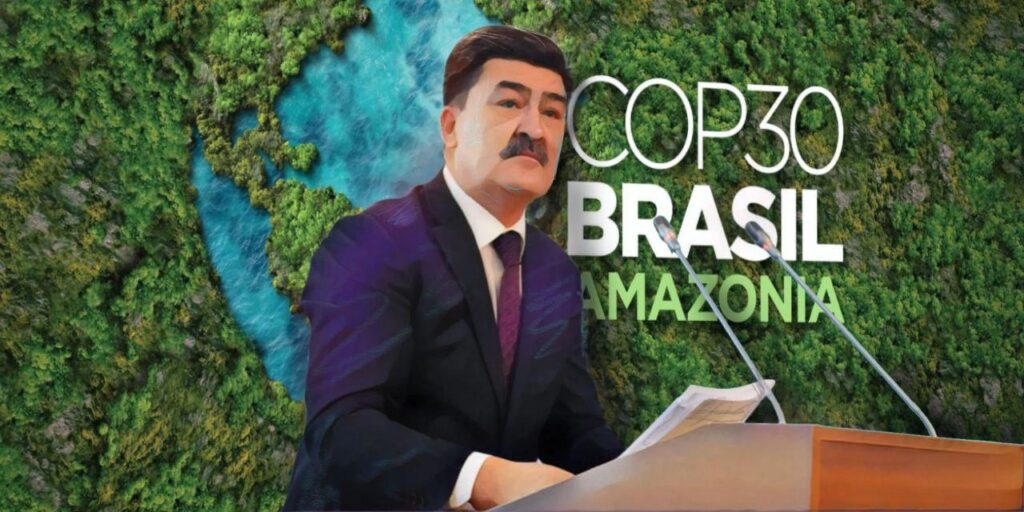
The UN Climate Change Conference (COP30) in Belém, Brazil, concluded with a hard-fought global deal that boosts climate finance for developing countries but avoids any promise to phase out fossil fuels. Amid this uneasy compromise, the Central Asian nations worked to get their priorities heard. Their delegations pressed for more climate funding, recognition of their unique vulnerabilities, and support for regional initiatives, with mixed results. A United Regional Voice on Climate Home to over 80 million people, Central Asia entered COP30 with a goal outlined as “five countries, one voice,” after a regional dialogue in Dushanbe ahead of the summit forged a common stance on shared threats such as melting glaciers and water stress. The region has already warmed about 2.2 °C – faster than the global average – and glaciers are shrinking by roughly 0.5% each year, Uzbekistan’s environment minister Aziz Abdukhakimov warned in Belém. He noted worsening land degradation and vanishing water resources, underscoring Central Asia’s acute climate vulnerability. In response, Uzbekistan unveiled a new pledge to cut its greenhouse gas emissions by 50% by 2035 (from 2010 levels) by expanding renewable energy and forests. Such actions align with COP30’s call for developed nations to triple adaptation finance by 2035 to help vulnerable countries cope. “COP30 showed that climate cooperation is alive and kicking, keeping humanity in the fight for a livable planet,” UN climate chief Simon Stiell said in his closing speech, praising delegates for persisting despite global divisions. National Commitments and Initiatives Kazakhstan, Central Asia’s largest economy and emitter, took on a visible role at COP30. Its delegation was led by Minister of Ecology and Natural Resources Yerlan Nyssanbayev, who addressed the summit’s opening session. Nyssanbayev reaffirmed Kazakhstan’s commitment to the Paris Agreement goals, noting the country has adopted a “Revised Nationally Determined Contribution (NDC) and a National Adaptation Plan” with more ambitious targets to cut emissions and bolster resilience. “It is crucial for us to consistently work toward achieving our climate goals,” he stated. Nyssanbayev emphasized the importance of climate finance for developing countries, highlighting the new “Baku–Belém Roadmap” to mobilize $1.3 trillion annually by 2035 and urging support for a significantly increased funding mechanism.  Kazakhstan also became one of only seven nations – and the sole Central Asian country – to sign a joint declaration pledging “near zero” methane emissions from its fossil fuel sector. In a sign of ongoing regional leadership, Nyssanbayev invited all delegates to attend a Central Asia Regional Environmental Summit that Kazakhstan will host in 2026, aiming to sustain climate cooperation beyond COP30. Kyrgyzstan, given its geography, used the summit to champion the mountain agenda and the plight of high-altitude communities on the frontlines of climate change. The Kyrgyz Republic chairs the UNFCCC’s Mountain Group and sent a delegation led by Deputy Chairman of the Cabinet of Ministers, Edil Baisalov, and Dinara Kemelova, the President’s Special Representative for the Mountain Agenda. In the first week of COP30, Kemelova delivered keynote remarks at multiple high-level sessions, calling for strengthened international support and...

Environmental Groups Criticize World Bank’s Decision on Rogun Dam Complaint

Environmental advocates have sharply criticized the World Bank’s decision to reject a request for a full investigation into Tajikistan’s Rogun Hydropower Plant, citing concerns over potentially severe environmental and social consequences for communities downstream along the Amu Darya river in Uzbekistan and Turkmenistan. According to the international coalition Rivers without Boundaries, the World Bank’s Board of Executive Directors dismissed the complaint despite mounting evidence that the project could exacerbate water scarcity, degrade water quality, damage vulnerable ecosystems, and displace rural populations dependent on agriculture and access to clean water. The complaint, filed earlier this year on behalf of affected communities, argued that the project’s environmental impact assessments were based on outdated data and non-binding verbal assurances from Tajikistan that the reservoir would not be operated at full capacity. The World Bank’s Inspection Panel registered the complaint in April 2025 and, after conducting an initial review, including a fact-finding visit to Tajikistan in June, recommended a comprehensive investigation, citing a strong likelihood of harm. However, the Bank’s Board rejected that recommendation, asserting that only citizens of the country receiving Bank financing are eligible to request an investigation. This decision surprised observers, particularly given that the Bank had previously accepted similar complaints from Uzbekistan over the same project in 2010. Environmental groups argue that the Board’s procedural reasoning allows it to ignore the project's far-reaching transboundary impacts. Evgeny Simonov, a lead expert at Rivers without Boundaries, stated that the Inspection Panel’s own findings validated the downstream communities’ concerns. He accused the Bank of avoiding accountability by hiding behind technicalities. Alexander Kolotov, director of the same coalition, said the ruling reveals a contradiction between the Bank’s public commitments to inclusive development and its actual response to cross-border grievances. He warned that dismissing downstream voices undermines the principles of equitable and participatory water governance. Environmental experts also caution that the refusal to launch an investigation leaves no recourse for affected communities should their fears materialize. Potential long-term impacts include increased soil salinity, reduced agricultural productivity, and the erosion of traditional rural livelihoods. The Rogun Alert coalition, an alliance of international environmental organizations, announced plans to continue monitoring the situation and to explore alternative mechanisms to protect the environmental rights of the region’s residents. Previous assessments had warned that filling the Rogun reservoir could reduce water flows to the Amu Darya delta by 25% or more, with potentially devastating effects on ecosystems and the wellbeing of up to 10 million people in Uzbekistan and Turkmenistan.

Lukoil ‘Garage Sale’ – Uzbekistan Bows Out, Kazakhstan Keeps Its Options Open

The story of the disposal of foreign assets by Lukoil, which has fallen under U.S. sanctions, is reaching its closing stages. A shortlist of potential buyers has already emerged, and in Kazakhstan intrigue remains: will the country’s national oil and gas company capitalise on the opportunity to acquire Lukoil’s shares in major projects? A recent Reuters report noted that potential buyers of Lukoil’s assets face two key complications: first, U.S. firms, such as Carlyle, Chevron, and Exxon, are seen by analysts as more likely to get licensed, meaning deals will only be recognised after proper U.S. licence approval. Second, Lukoil itself had preferred to sell its assets as a package deal rather than piecemeal.  However, after a deal to offload assets to Guvnor collapsed, several analyses now say a full package sale is unlikely and that piecemeal deals are more realistic or even more profitable. A new negotiation deadline has now been set for December 13, 2025, for the completion of authorised transactions.  Kazakhstan-based oil and gas market observer Oleg Chervinsky suggests that this could increase the likelihood of a “twostage process”. “Most likely, a single buyer with sufficient resources will purchase all of Lukoil’s foreign assets at a significant discount, then sell them off in parts,” Chervinsky said. Some media reports point to the U.S. investment firm Carlyle Group as showing interest in Lukoil’s assets. The firm is considered a plausible main buyer due to its former ties to U.S. presidents Bush senior and junior. In this scenario, Carlyle would act both as buyer and organiser of the subsequent 'garage sale' of individual assets. Other firms, such as Chevron Corporation and ExxonMobil, have already been linked in reports with interest in Lukoil’s Kazakh stakes in the Tengiz and Karachaganak oil fields, while Abu Dhabi National Oil Company (ADNOC) has shown interest in Lukoil’s Uzbek gas projects.  Meanwhile, three weeks ago, Uzbekistan made its position clear: it will not participate in the acquisition of Lukoil’s assets. Uzbekneftegaz Chairman Bahodir Sidikov said that "Buying out Lukoil’s assets in Uzbekistan is not on the table right now.”  In Kazakhstan, energy sector experts believe that this moment presents a real window of opportunity to acquire Lukoil’s shares in systemically important oil and gas projects. “Why hasn’t our Ministry of Energy asked: does the Ministry approve changes in the shareholder structure under the terms of the stabilized contracts for Tengiz and Karachaganak? These shares (if a sale takes place) should go to KazMunayGas. If KMG doesn’t have the cash, then the Chinese state-owned CNPC should be brought in. To balance interests, it would be optimal for one of the world’s largest oil corporations to enter Tengiz and Karachaganak,” argues specialist Olzhas Baidildinov. Baidildinov cited a review by Norway’s Rystad Energy estimating that Lukoil’s net cash flow from its Tengiz stake over the next five years will total $2.8 billion, and from Karachaganak $2.1 billion. However, Kazakhstan’s Energy Minister Erlan Akkenzhenov recently stated that the government is not considering a purchase of Lukoil’s shares. At the same time,...

Kazakhstan–Uzbekistan Partnership Signals a New Era in Central Asia

For many years, Kazakhstan and Uzbekistan were seen as regional rivals, with many analysts believing this long-standing competition impeded the realization of sustainable regional strategies. However, leadership changes and expanded cooperation frameworks in Central Asia have significantly shifted these dynamics. Today, countries in Central Asia are shaping policies at the intersection of Western, Chinese, and Russian interests, whilst looking even further afield. As Kazakhstan and Uzbekistan assert themselves more on the global stage, they are increasingly finding common ground. In part because of their geographic size and numbers, Kazakhstan and Uzbekistan are seen as the leading states in Central Asia. Kazakhstan has the largest territory by far, while Uzbekistan boasts the largest population, which stands in excess of 37 million. Both nations possess significant resources and development potential. While their current leadership has dismissed notions of rivalry, its roots stretched back for decades. Historical Competition Tensions between the two republics date to the Soviet era, when the rivalry was evident even to ordinary citizens. The influence of Dinmukhamed Kunaev, First Secretary of the Central Committee of the Communist Party of Kazakhstan, often clashed with that of his Uzbek counterpart, Sharaf Rashidov. Beyond personal rivalries between republican leaders, Soviet-era administrative borders were often drawn without regard for demographic realities or resource flows. Competition for Moscow’s attention and investment funding pushed union republics to emphasize different sectors - Kazakhstan’s development of virgin lands turned it into a major grain hub, while Uzbekistan long benefited from its cotton industry - creating distinct economic identities that later persisted into independence. These divergent economic structures shaped early regional competition and informed differing policy priorities in the 1990s and 2000s. Both republics had substantial industrial capacity, though analysts argue that Kazakhstan maintained an edge in economic growth. The Baikonur Cosmodrome, still operational today, was also a long-standing strategic asset within Kazakhstan’s borders. Following the collapse of the Soviet Union, this rivalry only intensified. Nursultan Nazarbayev and Islam Karimov, then presidents of Kazakhstan and Uzbekistan, were widely viewed as competing for regional leadership. While their economies were initially on par, Uzbekistan gradually turned inward, while Kazakhstan opened to foreign investment, particularly in the extractive sector. In the 2000s, despite successful border delimitation, disputes flared over boundaries, water, and natural resources. Some analysts contend that it was this lingering friction that hindered efforts to preserve the Aral Sea, once the world’s fourth-largest lake, which has now largely disappeared, at least in its southern section, causing dust storms so vast they are visible from space. In 2002, the border villages of Bagys and Khiyobon, inhabited by ethnic Kazakhs but situated in Uzbekistan, demanded to be recognized as part of Kazakhstan. These territories had been transferred to Uzbekistan in 1956. They were officially reincorporated into Kazakhstan only in 2021. Presidents Reject Rivalry Narrative Kazakh political scientist Gaziz Abishev maintains that there is no leadership struggle today between Kazakhstan and Uzbekistan. “An important point that was made is that there is no unhealthy rivalry between Kazakhstan and Uzbekistan, or between Kazakhs...

Opinion: Central Asia Is Consolidating Its Role as a Full-Fledged Actor in Global Processes

The seventh Consultative Meeting of the Heads of State of Central Asia, held in Tashkent, was far more than a routine regional gathering. It marked a pivotal moment with the potential to shape the political and economic architecture of the region for the next decade or two. President Shavkat Mirziyoyev’s keynote address stood out for articulating a forward-looking and comprehensive strategic vision. Notably, he proposed redefining the format itself from a loose “consultative mechanism” into a more cohesive and institutionalized “Central Asian Community.” At the summit, leaders endorsed several landmark documents: the Concept for Regional Security and Stability in Central Asia, the Catalogue of Threats to Central Asia’s Security and measures for their prevention for 2026-2028 and its implementation plan, a joint appeal supporting the Kyrgyz Republic’s candidacy for the UN Security Council, and the decision to admit Azerbaijan as a full-fledged participant. Taken together, these steps signal that Central Asia increasingly sees itself not as a passive bystander amid global geopolitical turbulence, but as an emerging regional actor capable of shaping its own trajectory. Two broader trends deserve special emphasis. First, the region is moving beyond reactive engagement with external initiatives and power blocs. Rather than relying solely on structures created by outside actors, Central Asia is beginning to develop its own institutions. This shift mirrors a global pattern: as the international order becomes more fragmented and unpredictable, regional communities are strengthening their internal mechanisms as a means of resilience. Second, the format envisioned in Tashkent diverges from “Brussels-style integration.” It does not require the transfer or dilution of sovereignty. Instead, it relies on soft integration, consultation, consensus-building, and phased convergence. As President Mirziyoyev noted, having a shared and realistic sense of “what we want our region to look like in 10-20 years” is essential. Without such a vision, Central Asia risks remaining the object of great-power competition rather than an autonomous participant in it. One of the summit’s most consequential developments was the decision to welcome Azerbaijan as a full-fledged member of the format. The emerging political and economic bridge between Central Asia and the South Caucasus is quickly becoming not only a transit nexus but also a cornerstone of a broader geopolitical space. The strengthening of Trans-Caspian corridors, the advancement of the “China – Kyrgyzstan – Uzbekistan” railway, the Trans-Afghan corridor, and the alignment of Caspian Sea transport routes will significantly expand the region’s strategic and economic potential. A further nuance is worth highlighting: Azerbaijan’s long-standing ties with the Western political and security architecture, through NATO partnership mechanisms and energy corridors, as well as its membership in the Organization of Turkic States, introduce new layers of connectivity. Its inclusion repositions the “Central Asian Community” from a post-Soviet platform into a wider geopolitical constellation spanning Eurasia, the South Caucasus, and the Middle East. For Central Asian states, this new configuration opens additional room for multi-vector diplomacy and reduces the risks of unilateral dependence.   The views expressed in this article are those of the author and do not...

Uzbekistan Emerges as Key Market for China’s Real Estate Giants

Since 2021, China’s property sector has been navigating one of the most severe downturns in its history. A combination of mounting developer debt, strict government lending rules, and a large stock of unsold housing has pushed the country’s real estate giants into prolonged distress. As speculative construction slows at home, Chinese companies are increasingly turning outward. Similar to firms in renewable energy, waste-to-energy, and electric vehicle industries, real estate developers now see foreign markets as essential for restoring balance and sustaining growth. In this broader search for new opportunities, Uzbekistan has emerged as a highly compelling destination for Chinese investment. The country offers a rare mix of rapid demographic growth and urgent housing needs that few markets can match. Uzbekistan’s population is expanding at a fast pace, and more than 60,000 new households form every year. This demographic surge is placing enormous strain on the country’s already limited housing stock. Official data shows that around 85,000 families are waiting for housing, yet annual construction increases the existing stock by only one to two percent. The result is a persistent shortage that cannot be resolved without sustained and large-scale capital investment. If this deficit remains unaddressed, it risks creating long-term social frustration. Against this backdrop, the interests of Chinese real estate developers and Uzbekistan’s housing priorities are beginning to align. Chinese firms looking for stable and high-demand markets increasingly view Uzbekistan as an attractive place to expand. Tashkent, in particular, has become a center of growing cooperation with Chinese partners. Several recent agreements illustrate this momentum. The Chinese firm TSC HK Investment is preparing a $340 million project for a residential complex and business center in the Chilanzar district of Tashkent. The city authorities have also signed agreements worth about $1 billion with CSCEC, including a major housing development valued at $440 million. Beyond the capital, another Chinese investor plans to allocate $250 million to build a modern complex covering 55 hectares in the city of Babur in the Andijan region. For Chinese companies, Uzbekistan offers a large and expanding market that helps absorb China’s massive overcapacity in construction services, heavy machinery, and industrial materials such as steel and cement. Investing in Uzbekistan not only eases domestic economic pressure but also allows Chinese firms to demonstrate their capabilities in shaping the daily lives of Uzbek families. Large residential projects provide opportunities to familiarize local communities with Chinese standards, technologies, and urban design practices. When these projects are executed successfully, they can contribute to a positive image of China and strengthen its soft power presence in the country. For Uzbekistan, China’s growing involvement brings several advantages. Chinese investment can help meet the country’s rapidly rising demand for housing and reduce the likelihood of long-term social frustration linked to shortages. Chinese developers often work with integrated models that go beyond simple residential blocks. They build high-density and multi-functional complexes combining housing, business centers, educational facilities, and public services. This approach aligns closely with Uzbekistan’s strategy to encourage sustainable urbanization, improve living conditions, and...