• KGS/USD = 0.01144 0%
  • KZT/USD = 0.00200 0%
  • TJS/USD = 0.10494 0%
  • UZS/USD = 0.00008 0%
  • TMT/USD = 0.28490 0%
  • KGS/USD = 0.01144 0%
  • KZT/USD = 0.00200 0%
  • TJS/USD = 0.10494 0%
  • UZS/USD = 0.00008 0%
  • TMT/USD = 0.28490 0%
  • KGS/USD = 0.01144 0%
  • KZT/USD = 0.00200 0%
  • TJS/USD = 0.10494 0%
  • UZS/USD = 0.00008 0%
  • TMT/USD = 0.28490 0%
  • KGS/USD = 0.01144 0%
  • KZT/USD = 0.00200 0%
  • TJS/USD = 0.10494 0%
  • UZS/USD = 0.00008 0%
  • TMT/USD = 0.28490 0%
  • KGS/USD = 0.01144 0%
  • KZT/USD = 0.00200 0%
  • TJS/USD = 0.10494 0%
  • UZS/USD = 0.00008 0%
  • TMT/USD = 0.28490 0%
  • KGS/USD = 0.01144 0%
  • KZT/USD = 0.00200 0%
  • TJS/USD = 0.10494 0%
  • UZS/USD = 0.00008 0%
  • TMT/USD = 0.28490 0%
  • KGS/USD = 0.01144 0%
  • KZT/USD = 0.00200 0%
  • TJS/USD = 0.10494 0%
  • UZS/USD = 0.00008 0%
  • TMT/USD = 0.28490 0%
  • KGS/USD = 0.01144 0%
  • KZT/USD = 0.00200 0%
  • TJS/USD = 0.10494 0%
  • UZS/USD = 0.00008 0%
  • TMT/USD = 0.28490 0%

Viewing results 553 - 558 of 1054

With the Russian Language Waning in Central Asia, Will Other Languages Replace It?

Russian is still the most widespread foreign language in Kazakhstan, though its role is declining there, and across Central Asia in general. At the same time, the people of the region have been slow to learn other languages, in part due to economic factors such as slowing globalization, according to the Kazakhstani political analyst Zamir Karazhanov, who is head of the Kemel Arna Public Foundation.   The language of cities Since declaring independence in 1991, all the counties of Central Asia have made promoting their national languages a priority. But foreign languages, which link the region with the rest of the world, have also historically been seen as critical. In practice, however, the study and use of foreign languages other than Russian is not widespread. The Russian language is losing its prominence in Kazakhstan as the number of ethnic Russians declines. According to official statistics, as of January 1, 2024, Russians made up 14.89% of the country’s population, down from close to 40% in 1989. Nevertheless, thanks to the education system and Kazakhstan’s proximity to Russia, the level of proficiency in Russian remains high. In Kazakhstan and Kyrgyzstan, Russian is a second official language. In Tajikistan, it is called the “language of interethnic communication”. In Uzbekistan and Turkmenistan, however, it does not have an official status. More than 90% of Kazakhstanis know Russian to some degree, while 20% of the population considers it their native language. Meanwhile, those figures for Turkmenistan are 40% and 12% respectively. In Kyrgyzstan, about 44% know Russian and 5% consider it their native language; in Uzbekistan, it is about 50% and 2.7%; and in Tajikistan, 55% and 0.3%. Kazakhstan's President Kassym-Jomart Tokayev has repeatedly spoken about the need to preserve the Russian language in Kazakhstan, and the unacceptability of language-based discrimination. Last year, he unveiled the International Russian Language Organization, established by the CIS Heads of State Council. “The new organization is open to all countries and, of course, very relevant from the point of view of global humanitarian cooperation,” explained Tokayev, while underlining that measures to promote the Russian language in the Eurasia region and elsewhere are congruous with the trend of strengthening national identities. “Kazakhstan will continue the policy of bolstering the status of the state language of Kazakh,” Tokayev said at the time. Today, Kazakhstan has many Russian-language media, while Russian remains the lingua franca at meetings among post-Soviet countries. Even though Russian is concentrated in big cities, all Kazakhstanis receive a significant amount of western and other foreign news from Russian sources. “Russian is spoken in most of Kazakhstan. In the biggest city, Almaty, communicating in Russian is not a problem. But, if you move 30-50 km outside the city, it gets harder to speak it. Russian is the language of cities and the language of interethnic interaction,” the political analyst Karazhanov told The Times of Central Asia. “Of course, the number of native speakers of the Kazakh language is growing, and the number of Russian speakers is declining, but Kazakh...

Deadly Attacks in Russia Spark Fears of Extremism Amid Ethnic Tensions

On August 23 2024, four prison employees were killed after several prisoners staged a revolt in the remote IK-19 Surovikino penal colony in the southwestern Volgograd region of Russia. Special forces stormed the facility and “neutralized” the attackers, whom the Russian media named as Temur Khusinov, 29, and Ramzidin Toshev, 28, from Uzbekistan, and Nazirchon Toshov, 28, and Rustamchon Navruzi, 23, from Tajikistan. In a mobile phone video released by the perpetrators, the attackers identified themselves as members of Islamic State, claiming their actions were fueled by a desire to avenge the mistreatment of Muslims. The footage starkly depicted prison officials lying in pools of blood, while other clips showed the attackers moving freely through the prison courtyard. With the twentieth anniversary of the Beslan school massacre - perpetrated by members of a Chechen separatist group called the Riyad as-Saliheen Martyrs’ Brigade - drawing near, tensions in Russia are running high, with the perceived threat from extremism leading to a wave of xenophobia. The Crocus City Hall attack, which allegedly involved Tajiks, served to stoke ethnic tensions in Russia, leading to backlash by nationalists. Faced with such conditions and prejudice, an exodus of migrant workers during a time of war has left Russia with a dearth of human capital. Through the Collective Security Treaty Organization (CSTO), Russia is working with the C5 to detect and combat violent extremists, some of whom are illegally entering Central Asia before traveling to Russia. The Central Asian states, which are secular, are meanwhile trying to balance rights to religious freedom with blocking the malinfluence of oppressive and potentially violent ideologies. Three Central Asian countries border Afghanistan, and both the U.S. and the UNODC are working with Tajikistan to counter terrorism and violent extremism. While some extremist groups see Central Asia as a fertile recruiting ground, a UN report from 2023 noted that “Regional Member States estimated current ISIL-K strength at between 1,000 and 3,000 fighters, of whom approximately 200 were of Central Asian origin.” Despite these low numbers, however, the fact that some observers continue to link Islamic State Khorasan Province to the countries of Central Asia - even though the terrorist organization has purely Afghan roots - means that Central Asia once again finds itself at the center of a nexus of international security challenges.

Silk Road Treasures: A Few of My Favorite Things

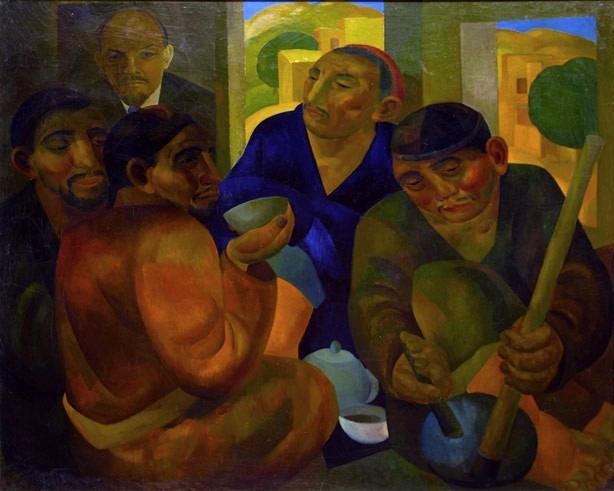
Under the banner of "Silk Road Treasures", TCA’s people – journalists, editors, authors – share their personal experiences of Central Asia and her people, and by listing their favorite places, literature, films, art, architecture and archaeological sites, alongside encounters with customs and traditions, provide pointers for readers wishing to visit the region. Stephen M. Bland - Senior Editor and Head of Investigations Architecture: Bukhara - The Kalon Trinity [caption id="attachment_21936" align="aligncenter" width="2560"] The Kalon Mosque, Bukhara; image: TCA, Stephen M. Bland[/caption]   From the ninth century Pit of the Herbalists to the Ismail Samani Mausoleum and the bird market, the old town in Bukhara isn’t really about its separate sights, it’s the sum of its parts, the timeless city permeated by an air of antiquity like a window into the past. That having been said, however, the jewel in the crown of Bukhara is the trinity of the Kalon Mosque, Minaret, and the Mir-i-Arab Madrasah. Built as an inland lighthouse for desert caravans, the Kalon Minaret - “great” in Tajik - was probably the tallest building in Central Asia upon its completion in 1127. The third minaret to have been built on this site, previous incarnations had caught fire and collapsed onto the mosque below, officially because of the “evil eye.” Also known as the “Tower of Death,” over the centuries the minaret has seen countless bodies sewn into entrail catching sacks and tossed from its 47-meter-tall lantern. Particularly popular during Manjit times, this practice survived until the 1920s. [caption id="attachment_21937" align="aligncenter" width="2560"] The lantern of the Kalon Minaret, Bukhara; image: TCA, Stephen M. Bland[/caption]   Home of the first recorded use of the now ubiquitous blue tile in Central Asia, the 14 distinct bands of the minaret are majestic in the pink evening light, its scale and intricacy remarkable. While the sense of history lingers, everyday life continues unabated at its stout base, and when the heat of the day abates, head-scarfed babushkas sat chit-chatting on the cool stone steps of the Madrassa, while kids kick soccer balls against the ancient stones.   Art: The State Art Museum of the Republic of Karakalpakstan, Nukus [caption id="attachment_21939" align="aligncenter" width="500"] Lev Galperin - "On his Knees"[/caption]   Once a thriving agricultural center, Karakalpakstan is now one of the sickest places on Earth. Respiratory illness, typhoid, tuberculosis and cancers are rife, birth defects and infant mortality rates amongst the highest in the world. The deliberate destruction of the Aral Sea for irrigation purposes has caused toxic dust storms so vast they are visible from space, ravaging a 1.5-million-kilometre square area. Spreading nitrates and carcinogens, these storms used to hit once every five years, but now come ten times a year. Yet it is in the capital of Karakalpakstan, Nukus, that a remarkable collection of art has survived in part because of its inhospitable location. Risking denouncement as an “enemy of the people,” obsessive Ukrainian-born painter, archaeologist and art collector, Igor Savitsky spirited away thousands of avant-garde pieces banned in the Soviet Union....

Gods and Demons of Central Asia

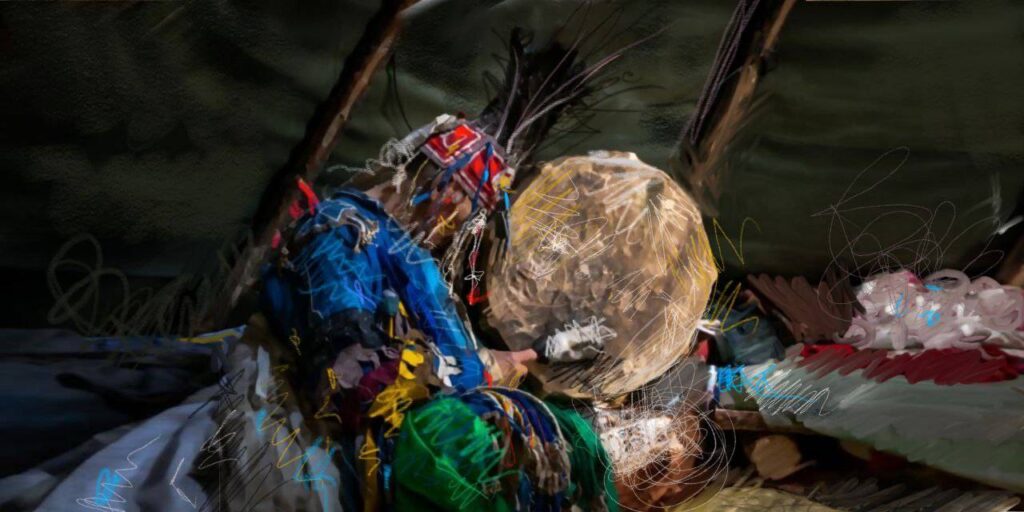
In today's dynamic world, Central Asia is emerging as a trendsetter in fashion, culture, lifestyle, and worldview. The ancient Tengrian faith, deeply rooted in Central Asian mythology and superstitions, may soon resurface creatively among the region's people, though it is unlikely to be reinstated as an official religion. While some in Kazakhstan attempt to distance themselves from Abrahamic religions, Tengrism remains a vital part of the cultural heritage, featuring gods, demigods, and dark entities that shaped the beliefs of our ancestors during the pre-Islamic era.   [caption id="attachment_22010" align="aligncenter" width="167"] photo: pininterest: Tengri's domain[/caption]   Divine entities According to Tatar scientist and writer Gali Rahim, shamanism attributes significant roles to various spirits and deities. Among the Turkic peoples, the supreme deity is Tengri, the eternal blue sky. Rahim's lectures on “The Folklore of the Kazan Tatars,” presented at the East Pedagogical Institute in the 1920s, describe Tengri as the primary god in Turkic cosmology, with the earth and humanity emerging from the union of the sky and the earth. Umai, the goddess associated with motherhood and children, stands next in importance. Ancient Turkic inscriptions and symbolic artifacts, such as the stone carving discovered in 2012 in the Zhambyl district of Almaty, Kazakhstan, depict her as a protective figure for children. Teleut pagans represented her as a silver-haired, young woman who descended from heaven on a rainbow to guard children with a golden bow, and the Kyrgyz appealed for her help during childbirth and when children fell ill. Motifs dedicated to Umai by Shorian shamans, were positioned around cradles. Boys' cradles were pierced with an arrow,  girls' with a spindle, and wooden arrows were placed within the those of both. Another prominent character common to Turkic, Mongolian, and Altaic mythology is Erlik or Yerlik Khan. Ruler of the underworld, the horned deity presides over the realm of the dead from a palace of black mud or blue-black iron on the bank of the Toibodym, a river of human tears. A single horsehair bridge is guarded by monsters known as dyutpa whilst the palace is protected by Erlik’s sentries or elchi, brandishing pike poles known as karmak. His breath, carried by a tan, a light warm breeze, was believed to paralyze anyone who inhaled it, which is why the Khakas term for paralysis, tan sapkhany, literally means “wind blow.” Kudai (Khudai), also known as Ulgen, is another central deity who, alongside his brother Erlik, created the land, its vegetation, mountains, and seas. Kudai created man from clay, and Erlik gave him his soul. Kudai created a dog but it was Erlik who clothed it in hair. Whilst Kudai created the first animals, the horse, the sheep, and the cow, Erlik created the camel, the bear, the badger, and the mole. Kudai brought down lightning from the sky and commanded thunder. In a dispute over who was the mightiest creator, Kudai won. The brothers parted ways, and after producing nine sons, from whom the tribes of Kpchak, Mayman, Todosh, Tonjaan, Komdosh, Tyus, Togus,...

Countries of Central Asia Team up as Threat of Natural Disasters Grows

Central Asia is vulnerable to a panoply of natural hazards: Floods, landslides, droughts, sandstorms, avalanches and earthquakes. Countries in the region increasingly seek to collaborate on early warning systems and other emergency precautions, especially since disasters can spill across borders and because the effects of climate change are intensifying. To that end, the heads of the national emergency departments of Kyrgyzstan, Kazakhstan, Tajikistan and Uzbekistan met last week in Cholpon-Ata, a lakeside resort town in northern Kyrgyzstan whose attractions include ancient petroglyphs showing deer, leopards and hunting scenes. Turkmenistan´s flag – green expanse, red stripe with designs and white crescent and stars - was on display in the conference hall, though official announcements did not mention the presence of any delegation from the reclusive Turkmen government. The goal was to share information and experience, and deepen cooperation among the emergency agencies of those Central Asian countries, said Maj. Gen. Boobek Azhikeev, Kyrgyzstan’s minister of emergency situations. The five nations, which have a total of approximately 75 million people and encompass four million square kilometers, face growing risks from natural disasters, and the region has been warming faster than the global average according to a report released in May by the U.N. agency for the coordination of disaster risk reduction and the U.N. Development Programme. The two U.N. bodies, which helped to support the Central Asia meeting on the shores of Kyrgyzstan’s Lake Issyk-Kul on Aug. 15, also mentioned human-made hazards, such as industrial accidents, chemical waste facilities in densely populated areas, and severe air pollution in major cities in all the countries. “Many disaster risk management systems are still reactive, not proactive. Early warning processes are often fragmented, and poorly integrated into countries' development strategies and policies for risk-informed decision-making,” the U.N. agencies said. “There is a lack of anticipation of new and emerging risks, insufficient monitoring and forecasting, and limited financial and technological support. Early warning communication and dissemination are often unclear, especially for the most vulnerable.” The private sector and media can also get more involved in ways of reducing the risk from disasters, they said. The U.N. agencies also noted progress, saying Tajikistan had taken the lead in Central Asia in rolling out an early warning system focused on monitoring, forecasting, communication and other measures. Earlier this month TCA reported that the head of Tajikistan’s committee for emergency situations and civil defense, Rustam Nazarzada, stated that the economic damage caused by natural disasters in the country has amounted to over $12 million in this year alone. Additionally, Uzbekistan is updating an early warning system in the populous, economically important Ferghana valley that will promptly disseminate weather forecasts. Central Asian countries have sought to coordinate on environmental issues in the past, sometimes with mixed results. But the sense of urgency is growing. Earlier this year, Kyrgyzstan was among countries that sent aid to Kazakhstan after floods there that the Kazakh president described as the worst natural disaster in 80 years. Kazakhstan, in turn, sent tons of humanitarian aid to Kyrgyzstan after...

UN Launches Projects to Improve Health and Environment in the Aral Sea Region

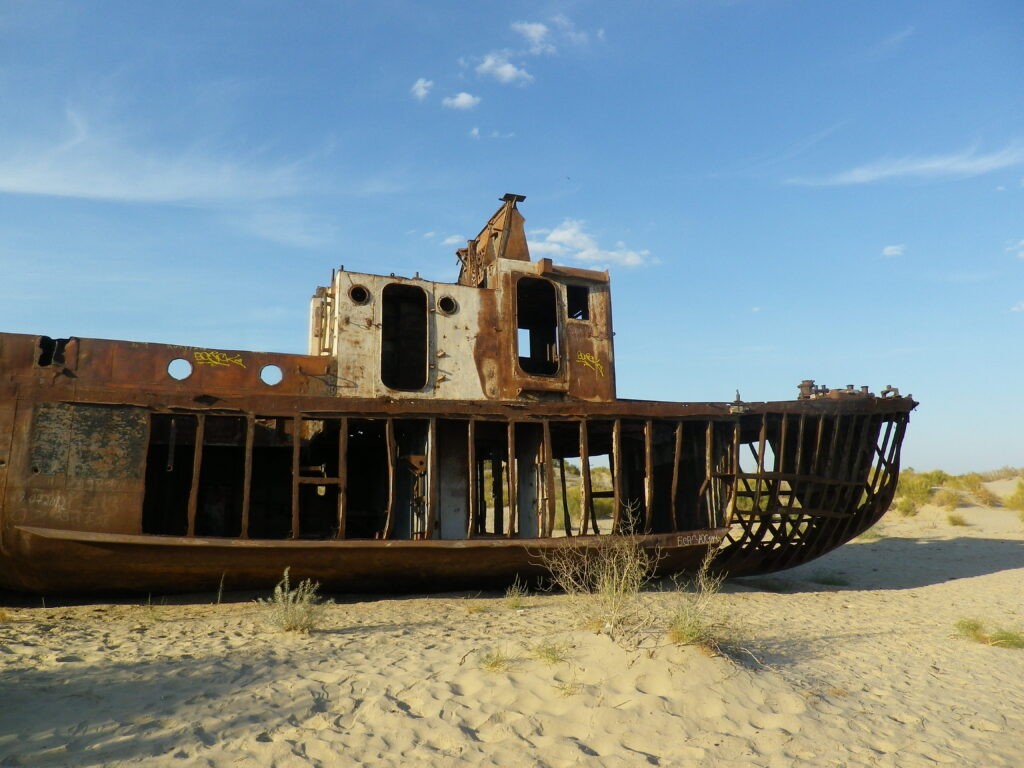
The UN has launched two new projects to address environmental and health issues in Karakalpakstan, Uzbekistan. These projects are “Enhancing Climate-Resilient and Safe Water, Sanitation, Hygiene, and Health Services for the Most Affected Communities in Four Districts of Karakalpakstan,” and the joint project between its development programme (UNDP) and its food and agriculture organization (FAO), "Building Knowledge and Skills of Local Partners and Communities to Address Environmental Insecurities through Innovative Air, Land, and Water Management Solutions in the Aral Sea Region.” “The launch of these projects marks a significant milestone in our collective efforts to address the Aral Sea Region's profound environmental and health challenges," said Sabine Machl, the UN's Resident Coordinator in Uzbekistan. "By fostering resilience through innovative solutions in water management, health services, and community empowerment, we are laying the groundwork for a sustainable future in Karakalpakstan.” The project between the UNDP and FAO aims to increase the knowledge and skills needed by local partners and communities to solve environmental security problems. It also aims to develop practical solutions for managing air, land and water, enabling communities to adapt to and mitigate climate change. In addition, within the project's framework, special attention will be paid to introducing new approaches to water treatment, forest restoration, and soil stabilization in the region. These activities have the potential to directly benefit over 376,000 residents of the three northern districts of Moynaq, Kungrad, and Takhtakupir in Karakalpakstan, particularly women in at-risk communities. The indirect impact will extend to 200,000 more people and build on the results of the previous projects. On 16 August, the UN programme “Laying the Foundations for People-Centered, Climate-Resilient Primary Health Care and Water, Sanitation, and Hygiene Practices at Healthcare Facilities and Schools” was officially completed. During his visit to Karakalpakstan on August 19, Uzbek President Shavkat Mirziyoyev announced the establishment of the Aral Sea Region International Innovation Center to improve the ecosystem and create new varieties and seeds in a saline, water-less environment. $80 million will be allocated to mitigate the consequences of climate change in the Aral Sea region. The Times of Central Asia has published several articles about the problems arising from the drying up the Aral Sea and the work being done to combat this.