• KGS/USD = 0.01144 0%
  • KZT/USD = 0.00208 0%
  • TJS/USD = 0.10414 -0.29%
  • UZS/USD = 0.00008 0%
  • TMT/USD = 0.28571 0%
  • KGS/USD = 0.01144 0%
  • KZT/USD = 0.00208 0%
  • TJS/USD = 0.10414 -0.29%
  • UZS/USD = 0.00008 0%
  • TMT/USD = 0.28571 0%
  • KGS/USD = 0.01144 0%
  • KZT/USD = 0.00208 0%
  • TJS/USD = 0.10414 -0.29%
  • UZS/USD = 0.00008 0%
  • TMT/USD = 0.28571 0%
  • KGS/USD = 0.01144 0%
  • KZT/USD = 0.00208 0%
  • TJS/USD = 0.10414 -0.29%
  • UZS/USD = 0.00008 0%
  • TMT/USD = 0.28571 0%
  • KGS/USD = 0.01144 0%
  • KZT/USD = 0.00208 0%
  • TJS/USD = 0.10414 -0.29%
  • UZS/USD = 0.00008 0%
  • TMT/USD = 0.28571 0%
  • KGS/USD = 0.01144 0%
  • KZT/USD = 0.00208 0%
  • TJS/USD = 0.10414 -0.29%
  • UZS/USD = 0.00008 0%
  • TMT/USD = 0.28571 0%
  • KGS/USD = 0.01144 0%
  • KZT/USD = 0.00208 0%
  • TJS/USD = 0.10414 -0.29%
  • UZS/USD = 0.00008 0%
  • TMT/USD = 0.28571 0%
  • KGS/USD = 0.01144 0%
  • KZT/USD = 0.00208 0%
  • TJS/USD = 0.10414 -0.29%
  • UZS/USD = 0.00008 0%
  • TMT/USD = 0.28571 0%

Viewing results 367 - 372 of 807

Uzbekistan to Create IT Towns Across its Regions

On May 13, Uzbekistan President Shavkat Mirziyoyev conducted a government meeting on measures to develop digital technologies and expand IT training for young people across the country. In recent years, Uzbekistan’s IT sector has undergone rapid growth and compared to the 147 companies registered in 2017, the country now has close to 2,000. The number of specialist employees has likewise increased and today some 30,000 people work in high-paid company jobs and a further 70,000 young people are independently engaged in the sector. During the first quarter of this year alone, services in the sector increased by 20 percent, exports amounted to $200 million, and 5,000 new jobs were created. Home to 80 percent of the country’s IT specialists, Tashkent represents the hub of Uzbekistan’s IT services and exports. To redress the balance through the development of the IT sector further afield, the government now plans to create IT towns in fifteen of the country’s regions and in the city of Khanabad. Once established, the IT towns will enable some 10,000 young people per year to study, free of charge, information technologies, foreign languages, and other professions in high demand. Hailing the initiative, the president emphasized that the key aim of the IT towns is to “give young people wings and train them in professions fit for the modern world.”  

Up to 300,000 Uzbeks Labor Migrants Expected to Return Home

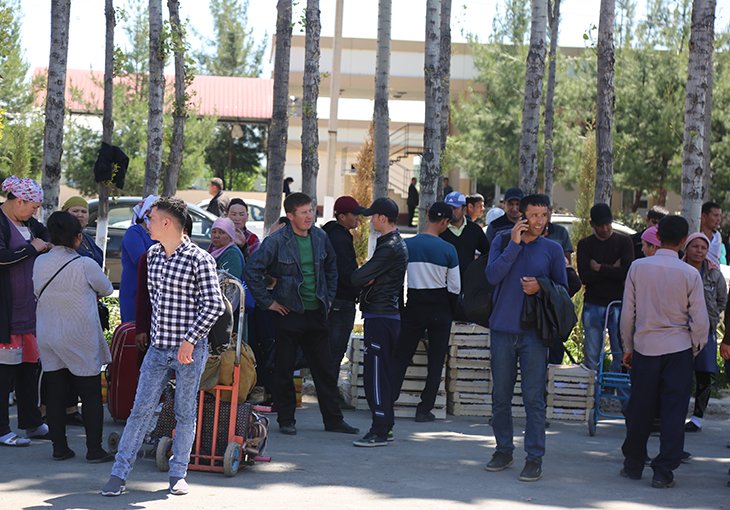
On May 10, an online meeting was held under the chairmanship of President Mirziyoyev on the issue of employment and mobilizing the internal capabilities of local industry. Mirziyoyev reiterated that the issue of employment and income of is of primary importance, and warned leaders at all levels that laxity in this regard will not be tolerated. Mirziyoyev also touched upon the issue of labor migration: 58,000 labor migrants returned between January and March of this year, followed by another 57,000 in April alone. Up to 300,000 people are expected to return by the end of the year, and the importance of providing them with gainful employment and helping them with social issues was emphasized. Officials were tasked with creating a single information platform on migration, helping compatriots working abroad who find themselves in difficult situations, and providing jobs for those returning.

New Measures to Boost Agriculture in Uzbekistan

On May 10, Uzbekistan President Shavkat Mirziyoyev was presented with proposed adaptations in agricultural practice and the more efficient use of land in the light of climate change. In Uzbekistan, 3 million hectares of pastural and agricultural land have been now degraded, and approximately 2 million hectares, salinized. According to experts, by 2030, water resources in the region are at risk of diminishing by almost 6 percent as a direct result of climate change. In response, Uzbekistan has developed a national program, for which over $294 million is anticipated in grant funding, to adapt agriculture to climate change and mitigate its impact. The initiative aims to improve the condition of 1 million hectares of agro-ecological landscape and degraded pastures in the Aral Sea region. Protective forest belts will be created in Karakalpakstan, as well as in Khorezm, Bukhara, and Kashkadarya regions and drought-resistant plants such as licorice, rose hips, and sesame, cultivated in areas where water is scarce. A center will be established to analyze and forecast climate change, and agrometeorological stations installed in five regions of the country. In cooperation with Italy, a further center with a nursery will be built for intensive seed cultivation alongside a farm for plants resistant to drought and salinity. Since the need to preserve water is particularly acute in areas surrounding the lower reaches of the river Amu Darya, subsidies are to be allocated for laser-leveling land in Karakalpakstan. Grain and rice producers will be reimbursed up to 100 percent of the fuel costs required to level land using a laser level, in a move to increase yields and reduce water consumption by 15-20 percent. The program also encourages farmers to build more greenhouses. In recent years, the spread of greenhouses has increased 2.6-fold, and the volume of produce grown in such, has more than tripled. The greenhouse sector currently provides 80,000 thousand permanent jobs and a further 70,000 seasonal posts. To increase the efficiency of greenhouse farms, the program proposes to reimburse greenhouse owners 50 percent of the costs of hiring qualified foreign agronomists, as well as up to 20 percent of the costs of coal heaters.

Victory Day Comes in Central Asian Countries Without Much Pomp, but Plenty of Feeling

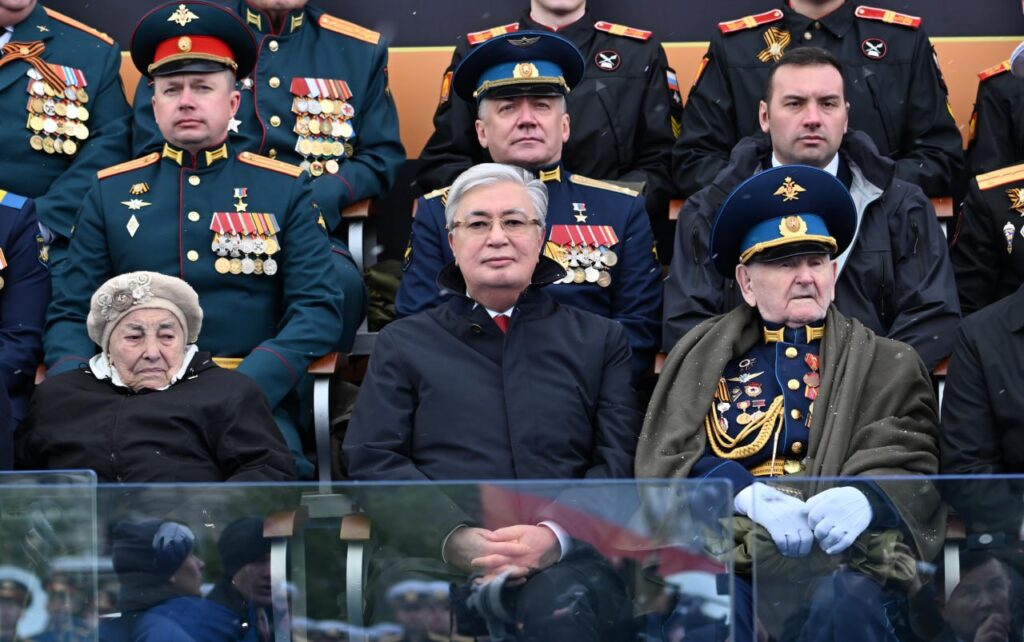
This year, as in previous years, the attitude toward Victory Day celebrations in Central Asian countries serves as an important political marker. The leaders of Kazakhstan, Kyrgyzstan, Tajikistan and Turkmenistan are scheduled to attend the Victory Day parade in Moscow on May 9. The leaders of Belarus, Cuba, Laos and Guinea-Bissau will also take part in the celebrations. The absences of the presidents of Uzbekistan, Armenia and Azerbaijan are particularly noticeable in that list. It's noteworthy that the Russian press is commenting on the different stances taken by the Central Asian countries in an extremely negative way -- deliberately agitating discord between Russia and the region. It's even been stated that Victory Day has been "canceled" in the region. Such are the broadcasts taking place against a backdrop of analysts' opinions: that in the coming decades, Central Asian countries won't be able to break the ties that bind them to their former Soviet master, as the economic dependence on Russia is only growing. This is especially true for Kazakhstan, as the lion's share of Kazakhstan's oil goes through Russian pipelines to Europe. In addition, a project increasing the transshipment of Russian hydrocarbons to China through Kazakhstan is in the works. However, contrary to the opinion of Russian tabloids, the Central Asian countries remain reverent and respectful of the cultural institution that is Victory Day. Most residents of the republics are proud of their fathers and grandfathers who fought on the fronts of World War II. In particular, for several years in a row, Kazakhstan has maintained a leading role in terms of doling out state budget payments to veterans of World War II. According to statistics, the size of a lump-sum social payment commemorating Victory Day in Kazakhstan, where 148 veterans live, averages $3,800. In Tajikistan there are 24 surviving veterans of World War II, and their payments amounted to $2,200-$2,300. Veterans in Uzbekistan received about $1,500, and in Belarus, Azerbaijan and Kyrgyzstan, about $1,100 apiece. Russia's 12,500 surviving veterans in Russia will receive the least -- the equivalent of only $107. To be sure, Kazakhstan has not held military parades in honor of the holiday for a year. That move is explained by the need to save money. This spring, unprecedented floods -- which affected almost half of the country -- have pushed President Kassym-Jomart Tokayev's administration to tend towards being thrifty and instead fund humanitarian aid and reconstruction. According to the Ministry of Defense of Kazakhstan, the parade requires spending about 4 billion tenge ($9 million) -- such a huge sum of money can be spent more impactfully on providing housing for the victims. Along with large-scale, WWII-related festive events in Kazakhstan, other important projects, such as international forums, have been canceled. Nevertheless, in his speech, President Tokayev not only congratulated veterans, but also emphasized the need to prepare for the 80th anniversary of the May 1945 victory, which is scheduled to be widely celebrated next year. In Uzbekistan, May 9 is considered a Day of Remembrance, but...

Uzbek Businesswoman Diora Usmanova Recounts Own History of Marital Violence

Diora Usmanova, the owner of two restaurants and some clothing brands in Uzbekistan, has spoken on her Instagram page about the beatings she suffered from her first husband, Babur Usmanov, who was the nephew of the billionaire Alisher Usmanov. Usmanova herself is related to Ziroatkhon Mirziyoyeva, the wife of Uzbek president Shavkat Mirziyoyev. Usmanova wrote that the story could cause her harm, but that she believes the benefits will "outweigh the risks a hundredfold" and will "change perceptions or somehow affect women who endure domestic violence and abuse," Gazeta.uz reported. "We loved each other and fought very hard for our marriage. Subsequently, when he started to raise his hand against me and when these beatings went on, and the beatings continued for four years, there were concussions, and a lot of blood, and bruises, and [my] whole body in bruises, and a lot of broken furniture, doors, everything," she said. Domestic violence is not only the man's fault, but also the woman's, Usmanova said. "We don't value ourselves enough, we're not brave enough, we're not strong enough, we're afraid to give a backhand, we're afraid to tell our parents, we're afraid to go back to our parents, we're afraid to start everything again. For the fact that we hope that it will change, that it will [bear] some good fruits in the future, that it will survive -- this is all our problem," Usmanova said. In her opinion, women should terminate harmful relationships and find the strength to leave -- and most importantly, learn to respect themselves. "You have to leave such relationships. [That's] because of the fact that you forgive once, forgive the second time, and then it becomes a habit, a person realizes that it is forgiven, it can end very badly, [a] whole life just poisoned. I did not find the strength then, and now after 10 years, I look back and realize how many mistakes were made on my part and how much is my fault. Just like [it was] his," she stated. On May 8, 2013, Babur Usmanov was involved in a fatal car accident in Tashkent. In 2016, Usmanova married businessman Batyr Rakhimov.

EU and FAO Aid Uzbekistan’s Management of Hazardous Chemicals

On 1 May, the Food and Agriculture Organization of the United Nations (FAO) and the Ministry of Ecology, Environmental Protection and Climate Change of Uzbekistan held an inception workshop in Tashkent on technical assistance for the sound management of hazardous chemicals. The joint venture, implemented with financial support from the European Union, is designed to enhance the effectiveness of mechanisms and tools for the management of hazardous chemicals and related waste. A key goal cited by the EU Delegation to Uzbekistan, is to reduce the use of dangerous pesticides in agriculture, through the introduction and promotion of alternative methodologies amongst farmers. Aziz Abdukhakimov, Minister of Ecology, Environmental Protection and Climate Change, stressed that by actively striving to reduce the use of highly hazardous pesticides, Uzbekistan aims to lower their adverse impact on the nation’s health and environment, in addition to making a significant contribution to  UN Sustainable Development Goals. Regarding plans to address the issue, he  announced, “We need to revise our inventory of contaminated areas of former agricultural airfields and other sites, the last of which, was carried out in the ‘90s when more than 450 former agricultural airfields were identified.” Praising the move, Wim Riepma, Head of Cooperation Section, EU Delegation to Uzbekistan, stated: "Our partnership with the Government of Uzbekistan and FAO exemplifies a collective commitment to protecting the environment and public health, by cleaning up legacy waste, by improving waste management, and by reducing pesticide waste production. Integrated pest management and awareness of health and environmental risks are key to a healthier, environment- friendly and economically viable agriculture sector.” Sherzod Umarov, Assistant FAO Representative in Uzbekistan, likewise emphasized, "The project implementation will enable an improved institutional capacity for sound pesticide management and better data on hazardous wastes in agriculture allowing development of a national waste management strategy. The project also aims to scale up green practices in the agricultural sector leading to reduced risks to farmers and consumers from the use of pesticides and to food production relying on less toxic pesticides and biological protection tools.”