• KGS/USD = 0.01144 0%
  • KZT/USD = 0.00210 0%
  • TJS/USD = 0.10438 0.19%
  • UZS/USD = 0.00008 0%
  • TMT/USD = 0.28571 0%
  • KGS/USD = 0.01144 0%
  • KZT/USD = 0.00210 0%
  • TJS/USD = 0.10438 0.19%
  • UZS/USD = 0.00008 0%
  • TMT/USD = 0.28571 0%
  • KGS/USD = 0.01144 0%
  • KZT/USD = 0.00210 0%
  • TJS/USD = 0.10438 0.19%
  • UZS/USD = 0.00008 0%
  • TMT/USD = 0.28571 0%
  • KGS/USD = 0.01144 0%
  • KZT/USD = 0.00210 0%
  • TJS/USD = 0.10438 0.19%
  • UZS/USD = 0.00008 0%
  • TMT/USD = 0.28571 0%
  • KGS/USD = 0.01144 0%
  • KZT/USD = 0.00210 0%
  • TJS/USD = 0.10438 0.19%
  • UZS/USD = 0.00008 0%
  • TMT/USD = 0.28571 0%
  • KGS/USD = 0.01144 0%
  • KZT/USD = 0.00210 0%
  • TJS/USD = 0.10438 0.19%
  • UZS/USD = 0.00008 0%
  • TMT/USD = 0.28571 0%
  • KGS/USD = 0.01144 0%
  • KZT/USD = 0.00210 0%
  • TJS/USD = 0.10438 0.19%
  • UZS/USD = 0.00008 0%
  • TMT/USD = 0.28571 0%
  • KGS/USD = 0.01144 0%
  • KZT/USD = 0.00210 0%
  • TJS/USD = 0.10438 0.19%
  • UZS/USD = 0.00008 0%
  • TMT/USD = 0.28571 0%

Viewing results 727 - 732 of 1133

Optimism Meets Reality at the B5+1 Forum in Almaty

The inaugural B5+1 Forum, a conference dedicated to strengthening business between the five Central Asian republics and the United States, came to a close today in Almaty after a second well received day of panel discussions. The B5+1 Forum was created by the Center for International Private Enterprise (CIPE), which aims to use public-private partnerships to create a better environment for business and trade. The B5+1 platform brings international and local companies together with high-ranking government officials from all six countries, to learn about the difficulties that each side faces, and suggest new ways to attract partners and investment. Following an opening day focused on “Looking within Central Asia”, today’s speakers brought attention to “Central Asia’s place in the world economy”. The morning began with a keynote speech by Eurasian affairs expert S. Frederick Starr, who argued that because the five countries are now members of different trade blocs, the revival of the Central Asian Economic Union could break down their existing barriers to business and trade with the United States. During a morning session on international partnerships, foreign experts brainstormed ways to speed up the Central Asia region’s economic integration with the rest of the world. To an audience of business leaders whose overall mood was optimistic, the EU’s ambassador to Kazakhstan Kestutis Jankauskas and World Bank economist David Knight brought a dose of realism, by explaining that business in Central Asia is not performing as well as in other emerging regions. This, they both said, is because the governments – and business owners – have mostly still not let go of self-defeating ways of approaching markets and investment. The middle session went into more detail about the investment landscape, particularly in terms of IT and fintech. Jennifer Miel, executive director for Kazakhstan for the US Chamber of Commerce, mentioned that all five Central Asian countries have seen healthy increases in foreign direct investment since 2021. This was soon tempered by Anatoly Motkin of the agency StrategEast, who said that to achieve further sustainable growth, the region must unify its legislation and best practices, so that foreign investors can treat it as a single market as much as possible. The Forum’s closing session explored the role of business associations in public-private dialogue. The panel was moderated by Eric Hontz, CIPE’s director for accountable investments, and featured the executive directors of the US Chambers of Commerce in Kyrgyzstan, Tajikistan and Uzbekistan – Aisuluu Sydygalieva, Nilufar Bulbulshoeva and Tatyana Bystrushkina. Discussion centered on best practices and solutions for effective member representation. The B5+1 Forum forms part of CIPE’s program called “Improving the Business Environment in Central Asia” (IBECA). CIPE themselves are affiliated to the US Chamber of Commerce – the catalyst behind the B7 and B20 platforms – and receive funding from the US Department of State. Early indications are that the B5+1 Forum in 2025 will be held in Bishkek, Kyrgyzstan.
Kazakhstan, Uzbekistan Agree to Improve Ecology of Aral Sea Basin 

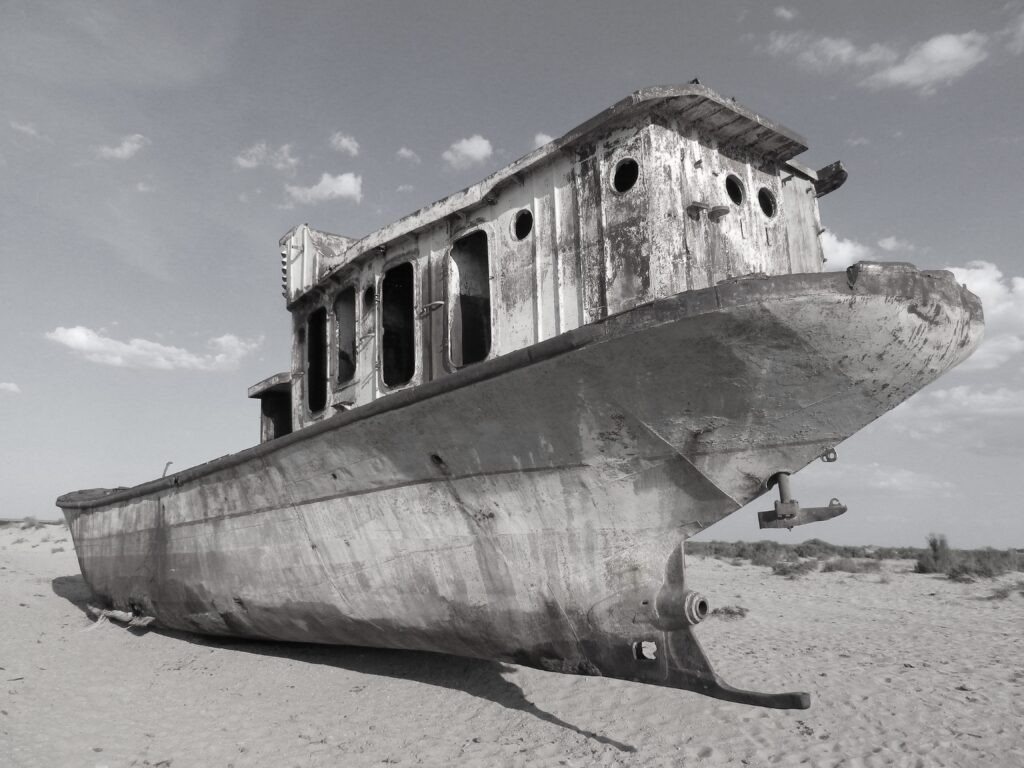
Kazakhstan and Uzbekistan will jointly improve the ecological situation in the Aral Sea basin, according to members of the Mazhilis of the Parliament of Kazakhstan. At a plenary session they adopted the corresponding bill on ratification of the agreement between the Government of the Republic of Kazakhstan and the Government of the Republic of Uzbekistan on cooperation in the field of ecology and environmental protection.   The document states that cooperation between the countries will be carried out in several areas. The most important is the prevention and control of pollution affecting the air and water of the Aral Sea, as well as the Amu Darya and Syr Darya rivers. Also included are the management of solid domestic waste and the preservation of biological diversity. In addition, Kazakhstan and Uzbekistan will jointly carry out measures to improve the ecological situation and environmental monitoring in the Aral Sea basin. The agreement between the countries also implies the creation of joint educational institutions, training of personnel, and the commitment that both states will do everything necessary to avoid environmentally harmful emergencies.   Parliamentarians report that in order to comply with this agreement, Kazakhstan and Uzbekistan will create a special commission that will monitor the implementation of the bilateral agreement.

High-Profile Speakers Open B5+1 Forum in Almaty

The ‘B5+1’ platform – a group of countries comprising the five Central Asian republics and the United States – took an important step forward today, with the launch of the inaugural B5+1 Forum in Almaty.  Instrumental in the formation of the B5+1 group has been the Center for International Private Enterprise (CIPE), which aims to develop public-private partnerships in the Central Asia region. This new business platform has been created to help international and local companies to capitalize on opportunities in global business and trade – while assisting the six governments in attracting more direct foreign investment.  The theme of the opening day was “Looking within Central Asia”. It began with a panel discussion on boosting economic integration in the Central Asia region, drawing from the area's distinctive context, and successful examples like ASEAN and the EU. Recommendations, from panelists including Richard E. Hoagland of the Caspian Policy Center and Alisher Shaykhov from Uzbekistan’s National Venture Capital Fund, included integrating the region's value chain into the global economy, and promoting collaborative investment initiatives. The second panel offered perspectives from Central Asia’s business leaders. Panelists including B5+1 representatives Aziza Shuzheyeva (Kazakhstan, e-commerce) and Manusurjon Rasulev (Uzbekistan, agribusiness) gave insights into the region’s high-profile industries. Speakers advocated for policy synchronization in these sectors, as well as in tourism and trade, as a means to boost regional growth.  For the third panel, government officials voiced their support for enhancing public-private dialogue. Tajikistan was represented by its deputy minister for economy Ahliddin Nuriddinzoda; his counterpart Ainura Usenbekova spoke on behalf of Kyrgyzstan, and Turkmenistan’s minister of finance Serdar Jorayev also spoke at length. Their focus was on national reforms and regional integration. The B5+1 Forum forms part of CIPE’s program called “Improving the Business Environment in Central Asia” (IBECA). CIPE themselves are affiliated to the US Chamber of Commerce – the catalyst behind the B7 and B20 platforms – and receive funding from the US Department of State. The B5+1 Forum continues tomorrow, Friday 15 March, with a thematic day dedicated to “Central Asia’s place in the world economy”.

UAE’s Masdar to Build Four Pumped-Storage Power Plants in Uzbekistan

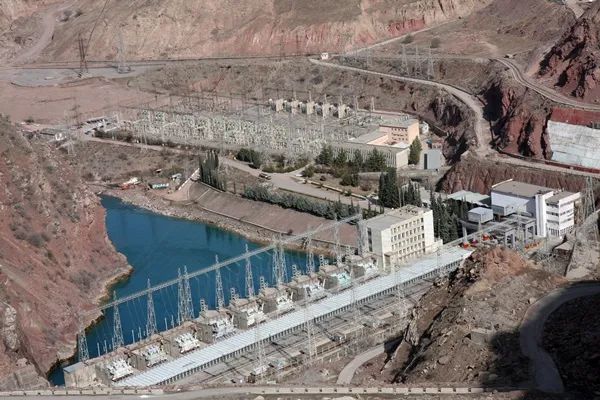
According to a memorandum of understanding (MoU) signed at the eighth international Congress, Hydropower. Central Asia and the Caspian held in Tashkent, Masdar will build four pumped-storage power plants in Uzbekistan with a capacity of 1,600 MW. The MoU signed by Masdar (UAE) and JSC Uzbekhydroenergo will give Uzbekistan its first hydropower plants that use gravity-driven water flow that's been pumped uphill to generate electricity when it's released. Thanks to the plant, Uzbekistan will be able to better manage issues with interruptions to its electricity supply. The large-scale hydropower project will be the first of its kind in Central Asia. Facilities built in the regions of Jizzak, Karakalpakstan, and Tashkent will have a total capacity of 1,600 MW capable of generating 2.8 gigawatt-hours (GWh) of electricity. Uzbekistan has been collaborating with Masdar for several years in the fields of solar and wind energy. According to the International Hydropower Association (IHA), pumped-storage hydroelectric power plants account for more than 90% of the world's installed energy storage capacity. By 2030, their total global capacity is forecast to reach 240 GW. in regard to the country's prospects on hydropower, Nodirbek Akchaboev, a department head at JSC Uzbekhydroenergo, stated, "Uzbekistan is striving to create a long-term and sustainable energy system. Uzbekhydroenergo acts as a locomotive to achieve these goals. We have set a goal to increase capacity up to 6,000 MW by 2030, and increase the hydro share in the generation of electricity 25% to 40%." During the congress, Uzbekhydroenergo outlined plans to build 18 new hydroelectric power plants with a capacity of 1,630 MW in addition to 28 small and micro-hydropower plants with a capacity of 28 MW. Fifteen existing hydro plants will be modernized. Thus, the total capacity of Uzbekistan's hydropower assets will rise to almost 6,000 MW; 3.7 times higher than the current output. Hydropower has now become the most widespread type of renewable energy and provides almost a quarter of the world's energy consumption. It therefore generates enough sustainable energy for over one billion households and 90% of the top 25 nations by population depends on this system. Furthermore, the development of the energy-transmission grid is becoming increasingly critical under current climate change conditions that require increased use of alternative energy sources.

Uzbekistan’s Uranium Deposits Attract Foreign Investors

Representatives of the China Nuclear Uranium Corporation (CNUC) met with the general director of state company Navoiuran, Jamal Faizullaev, to discuss the possibility of mining black shale uranium at the Jantuar and Ma'danli deposits in the Navoi region of Uzbekistan. Samples have already been taken from the deposits to complete geological studies. According to the International Atomic Energy Agency (IAEA), Uzbekistan ranks seventh in the world in terms of uranium reserves, and fifth in terms of uranium production. Until 1991, all uranium mined and processed in Uzbekistan was shipped to Russia, but since 1992, virtually all Uzbek uranium has been exported to the U.S. and other countries through Nukem Inc. In 2008, South Korea's Kepco signed agreements to purchase 2,600 tons of uranium over six years through 2015 for about $400 million. In May 2014, China's CGN agreed to purchase $800 million worth of uranium through 2021. In November 2023, state-owned Navoiuran and China National Nuclear Corporation (CNNC) signed a memorandum of cooperation on uranium mining and processing. CNNC is the main investor in Chinese nuclear power plants. The company currently has 22 operating units, six units under construction, and is the largest uranium producer in China. Besides Chinese investors, Uzbek uranium reserves continue to attract other major market players. In January 2006, Russia's Techsnabexport, a subsidiary of JSC Atomredmetzoloto, signed a memorandum of understanding with Navoi Mining and Metallurgical Combine (NMMC) and the State Committee on Geology (Goskomgeologiya) to establish a joint venture for uranium mining at the (JV) Aktau deposit. The JV was originally scheduled to begin operations in late 2006, but after four years of negotiations, no agreement was reached, and Russia withdrew in mid-2010. In October 2007, Japan's Itochu Corporation agreed with NMMC to develop technology for the extraction and processing of black shale uranium  at the Rudnoye deposit. In mid-2008, Mitsui & Co. signed a basic agreement with Goskomgeologiya to establish a JV for geological research in the development of black shale uranium resources at the Zapadno-Kokpatasskaya mine, 300 km northwest of Navoi. Then, in mid-2009, Goskomgeologiya and the Japan Oil, Gas and Metals National Corporation (JOGMEC) signed an agreement on exploration for uranium and rare-earth metals in the Navoi region with the stipulation that JOGMEC receive 50% of the extracted raw materials. In August 2013, JOGMEC received a license for uranium exploration at two sandstone deposits for a period of five years. During the November 2023 state visit by French President Emmanuel Macron to Uzbekistan, President Shavkat Mirziyoyev held a meeting with Orano Chairman, Claude Imoven. The meeting discussed the prospects of cooperation with the French company in the field of geological exploration and uranium mining in Uzbekistan. France's Orano is the world's largest producer of uranium and nuclear fuel, with assets totaling €29 billion. Uzbekistan's uranium production increased to 3,560 tons in 2022 from 2,385 tons in 2015. Furthermore, President Mirziyoyev has approved an ambitious uranium production target of 7,100 tons in 2030.

Problems and Solutions: Uzbekistan Presents National Report on the State of the Environment

The Ministry of Ecology, Environmental Protection and Climate Change of Uzbekistan has presented its National Report on the State of the Environment. (https://unece.org/sites/default/files/2024-02/uzbekistan-state-of-the-environment-ru.pdf) Prepared with the support of the United Nations (UN) Economic Commission for Europe, UN Environment Programme (UNEP), and the Food & Agriculture Organization (FAO), the document provides a comprehensive overview of the environment, current trends, relevant policy priorities, strategies and other documents aimed at outlining a plan of measures to address environmental problems. According to the report, water scarcity is one of the most acute problems facing Uzbekistan today. The cause is attributed to the country's growing population and consumption coupled with the impact of climate change. Over the past 50-60 years, glaciers in the Pskem River basin have diminished by 24%; in the Surkhandarya River basin, by 40%, and in the Kashkadarya basin by 70%. Scientists have now forecast that in the coming decades, the flow of the Amu Darya and Syr Darya rivers may decrease by 5-15%; a fate which will aggravate water shortages in both Uzbekistan and across neighbouring regions. To prevent such consequences, recommendations have been made to increase fines and taxes for the use and pollution of water resources, invest in the latest treatment systems, and adopt innovative irrigation systems in agriculture. The Aral Sea and its environs, declared a zone of permanent ecological disaster, deserves special attention. Another key problem highlighted in the report concerns air pollution caused by the growing number of cars, poor fuel quality, an increase in industrial enterprises and the use of coal. Proposed measures to improve air quality include switching to electric transport, installing purification plants and filters in factories, increasing green spaces and decarbonizing the economy. In addition to data on existing environmental problems, the report describes successful solutions realised by Uzbekistan in recent years. Due to the reforms, the country has managed to significantly increase life expectancy and reduce the spread of infectious diseases. In 2021, life expectancy had risen to 73.8 years, compared to 70.8 years in 2000. In 2021, maternal mortality rate fell to 14.4 per 100,000 live births, compared to 21.4 in 2000. The mortality rate for infants under one year old fell to 6.4 in 2021 from 17.3 in 2000, and that of children under 5, decreased to 12.3 from 28.5 over the same period. Today, Uzbekistan boasts 14 international conventions and over 20 protocols, agreements and memoranda of understanding in the field of environmental protection and sustainable development. The country has updated and strengthened its commitments on greenhouse gas emissions under the Paris Agreement up to 2030. The Ministry of Ecology is in the process of implementing 31 international grant projects totalling more than $100 million and in the future, will instigate eight international projects worth $40 million.