• KGS/USD = 0.01144 0%
  • KZT/USD = 0.00209 0%
  • TJS/USD = 0.10438 0%
  • UZS/USD = 0.00008 0%
  • TMT/USD = 0.28490 0%
  • KGS/USD = 0.01144 0%
  • KZT/USD = 0.00209 0%
  • TJS/USD = 0.10438 0%
  • UZS/USD = 0.00008 0%
  • TMT/USD = 0.28490 0%
  • KGS/USD = 0.01144 0%
  • KZT/USD = 0.00209 0%
  • TJS/USD = 0.10438 0%
  • UZS/USD = 0.00008 0%
  • TMT/USD = 0.28490 0%
  • KGS/USD = 0.01144 0%
  • KZT/USD = 0.00209 0%
  • TJS/USD = 0.10438 0%
  • UZS/USD = 0.00008 0%
  • TMT/USD = 0.28490 0%
  • KGS/USD = 0.01144 0%
  • KZT/USD = 0.00209 0%
  • TJS/USD = 0.10438 0%
  • UZS/USD = 0.00008 0%
  • TMT/USD = 0.28490 0%
  • KGS/USD = 0.01144 0%
  • KZT/USD = 0.00209 0%
  • TJS/USD = 0.10438 0%
  • UZS/USD = 0.00008 0%
  • TMT/USD = 0.28490 0%
  • KGS/USD = 0.01144 0%
  • KZT/USD = 0.00209 0%
  • TJS/USD = 0.10438 0%
  • UZS/USD = 0.00008 0%
  • TMT/USD = 0.28490 0%
  • KGS/USD = 0.01144 0%
  • KZT/USD = 0.00209 0%
  • TJS/USD = 0.10438 0%
  • UZS/USD = 0.00008 0%
  • TMT/USD = 0.28490 0%

Viewing results 451 - 456 of 1136

Turkmengaz Ends Gas Supply Contract with Gazprom Over Pricing Dispute

Turkmenistan's national gas company, Turkmengaz, has not extended its gas supply contract with Gazprom because the parties could not agree on a new fuel price. Turkmengaz Chairman Maksat Babayev explained: "On June 30, as outlined in the contract, we were set to review prices. If both sides agreed on the price, we could extend the contract. However, after negotiations, we couldn’t agree on the commercial terms. So, as per the contract, without an agreement, the contract was to end on June 30, which is what we proceeded with.” He shared this at a press conference following the “Oil and Gas of Turkmenistan – 2024” (OGT 2024) event. Babayev added that for Turkmengaz, the critical factor in starting, resuming, or ending supplies is the commercial aspect. “Contracts for purchase and sale are considered based on mutual benefit,” he explained. “Currently, demand from the north, west, and east is growing, and we are constantly in talks with various buyers and countries, so resuming supplies to Russia is certainly possible.” In 2019, Gazprom signed a five-year contract with Turkmengaz to buy natural gas through June 30, 2024. The agreement covers an annual supply volume of 5.5 billion cubic meters. Previously, Gazprom's head, Alexey Miller, announced that the company doubled the volume of gas supplies to Central Asia from January to August 2024. According to Miller, the republics' rapid economic and social development has opened meaningful new opportunities for Gazprom, which is currently at the highest possible level of gas supply to Uzbekistan.
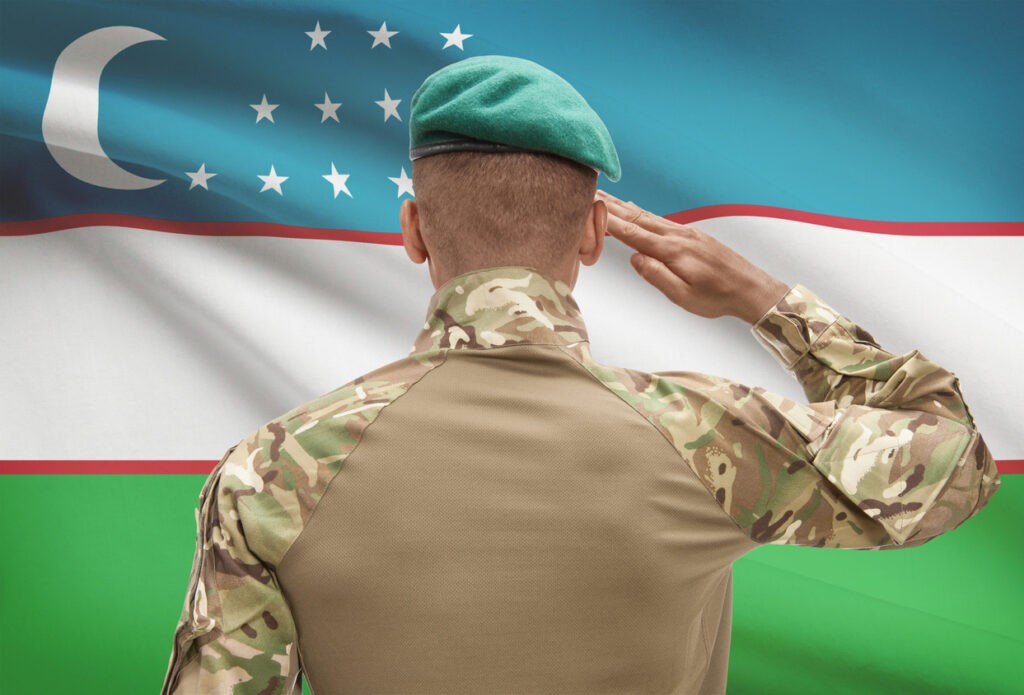
Uzbekistan Leads in Central Asia’s Military Strength Rankings

U.S. News recently published its list of the world’s strongest militaries, with Russia, the U.S., and Israel in the top three. The Times of Central Asia reviewed this rating in the Central Asian countries section. Uzbekistan ranks 19th globally in military strength, the highest in the region. However, U.S. News ranks the country 74th out of 78 in its “Best Countries” category, citing an economy still largely driven by cotton. Uzbekistan remains a major global player in cotton, as the fifth-largest exporter and seventh-largest producer worldwide. Kazakhstan, Central Asia’s largest economy, ranks 22nd for military strength and is noted for its vast reserves of fossil fuels, uranium, and other minerals. Much of Kazakhstan’s economic growth has been oil-driven, and the country ranks 83rd on the “Best Countries” list. U.S. News ranked countries based on cultural influence, entrepreneurship, heritage, openness to business, quality of life, and social purpose. In a separate ranking, the Global Firepower Military Index for 2024 lists Kazakhstan as Central Asia’s top military power, placing it at 58th worldwide. Uzbekistan has fallen by three places since last year’s rankings — the only country in the region not to show an improvement — and is now in the 65th position. In the bottom half of the table, Turkmenistan lies in 83rd place, while Kyrgyzstan is 100th. Global Firepower puts Tajikistan in 107th place, making it the region’s weakest army.

How Central Asia Is Shifting From Russia Towards Turkey

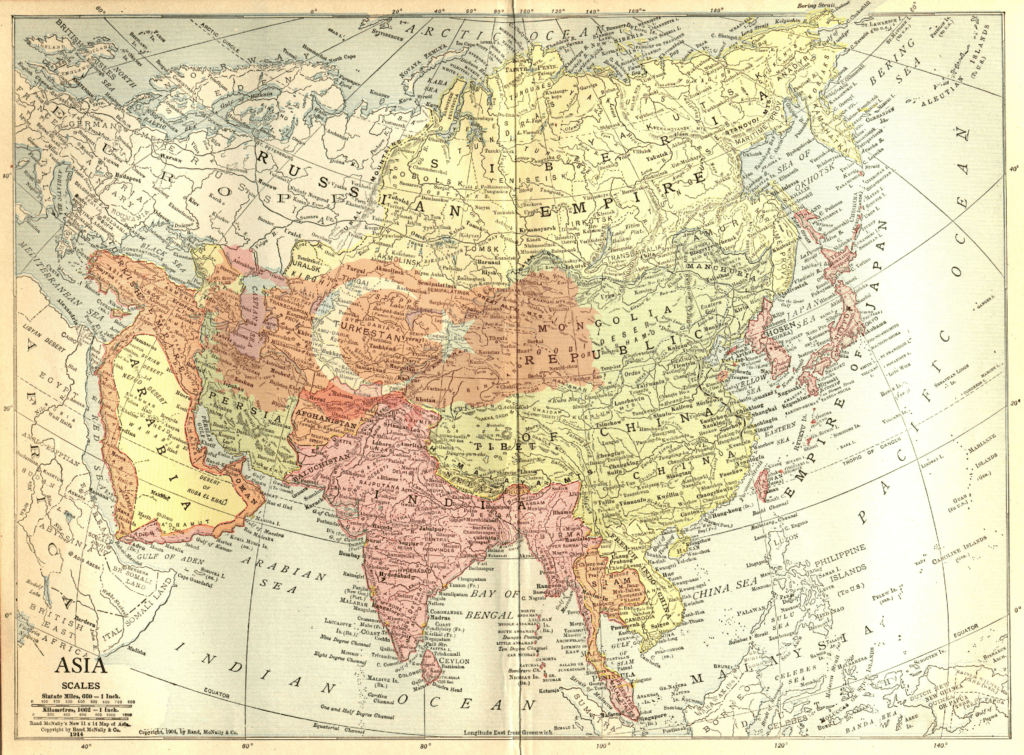
For Turkey, a NATO member and EU hopeful, the Organization of Turkic States (OTS) is an instrument that helps Ankara increase its presence in the strategically important region of Central Asia. For Kazakhstan, Kyrgyzstan, Uzbekistan, and Turkmenistan, the Turkish-dominated group seems to be a tool that allows them to achieve their economic goals, while also continuing to distance themselves from Russia. Although Moscow still has a relatively strong foothold in Central Asia, it does not seem able to prevent the growing role of the Organization of Turkic States in the post-Soviet space. This entity – whose members are Azerbaijan, Kazakhstan, Kyrgyzstan, Turkey, and Uzbekistan, while Turkmenistan, Hungary, and the self-proclaimed Turkish Republic of Northern Cyprus hold observer status – has the potential to eventually serve as a counterbalance not only to Russian, but also Chinese influence in the region. Since its foundation in 2009, the OTS has held ten summits of its leaders. Over this period, the intergovernmental organization’s working bodies have also convened dozens of times. On November 5-6 in the Kyrgyz capital Bishkek, the OTS heads of states will meet for the eleventh time to discuss the future of the Turkic world. Although the agenda has yet to be announced, it is believed that the OTS leaders will seek to strengthen economic cooperation between its members. Currently, their major trade partners are nations outside the bloc. For instance, Turkey’s largest trading partner is Germany, Azerbaijan’s is Italy, while China has recently become Kazakhstan’s biggest trade partner with bilateral trade hitting $31.5 billion. For neighboring Kyrgyzstan and Uzbekistan, China and Russia remain the most important economic partners. One of the group’s major problems is the fact that its members, excluding Turkey, are landlocked countries heavily-dependent on Russia and China geographically. Turkmenistan and Kazakhstan, as major energy exporters, rely on oil and gas pipelines traversing Russian territory to reach their customers in Europe. It is, therefore, no surprise that the Organization of Turkic States governments’ agreed in September to create a simplified customs corridor, aiming at reducing the number of documents required for customs operations and customs procedures between OTS member states. In other words, they plan to increase trade among themselves. According to Omer Kocaman, OTS Deputy Secretary-General, the Turkic nations are also looking to “continue cooperation to stimulate positive changes in their financial systems.” That is why the organization has recently launched the Turkic Investment Fund – the first joint financial institution for economic integration of the Turkic countries, with an initial capital of $500 million. Kyrgyzstan’s Chamber of Commerce and Industry announced on October 17 that, starting in January 2025, the Turkic Investment Fund will begin financing major joint projects in OTS nations. However, in July, Azerbaijani President Ilham Aliyev said that the current structure of the Organization of Turkic States does not meet its established goals, and that its budget is insufficient for their implementation. In order to change that, on October 19, ministers of economy and trade of the OTS nations met in Bishkek to...

Uzbekistan Opens Strategic Highway Link to Europe

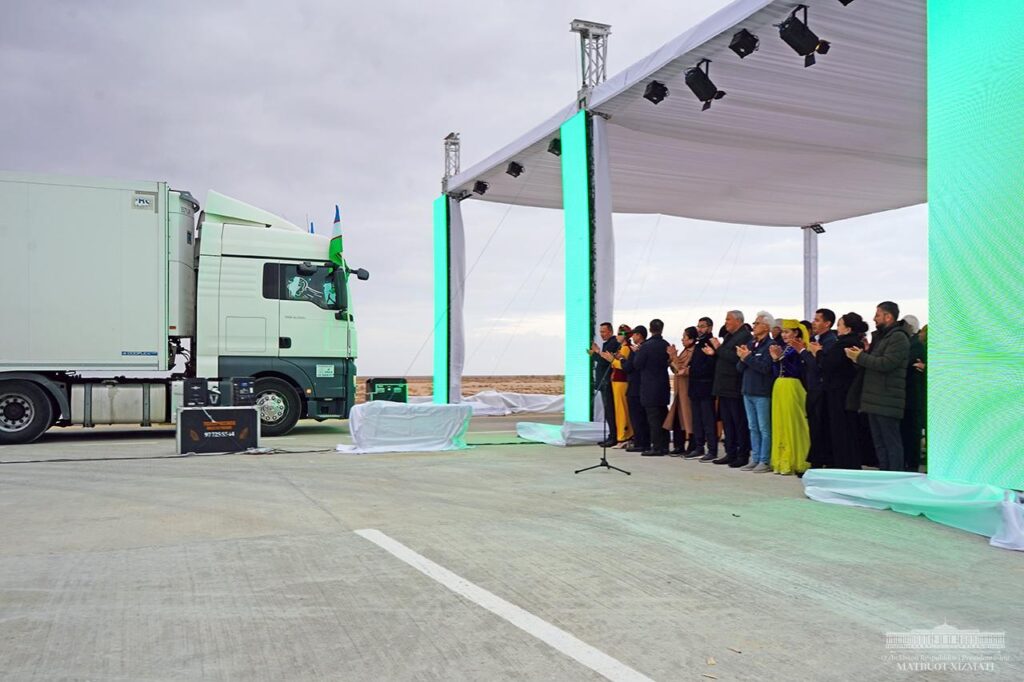
A 240km section of the Kungrad-Beineu highway in Uzbekistan has been reopened after reconstruction. The road runs through Uzbekistan’s northwestern region of Karakalpakstan to the border with Kazakhstan. It is part of a strategic highway corridor connecting Uzbekistan with European countries. Uzbekistan's President Shavkat Mirziyoyev said that the distance of international transportation through Uzbekistan will now be reduced to 1,000 kilometers, and transportation costs will be lowered by 25 percent. “This road will become part of the logistics network reliably connecting our country with European markets through the Caspian and Black Sea ports. On this section of the international corridor "A-380" that passes through Uzbekistan, the daily traffic flow will increase threefold,” Mirziyoyev noted. In recent years, double-landlocked Uzbekistan has been striving to become a key transit hub in trade turnover between the EU and Turkey and Kyrgyzstan, Tajikistan, and Afghanistan.

Uzbekistan’s Cricket Team: We’re Ready For International Matches

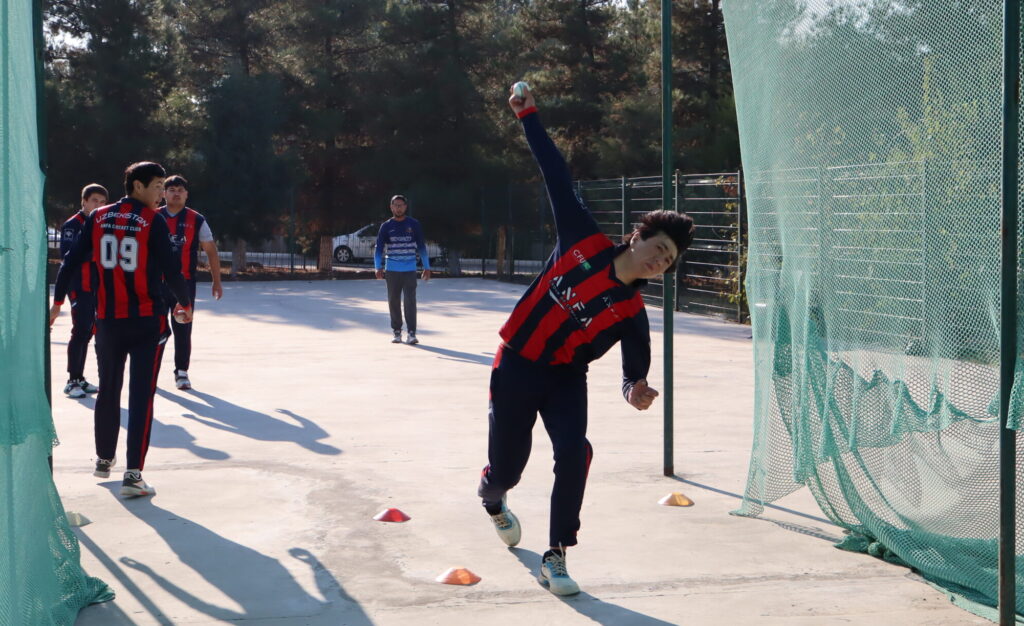
Supporters of Uzbek sport have had a lot to celebrate this year. The national football team currently sits at the top of its qualifying group for the 2026 FIFA World Cup, while eight of the country's athletes took gold at this summer's Paris Olympics.  But next year Uzbekistan wants to enter the world stage in a more surprising sport: cricket. The Central Asian country joined the game's governing body, the International Cricket Council (ICC), in 2022. As an “Associate” ICC member there are hopes that the Uzbek squad will play its first international matches in 2025, in the Twenty20 (T20) version of the game. T20 games are much shorter than traditional five-day Test matches. The nation's rapid progress is due to Aziz Mihliev, the owner of Tashkent pharmaceutical company Anfa. Mihliev fell in love with the game while living in India, where cricket is the national sport. As the founder and chairman of the O’zbekiston Kriket Federatsiyasi (Uzbekistan Cricket Federation), Mihliev has created the Anfa Cricket Academy in the capital's Yunusobod district, where three practice pitches cover a school playground. The federation invites students at Tashkent’s sports colleges to the academy to try their hand at cricket. Many of the players picked to wear the red and dark blue striped jerseys of the new Anfa Cricket Club are also talented tennis players. Mihliev has also built a cricket ground outside the capital, towards the town of Chirchiq, where a game between Salar Stars and Ferghana Rangers will be played this Sunday. There are plans to turn an abandoned Soviet-era stadium outside Samarkand into Uzbek cricket's second home. Travelling to represent Uzbekistan at global ICC conferences, Mihliev speaks with the ambition of a man who now rubs shoulders with the most influential people in the sport. From one such trip he writes: "My ambition is to see an Uzbekistan national team play a Test match against the England team. And win, of course!" Over 4,000 Uzbeks now play the game regularly at schools and universities, from Tashkent in the north of the country to the southern Surkhandaryo region.  Surkhandaryo borders Afghanistan, a passionate cricketing nation that reached the semi-finals of this year's men’s T20 World Cup. And it was to Afghanistan that Mihliev turned when recruiting a former international player to train his national team. Khaliq Dad Noori played a few games for Afghanistan at the beginning of the 2010s, when his own country was at the start of its journey to the top of world cricket.  Noori coaches his players in the Pashto language, which his Uzbek students can understand. But cricket in Uzbekistan still has a local flavour. Hitting techniques come straight from games of chilla, an old pastime played with sticks. Bats are known as tuqmoq – the name of a wooden club that Uzbek warriors used to brandish. Although some of Uzbekistan’s best cricketers have only been playing for a year or two, judging by the talent on show during a practice session they would beat most...

Two Lost Silk Road Cities Unearthed in Uzbekistan

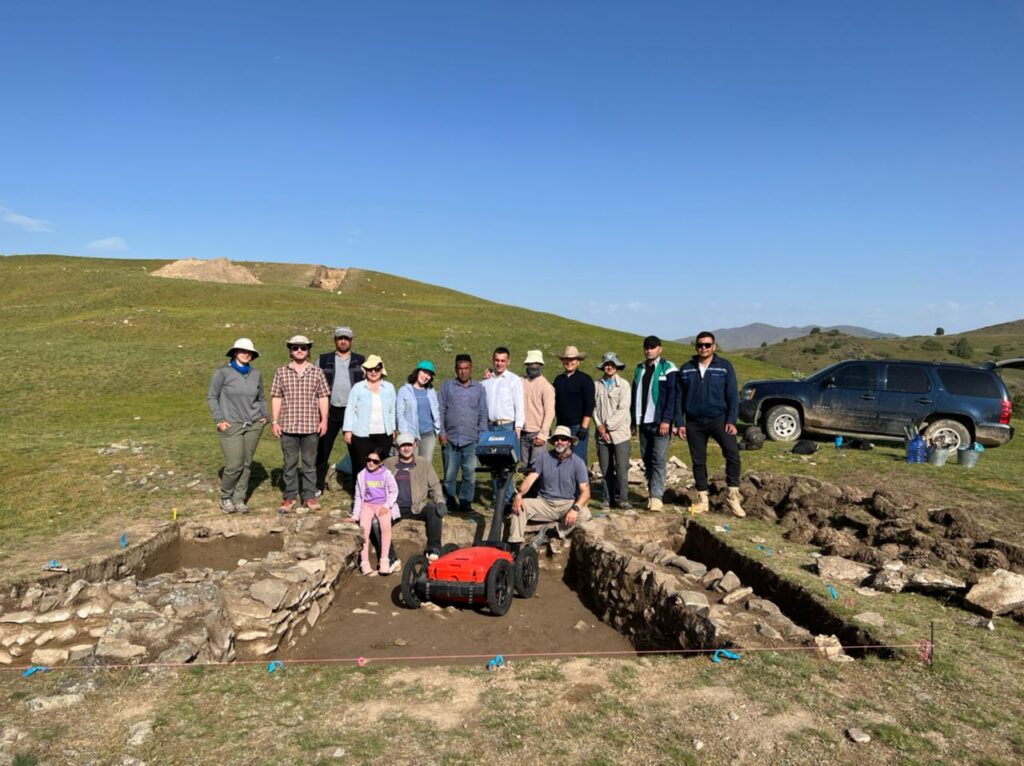
Aided by laser-based technology, archaeologists in south-east Uzbekistan, have discovered two lost cities that once thrived along the Silk Road from the 6th to 11th centuries AD. As reported  by Reuters, one was a center for the metal industry, and the other, indicates early Islamic influence. Located some five kilometers apart, these early fortified outposts are among the largest found on the mountainous sections of the Silk Road. “These cities were completely unknown. We are now working through historical sources to find possible undiscovered places that match our findings,” said archaeologist and lead author of the report, Michael Frachetti of Washington University in Saint Louis. The researchers state that the most expansive of the two, Tugunbulak, covered about 300 acres (120 hectares) and in existence from around 550 to 1000 AD, boasted a population of tens of thousands. As such, it was one of the largest cities of its time in Central Asia, rivaling even the famed trade hub Samarkand, situated about 110 km away, and according to Frachetti,  many times larger and more enigmatic than other highland castles or settlements that have been documented in high-elevation Central Asia." The other city, Tashbulak, inhabited from around 730-750 to 1030-1050 AD, was only a tenth the size of its neighbor, with a population perhaps in the thousands. After discovering the first signs of the cities' existence, archaeologists employed drone-based lidar -  a technology that floods the landscape with lasers to measure the topography - to map and establish the size and layout of the sites. Findings revealed highly defined structures, plazas, fortifications, roads, homes, and other urban features. An initial dig at one of Tugunbulak’s buildings, fortified with thick earthen walls, uncovered kilns and furnaces, suggesting it was a factory wherein, metalsmiths turned local iron ore into steel. During the 9th and 10th centuries, the region was known for its steel production and researchers are now analyzing slag found on-site to confirm their hypothesis that in addition to trade in livestock and related products such as wool, the metal industry may have been a central feature of Tugunbulak’s economy. According to Franchetti, “Tugunbulak, in particular, complicates much of the historical understanding of the early medieval political economy of the Silk Routes, placing both political power and industrial production far outside the regional ‘breadbaskets’ such as Samarkand." As stated in the report, Tashbulak lacked the industrial scale of Tugunbulak but boasted an interesting cultural feature: a large cemetery that reflects the early spread of Islam in the region. Its 400 graves—for men, women, and children—include some of the oldest Muslim burials documented in the area.“The cemetery is mismatched to the small size of the town," said Frachetti. "There's definitely something ideologically oriented around Tashbulak that has people being buried there." Tugunbulak and Tashbulak are especially remarkable given their altitude, which is roughly comparable to that of the later Inca citadel of Machu Picchu in Peru, and as noted by Frachetti, “The key finding of this study is the existence of large, fortified, and...