Viewing results 9157 - 9162 of 12365
BISHKEK (TCA) — The UN supports the initiative of Kyrgyzstan President Sooronbai Jeenbekov to declare 2018 the Year of Regional Development, Ozonnia Ojiello, UN Resident Coordinator and UNDP Resident Representative in the Kyrgyz Republic said at the meeting with the Kyrgyz President on February 16. Continue reading
BISHKEK (TCA) — The Publisher’s note: Throughout the 19th and 20th centuries, Central Asia was the scene of intense geopolitical struggle and the Great Game between the British and Russian Empires, and later between the Soviet Union and the West, over Afghanistan and neighboring territories. Into the 21st century, Central Asia has become the area of a renewed geopolitical interest, dubbed the New Great Game, largely based on the region’s hydrocarbon and mineral wealth. On top of that, the region now is perhaps the most important node in the implementation of China’s One Belt, One Road initiative through which Beijing aims to get direct access to Western markets. Every week thousands of news appears in the world’s printed and online media and many of them may escape the attention of busy readers. At The Times of Central Asia, we strongly believe that more information can better contribute to peaceful development and better knowledge of this unique region. So we are presenting this Weekly Digest which compiles what other media have reported on Central Asia over the past week. KAZAKHSTAN What Nazarbayev Hopes to Achieve The honorary secretary of the Singapore Press Club on the Kazakh president’s efforts to modernize the country Feb 9 — “The 10 priority tasks that President Nursultan Nazarbayev announced on Jan. 9 indicate that the statesman is in a hurry to modernise Kazakhstan. The resourceful leader knows that his developing Central Asian republic cannot afford to lag behind if it is to achieve his goal of becoming one of the top 30 economies of the world by 2050.” READ MORE: https://astanatimes.com/2018/02/what-nazarbayev-hopes-to-achieve/ Meet the Woman Charged With Saving the Kazakh Banking System Kazakhstan’s banking system still remains weak, with non-performing loans undermining the system Feb 12 — “After a decade of financial turmoil, Kazakhstan is looking to the head of its largest lender to restore the banking system to health. Umut Shayakhmetova, the 48-year-old chief executive officer of Halyk Bank, is weighing the lender’s first dividend since 2015. The potential payout is a sign of stabilization in the banking system after years of turmoil culminated in Halyk being drafted in to recapitalize its main competitor, Kazkommertsbank.” READ MORE: https://www.bloomberg.com/news/articles/2018-02-12/meet-the-woman-charged-with-saving-kazakhstan-s-banking-system Kazakhstan’s new secularity In October 2018, Astana will host the 6th Congress of World Religions, as the issues of religious freedom and extremism remain high on the regional agenda Feb 13 — “The upcoming congress of religious leaders may offer the Kazakh government insights into better ways of fighting national security threats related to religion. If not, the Palace of Peace and Reconciliation built in 2006 especially for inter-confessional conferences may itself become a threat to Astana’s new definition of secularity.” READ MORE: http://neweasterneurope.eu/2018/02/13/kazakhstans-new-secularity/ Kazakhstan: Businessman Alleges Torture The ill-treatment and torture of detained people is widespread in Central Asian countries and Kazakhstan is no exception Feb 15 — “Kazakh authorities should provide immediate medical assistance to a detained businessman who has alleged that he was beaten and ill-treated, the Norwegian Helsinki Committee and Human Rights Watch said today.”...
BISHKEK (TCA) — Kyrgyzstan’s National Security Committee said on February 16 it had caught a would-be suicide attacker in a counter-terrorist raid that targeted a cell trained in Syria, Sputnik news agency reported. Continue reading
TASHKENT (TCA) — The Asian Development Bank’s (ADB) Trade Finance Program (TFP) and Uzbekistan’s Joint-Stock Commercial Aloqabank have signed an agreement to provide loans and support trade in Uzbekistan, ADB’s country office said on February 14. Continue reading
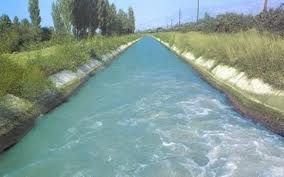
BISHKEK (TCA) — The largely non-delimited state border between Kyrgyzstan and Tajikistan, as well as long-lasting disputes over water resources and irrigation facilities in border areas, remain the main problem in the relations between the two neighboring countries. We are republishing this article on the issue by Nurjamal Djanibekova, originally published by Eurasianet: The districts of Batken and Lelik are tucked away in a southwest corner of Kyrgyzstan with the northern part of Tajikistan on either side. On occasion, this remote corner of the Fergana Valley is the site of sudden outbreaks of unrest, as rival communities on either side of the border vie for control over the sparse resources the unyielding land has to provide. The problem is compounded by lingering uncertainty and indecision on where exactly national borders ought to be drawn. On February 15, experts convened at the University of Central Asia for a roundtable – “Promoting Social Cohesion and Conflict Migration along the Kyrgyz-Tajik border” – to discuss the findings of their research on these pressing issues and to debate how best to resolve the impasse. Kemel Toktomushev, research fellow at the Institute of Public Policy and Administration of the University of Central Asia, said that he saw the roots of sporadic conflicts in the inability of the Kyrgyz SSR to take preventative measures. Tensions between one particular set of communities have been exacerbated over the years by disagreement on how to manage the Tortgul Reservoir, which was built in the 1970s to collect the flow of water from the Isfara, a river that snakes along either side of the border. But Toktomushev said that despite the oft-cited insistence that water shortages cause arguments, only by finally ending the process of delimiting borders will the periodic flare-ups stop. Borders need to be both clearly defined and yet open for local residents to cross with ease. “For more than 25 years we have been unable to address this problem. We still have uncertain borders and enclaves. These shortcomings exacerbate conflict — as well as economic tensions and interethnic hatred — in the region. Strict border regimes only hinder free movement and destroy fragile peace, instead of strengthening relations,” he said. Toktomushev noted that tensions tend to surge during the growing season as many of the canals and irrigation systems are in bad shape. Since neither government is willing to commit to the cost of renovations outside their national borders, the faulty infrastructure itself makes resource-sharing problematic. Asel Murzakulova, a senior research fellow at UCA's Mountain Societies Research Institute, agreed that Tajikistan and Kyrgyzstan are failing to address the problem at the local level and are instead politicizing it. “We see how almost all republic-status canals are not being maintained. There is no sense of ownership, there is constant competition: that’s mine and this is mine. People don’t view canals as infrastructure but as a place where to plant one’s flag. This politicization of the issue leaves no space for development,” Murzakulova said. Murzakulova added that the local...
BISHKEK (TCA) — Youth from Central Asian countries and Afghanistan participated in the Network Cup 2018 debate tournament at the American University of Central Asia in Bishkek, organized by the C5+1 Youth Council with support of the U.S. Embassy in Kyrgyzstan, on February 10–11. Continue reading