• KGS/USD = 0.01144 0%
  • KZT/USD = 0.00208 0%
  • TJS/USD = 0.10439 0%
  • UZS/USD = 0.00008 0%
  • TMT/USD = 0.28571 0%
  • KGS/USD = 0.01144 0%
  • KZT/USD = 0.00208 0%
  • TJS/USD = 0.10439 0%
  • UZS/USD = 0.00008 0%
  • TMT/USD = 0.28571 0%
  • KGS/USD = 0.01144 0%
  • KZT/USD = 0.00208 0%
  • TJS/USD = 0.10439 0%
  • UZS/USD = 0.00008 0%
  • TMT/USD = 0.28571 0%
  • KGS/USD = 0.01144 0%
  • KZT/USD = 0.00208 0%
  • TJS/USD = 0.10439 0%
  • UZS/USD = 0.00008 0%
  • TMT/USD = 0.28571 0%
  • KGS/USD = 0.01144 0%
  • KZT/USD = 0.00208 0%
  • TJS/USD = 0.10439 0%
  • UZS/USD = 0.00008 0%
  • TMT/USD = 0.28571 0%
  • KGS/USD = 0.01144 0%
  • KZT/USD = 0.00208 0%
  • TJS/USD = 0.10439 0%
  • UZS/USD = 0.00008 0%
  • TMT/USD = 0.28571 0%
  • KGS/USD = 0.01144 0%
  • KZT/USD = 0.00208 0%
  • TJS/USD = 0.10439 0%
  • UZS/USD = 0.00008 0%
  • TMT/USD = 0.28571 0%
  • KGS/USD = 0.01144 0%
  • KZT/USD = 0.00208 0%
  • TJS/USD = 0.10439 0%
  • UZS/USD = 0.00008 0%
  • TMT/USD = 0.28571 0%

Our People > Andrei Matveev

Andrei Matveev's Avatar

Journalist

Andrei Matveev is a journalist from Kazakhstan.

Articles

Kazakhstan Signals Early Review of Oil Production Sharing Agreements

The question of revisiting Kazakhstan’s production-sharing agreements (PSAs) with foreign oil companies is once again gaining prominence both within the country and internationally. While the Ministry of Energy is formally responsible for managing these contracts, growing pressure is coming not only from civil society but also directly from President Kassym-Jomart Tokayev, who has publicly questioned the long-standing terms of these deals since 2022. Confidential Terms, Public Scrutiny Recent revelations have further fueled this debate. The International Consortium of Investigative Journalists (ICIJ) recently detailed the ongoing arbitration dispute between Kazakhstan and the North Caspian Operating Company (NCOC), which manages the Kashagan field. The stakes are high: $160 billion is under contention. Yet what shocked the Kazakh public most was not the litigation itself, but that the state receives just 2% of the field’s profits, with a staggering 98% flowing to foreign stakeholders. Such findings offer context for why the Ministry of Energy is reluctant to release details of these 1990s-era agreements, originally negotiated with significant involvement from Kazakhstan’s first president, Nursultan Nazarbayev. In a recent court case, the ministry successfully blocked a lawsuit by Vadim Ni, founder of the Save the Caspian Sea movement, who demanded public disclosure of PSA terms affecting environmental interests in the Caspian. The ministry argued that Kazakhstan’s adherence to international confidentiality clauses is essential to avoid multibillion-dollar lawsuits and maintain its reputation as a stable investment destination. However, the ministry also emphasized that confidentiality does not shield violators from environmental penalties. Calls for transparency and revision have come from various quarters. Members of the Ak Zhol party and the Parasat Business Alliance have joined the chorus, urging the government to review the PSAs. In this context, President Tokayev’s consistent remarks suggest a coordinated state policy shift. A Change in Presidential Tone Tokayev first broached the subject in a 2022 interview with Russia 24, reflecting on the constraints Kazakhstan faced during the early years of independence. At the time, the country had no legal framework for foreign investment and had to rely on companies like Chevron to develop its energy sector. The president acknowledged the success of some ventures but also suggested the need for a “correction” to reflect current realities. Fast forward to 2023, and the government launched a $5 billion lawsuit against NCOC over alleged environmental violations. Although Kazakhstan has been temporarily barred from collecting the fines pending arbitration, the case marks a significant escalation. In April 2024, the Parasat Business Alliance held a public briefing demanding more local participation in procurement contracts tied to oil fields such as Karachaganak, Kashagan, and Tengiz. Kazakh companies reportedly receive less than 5% of $12 billion in annual procurements, a figure viewed as unacceptable by domestic businesses. By January 2025, Tokayev’s rhetoric had hardened. Speaking at an expanded government meeting, he instructed his cabinet to actively renegotiate PSA terms before their expiration. "The implementation of these agreements has helped Kazakhstan become a reliable global energy supplier,” he said, “but large investments require updated terms that benefit our nation.”...

11 months ago
May Day in Central Asia: From Soviet Parades to a Celebration of Unity

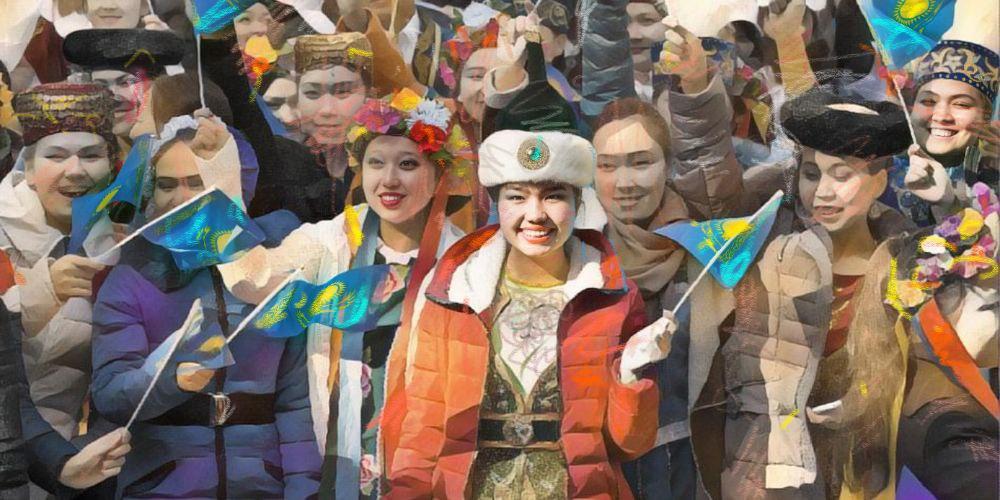
In Soviet times, May 1 and 2 were public holidays. May 1 was International Workers' Day, marked by large-scale parades celebrating the proletariat, while May 2 served as a day to recuperate before returning to work. Today, three of the five Central Asian republics have preserved the tradition of celebrating May Day, effectively marking the arrival of spring twice, once through Central Asian customs – Nauryz - and again through European ones. Workers of the world, unite! Coined by Karl Marx and Friedrich Engels in The Communist Manifesto, this famous communist slogan once appeared on the coats of arms of the Soviet Union and its republics. International Workers' Day became the living embodiment of this phrase. Celebrated on 1 May, May Day began as a European festival of spring but gained global significance through the labor movement. The Second International, formed at the 1889 International Workers Congress in Paris, called for an annual demonstration advocating an eight-hour workday. The date honors the U.S. general strike that started on 1 May 1886 and led to the tragic Haymarket massacre on 4 May. The date became a powerful symbol of working-class solidarity and a yearly tradition across large swathes of the globe. [caption id="attachment_31352" align="aligncenter" width="1174"] Soviet-era poster for International Workers' Day[/caption] Before the Bolsheviks came to power, political agitators in the Russian Empire used May 1 to call for change with slogans such as “Down with the Tsar” and “Give us freedom.” After the October Revolution, May 1 and 2 became official state holidays, with May Day becoming synonymous with International Workers' Day and mandatory parades. Unlike the more formal and solemn celebrations honoring the October Revolution, however, May Day events were often met with genuine enthusiasm. After the collapse The fall of the USSR brought about a widespread reevaluation of Soviet holidays. The celebration of the October Revolution on November 7 was widely discarded, but many post-Soviet republics retained May 1 as a public holiday, albeit with new interpretations and meanings. In Central Asia, Turkmenistan and Uzbekistan do not officially celebrate May 1. Turkmenistan has developed a distinct holiday calendar, while in Uzbekistan, May 1 is observed symbolically as the Day of Fountains. [caption id="attachment_31353" align="aligncenter" width="2560"] Day of Fountains, Tashkent; image: TCA, Stephen M. Bland[/caption] Though celebrations are more modest and it is no longer officially a day off, Tajikistan has retained the holiday’s Soviet-era name, International Workers’ Day. Some traditions, such as honoring outstanding workers, persist. Kyrgyzstan calls the holiday Labor Day, in line with its American equivalent. It is marked by festive events and activities organized by trade unions. Kazakhstan has taken a different approach, reimagining May Day as the Day of Unity of the People of Kazakhstan. The name reflects the country’s emphasis on stability and interethnic harmony, a model promoted by the Assembly of the People of Kazakhstan, an institution established on March 1, 1995, at the initiative of the country’s first president, Nursultan Nazarbayev. Since 2016, March 1 has also been celebrated as Thanksgiving...

11 months ago

Shadows of Power: Assassination Attempt Exposes Kazakhstan’s Turbulent Past

The assassination attempt on the deputy akim (head of the local government) in Shymkent, Kazakhstan’s third-largest city with a population exceeding one million, has drawn intense public attention. Shymkent, designated a city of republican significance, rarely sees violence of this nature targeting high-ranking officials. Ruslan Berdenov, the official in question, was wounded by shotgun fire from a smoothbore weapon on the steps of the city administration building, which struck him in the thigh and the shoulder. The attack appears less like a calculated contract killing and more like an act of personal retribution. Despite its entrenched presence in Russian criminal culture, the phenomenon of contract killings has not firmly taken root in Kazakhstan or the broader Central Asian region. Nonetheless, several contract-style assassinations have left a deep imprint on the public consciousness. The following cases are among the most significant. Alexander Svichinsky On December 28, 1992, Alexander Svichinsky, the general director of the Karaganda Metallurgical Plant, was gunned down in Temirtau. This was the first confirmed contract killing in post-Soviet Kazakhstan. Svichinsky, who had risen through the ranks at Karmet Combine from mechanic to general director, had recently succeeded Oleg Soskovets, who later served in both the Kazakh and Russian governments. He was shot in the back of the head at the plant’s gatehouse. President Nursultan Nazarbayev took personal control of the investigation. Gabdrakhim Mendeshev, a veteran criminal investigator, eventually uncovered the truth: the hit was arranged by a demoted former deputy of Svichinsky. The intermediary, a driver at the plant, enlisted three Lithuanian nationals staying at a local hotel to carry out the murder. Following Svichinsky’s death, the plant’s fortunes declined. It was eventually sold to Indian industrialist Lakshmi Mittal’s Ispat Corporation. Iosif Milgram A year later, in December 1993, Almaty saw its first major contract killing. Iosif Milgram, the head of the Almatygorstroy construction firm, and his driver Dmitry Tarasov were murdered in the courtyard of Milgram’s home. The case went unsolved until 1998 when a traffic stop led to the arrest of Zakir Salakhutdinov. After killing a police officer during the stop, Salakhutdinov was detained and eventually confessed to the murder of Milgram. Investigators discovered that Milgram had accused his business partner, Valentin Li, of embezzlement. Li allegedly paid Salakhutdinov $20,000 to carry out the killing. In 1999, Salakhutdinov was sentenced to death and Li received a 15-year sentence, although he was released early due to illness. Nurlan Turysov In 2002, businessman Nurlan Turysov and his wife Bayan Atabaeva were murdered in their Almaty apartment. Turysov was the son of Karatay Turysov, a prominent political figure in Soviet Kazakhstan who had served as vice-premier of the republic’s Council of Ministers. Investigators believe Turysov was acquainted with the killers, as he let them in himself. He was shot twice in the temple and once in the back of the head. Hearing the shots, his wife attempted to flee and was attacked at the window, stabbed, and then shot in the head. The apartment was ransacked, suggesting the killers...

11 months ago

Open Wounds: Why a Murder Trial in Talgar Has Gripped Kazakhstan

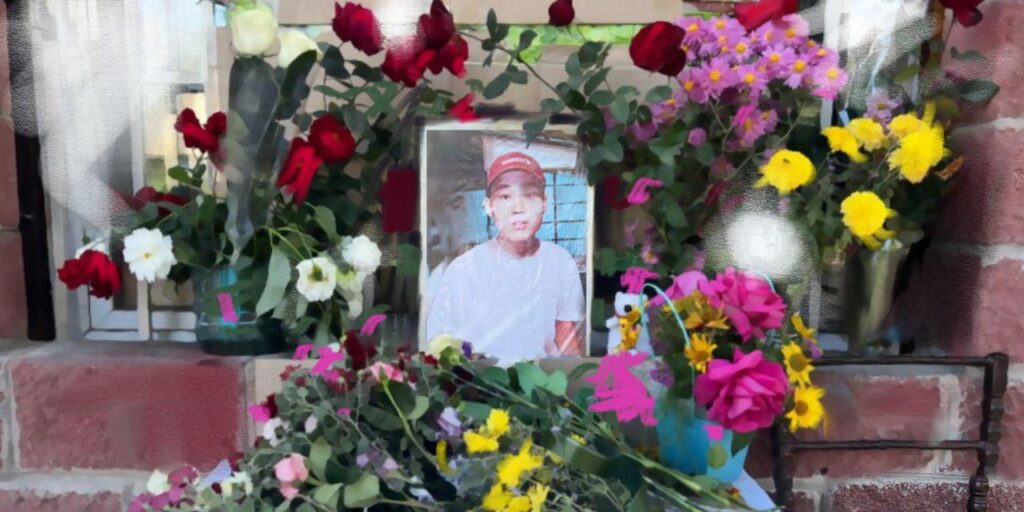
In recent years, Kazakhstan has begun broadcasting high-profile criminal trials online in a move toward greater transparency in the justice system. The trial of former Minister Kuandyk Bishimbayev, sentenced to 24 years for brutally beating his wife Saltanat Nukenova to death, marked the beginning of this new judicial openness. Now, another trial has captured the public imagination: the case of the killing of teenager Sherzat Bolat in a street fight involving adult men. The tragic events in Talgar, a small town near Almaty, have resonated across the country, exposing what many see as a long-standing culture of impunity and complacency within law enforcement. The Talgar Tragedy While the full chronology of events is still being established in court, several key details were released early in the investigation. Video footage suggests that Sherzat Bolat may have initiated the confrontation, allegedly striking a man he believed hadn’t paid for beer outside a store rented by his father. The man then summoned reinforcements. A group of eleven men reportedly responded to his call, sparking a violent altercation. During the melee, Bolat was fatally stabbed in the heart. His uncle, who rushed to defend him, was also stabbed and beaten. The incident occurred on October 4, 2024, in Talgar, a town with untapped tourism potential and historical roots tracing back to the medieval city of Talhiz. But for many, Talgar symbolizes not cultural heritage, but bureaucratic neglect. The town's overgrown archaeological remnants mirror what residents say is the indifference of local authorities. When no swift action followed his son’s death, Sherzat’s father, Karzhaubai Nurymov, staged a protest on October 7 alongside several residents. Nurymov demanded a transparent investigation and an open trial, appealing directly to Prosecutor General, Berik Asylov, and calling for visits from senior officials, including the Akim of the Almaty Region. Demonstrators threatened to block roads unless their demands were immediately addressed. The protest prompted action. With the Minister of Internal Affairs taking the case under his control, the authorities began reviewing the family’s allegations. Intimidation and Escalation Just days later, on October 12, Sherzat’s family home was set on fire while relatives gathered at his grandmother’s house for a memorial. Police opened a criminal case for arson and placed the family under protection. According to the family’s lawyer, Askar Kaymakov, they had requested protection a day earlier after receiving threats. The next day, National Guard units were deployed to patrol Talgar amid rumors of entrenched organized crime networks operating with the complicity of local officials and police. While the government has denied the existence of a "Talgar mafia," the incident triggered a wave of dismissals in the local police force and administration, seemingly validating public suspicion. Despite initial skepticism, the investigation appears to have been thorough. Authorities conducted 40 forensic examinations, questioned around 200 witnesses, and recreated the crime scene with the suspects. Confrontations and other legal procedures were carried out, and eight videos were analyzed. The criminal case now spans 62 volumes. A Nation’s Unresolved Trauma The Talgar case has...

11 months ago

Central Asia: An Arena of Geopolitical Attraction

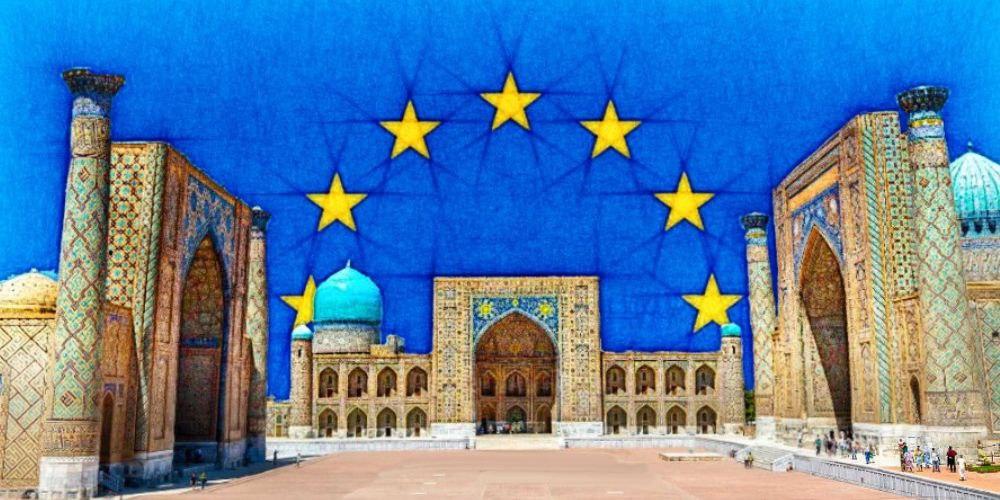
Though 2025 is not yet at its halfway point, Central Asia has already emerged as one of the primary stages of global diplomatic engagement. Rich in natural resources and strategically positioned between global powers, the region has attracted increasing interest from the European Union, China, Russia, and others. Kazakhstan, Uzbekistan, and their neighbors are asserting greater agency, pursuing multi-vector foreign policies, and striving to capitalize on evolving geopolitical dynamics. EU-Central Asia: A New Chapter Amid regular annual meetings, a landmark event this year was the inaugural EU-Central Asia Summit, held in Samarkand, Uzbekistan, on April 3-4. Leaders of all five Central Asian states met with European Council President António Costa and European Commission President Ursula von der Leyen. Discussions centered on infrastructure development, including the Trans-Caspian route, digitalization, energy security, and water resource management. The summit concluded with a pledge to sign an Enhanced Partnership and Cooperation Agreement. This meeting was facilitated by a reconfiguration of global alliances. U.S. President Donald Trump's new tariff policies and the evolving relationship between Washington and Moscow have led European leaders, unwilling to restore ties with Russia, to seek new partnerships. Central Asia, with its strategic position and investment potential, is increasingly appealing. Kazakhstan and Uzbekistan, the region’s economic leaders, are particularly eager to attract foreign capital. The EU represents a possible source, though Russian analysts remain skeptical about Europe’s ability to dislodge Russian and Chinese influence. For instance, Mikhail Neizhmakov of the Russian Agency for Political and Economic Communications noted that while von der Leyen spoke of a €12 billion Global Gateway investment package, China is the largest exporter of investment in the Eurasian region, with accumulated direct investment of $58.6 billion at the end of the first half of 2024, according to the Eurasian Development Bank. Security Discourse and Russian Narratives In addition to the EU summit, the region hosted other key diplomatic events, such as the Digital Forum in Almaty earlier this year, which was attended by Russian Prime Minister Mikhail Mishustin. Another major gathering was the CIS Council of Foreign Ministers, held on April 11, also in Almaty. Ministers approved a 2025 consultation plan and adopted joint statements on regional security, humanitarian cooperation, and opposition to unilateral sanctions. Kazakhstan: A Regional Diplomatic Hub Kazakhstan has so far distinguished itself as Central Asia’s foremost diplomatic player in 2025, hosting high-level visits and spearheading regional engagement. In January, Prime Minister Mishustin visited Astana and Almaty. February saw King Abdullah II of Jordan meet with President Kassym-Jomart Tokayev to discuss investment and humanitarian cooperation. In March, President Tokayev welcomed his Slovenian counterpart, Nataša Pirc Musar, who expressed interest in expanding bilateral trade. French President Emmanuel Macron is also preparing to visit Kazakhstan later this year, reinforcing France’s strategic interest in the region. In June, meanwhile, Chinese President Xi Jinping is scheduled to attend the second Central Asia-China Summit in Astana, where trade and investment will top the agenda. Navigating a New Geopolitical Order Today, Central Asia represents a vital intersection of East and West....

11 months ago