• KGS/USD = 0.01144 0%
  • KZT/USD = 0.00194 -0%
  • TJS/USD = 0.10822 -0.18%
  • UZS/USD = 0.00008 0%
  • TMT/USD = 0.28490 -0.28%
  • KGS/USD = 0.01144 0%
  • KZT/USD = 0.00194 -0%
  • TJS/USD = 0.10822 -0.18%
  • UZS/USD = 0.00008 0%
  • TMT/USD = 0.28490 -0.28%
  • KGS/USD = 0.01144 0%
  • KZT/USD = 0.00194 -0%
  • TJS/USD = 0.10822 -0.18%
  • UZS/USD = 0.00008 0%
  • TMT/USD = 0.28490 -0.28%
  • KGS/USD = 0.01144 0%
  • KZT/USD = 0.00194 -0%
  • TJS/USD = 0.10822 -0.18%
  • UZS/USD = 0.00008 0%
  • TMT/USD = 0.28490 -0.28%
  • KGS/USD = 0.01144 0%
  • KZT/USD = 0.00194 -0%
  • TJS/USD = 0.10822 -0.18%
  • UZS/USD = 0.00008 0%
  • TMT/USD = 0.28490 -0.28%
  • KGS/USD = 0.01144 0%
  • KZT/USD = 0.00194 -0%
  • TJS/USD = 0.10822 -0.18%
  • UZS/USD = 0.00008 0%
  • TMT/USD = 0.28490 -0.28%
  • KGS/USD = 0.01144 0%
  • KZT/USD = 0.00194 -0%
  • TJS/USD = 0.10822 -0.18%
  • UZS/USD = 0.00008 0%
  • TMT/USD = 0.28490 -0.28%
  • KGS/USD = 0.01144 0%
  • KZT/USD = 0.00194 -0%
  • TJS/USD = 0.10822 -0.18%
  • UZS/USD = 0.00008 0%
  • TMT/USD = 0.28490 -0.28%
18 December 2025

Our People > Anton Chipegin

Anton Chipegin's Avatar

Anton Chipegin

Anton was born and grew up in Bishkek, Kyrgyzstan. He worked as a television correspondent, editor and TV presenter on the main television channels of the republic, such as NTS and MIR 24, and also as an economic observer at international news agencies and other media resources of Kyrgyzstan.

Articles

Investment in Kyrgyzstan’s Economy Rises by 20 Percent

In the first eight months of 2025, several sectors of Kyrgyzstan’s economy experienced substantial growth, particularly in finance, manufacturing, hospitality, and food services. According to the National Statistical Committee of Kyrgyzstan, domestic investment surged most notably in the hospitality and food service sectors, which saw a 170 percent increase. The manufacturing sector reported a 110 percent rise, driven largely by state funding for new industrial facilities. Officials emphasized that the primary sources of investment were allocations from the state budget and enterprises’ internal funds. “The implementation of government investment programs is creating conditions for accelerating growth in sectors such as construction, transport, energy, and irrigation,” the Ministry of Finance of Kyrgyzstan stated. Foreign investment was concentrated in financial intermediation and insurance, particularly in Bishkek. Between January and July 2025, nearly $94 million was invested in this sector, an 80 percent increase. Finance and insurance accounted for 40 percent of all foreign investment received by Kyrgyzstan during this period. The Eurasian Development Bank (EDB) also released its analysis of investment trends in Kyrgyzstan. According to EDB analysts, the country achieved double-digit economic growth this year, largely due to increased investment in industry, transport, and construction. Kyrgyzstan’s GDP expanded by 11.5 percent between January and July 2025. “Investment growth is driven both by domestic resources and external financing, including foreign direct investment. This demonstrates the region’s strong adaptability to the new realities of the global economy,” said EDB Chief Economist Evgeny Vinokurov.

3 months ago

Kyrgyzstan Prepares for High-Rise Era with Plans for 40-Storey Towers

Kyrgyzstan is preparing to enter the era of high-rise construction, according to Minister of Construction Nurdan Oruntaev, who spoke in a recent interview with state media. The ministry is currently working to create favorable conditions for investors in the sector, and the first major investor has already been identified. At present, the tallest building in Kyrgyzstan stands at 27 storeys. Oruntaev confirmed that the country is ready to go higher: one 35-storey project is already in progress, and a Chinese company, whose name has not been disclosed, has received a license to build a 40-storey skyscraper in Bishkek. The minister emphasized that all developers must demonstrate full financial independence and adhere strictly to seismic safety standards. “Thanks to new technologies and software, structural calculations are thoroughly verified before construction begins. We have reviewed the preliminary project and confirmed that the country is fully capable of building such structures. Kyrgyzstan should not lag behind others in this area,” Oruntaev said. He cited Urumqi in neighboring China as an example, noting that despite similar seismic conditions, the city is home to buildings with 60 to 70 storeys. These developments are serving as reference models for Kyrgyz architects and engineers. “In the construction sector, the number of investors both domestic and foreign, has increased. Currently, they face no barriers. We ensure equal conditions for all,” Oruntaev added. As previously reported by The Times of Central Asia, Kyrgyzstan is experiencing strong economic momentum. In 2024, the country’s GDP grew by 9% and continues to expand steadily. The construction sector is playing a pivotal role in this growth. Under a state-led renovation program, both local companies and foreign investors are actively competing for development rights, particularly in Bishkek. The State Mortgage Company is also contributing to the surge in new projects. According to the Ministry of Economy and Commerce, the production of construction materials has become the fastest-growing segment of the industrial sector. If high-rise construction accelerates, demand for building materials and labor is expected to rise further, unlocking additional potential for GDP growth.

3 months ago

Kazakhstan Reclaims Role as Kyrgyzstan’s Main Wheat Supplier

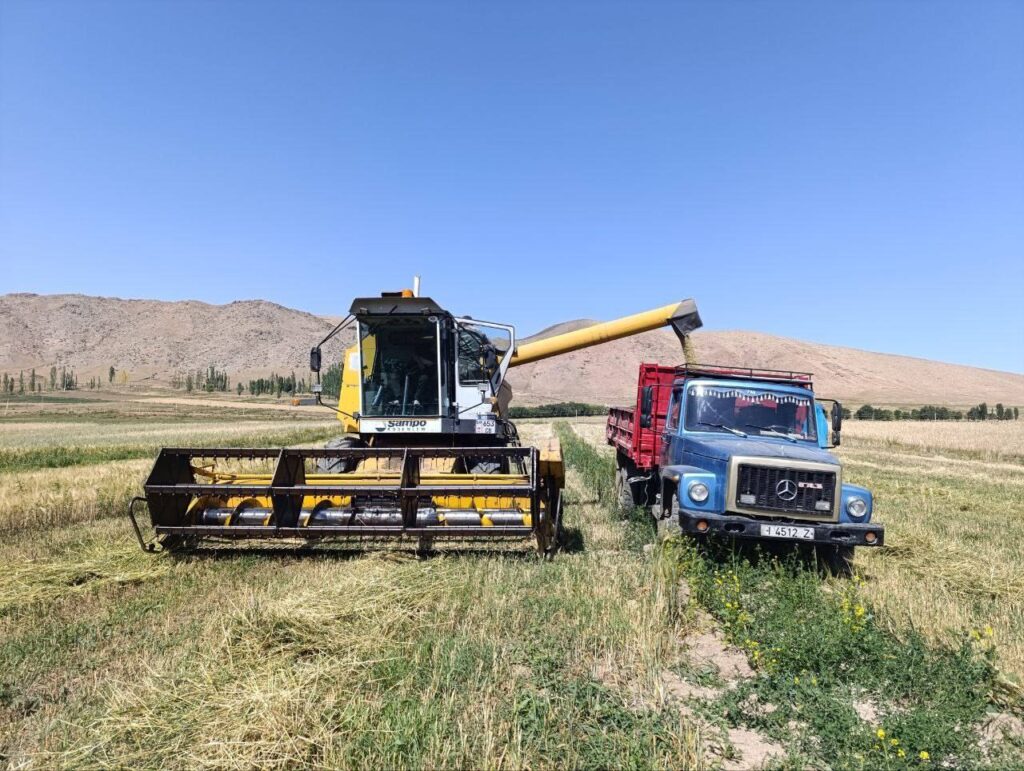
Bishkek has sharply increased wheat imports from Kazakhstan, reversing a three-year reliance on Russian supplies. According to the National Statistics Committee, Kyrgyzstan imported 132,000 tons of wheat from Kazakhstan during the first seven months of 2025, an eightfold increase from previous years, when Kazakh wheat had nearly vanished from the local market. The Ministry of Agriculture reported that 90% of Kyrgyzstan’s wheat crop had been harvested by the end of August, yielding 550,000 tons of grain. However, with national consumption exceeding 1.1 million tons of flour annually, domestic production remains insufficient. In 2022, Kyrgyz importers pivoted toward Russian suppliers, citing lower costs. Imports from Kazakhstan fell from 82,500 tons to just 3,500 tons, while purchases from Russia soared to nearly 240,000 tons. By 2025, the trend had reversed. Kazakhstan now accounts for 72.5% of Kyrgyz wheat imports. In monetary terms, imports surged even more dramatically, rising 8.8 times. Between January and August, Kyrgyzstan spent $27.2 million on Kazakh wheat at an average price of $206 per ton. The rest came from Russian suppliers. The shift has been driven largely by pricing. Russian wheat, which cost just over $160 per ton in 2023, rose to $203 in 2024 and is now priced around $220 per ton. In contrast, Kazakhstan’s record 2024 harvest, 26.5 million tons overall, including 18 million tons of wheat, enabled it to offer more competitive rates, despite traditionally being more expensive than Russian grain. Sources in the Kyrgyz Association of Millers told TCA that the strengthening of the ruble, recovering from years of sanctions-induced weakness, has pushed Russian wheat prices higher. As the ruble appreciates, Russian grain becomes less affordable for importers. The resurgence of Kazakh wheat underscores Kyrgyzstan’s ongoing reliance on imports to meet domestic food demand. While the national harvest is nearing completion, local output still covers only about half of annual consumption. For Bishkek, the return to Kazakh suppliers is not merely economic, it’s also a matter of food security, amid rising global market volatility and Russia’s continued exposure to external shocks.

3 months ago

Kyrgyzstan Faces Power Shortages Amid Record Low Water Levels at Toktogul Reservoir

Kyrgyz authorities have warned of potential rolling blackouts this winter due to critically low water levels at the country’s main hydropower facility, the Toktogul Hydroelectric Power Station. At a press conference in Bishkek, Energy Minister Taalaibek Ibraev reported that as of mid-September, the Toktogul reservoir had accumulated just 10.8 billion cubic meters of water, 1.5 billion cubic meters less than at the same time last year. The shortfall significantly limits the country’s electricity generation capacity during peak winter demand. “Kyrgyzstan is facing a persistent energy crisis, exacerbated by insufficient water reserves amid global warming and rising demand for electricity,” Ibraev stated. Hydropower provides around 90 percent of Kyrgyzstan’s electricity. If water levels at Toktogul fall to 6.5 billion cubic meters, the turbines will be unable to function, increasing the risk of large-scale outages. Officials clarified, however, that the current deficit does not necessarily mean the country will face a total blackout during the winter of 2025-26. On the eve of the announcement, energy ministers from Kyrgyzstan, Kazakhstan, and Uzbekistan met in the town of Cholpon-Ata, where they agreed to facilitate electricity transit from Russia and Turkmenistan through their respective territories. “Through joint efforts, we will ensure an uninterrupted power supply to our cities and strengthen regional energy security. We expect our Kazakh and Uzbek colleagues to adhere to the delivery schedules set out in the signed protocols,” Ibraev added.

3 months ago

Dollarization in Kyrgyzstan Declines as Banks Report Lower Profits

The National Bank of the Kyrgyz Republic (NBKR) has reported a continued decline in dollarization within the country’s banking sector, reflecting growing public confidence in the national currency. As of early September, the share of foreign currency loans in the banking sector dropped to 18%, down from over 20% at the start of the year. The decrease is even more pronounced in the deposit base: the share of foreign currency deposits fell from 43% to 38% during the first eight months of 2025. NBKR officials say households are increasingly moving away from the U.S. dollar and other foreign currencies as trust in the national currency, the som, strengthens. Despite the reduction in foreign currency lending and deposits, the sector overall continues to grow. Since the beginning of the year, deposits in Kyrgyz soms have increased by 21%, reaching 717.6 billion KGS ($8.2 billion). The total loan portfolio rose by 26% to 430 billion KGS ($4.9 billion). However, commercial banks are reporting weaker profitability. Financial statements for January to August 2025 indicate a steep drop in earnings from foreign exchange operations. During this period, turnover in foreign currencies fell by more than 2 billion KGS ($23 million), totaling 18 billion KGS ($206.5 million). Analysts note that the current environment contrasts sharply with conditions just a few years ago. After the onset of Russia's war in Ukraine in 2022 and the introduction of Western sanctions, Kyrgyzstan’s currency market experienced significant volatility. Banks then benefited from heightened demand for exchange operations. But with today’s more stable ruble and reduced fluctuations, those profits have diminished. Just five years ago, the National Bank was actively urging citizens to use the som more broadly. At the time, dollar-denominated loans were more expensive, yet remained popular among Kyrgyz borrowers. Now, the trend has reversed, with households increasingly choosing the national currency over foreign alternatives.

3 months ago