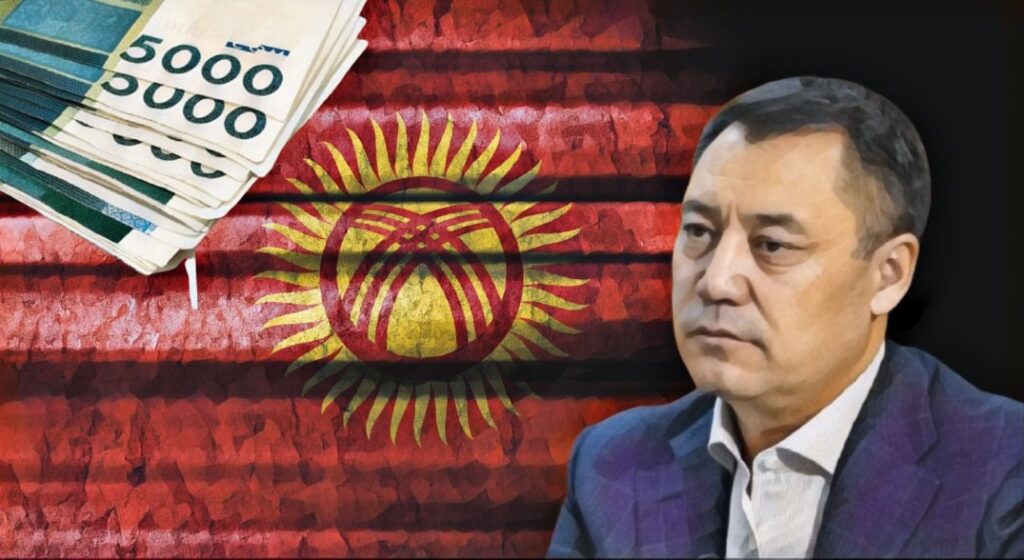
Kyrgyz President Denounces “Politicized” Sanctions on Banks
President Sadyr Japarov has sharply criticized the United States and United Kingdom for imposing what he has called unfounded sanctions on Kyrgyz financial institutions, urging Western leaders to stop “politicizing the economy.” In an interview with state news agency Kabar, Japarov defended two state-owned banks – Keremet Bank and Capital Bank – against allegations that they helped Russia skirt international sanctions, insisting that no evidence of violations has been presented. Neither the UK nor the U.S. has provided a single fact of violation… such facts simply do not exist,” Japarov said, dismissing the sanctions as politically motivated. UK and U.S. Target Kyrgyz Banks for Russia Sanctions Evasion Japarov’s comments come after a new wave of Western measures targeting Kyrgyzstan’s banking and crypto sectors for purported links to Russian sanctions evasion. On August 20, London sanctioned Kyrgyzstan-based Capital Bank – along with its director, Kantemir Chalbayev – alleging the bank was being used by Moscow to pay for military goods as part of a “convoluted scheme” to evade sanctions. The British authorities also blacklisted two Kyrgyz cryptocurrency exchanges - Grinex and Meer - that ran the infrastructure for a new rouble-backed crypto coin called A7A5, which moved an estimated $9.3 billion in just four months and was “intentionally created to evade sanctions.” The UK’s sanctions minister, Stephen Doughty, warned that “laundering transactions through dodgy crypto networks” would not soften the blow of Western sanctions. These steps followed a U.S. Treasury designation in January 2025 against Keremet Bank, a mid-sized Kyrgyz lender, for creating a hub for trade payments that helped Moscow evade restrictions. U.S. officials allege that Keremet Bank facilitated cross-border transactions for Russia’s sanctioned Promsvyazbank and even sold a controlling stake to a firm linked to a pro-Kremlin oligarch – moves Washington viewed as part of a secret channel to re-export dual-use goods and finance Russia’s defense sector. Those actions marked one of the first instances of Western “secondary sanctions” against Central Asian entities – penalties on third-country institutions accused of abetting a sanctioned nation’s activities. Kyrgyz Government’s Defensive Measures President Japarov contends that Kyrgyzstan has been proactive in compliance and that the West’s suspicions are misplaced. He noted that 21 banks operate in Kyrgyzstan, and authorities deliberately limited all Russian rouble transactions to just two state-controlled banks to shield the rest of the financial sector from any inadvertent sanctions breach. “To prevent any of them from falling under sanctions, we decided that only the state-owned Keremet Bank would work with the Russian rouble… All operations are under state control, and the income goes directly to the state treasury,” Japarov stated. Earlier this year, the government expanded this approach by channeling rouble remittances and payments through Capital Bank, which was brought under 100% state ownership in April. The National Bank of Kyrgyzstan ordered that all cross-border transfers in roubles – including the billions of roubles sent home by Kyrgyz migrant workers each day – be processed exclusively via Capital Bank. Kyrgyz officials argued this centralization was meant to “ensure transparency of...
1 year ago