• KGS/USD = 0.01144 0%
  • KZT/USD = 0.00204 0%
  • TJS/USD = 0.10782 0%
  • UZS/USD = 0.00008 0%
  • TMT/USD = 0.28490 0%
  • KGS/USD = 0.01144 0%
  • KZT/USD = 0.00204 0%
  • TJS/USD = 0.10782 0%
  • UZS/USD = 0.00008 0%
  • TMT/USD = 0.28490 0%
  • KGS/USD = 0.01144 0%
  • KZT/USD = 0.00204 0%
  • TJS/USD = 0.10782 0%
  • UZS/USD = 0.00008 0%
  • TMT/USD = 0.28490 0%
  • KGS/USD = 0.01144 0%
  • KZT/USD = 0.00204 0%
  • TJS/USD = 0.10782 0%
  • UZS/USD = 0.00008 0%
  • TMT/USD = 0.28490 0%
  • KGS/USD = 0.01144 0%
  • KZT/USD = 0.00204 0%
  • TJS/USD = 0.10782 0%
  • UZS/USD = 0.00008 0%
  • TMT/USD = 0.28490 0%
  • KGS/USD = 0.01144 0%
  • KZT/USD = 0.00204 0%
  • TJS/USD = 0.10782 0%
  • UZS/USD = 0.00008 0%
  • TMT/USD = 0.28490 0%
  • KGS/USD = 0.01144 0%
  • KZT/USD = 0.00204 0%
  • TJS/USD = 0.10782 0%
  • UZS/USD = 0.00008 0%
  • TMT/USD = 0.28490 0%
  • KGS/USD = 0.01144 0%
  • KZT/USD = 0.00204 0%
  • TJS/USD = 0.10782 0%
  • UZS/USD = 0.00008 0%
  • TMT/USD = 0.28490 0%

Our People > Anton Chipegin

Anton Chipegin's Avatar

Anton Chipegin

Anton was born and grew up in Bishkek, Kyrgyzstan. He worked as a television correspondent, editor and TV presenter on the main television channels of the republic, such as NTS and MIR 24, and also as an economic observer at international news agencies and other media resources of Kyrgyzstan.

Articles

Kyrgyzstan Sets New Summer Electricity Consumption Record

Kyrgyzstan has recorded a new peak in daily electricity consumption during the summer season, reaching 44.1 million kilowatt-hours (kWh) in a single day, according to the National Electric Grid of Kyrgyzstan (NEGK). This marks a 22% increase compared to the same period in 2024, when the maximum daily load stood at 36 million kWh. The surge is largely attributed to an extended heatwave, with temperatures in major cities exceeding 40°C, prompting heavy use of air conditioners and cooling systems. The NEGK also reported a steady rise in electricity consumers, with an estimated 30,000 new subscribers joining the grid annually. This trend is fueled by Kyrgyzstan’s ongoing construction boom, which includes the development of residential complexes and industrial sites, sectors that have become pillars of the national economy. Despite the strain, the power grid remains stable. “We urge citizens to use electricity sparingly. Rational resource use contributes to the reliable operation of the energy system,” the company stated in a public advisory. Residents were also encouraged to unplug unused appliances to conserve energy. Summer Surplus, Winter Strain Unlike the winter months, Kyrgyzstan typically enjoys a surplus of electricity in summer due to the seasonal melting of glaciers, which boosts hydroelectric output. The country is preparing to participate in the CASA-1000 project alongside Tajikistan, aiming to export surplus electricity to Pakistan via Afghanistan. These exports will be limited to the summer, as Kyrgyzstan faces significant energy shortages in winter. According to the National Energy and Power System Company, winter electricity demand can reach 80 million kWh per day, placing substations under considerable stress. To mitigate shortages and prevent rolling blackouts, Kyrgyzstan imports electricity from Kazakhstan and Russia, and under contracts with Turkmenistan and Uzbekistan. The country’s energy reserve capacity is shrinking due to increasing demand. In response, the Ministry of Energy is investing in network expansion and voltage stabilization. In 2024, five 110 kV substations were constructed. In 2025, two additional major facilities are slated to open in the Issyk-Kul and Batken regions, each with a capacity of 500 kWh.

11 months ago

Kyrgyzstan Tops EAEU in Construction Growth Despite Labor Woes

Kyrgyzstan recorded the highest growth in construction activity among member states of the Eurasian Economic Union (EAEU) during the first half of 2025, according to data published by the Eurasian Economic Commission (EEC). Infrastructure Boom Drives Expansion Between January and May 2025, construction volumes in Kyrgyzstan nearly doubled compared to the same period in 2024. Last year, the sector had already grown by 38% year-on-year. Armenia followed with a growth rate of 29%, while Kazakhstan, Belarus, and Russia posted more modest increases of 15.4%, 12.3%, and 5.5% respectively. Across the EAEU, construction grew by an average of 6.8%. The primary drivers of Kyrgyzstan’s construction boom include extensive state and private investment in housing, infrastructure, and industrial development. The government has focused on building hydroelectric power plants, residential complexes, and administrative buildings. Notably, the state mortgage program offers housing loans at 4-8% interest rates, well below market levels. From January to April 2025, the Cabinet of Ministers allocated nearly $500 million toward housing projects, supplemented by $77 million in equity financing. To help stabilize construction costs, the government also classified cement as a socially significant good, subject to price controls. According to The Times of Central Asia, investment in housing, infrastructure, and social facilities rose by 62% year-on-year during the first four months of 2025, reaching approximately $800 million, the highest figure in recent years. The construction sector contributed an estimated 3% to Kyrgyzstan’s GDP growth in the first half of the year. Quality and Labor Concerns Persist Despite these achievements, concerns are growing over construction quality and labor shortages. Residents in major cities report poorly planned developments that lack supporting infrastructure, including roads and essential utilities such as water and electricity. Speaking to The Times of Central Asia, construction auditor Bakhtiar Kasymaliyev highlighted critical challenges in project execution. “We have serious problems with quality and professionalism,” he said. “There is a shortage of skilled concrete workers and bricklayers. They are in high demand. As a temporary solution, companies are bringing in labor from Pakistan, India, and Egypt, but most of them are unskilled. To improve quality, we need to attract qualified specialists from abroad.” According to Kasymaliyev, the labor shortage is already impacting project timelines and structural integrity, raising red flags amid the sector’s rapid expansion.

11 months ago

Kyrgyzstan Launches Registry of Reliable Entrepreneurs

The Ministry of Economy and Commerce of Kyrgyzstan has opened applications for a newly established Registry of Reliable Entrepreneurs, aimed at promoting transparent and responsible business practices. According to officials, companies listed in the registry will receive a range of incentives and benefits from the state. The registry is open to all eligible businesses, including large companies and individual entrepreneurs operating under patent regimes. To qualify, applicants must meet several criteria: At least three years of operational history No outstanding debts related to taxes or social contributions Timely payment of wages at or above the industry average Compliance with labor laws and standards A clean criminal record for company leadership in relation to economic offenses An Official “White List” of Trusted Businesses The Chamber of Commerce and Industry (CCI) of Kyrgyzstan, which has experience in compiling similar business listings, has been tasked with managing the registry. “The Registry of Reliable Entrepreneurs is an official list of companies and individual business owners recognized by the state as trustworthy, honest, and socially responsible. In other words, it serves as a white list of the best representatives of business operating transparently and legally,” the CCI stated. Applications must be submitted by August 5, 2025. A joint commission comprising representatives from the Ministry of Economy and the CCI will review applications and issue decisions accordingly. Incentives for Registered Businesses Business leaders say inclusion in the registry will enhance corporate reputation, foster trust among customers and government agencies, and encourage ethical business practices. “The registry encourages businesses to operate honestly, comply with laws, and contribute to the country’s economic development,” noted one participant. In addition to reputational benefits, companies listed in the registry will enjoy several practical advantages: Exemption from government inspections for up to three years Priority service at tax offices Free advertising slots on national television during designated times Complimentary participation in international exhibitions, trade fairs, and forums organized by the Kyrgyz government Moving from Private to State-Backed Recognition Previously, similar registries were compiled only by private initiatives. Business associations, including the CCI itself, created so-called “elite lists” funded through membership fees and shared with potential foreign partners to facilitate business cooperation. Unlike those earlier efforts, the new government-backed registry is free of charge and formally recognizes businesses that operate transparently and in full compliance with Kyrgyz law.

11 months ago

In Kyrgyzstan, 13,000 Low-Income Families Receive Funds to Launch Businesses

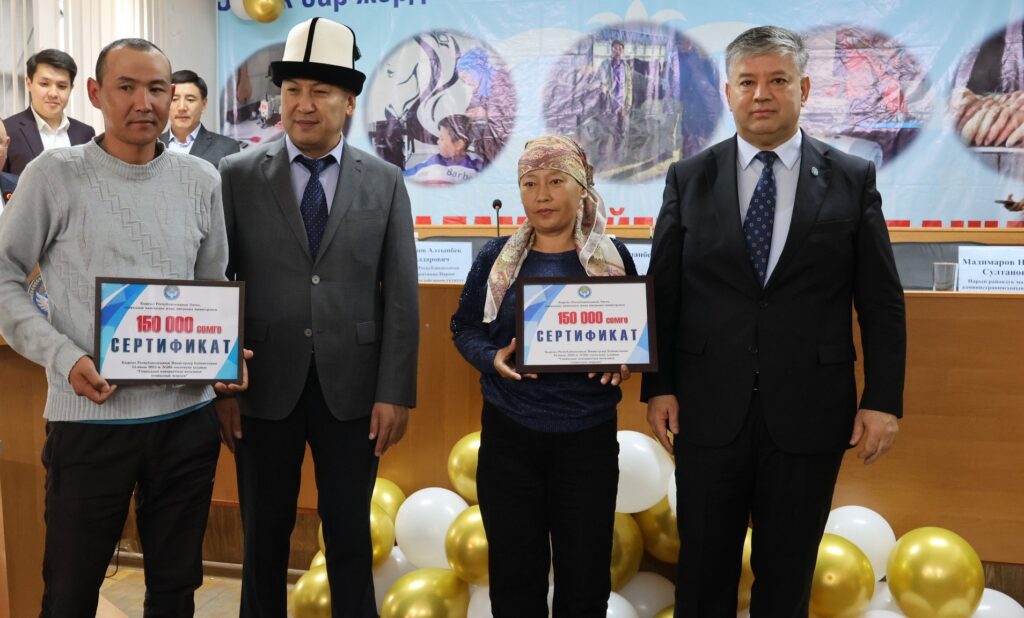
Over the past two years, 13,333 families in Kyrgyzstan living below the subsistence level have signed social contracts with the state. Through this initiative, each family received an interest-free loan of $1,700 to start a small business. According to the Ministry of Labor, the social contract program is designed to help families break the cycle of poverty by providing both start-up capital and practical support. Recipients use the funds to establish businesses, engage in subsistence farming, or purchase tools and equipment. In addition to financial assistance, the program offers training and consulting in sustainable agriculture and income-generating practices. How the Program Works Participants can use the funds to acquire equipment, materials, and other business essentials. The initiative has supported the creation of sewing workshops, food production facilities, apiaries, and small-scale poultry farms. Many recipients now produce honey, natural juices, felt goods, and meat products. The program is open to both new ventures and the expansion of existing microbusinesses. Specially trained consultants guide participants through the process of launching and managing their businesses, helping to increase long-term viability. Results and Regional Reach Although the social contract program was launched five years ago, its most significant impact has been seen in the past two years. More than 13,000 families have become self-sufficient and no longer require government aid. The majority of successful projects have emerged in Kyrgyzstan’s southern provinces, particularly Jalal-Abad and Osh, where rural entrepreneurship has rapidly expanded. Government data indicates that over 280 different products have been developed through the program. While most are sold domestically, a small number are now being exported abroad. This social contract initiative is a cornerstone of the government’s strategy to combat poverty and promote self-employment. Authorities emphasize its role in stimulating economic activity in rural areas and encouraging entrepreneurship among vulnerable populations.

11 months ago

Kyrgyzstan Pushes for Flour Self-Sufficiency

Kyrgyzstan’s Minister of Water Resources, Agriculture, and Processing Industry, Bakyt Torobaev, has called on domestic millers to produce at least 200,000 tons of wheat annually in a bid to reduce the country’s reliance on flour imports. His remarks came during a groundbreaking ceremony for a new flour mill in the northern Chui region. Torobaev emphasized the need to boost local wheat production to cover at least four to five months of national flour demand each year. He also urged producers to work toward gradually lowering retail prices. “If flour producers work closely with farmers, understand and address their challenges, the situation will improve. The Ministry of Agriculture is ready to support the sector from seed selection and soil analysis to mechanization,” he stated. With coordinated efforts, the minister believes that the cost of domestically milled flour could become competitive with imports from Kazakhstan and Russia. Tackling Price Volatility and Import Dependence Due to limited domestic production, Kyrgyz flour is currently more expensive than imported alternatives. This price gap has left the country vulnerable: any disruption in imports has previously led to sharp increases in bread prices. Nevertheless, the local milling industry has shown robust growth in 2025. According to the Ministry of Agriculture, 215,000 tons of grain were processed in the first five months of the year. Once the new plant in Chui becomes operational, total national milling capacity is expected to exceed 300,000 tons annually. Expanding Capacity and Mechanization To support expanded production, 1,500 units of harvesting equipment have been deployed across Kyrgyzstan’s wheat-growing regions. The government has also relocated machinery from the Issyk-Kul and Naryn regions to high-output areas such as the south, Talas, and Chui. Harvesting operations are ongoing without interruption. Official statistics show that agriculture is becoming a major engine of economic growth. In the first half of 2025, GDP grew by 11.7%, surpassing 700 billion KGS ($8 billion). The food processing industry alone contributed 50 billion KGS ($500 million) to this growth.

11 months ago

Kyrgyzstan Moves to Tighten Passenger Transport Regulations

Kyrgyzstan’s Ministry of Internal Affairs has proposed amendments to the national passenger transport law aimed at improving safety standards for drivers and imposing new restrictions on mountainous routes, particularly the perilous Bishkek-Osh highway. According to the draft legislation published on the government’s legal portal, the proposed changes would apply to taxi and bus services nationwide. Among the key provisions are: all taxis must be equipped with functioning taximeters, and drivers will be required to visibly display their license number and photo identification inside the vehicle. Drivers must also meet stricter eligibility criteria, including sobriety, appropriate grooming, and a clean criminal record, specifically, no convictions for serious crimes. Enhanced Safety Protocols and Route Restrictions The proposed law mandates pre-trip medical examinations for drivers and routine technical inspections for all passenger vehicles prior to departure. These measures are part of a broader effort to raise safety standards in the country's growing but often unregulated transport sector. One of the most significant changes involves the regulation of mountain routes. The new rules would prohibit right-hand drive vehicles from providing passenger services and restrict the use of small-capacity buses on the hazardous Bishkek-Osh highway during winter months. Only large, four-wheel-drive buses would be allowed to operate on the route year-round, while smaller vehicles would be permitted only between May 1 and October 15. The highway, which traverses some of Kyrgyzstan’s most treacherous terrain, sees dozens of accidents and fatalities each year. Mixed Reactions from Drivers Taxi drivers interviewed by The Times of Central Asia offered a range of responses to the proposed legislation. “We carry people, and safety should come first,” said Halil Ibragimov, a taxi driver in Bishkek. “Passengers need to know that the vehicle is in proper condition and that the driver is well-kept. No one wants to be driven by someone wearing shorts and slippers, with smelly feet.” Ibragimov welcomed stricter checks on driver sobriety and knowledge of traffic regulations. Others, however, raised concerns about the potential economic impact of seasonal vehicle bans on the Bishkek-Osh route. “If this ban is introduced, hundreds of drivers will lose their income, and it will be much harder for passengers to travel from the north to the south of the country,” said a Mr. Kudaybergenov, a taxi operator. Fleet drivers in Bishkek echoed these concerns and called for more balanced reforms. They advocated for better enforcement of existing regulations and improved oversight of vehicle fleets rather than outright seasonal bans. “There should be scheduled departures for all buses and taxis along that route,” one driver said. “Make sure every driver has proper winter tires and gets enough rest before setting off again. Too many drivers go back on the road immediately after a long trip just to earn more.” Fleet owners also warned that a full winter ban on standard vehicles could cause travel disruptions and leave passengers stranded for extended periods.

11 months ago

Attacks on Doctors Surge in Kyrgyzstan Amid Systemic Failures

A recent spate of violent assaults on doctors in Kyrgyzstan has sparked growing concern within the healthcare sector. Over the past week alone, multiple incidents of medical staff being physically attacked have been reported at the National Hospital in Bishkek, with relatives of patients identified as the primary perpetrators. The first major incident involved a young resident doctor who was providing emergency treatment to a patient suffering from a severe nosebleed. According to local media reports, the patient's relatives attempted to interfere during the treatment and later assaulted the doctor as he accompanied the patient to a hospital ward. The doctor sustained a concussion, and his uniform was torn during the altercation. In a controversial move, police officers responding to the scene did not detain the attackers. Instead, they arrested the injured doctor, citing his use of obscene language. A court later sentenced him to three days of administrative detention. Human rights advocates say the doctor was denied legal counsel. Despite mobile phone video footage recorded by the doctor and corroborating statements from hospital staff, law enforcement agencies reportedly ignored this evidence. “The patient is much better, he received the necessary treatment and has been stable since. His relatives, however, acted with arrogance and cruelty toward medical personnel, seemingly convinced of their own impunity,” said Barmet Baryktabasova, chair of the Medical Trade Union. Just days later, a second assault occurred at the same hospital, this time targeting an emergency department physician. Although the attack was captured on CCTV, police again refrained from detaining the perpetrators, issuing only vague statements. The Medical Trade Union has announced plans to file formal appeals to the President’s Office, the Ministry of Health, the Prosecutor General, and the State Committee for National Security. The union argues that violence against medical professionals is becoming systemic and poses a threat to the integrity of Kyrgyzstan’s already strained healthcare infrastructure. Health Minister Erkin Checheibaev condemned the assaults in a public Facebook post: “There is lawlessness against doctors! The man who attacked the doctor must be punished. This sets a dangerous precedent when attackers face no consequences.” He emphasized the urgent need to protect the dignity and physical safety of medical personnel, warning that failure to act could lead to a severe staffing crisis in the coming years. This is not the first wave of violence against healthcare workers in Kyrgyzstan. In 2023, following several incidents, the National Hospital briefly enhanced security by installing panic buttons, surveillance cameras, and hiring private guards. However, these measures were later rolled back due to budget constraints. Currently, the average salary for public sector healthcare workers in Kyrgyzstan ranges from $300 to $400 per month. Combined with long hours and frequent high-stress situations, poor compensation is prompting many experienced professionals to exit the system. The government has pledged to implement healthcare funding reforms over the next three to four years, but many in the medical community fear those changes will come too late.

11 months ago

Kyrgyzstan Enacts Code to Boost Financing for Female Entrepreneurs

Kyrgyzstan has officially enacted the Code on Financing Women Entrepreneurs, a regulatory framework aimed at expanding women’s access to financial products from banks and microfinance institutions. The National Bank of the Kyrgyz Republic (NBKR) will oversee the implementation of the Code, which it regards as a milestone in institutional support for women’s entrepreneurship. Speaking at the launch ceremony, NBKR Chairman Melis Turgunbaev emphasized the crucial role of women in the country’s economy, particularly within the small and medium-sized business sector. “The launch of the Code, backed by the recent legislative recognition of the concept of ‘women’s entrepreneurship,’ creates a solid institutional foundation for mobilizing financial sector resources and directing them toward the development of this strategically important segment of the economy,” Turgunbaev said. The legal definition of women’s entrepreneurship was introduced into Kyrgyz legislation only last year. Lawmakers noted that female entrepreneurs often face structural challenges, such as balancing business activities with domestic responsibilities and limited access to property assets that can serve as loan collateral. According to the Ministry of Economy and Commerce, the typical Kyrgyz female entrepreneur is between 40 and 50 years old, has a secondary education, runs a small or medium-sized enterprise, often individually and began her business career before turning 30. The new Code modifies financial regulations to simplify access to credit for women. Key provisions include expanded opportunities for unsecured lending and the removal of a previous requirement for financial institutions to set aside 1% of the loan amount for potential losses when lending to women. The NBKR believes these changes will make financing for women both strategically and commercially attractive across the banking sector. “Our actions are not just advocacy, they are about building sustainable market mechanisms,” said Turgunbaev. “The National Bank is establishing economically sound conditions that incentivize the entire financial sector to support women entrepreneurs.” According to the NBKR, the Code applies specifically to enterprises in which women own at least 51% of the capital and make up at least 51% of the workforce. Financial institutions are encouraged to offer more accessible, long-term loans to qualifying women-led businesses on preferential terms. However, The Times of Central Asia has learned that the Code currently lacks a dedicated mechanism to support women facing loan repayment difficulties. Nonetheless, the regulator clarified that this does not restrict banks from granting relief measures. “The NBKR will not prevent commercial banks from offering concessions to women entrepreneurs with overdue loans under programs focused on financing women-led businesses,” a spokesperson said. The National Bank plans to coordinate the Code’s rollout and ongoing refinement, emphasizing that support for women entrepreneurs is viewed as a long-term institutional priority.

11 months ago

CCTV Cameras Installed Around Lake Issyk-Kul to Combat Poaching and Environmental Violations

Kyrgyz authorities have begun installing CCTV cameras around Lake Issyk-Kul as part of a broader effort to protect the region’s fragile ecosystem and crack down on poaching. The surveillance system, which includes thermal imaging capabilities, will operate around the clock, the Issyk-Kul Regional Internal Affairs Department announced. The cameras are designed to capture instances of illegal fishing and to monitor motorists who drive onto beaches or into the lake itself, practices that authorities say are damaging the environment. Police officials stressed that this measure was necessary, as public awareness campaigns and verbal warnings had not been effective in curbing such behavior. “This is an important step toward preserving the lake’s natural environment,” the regional police stated. “Conversations and warnings have not worked, people continue to pollute Issyk-Kul. Our goal is to install cameras around the entire perimeter. Together, we will succeed.” Public Involvement and Technological Integration Authorities have called on both local residents and the business community to support the initiative, including through financial contributions. The new video system will be integrated into the regional situation center operated by the Kyrgyz Ministry of Internal Affairs. The center currently oversees major settlements in the area and already operates 353 smart cameras capable of tracking movement and recognizing faces. Staff at the center monitor adherence to environmental regulations and public order. In collaboration with the Ministry of Emergency Situations, law enforcement regularly conducts raids to identify illegal fishing operations. A particular concern is the use of synthetic fishing nets, which are banned from import and considered especially harmful to the lake’s biodiversity. Environmental Enforcement and Community Outreach “Issyk-Kul is a gift of nature. Its preservation is the sacred duty of every citizen,” said Chingiz Tokoldashev, head of the Balykchy Internal Affairs Department. “The fight against illegal fishing is our priority.” Law enforcement also engages in preventive outreach, educating vacationers about fishing regulations and environmental restrictions. Under current rules, legal fishing, including for the endemic chebachka fish, requires payment of a fee of 600 KGS (approximately $7) to the Ministry of Natural Resources.

11 months ago

Heavy Rains Flood Newly Renovated Streets and Market in Southern Kyrgyzstan

A sudden downpour on July 10 inundated parts of Osh, southern Kyrgyzstan’s largest city, flooding recently renovated streets, a newly opened municipal market, and multiple residential and public buildings. According to the Ministry of Emergency Situations (MES), the city’s drainage system overflowed after several hours of heavy rainfall. Three private homes and the basement of an apartment block were submerged, along with the Family Medicine Center and the State Archive. Emergency services evacuated nine residents to safety, while 80 personnel, including firefighters and rescue teams, were deployed to respond to the crisis. Authorities blamed the flooding on clogged drainage canals and irrigation ditches. “The primary cause of the flooding was the failure to properly clean drainage systems in several districts,” the MES reported. “Accumulated garbage and debris blocked water flow, leading to road flooding and hindering pedestrian movement.” Despite earlier instructions from Emergency Situations Minister Boobek Azhikeev to clear stormwater infrastructure in anticipation of the rainy season, the preparation appears to have been incomplete or ineffective. Osh Mayor Jenishbek Toktorbaev toured the affected areas, met with residents and business owners, and ordered an expedited cleanup operation. Videos released by city authorities show the mayor wading through flooded streets and assessing damage. [caption id="attachment_33891" align="aligncenter" width="1080"] @mchs.gov.kg[/caption] The timing of the flooding was particularly ironic. Just days earlier, Deputy Chairman of the Cabinet of Ministers Kamchybek Tashiev had visited Osh, praising Toktorbaev’s urban development initiatives and presenting him with a ceremonial car. Under Toktorbaev’s leadership, the city has invested in infrastructure upgrades, including road reconstruction and the demolition of illegal structures. However, traders at the newly inaugurated municipal market voiced frustration over poor planning. Speaking to local media, they said the site lacked adequate drainage and roofing, leaving commercial aisles waterlogged. “They rushed the relocation,” one vendor said. “The market should have been completed before moving us from the old site.” Residents noted that such flooding has become a recurring issue during Osh’s rainy season, with stormwater systems consistently overwhelmed by downpours.

11 months ago