• KGS/USD = 0.01144 0%
  • KZT/USD = 0.00208 0%
  • TJS/USD = 0.10429 0.1%
  • UZS/USD = 0.00008 0%
  • TMT/USD = 0.28530 0%
  • KGS/USD = 0.01144 0%
  • KZT/USD = 0.00208 0%
  • TJS/USD = 0.10429 0.1%
  • UZS/USD = 0.00008 0%
  • TMT/USD = 0.28530 0%
  • KGS/USD = 0.01144 0%
  • KZT/USD = 0.00208 0%
  • TJS/USD = 0.10429 0.1%
  • UZS/USD = 0.00008 0%
  • TMT/USD = 0.28530 0%
  • KGS/USD = 0.01144 0%
  • KZT/USD = 0.00208 0%
  • TJS/USD = 0.10429 0.1%
  • UZS/USD = 0.00008 0%
  • TMT/USD = 0.28530 0%
  • KGS/USD = 0.01144 0%
  • KZT/USD = 0.00208 0%
  • TJS/USD = 0.10429 0.1%
  • UZS/USD = 0.00008 0%
  • TMT/USD = 0.28530 0%
  • KGS/USD = 0.01144 0%
  • KZT/USD = 0.00208 0%
  • TJS/USD = 0.10429 0.1%
  • UZS/USD = 0.00008 0%
  • TMT/USD = 0.28530 0%
  • KGS/USD = 0.01144 0%
  • KZT/USD = 0.00208 0%
  • TJS/USD = 0.10429 0.1%
  • UZS/USD = 0.00008 0%
  • TMT/USD = 0.28530 0%
  • KGS/USD = 0.01144 0%
  • KZT/USD = 0.00208 0%
  • TJS/USD = 0.10429 0.1%
  • UZS/USD = 0.00008 0%
  • TMT/USD = 0.28530 0%

Our People > Jonathan Campion

Jonathan Campion's Avatar

Jonathan Campion

Senior Editor

Jonathan Campion has worked in the Eurasia region since 2007. After leaving Exeter University with a degree in Russian Language, he worked as a writer, editor, analyst and translator for international law firms, market research firms and business forums serving the CIS region's major industries.

With a passion for Central Asia, he has covered the region in esteemed publications such as the Lonely Planet, Open Central Asia magazine, and National Geographic Traveler.

Jonathan's first book, about a sports team from the Eurasia region, was shortlisted at the Charles Tyrwhitt Sports Book Awards in 2025.

Articles

The Next Steps for Central Asian Finance: Interview with Azerbaijani Fintech Leader Dr. Fuad Karimov

This week The Times of Central Asia will be attending the CAMCA Regional Forum, which this year is being held in Ulaanbaatar, Mongolia.  The CAMCA network is a collection of professionals and policymakers dedicated to sharing ideas, knowledge and inspiration to accelerate the development of the Eurasia region; its name stands for Central Asia, Mongolia, the Caucasus and Afghanistan. Ahead of the Forum, The Times of Central Asia spoke with Dr. Fuad Karimov, Regional Managing Director of the payment software company Xsolla, about what the CAMCA program means for the Eurasian finance industry, and how Azerbaijan can work more closely with Central Asia. TCA: What condition do you feel fintech spaces are currently in, particularly in the Eurasia region? FK: Fintech [financial technology] across the CAMCA region is accelerating. Countries like Kazakhstan and Uzbekistan have made significant progress in regulation and adoption.  In Azerbaijan, key drivers include state-led digitalization and innovative companies like PashaPay and Birbank, which are transforming consumer payment behavior.  Cross-border transfers, mobile banking, and contactless solutions are increasingly common across the region. In what areas do you think CAMCA initiatives can help them improve? CAMCA can create platforms to harmonize financial regulations, facilitate cross-border fintech testing, and promote knowledge exchange. It can also help reduce friction in currency conversion.  Regional collaboration can attract investors from the West and Asia. Priorities should include cybersecurity, financial literacy, AI in finance, and coordinated exploration of digital currency pilots like e-Manat, e-Tenge, and e-Soum. You're moderating a session on harnessing fintech in CAMCA markets. What topics do you expect to touch upon, and who are you looking forward to hearing from? We’ll cover the rise of digital national currencies (CBDCs), crypto regulation, exchange rate risk, and the impact of AI on lending, compliance, and fraud prevention.  I’m especially looking forward to hearing from fintech leaders in the CAMCA region — each representing diverse policy environments and innovation models. Where do you see opportunities for Central Asia to work more closely with Azerbaijan? There’s strong potential in co-developing cross-border payment systems, digital identity frameworks, and startup accelerators.  Azerbaijan can share experience in building public-private fintech partnerships, while Central Asia offers scale and growing demand. Aligning exchange rate mechanisms, regulatory approaches, and education systems will enhance regional integration.  The CAMCA platform is an ideal space to turn these synergies into actionable policy and investment opportunities.  

9 months ago

Kazakh Nomads and Authentic Tourism: Interview with Mongolia’s Cultural Envoy Dr. Gantemur Damba at CAMCA

This week The Times of Central Asia will be attending the CAMCA Regional Forum, which this year is being held in Ulaanbaatar, Mongolia.  The CAMCA network is a collection of professionals and policymakers dedicated to sharing ideas, knowledge and inspiration to develop the Eurasia region; its name stands for Central Asia, Mongolia, the Caucasus and Afghanistan. Ahead of the Forum, The Times of Central Asia spoke with Mongolia’s Cultural Envoy, and the Vice Chair of the Asian Ecotourism Network, Dr. Gantumur Damba, about the country's Kazakh nomads, and what the CAMCA program means for Mongolian culture and tourism. TCA: Central Asia is geographically quite close to Mongolia, but Mongolia's culture is distinct. What parts of Mongolian life do you think make journeys here unique for visitors? GD: Indeed. While Mongolia has some cultural similarities with Central Asia due to historical links, it has developed its own distinct identity. We are a unique culture with influences from Buddhism, shamanism and animism in our pastoralist herder’s way of life. Eastern Mongolia is rich in historical sites, including Deluun Boldog, where Genghis Khan was born, and the historical ruins of 13th and 14th-century towns. Central Mongolia is centered on the ancient town of Kharkhorum – with UNESCO-inscribed intangible cultural events – and the beautiful Orkhon Valley.  This region is also enriched by Mongolian Buddhist traditions and architectural sites.   North Mongolia is the home of nomadic reindeer herders, who have strong shamanistic beliefs. They are one of the last groups in the world to still herd reindeer as their primary way of life. Mongolia's largest ethnic minority are Kazakhs, who live in the country's western regions. What opportunities do visitors to Mongolia have to discover the Mongolian Kazakh way of life? The Kazakhs of Mongolia have distinct cultural practices, and live mainly in western Mongolia, particularly in Bayan-Ölgii province.  While they share a common heritage with Kazakhs in Kazakhstan and other Central Asian nations, their experience in Mongolia is shaped by their minority status and the influence of Mongolian culture and Buddhism, alongside their own Turkic language and Islamic traditions.  Activities like eagle hunting demonstration events, trekking in the Altai Mountains, and exploring authentic nomadic life offer unique travel experiences.  Travelers can experience authentic nomad Kazakh culture through homestays, participating in festivals, and witnessing traditional crafts, traditional music, epic storytelling and vibrant dances like the eagle dance. What places and activities in Mongolia do you most recommend to foreign visitors? Are you working on any new destinations? Mongolia offers a high degree of freedom and flexibility for travelers, especially when it comes to camping and exploring the vast landscapes. There are relatively few restrictions on where you can go and camp, and you can often choose your own route and pace.  However, choosing the right travel partner is vital. I categorize our destinations according to three “Ms”. The first M stands for modified places – basically those that are spoiled. That includes Terelj, Kharkhorum and West Khuvsgul Lake, where you will find many resorts,...

9 months ago

Pope Francis Championed Central Asia’s Role in Promoting Peace in a Multicultural Region

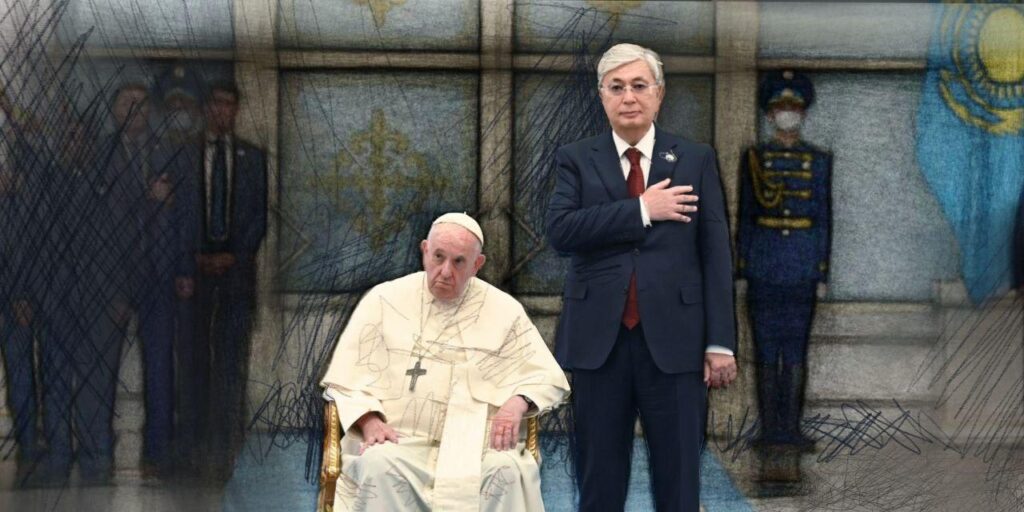
Pope Francis was a tireless advocate for peace and dialogue on the global stage, spotlighting Central Asia not as a zone of conflict but as a unique crossroads of cultures, religions, and geopolitical influence—an embodiment of tolerance and coexistence. In 2022, amidst the escalating Russia-Ukraine war and rising geopolitical tensions, Pope Francis made a historic pastoral visit to Kazakhstan to attend the Congress of Leaders of World and Traditional Religions. Kazakhstan, a predominantly Muslim nation, has a Christian minority comprising 17.2% of the population, primarily Russian Orthodox, alongside Catholics and Protestants. President Kassym-Jomart Tokayev, the event’s host, reaffirmed his country’s dedication to religious tolerance, presenting Kazakhstan as a model of “interfaith dialogue in creating a more peaceful and harmonious global society.” Notably, religiously motivated violence against minorities is virtually unheard of in Kazakhstan. Tokayev later visited the Holy See to continue discussions with Pope Francis, focusing on strengthening collaboration for global peace and interfaith understanding. Tributes and Reflections on His Legacy Central Asian leaders are expressing their condolences following the death of Pope Francis at age 88. “The deceased, with his extensive activity as a great Pontiff, made a significant contribution to world affairs and gained fame throughout the world with his creative initiatives and actions,” President Emomali Rahmon of Tajikistan said in a message to Cardinal Giovanni Battista, dean of the College of Cardinals.  Rahmon, who met Francis last year at the Vatican, said the pontiff had promoted dialogue, peace and stability. Tajikistan’s leader said he recalled the pope's “continuous efforts to strengthen and expand the good relations between Tajikistan and the Holy See.” President Shavkat Mirziyoyev of Uzbekistan said Francis had made “a worthy contribution to the development of relations between Uzbekistan and the Vatican, strengthening interfaith and interfaith friendship, supporting people in need around the world, and widely promoting noble ideas.” Mirziyoyev’s message was posted on Telegram by Sherzod Asadov, Uzbekistan’s presidential press secretary. President Sadyr Japarov of Kyrgyzstan, who met the pope in the Vatican last year, has also expressed condolences.  Tokayev offered his condolences through his X account (formerly Twitter): “I express my deepest condolences on the passing of His Holiness Pope Francis. [The Pontiff] was an extraordinary spiritual leader who spared no effort to promoting the noble ideals of humanism, justice and compassion.” Kazakhstan will hold a nationwide prayer on Tuesday, according to the state-run Kazinform News Agency. It said the prayer will be broadcast live from the Our Mother of Perpetual Help Cathedral in Astana. A Legacy of Peace and Dialogue Pope Francis’ engagement with Central Asia highlighted the region’s growing geopolitical significance in a rapidly changing global order. His efforts emphasized shared responsibilities in building a more peaceful and equitable world—a mission he championed throughout his papacy. These interactions serve as a powerful reminder that even in today’s fragmented global landscape, communities can transcend divisions to forge partnerships rooted in shared human dignity. Through his outreach, Pope Francis strengthened Central Asia’s connection to the Vatican, showcasing the potential of faith-driven diplomacy in...

11 months ago

Uzbek Footballer Abdukodir Khusanov to Sign for Manchester City

When the English champions Manchester City suffered a shock run of losses recently, soccer fans began guessing what moves coach Pep Guardiola would make to stop their winter slump. No-one expected him to call for a defender from Uzbekistan. Abdukodir Khusanov, still only 20 but already with 18 appearances for the White Wolves, is set to become Guardiola’s first signing of 2025. On 11 January the tall center-back agreed to join City in a €40 million ($41 million) transfer from the French team RC Lens. Once the move is complete, Khusanov is expected to sign a contract for four and a half years, Manchester City have won five of the last six Premier League titles. They were European club champions in 2023 after winning a first UEFA Champions League. With Europe's giants very rarely looking to Asia for their next young star, Khusanov has taken an unconventional route to the Etihad Stadium. He began his career in the youth team of local side Bunyodkor, before moving to Belarus in 2022, at the age of 18, to play for Energetik-BGU Minsk. In 2023 Khusanov was part of the Uzbekistan youth team that won the AFC Under-20 Asian Cup. There his confident passing and physicality caught the attention of RC Lens. He became a fan favorite in northern France, and the youngest Uzbek to play in the Champions League. Conor Bowers, a British fan of Uzbek soccer, has followed Khusanov’s career closely, and mentions that the €40 million man once struggled even to make teams in his homeland. “Although he is now over six feet tall, his youth coaches thought he would be too small to make it professionally. And that was even as a child, when he played as a striker.” Of his season in France, Bowers adds: “People had high hopes for Khusanov, but no-one expected him to move to a club the size of Manchester City this fast. People feel it will put Uzbekistan in the spotlight of the football world.” It was his strong performances in the French league that put Khusanov on the radar of Europe’s best clubs – Manchester City beat other English teams to his signature – but the defender is also vital to his national team. With the striker Eldor Shomurodov (of Roma in Italy) leading the attack, and Khusanov the team’s rock in defense, Uzbekistan has become Central Asia’s most accomplished side. The senior team is on course to qualify for next year’s men’s FIFA World Cup in North America. Khusanov will be the first footballer from anywhere in Central Asia to play in the English Premier League. However, he is not the first player born in Tashkent to grace the so-called “best league in the world". The Nigerian forward Peter Odemwingie spent his early childhood in Uzbekistan’s capital, before playing in the EPL for West Bromwich Albion and Stoke City. As news of Khusanov’s move to Manchester swept across Uzbek media over the weekend, sports fans were excited by the prospect of...

1 year ago

Interview: A Profile of Women’s Rights in Central Asia from Equality Now

Equality Now is an international human rights organization that uses the law to protect and promote the rights of all women and girls worldwide. The organization combines grassroots activism with legal advocacy at national, regional, and international levels, and collaborates closely with local partners to ensure governments enact and enforce laws protecting women’s and girls’ rights. The Times of Central Asia spoke with Equality Now's Eurasia consultant Janette Akhilgova about the issues that women and girls in Central Asia face, and how women's rights are being addressed. TCA: Equality Now works in all regions of the world. Which social issues and inequalities are most affecting women and girls in Central Asia at the present time?  JA: One of Equality Now’s main focuses in Central Asia is ending sexual violence and improving access to justice for survivors, specifically women and girls. In 2019, we published  “Roadblocks to Justice: How the Law is Failing Survivors of Sexual Violence in Eurasia,” examining laws on rape and other forms of sexual violence in 15 former Soviet Union countries. This report formed the basis of our work in Eurasia, helping us identify the major legal gaps in the region.  A critical legal gap is the absence of a consent-based definition of rape, which means the law does not recognize a broad range of coercive circumstances where consent cannot be genuine, willing, or voluntary. This omission leaves some forms of sexual violence unpunished, perpetuating a culture of impunity. Inadequate support systems for sexual violence survivors compound the problem, enabling miscarriages of justice and fostering a widespread lack of trust in legal systems. Another obstacle to justice for survivors is the provision for conciliation between parties in rape cases. This practice involves sexual violence survivors being encouraged or pressured to reach an agreement with their assailant outside of the formal criminal justice system. The approach often involves mediating a settlement, whether financial or otherwise, between the survivor and the accused, typically facilitated by families, communities, or even legal authorities. Conciliation is sometimes not voluntary as survivors are often subjected to societal pressure. The social stigma attached to rape, a strong culture of victim blaming, and a lack of awareness about legal procedures are also factors that contribute to sexual violence cases not being reported to authorities and instead being dealt with privately. TCA: Is progress being made to eradicate these issues? Conversely, are there any parts of life where women and girls see their rights eroded? JA: Central Asian countries have made varying progress in advancing women’s rights and welfare.  The 2022 Global Gender Gap Report highlighted significant strides by Kazakhstan, such as lifting restrictions on “banned professions” so that women are no longer legally prohibited from doing certain jobs previously deemed "too dangerous" or "unsuitable" for women. The country has also adopted new and comprehensive laws to protect women's and children’s rights.  Another progressive legal reform in Kyrgyzstan was the introduction in 2024 of a law on domestic, sexual, and gender-based violence that strengthened access to justice for...

1 year ago