• KGS/USD = 0.01144 0%
  • KZT/USD = 0.00194 -0%
  • TJS/USD = 0.10861 0.18%
  • UZS/USD = 0.00008 0%
  • TMT/USD = 0.28571 0%
  • KGS/USD = 0.01144 0%
  • KZT/USD = 0.00194 -0%
  • TJS/USD = 0.10861 0.18%
  • UZS/USD = 0.00008 0%
  • TMT/USD = 0.28571 0%
  • KGS/USD = 0.01144 0%
  • KZT/USD = 0.00194 -0%
  • TJS/USD = 0.10861 0.18%
  • UZS/USD = 0.00008 0%
  • TMT/USD = 0.28571 0%
  • KGS/USD = 0.01144 0%
  • KZT/USD = 0.00194 -0%
  • TJS/USD = 0.10861 0.18%
  • UZS/USD = 0.00008 0%
  • TMT/USD = 0.28571 0%
  • KGS/USD = 0.01144 0%
  • KZT/USD = 0.00194 -0%
  • TJS/USD = 0.10861 0.18%
  • UZS/USD = 0.00008 0%
  • TMT/USD = 0.28571 0%
  • KGS/USD = 0.01144 0%
  • KZT/USD = 0.00194 -0%
  • TJS/USD = 0.10861 0.18%
  • UZS/USD = 0.00008 0%
  • TMT/USD = 0.28571 0%
  • KGS/USD = 0.01144 0%
  • KZT/USD = 0.00194 -0%
  • TJS/USD = 0.10861 0.18%
  • UZS/USD = 0.00008 0%
  • TMT/USD = 0.28571 0%
  • KGS/USD = 0.01144 0%
  • KZT/USD = 0.00194 -0%
  • TJS/USD = 0.10861 0.18%
  • UZS/USD = 0.00008 0%
  • TMT/USD = 0.28571 0%
18 December 2025

Our People > Nikola Mikovic

Nikola Mikovic's Avatar

Nikola Mikovic

Journalist

Nikola Mikovic is a freelance journalist, researcher and analyst based in Serbia. He covers mostly the foreign policies of Russia, Belarus and Ukraine, as well as energy-related issues.

Nikola primarily focuses on Russia’s involvement in post-Soviet space, the Middle East, and the Balkans. He writes for several publications such as Diplomatic Courier, Byline Times, CGTN, Lowy Institute, Global Comment, and World Geostratregic Insights, among others.

Articles

Ukraine Eyes Central Asia: Can War-Weary Kyiv Forge New Regional Alliances?

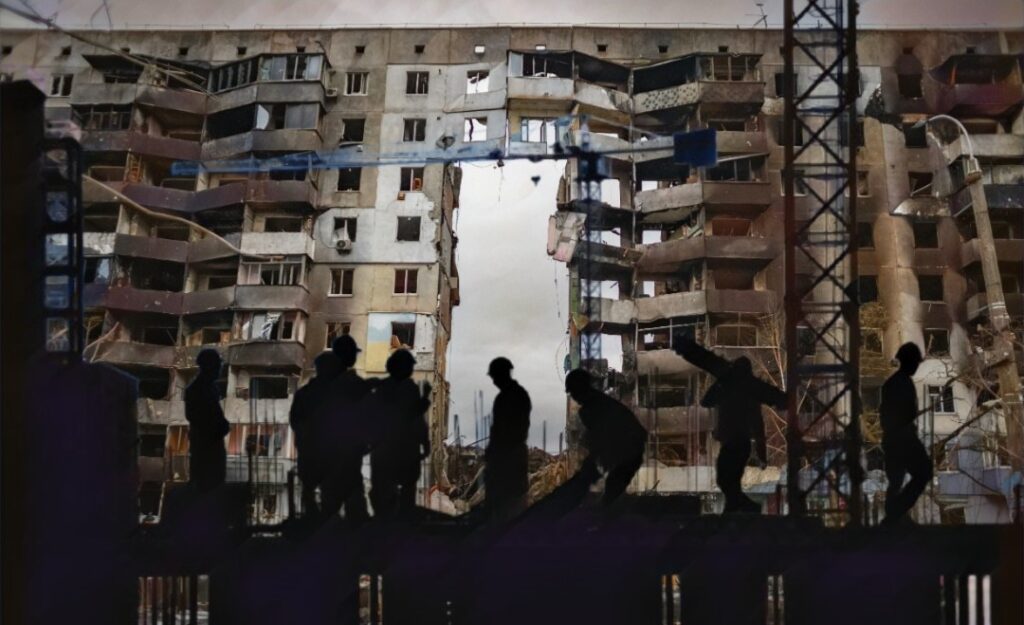
Despite the ongoing war with Russia, Ukraine is attempting to intensify its diplomatic and economic ties with Central Asia. Kyiv is seeking the region’s de facto political support against Moscow, and aiming to rebuild trade relations with the former Soviet republics. But how do the Central Asian nations view Ukraine’s regional ambitions? Ukraine’s Ministry of Foreign Affairs has recently launched a new department focused on Central Asia – a region that has traditionally been in Russia’s zone of influence. The move comes as no surprise, given that Kyiv is also actively seeking to make diplomatic inroads in Africa, a continent where the Kremlin harbors significant geopolitical ambitions. But unlike in Africa, which represents relatively new ground for Ukraine — and where it struggles to compete with Russia’s growing influence — Kyiv appears to be in a stronger position in Central Asia. Ukraine and the countries of Central Asia share a common Soviet past, which has left its mark on their relations in various areas, including the economy, culture, and education. A Ukrainian diaspora also lives in all of the Central Asian states and serves as an important link between the nations. That, however, does not mean that Kyiv’s diplomatic initiative will go flawlessly. Besides the ongoing war, geography is one of the biggest obstacles to Ukraine’s efforts to increase its presence in Central Asia. As a result of the conflict, the Eastern European nation can no longer use its old transport and trade routes to Central Asia through Russia. Since 2022, trade between Ukraine and the regional countries has dropped significantly, as sending goods back and forth has become more expensive. To bypass Russian territory, products from Ukrainian manufacturers are now transported to Central Asia through countries such as Romania, Bulgaria, Turkey, Azerbaijan, and Georgia. Although these routes are functional, their profitability remains questionable. Moreover, statistics show that Ukraine’s industrial production index collapsed from 101.7% in December 2021 to 69.3% in December 2024, which is why the war-torn nation is no longer among Central Asia’s major trading partners. In 2012, long before the war, trade turnover between Ukraine and Kazakhstan – Central Asian largest economy – amounted to $5.5 billion, while in 2023 it was only $391 million. At the end of 2023, Ukraine ranked 35th in Kazakhstan’s list of trading partners, while before the war, in 2021, it was the energy-rich nation’s 15th largest trade partner. Economic ties between Ukraine and Kyrgyzstan are faring no better. According to Idris Kadyrkulov, Kyrgyzstan’s Ambassador to Ukraine, trade between the two countries has “mostly stopped” because many Ukrainian businesses have been hurt by the war, and shipping goods between Ukraine and Kyrgyzstan has become “at least three times more expensive than before the Russian invasion.” That is why, under the current circumstances, strengthening economic ties between Ukraine and the Central Asian states does not seem realistic. Fully aware of this, Kyiv is counting on the regional nations’ economic support in the post-war era – an area in which Kazakhstan has already shown...

5 months ago

Steel Diplomacy: Central Asia’s Southern Push via Afghanistan

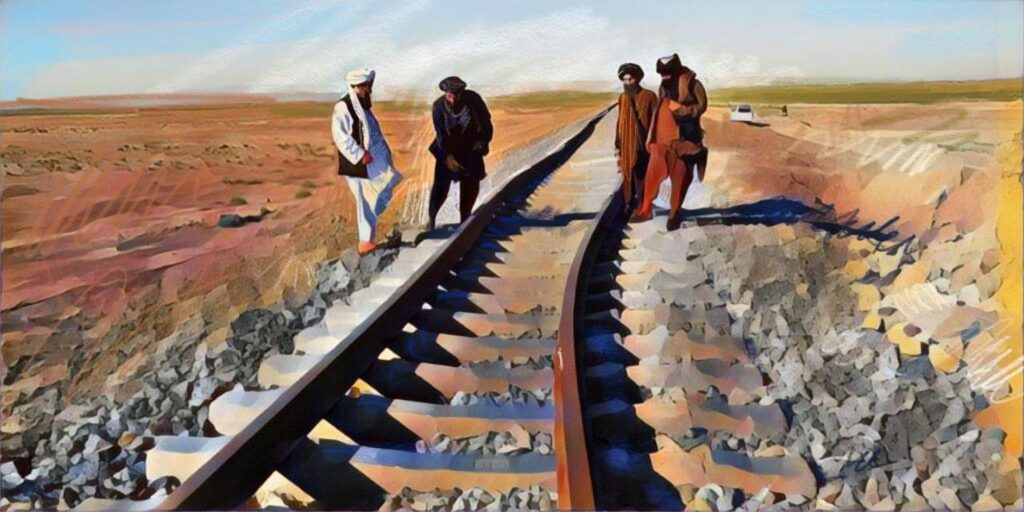
The United States and its allies may be uneasy about the Taliban’s return to power, given their extremist history, continued repression, and the collapse of decades-long Western efforts in Afghanistan. Nevertheless, the Taliban is strengthening ties with the Global South—particularly Central Asia—in search of investment for railway infrastructure. For landlocked Central Asian nations, Afghanistan is a key transit point on the shortest route to the Arabian Sea, offering an alternative to routes through Russia, China, or westward via the Caspian. The war-torn country – located at the crossroads of Central and South Asia – serves as a land bridge between the former Soviet republics and the major markets of the region, including India and Pakistan. This strategic position is why regional actors are eager to invest in the construction of the railway network in Afghanistan, fully aware that the new route would help them achieve at least some of their geopolitical and geoeconomics interest. Kazakhstani Foreign Minister Murat Nurtleu’s recent visit to Kabul was, according to reports, primarily focused on Afghan railway infrastructure. The largest Central Asian nation economy is reportedly ready to invest $500 million in the construction of the 115km (71 miles) railway from Towrgondi on Afghanistan’s border with Turkmenistan to the city of Herat. As Taliban railway officials told The Times of Central Asia, the Afghan and Kazakh delegations, who signed a memorandum of understanding on the project, are expected to finalize new agreements and contracts in the coming months. A detailed construction study is expected to be completed by winter, and Afghan authorities anticipate that construction will begin by the end of the year.  Meanwhile, Kabul hopes to reach similar deals with neighboring Uzbekistan and Turkmenistan, as well as with Russia and Pakistan. According to Taliban railway experts, these four nations – along with Kazakhstan – are expected to play a major role in the development of the 700-kilometer (approximately 435-mile) railway network in Afghanistan. The Taliban political officials, on the other hand, see the project as an opportunity for Afghanistan to increase its geopolitical importance. “It will help us reduce economic dependence and isolation, allowing Afghanistan to integrate more actively into the regional economy,” Muhammad Rehman, the Taliban-appointed Chargé d’Affaires of the Islamic Emirate of Afghanistan to Kazakhstan, told The Times of Central Asia, From his perspective, nations investing in Afghan railway infrastructure will become advocates for Afghanistan’s stability. Projects like the construction of the railway, in his view, can transform Afghanistan into a transit hub for regional countries through railway corridors. “Through the railway, Afghanistan can also import goods at a significantly lower cost, making essential commodities more affordable for its people,” Rahman stressed. More importantly, the railway opens a route for Central Asian natural resources to reach global markets via the ocean and further enhances the viability of the westward-flowing Middle Corridor. In short, the Afghan rail projects are important for connecting Eurasia. It is, therefore, no coincidence that Kazakhstan – being the richest country in terms of mineral wealth in Central Asia...

5 months ago

Is Central Asia China’s Backdoor to Global Power?

As Russia remains preoccupied with the war in Ukraine and the United States is focused on the ongoing Israel-Iran conflict, China is seeking to increase its presence in Central Asia. In the current circumstances, the European Union and Beijing appear to be the most active players in the strategically important region; but who is in a better position? Central Asia has become a region where various foreign powers are competing for influence. On June 5, New Delhi hosted the 4th India-Central Asia Dialogue, during which the foreign ministers of the regional nations, along with their Indian counterpart, Subrahmanyam Jaishankar, discussed anti-terrorism cooperation amid rising regional extremism. Earlier, on April 3–4, the European Union sought to expand its ties with the region through the EU–Central Asia Summit format. Given China’s extensive economic cooperation with Kazakhstan, Uzbekistan, Kyrgyzstan, Turkmenistan, and Tajikistan, it is unsurprising that Beijing is seeking to strengthen its strategic influence in the region. The 2nd China-Central Asia Summit, taking in Astana on June 16-17, is yet another opportunity for Beijing to demonstrate that it has the capacity to position itself as an alternative to the growing European presence in the region. According to Dr. Habib Al-Badawi, Professor of International Relations at the Lebanese University, China is also aiming to limit the influence of other powers in the region – especially the United States, and to a lesser extent, Russia. “Moscow appears to accept China's growing economic dominance while trying to maintain its traditional security role. However, Beijing's expanding presence represents a long-term challenge to Russia's historical sphere of influence in the region,” Dr. Al-Badawi told The Times of Central Asia, emphasizing that Moscow and Beijing are more inclined to cooperate rather than compete in the region. Mark N. V. Temnycky, a Nonresident Fellow at the Atlantic Council’s Eurasia Center, believes that Moscow is showing a high degree of tolerance toward Beijing’s increased economic, energy, and security presence in Central Asia. Both countries, in his view, share similar objectives in the region, where they act as major trading partners and energy suppliers. The European Union seems to be their major rival in the Central Asia. In Dr. Al-Badawi’s view, unlike the EU that is “solely pursuing the region’s critical minerals,” China appears focused on broader economic integration through infrastructure development and trade partnerships. Dr. Tugrul Keskin, Professor at Cappadocia University and Moderator of Global China Academic Network, seems to share this view. “Beijing’s objectives in Central Asia are driven by a blend of strategic, economic, and security imperatives. While access to critical minerals – including rare earth elements vital for green technologies – is an emerging interest, it is not the primary driver. Unlike the European Union, whose recent engagement has focused heavily on securing raw materials, China’s approach is more comprehensive. It aims to shape the region’s long-term political alignments and economic structures in ways that favor Chinese leadership and diminish Western influence,” Dr. Keskin told The Times of Central Asia. At the same time, Beijing is actively increasing...

6 months ago

Interview: Taliban-Ruled Afghanistan Looks to Kazakhstan

ASTANA - War-torn Afghanistan, now led by the Taliban, is in desperate need of funding. The radical group is seizing every opportunity to secure not only financial support but also major infrastructure projects that could help rebuild the country. In late May, a delegation of Taliban representatives, led by Haji Nooruddin Azizi, the Minister of Trade and Industry, visited Kazakhstan to attend the Astana International Forum (AIF). During the summit, they spoke with The Times of Central Asia, discussing their ambitions and plans. It was their first participation in the prominent forum, made possible by Kazakhstan’s 2024 decision to remove the Taliban from its list of terrorist organizations. Since then, Kazakhstani political and business leaders have traveled to Kabul on several occasions aiming to establish closer relations with the Islamic Emirate. [caption id="attachment_32607" align="aligncenter" width="1600"] Image: TCA, Nikola Mikovic[/caption] Most recently, during a meeting with Azizi, Kazakhstan’s President Kassym-Jomart Tokayev emphasized the need to strengthen political ties with Afghanistan. The economy, however, seems to play an equally important role in this relationship, with Astana aiming to increase its bilateral trade volume with Afghanistan to $3 billion in the coming years. Kazakhstan is also eyeing investing $500 million in the construction of the 115-kilometer (71 miles) Turgundi–Herat railway line, a section of the rail corridor linking Turgundi in the north of Afghanistan and Spin Boldak on the country’s border with Pakistan. The route effectively connects Central and South Asia via Afghanistan. Neighboring Turkmenistan is also interested in participating in this project, as the railway aims to connect Central Asia to Pakistan’s Karachi and Gwadar ports, providing Turkmenistan and its neighbors access to vast South Asian markets. The Turgundi–Herat–Kandahar–Spin Boldak railway line is considered a key segment of the broader Trans-Afghan Railway project, which even Russia has expressed an interest in joining. “It is still too early to discuss who will build the railway, although it is clear that Afghan companies are unlikely to be able to undertake the project,” Mirwais Ghafouri, Senior Advisor of the Afghanistan Railway Authority, told The Times of Central Asia in an interview. In his view, given that Afghanistan is a mountainous country, the entire project will cost at least $2–3 billion. The problem for Kabul is that – due to various sanctions and the fact that most countries still do not officially recognize the Taliban-led government – it cannot count on significant support from international financial institutions such as the World Bank and the Asian Development Bank. “But we expect Kazakhstan to invest in this project, as well as in our economy in general. The shortest route connecting Central Asia and South Asia is through Afghanistan. Once the railway is complete, Kazakhstan and other Central Asian nations will be able to use it to export their agricultural products to huge markets such as India, Pakistan, and Bangladesh”, Ghafouri stressed, pointing out that Kabul and Astana are currently working on a project feasibility study. The Taliban appear to be aiming to revive nearly all previously announced projects...

7 months ago

Kazakhstan, Italy, and the Battle for Europe’s Energy Future

ASTANA - Central Asia is no longer on the periphery of global events, but a place where major countries come together with their ideas, money, and projects. In a turbulent and highly uncertain geopolitical environment, global powers are seeking to establish their presence in this strategic, energy-rich region. Italy is no exception. Italian Prime Minister Giorgia Meloni was initially scheduled to visit Kazakhstan in late April, but in light of Pope Francis' passing her trip to Astana was canceled. Coincidently or not, she came to the Kazakh capital on May 30 to attend the Astana International Forum (AIF) – a two-day event that saw the attendance of political, business, and thought leaders who gathered under an expanded agenda that included climate change, energy security, and sustainability. Meloni’s visit to Kazakhstan is part of her Central Asian tour; she previously visited Uzbekistan, where she met with the country’s President Shavkat Mirziyoyev. In Astana, she not only spoke at the AIF, emphasizing that the “Astana International Forum has become increasingly important in dialogue worldwide,” but also took part in the first-ever Central Asia–Italy summit. “Italy was the first Nation in the EU to decide to invest in relations with Central Asia and its individual member Nations, launching a permanent format in order to share ideas,” Meloni said at the AIF, emphasizing that the EU–Central Asia Summit, held in April in Samarkand, “elevated the relations between the region and the European Union to a strategic partnership.” In this relationship, Kazakhstan seems to play a crucial role. Italy is the largest Central Asian economy’s number one trading partner in Europe. According to Kazakhstan’s Ministry of Trade and Integration, trade turnover between Kazakhstan and Italy in 2024 amounted to $19.9 billion, which is 24% higher compared to the previous year ($16.1 billion). Oil is undoubtedly Kazakhstan’s main export to Italy, although critics argue that the third-most populous EU member is merely a transit country, as large amounts of Kazakh oil ultimately reach other European countries. “If we really want to shape the future, we must have the courage to look beyond our geographical boundaries and pave new paths. I am thinking of the energy sector, where our cooperation can help make a difference, and I am also referring to critical raw materials, where our collaboration aims to generate shared benefits and mutual opportunities,” Meloni stressed. Kazakhstan is one of the richest countries in the world in terms of natural resources. This makes it a nation of significant interest to Italy – with whom Astana signed a Strategic Partnership Agreement back in 2009 – as well as to other European states. But from the Kazakh perspective, it is important that this cooperation be mutually beneficial. Astana is seeking to avoid being seen merely as a source of raw materials and expects its partners to offer tangible benefits in return. That is why Kazakhstan’s President Tokayev has pushed forcefully for the renegotiation of oil agreements with foreign energy companies operating in the country. For Astana, it is...

7 months ago