• KGS/USD = 0.01144 0%
  • KZT/USD = 0.00205 0%
  • TJS/USD = 0.10782 0%
  • UZS/USD = 0.00008 0%
  • TMT/USD = 0.28571 0.28%
  • KGS/USD = 0.01144 0%
  • KZT/USD = 0.00205 0%
  • TJS/USD = 0.10782 0%
  • UZS/USD = 0.00008 0%
  • TMT/USD = 0.28571 0.28%
  • KGS/USD = 0.01144 0%
  • KZT/USD = 0.00205 0%
  • TJS/USD = 0.10782 0%
  • UZS/USD = 0.00008 0%
  • TMT/USD = 0.28571 0.28%
  • KGS/USD = 0.01144 0%
  • KZT/USD = 0.00205 0%
  • TJS/USD = 0.10782 0%
  • UZS/USD = 0.00008 0%
  • TMT/USD = 0.28571 0.28%
  • KGS/USD = 0.01144 0%
  • KZT/USD = 0.00205 0%
  • TJS/USD = 0.10782 0%
  • UZS/USD = 0.00008 0%
  • TMT/USD = 0.28571 0.28%
  • KGS/USD = 0.01144 0%
  • KZT/USD = 0.00205 0%
  • TJS/USD = 0.10782 0%
  • UZS/USD = 0.00008 0%
  • TMT/USD = 0.28571 0.28%
  • KGS/USD = 0.01144 0%
  • KZT/USD = 0.00205 0%
  • TJS/USD = 0.10782 0%
  • UZS/USD = 0.00008 0%
  • TMT/USD = 0.28571 0.28%
  • KGS/USD = 0.01144 0%
  • KZT/USD = 0.00205 0%
  • TJS/USD = 0.10782 0%
  • UZS/USD = 0.00008 0%
  • TMT/USD = 0.28571 0.28%

Our People > Nikola Mikovic

Nikola Mikovic's Avatar

Nikola Mikovic

Journalist

Nikola Mikovic is a freelance journalist, researcher and analyst based in Serbia. He covers mostly the foreign policies of Russia, Belarus and Ukraine, as well as energy-related issues.

Nikola primarily focuses on Russia’s involvement in post-Soviet space, the Middle East, and the Balkans. He writes for several publications such as Diplomatic Courier, Byline Times, CGTN, Lowy Institute, Global Comment, and World Geostratregic Insights, among others.

Articles

China–Kyrgyzstan–Uzbekistan Railway: What It Means for Central Asia

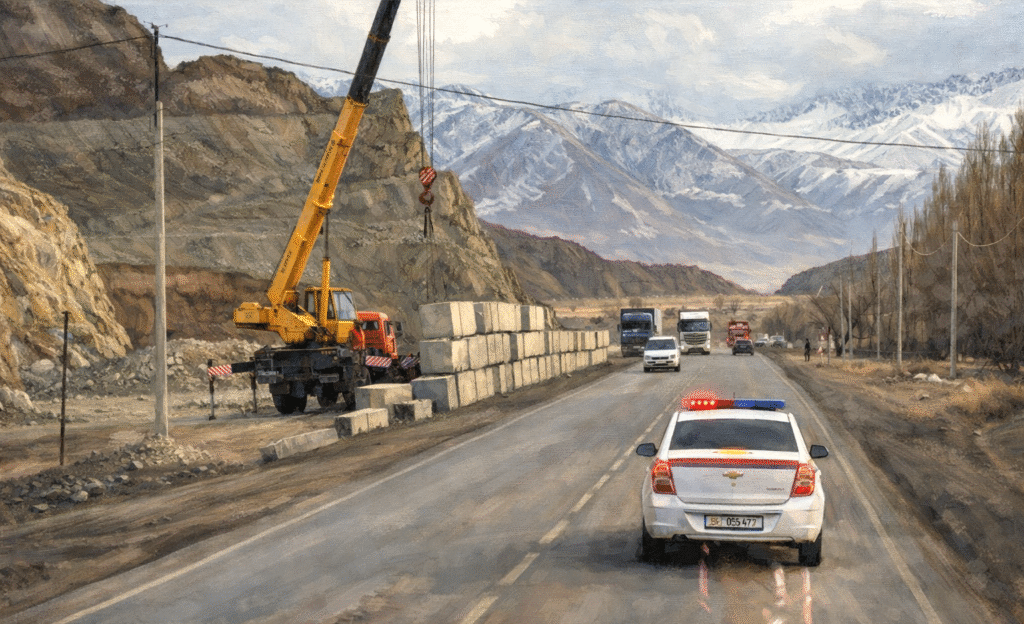
The China–Kyrgyzstan–Uzbekistan railway (CKU railway), also known as the Kashgar–Andijan railway line, is more than an infrastructure project. It represents a geopolitical initiative that could significantly shape the future of Central Asia. In June 2024, Beijing, Bishkek, and Tashkent signed the intergovernmental agreement to move the project forward. The project’s financing—estimated at $4.7 billion—was finalized in December 2025, sparking optimism in all three nations about regional connectivity, trade, and economic growth. Once completed, the railway is expected to become a vital strategic asset in China’s Belt and Road Initiative (BRI). From China’s perspective, the CKU project is a strategic line that diversifies its trade channels and strengthens overland access to Central Asia and beyond. Construction was ceremonially launched on 27 December 2024 in Kyrgyzstan, with major works progressing through 2025, including key tunnel works. For Uzbekistan, the railway could serve as a key link for commerce and transit. Tashkent aims to integrate the China–Kyrgyzstan–Uzbekistan line with existing international transport networks, including connections through Iran and Turkey. But how important is the project for Kyrgyzstan, through which, according to recent reporting, 304 km of the line will pass? According to Nurbek Satarov, Presidential Envoy in the Naryn Region, the project is vital for Kyrgyzstan’s most mountainous region, as roughly 90% of the route through the country will run through Naryn. As he told The Times of Central Asia, construction is in full swing, and the railway is expected to be completed between 2028 and 2030, despite the challenging terrain and technical difficulties. The project includes the construction of 50 bridges and 29 tunnels, underscoring the significant engineering complexities involved. But while regional and national authorities anticipate direct economic benefits from the project, critics argue that Kyrgyzstan may end up serving primarily as a transit country, with limited gains for the local economy. They also question the financial sustainability of the project, noting that it is backed by a long-term loan package of approximately $2.3 billion from Chinese banks. The financing, structured over 35 years and to be repaid by the joint venture company implementing the railway, increases Kyrgyzstan’s exposure to China-linked debt and has raised concerns about future repayment obligations. [caption id="attachment_44216" align="aligncenter" width="1536"] Site visit at the road construction project in the Naryn Oblast; image: TCA, Nikola Mikovic[/caption] However, Edil Baisalov, Kyrgyzstan’s Deputy Prime Minister, claims that the CKU will have a positive impact on the country’s economic development. “This railroad will virtually transform Kyrgyzstan – and not just Kyrgyzstan, but the whole of Central Asia,” he told The Times of Central Asia. Baisalov believes that the CKU railway, once completed, will be part of a larger transcontinental railroad that will cut transit times by at least seven days compared to the northern routes of the Trans-Siberian Railway and maritime transport. The CKU line could indeed bypass the usual northern rail routes through Russia and Kazakhstan, taking a significant share of freight from those countries and reducing their transit revenue. Kyrgyzstan, on the other hand, hopes to see direct gains...

4 months ago

Kyrgyzstan Between the Russian World and Global Chaos: An Interview With Deputy Prime Minister Edil Baisalov

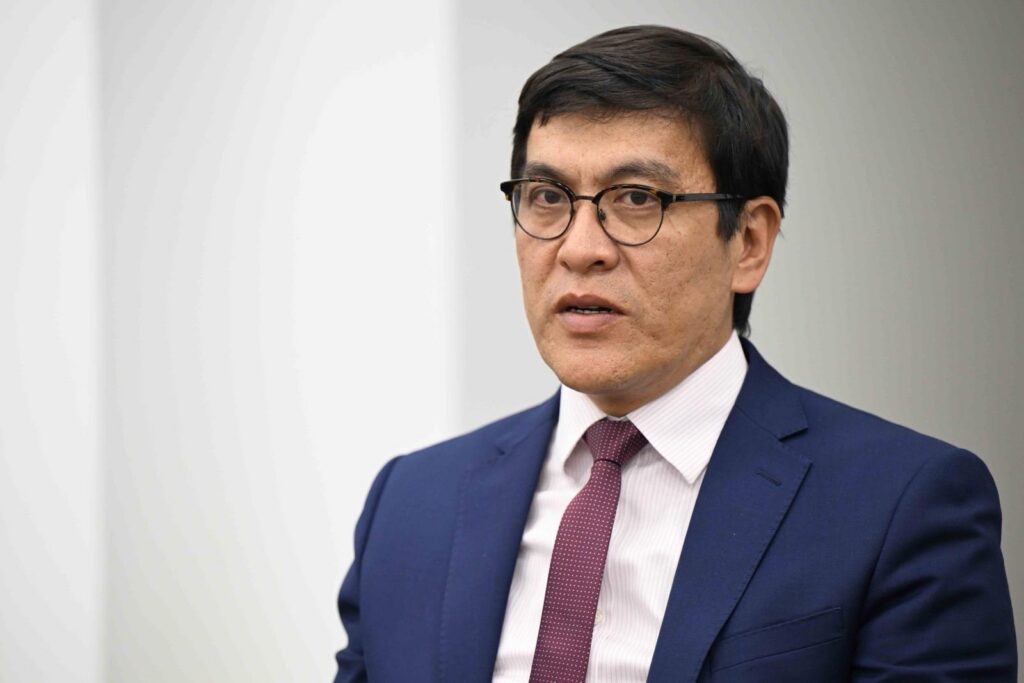
Edil Baisalov is a politician who began his career as a civil-rights activist, became a prominent member of Kyrgyzstan’s non-governmental organization (NGO) sector, and is now serving as the country’s Deputy Prime Minister. In an exclusive interview with The Times of Central Asia, he explained not only how his views have changed over the years, but also how Kyrgyzstan is seeking to find its place in what he described as a rapidly changing global landscape. In Baisalov’s assessment, the global system is facing a crisis of democracy. “The world order, as we know it, is collapsing – or at least is under attack from both within and without,” Baisalov told TCA. “The era of global hypocrisy is over, and the people of Kyrgyzstan have woken up. “What various international institutions have taught us over the years – their lectures on how to develop an economy, how to pursue nation-building, and so forth – has been proven wrong. Throughout the 1990s, Kyrgyzstan was one of the most diligent students of the liberal policies promoted by the “Chicago Boys.” We followed their instructions to the letter. Kyrgyzstan was the first post-Soviet country to join the World Trade Organization in 1998, and we were the first to receive normalized trade relations with the U.S. with the permanent repeal of the Jackson-Vanik amendment. All of our previous governments followed IMF conditionality dictates to the letter, especially in deregulation, mass privatization, and all the austerity programs and budget sequestrations. We were promised prosperity; that the free markets and the invisible hand would take care of everything. But it did not work. “I remember it well: at the time, U.S. President Bill Clinton laughed at China, saying that Beijing needed to adopt certain policies, to liberalize, or that science could not prosper in a closed society. He claimed the Chinese model was doomed to fail, arguing that scientific and technological breakthroughs could only occur in a Western-style society with minimal state intervention. Yet today, we witness the triumphant rise of the People’s Republic of China. This is not only an emergence but also a return to the rightful place of a great civilization that has, for millennia, contributed enormously to humankind.” TCA: Does this mean you now see China, rather than the West, as a model for Kyrgyzstan to follow? Baisalov: It’s not about the Chinese model or any particular foreign template. What we understood is that as a nation, we are in competition with other nations. Just like corporations compete with each other, nations must look out for themselves. If our state does not actively develop industries and sciences, there is no formula for success. All those ideologies promoting the “invisible hand” – the idea that everything will naturally flourish on its own – are simply false. TCA: When did Kyrgyzstan stop taking orders from outside forces and begin making independent national decisions? Baisalov: We used to be naive about wanting to be liked by others. But not anymore. In the last five years of...

4 months ago

Ukraine Eyes Central Asia: Can War-Weary Kyiv Forge New Regional Alliances?

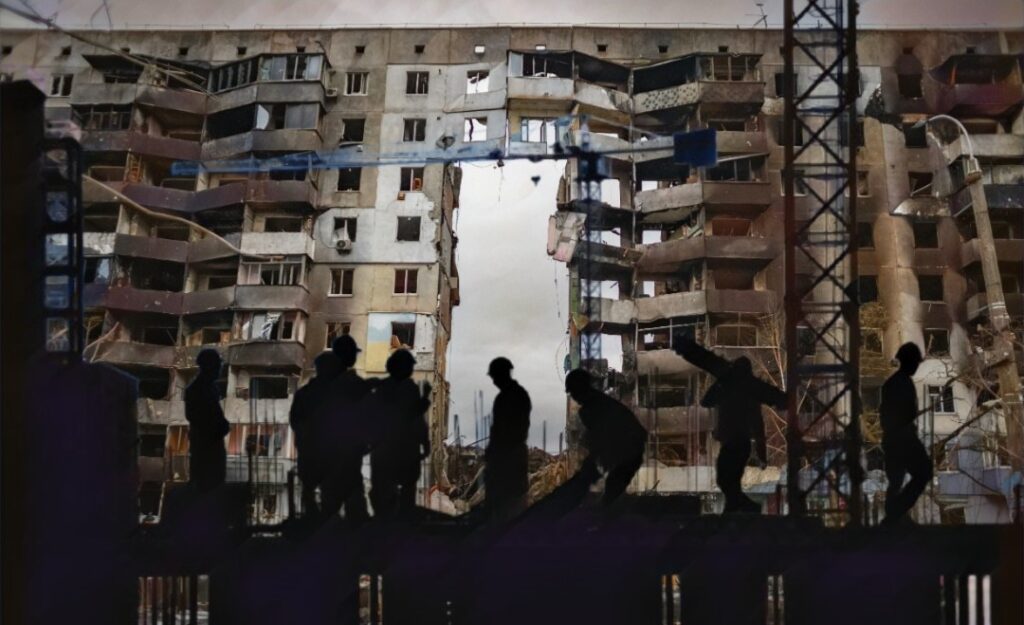
Despite the ongoing war with Russia, Ukraine is attempting to intensify its diplomatic and economic ties with Central Asia. Kyiv is seeking the region’s de facto political support against Moscow, and aiming to rebuild trade relations with the former Soviet republics. But how do the Central Asian nations view Ukraine’s regional ambitions? Ukraine’s Ministry of Foreign Affairs has recently launched a new department focused on Central Asia – a region that has traditionally been in Russia’s zone of influence. The move comes as no surprise, given that Kyiv is also actively seeking to make diplomatic inroads in Africa, a continent where the Kremlin harbors significant geopolitical ambitions. But unlike in Africa, which represents relatively new ground for Ukraine — and where it struggles to compete with Russia’s growing influence — Kyiv appears to be in a stronger position in Central Asia. Ukraine and the countries of Central Asia share a common Soviet past, which has left its mark on their relations in various areas, including the economy, culture, and education. A Ukrainian diaspora also lives in all of the Central Asian states and serves as an important link between the nations. That, however, does not mean that Kyiv’s diplomatic initiative will go flawlessly. Besides the ongoing war, geography is one of the biggest obstacles to Ukraine’s efforts to increase its presence in Central Asia. As a result of the conflict, the Eastern European nation can no longer use its old transport and trade routes to Central Asia through Russia. Since 2022, trade between Ukraine and the regional countries has dropped significantly, as sending goods back and forth has become more expensive. To bypass Russian territory, products from Ukrainian manufacturers are now transported to Central Asia through countries such as Romania, Bulgaria, Turkey, Azerbaijan, and Georgia. Although these routes are functional, their profitability remains questionable. Moreover, statistics show that Ukraine’s industrial production index collapsed from 101.7% in December 2021 to 69.3% in December 2024, which is why the war-torn nation is no longer among Central Asia’s major trading partners. In 2012, long before the war, trade turnover between Ukraine and Kazakhstan – Central Asian largest economy – amounted to $5.5 billion, while in 2023 it was only $391 million. At the end of 2023, Ukraine ranked 35th in Kazakhstan’s list of trading partners, while before the war, in 2021, it was the energy-rich nation’s 15th largest trade partner. Economic ties between Ukraine and Kyrgyzstan are faring no better. According to Idris Kadyrkulov, Kyrgyzstan’s Ambassador to Ukraine, trade between the two countries has “mostly stopped” because many Ukrainian businesses have been hurt by the war, and shipping goods between Ukraine and Kyrgyzstan has become “at least three times more expensive than before the Russian invasion.” That is why, under the current circumstances, strengthening economic ties between Ukraine and the Central Asian states does not seem realistic. Fully aware of this, Kyiv is counting on the regional nations’ economic support in the post-war era – an area in which Kazakhstan has already shown...

11 months ago

Steel Diplomacy: Central Asia’s Southern Push via Afghanistan

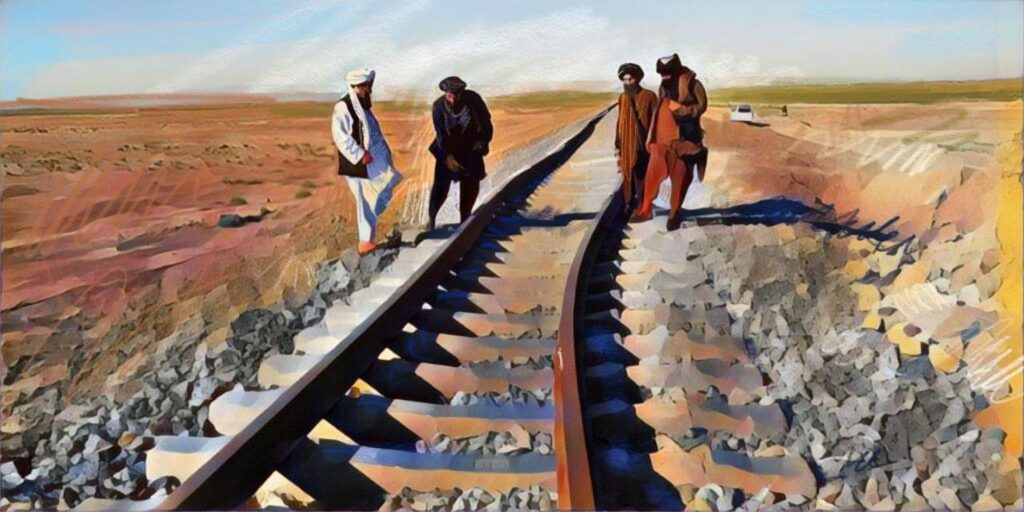
The United States and its allies may be uneasy about the Taliban’s return to power, given their extremist history, continued repression, and the collapse of decades-long Western efforts in Afghanistan. Nevertheless, the Taliban is strengthening ties with the Global South—particularly Central Asia—in search of investment for railway infrastructure. For landlocked Central Asian nations, Afghanistan is a key transit point on the shortest route to the Arabian Sea, offering an alternative to routes through Russia, China, or westward via the Caspian. The war-torn country – located at the crossroads of Central and South Asia – serves as a land bridge between the former Soviet republics and the major markets of the region, including India and Pakistan. This strategic position is why regional actors are eager to invest in the construction of the railway network in Afghanistan, fully aware that the new route would help them achieve at least some of their geopolitical and geoeconomics interest. Kazakhstani Foreign Minister Murat Nurtleu’s recent visit to Kabul was, according to reports, primarily focused on Afghan railway infrastructure. The largest Central Asian nation economy is reportedly ready to invest $500 million in the construction of the 115km (71 miles) railway from Towrgondi on Afghanistan’s border with Turkmenistan to the city of Herat. As Taliban railway officials told The Times of Central Asia, the Afghan and Kazakh delegations, who signed a memorandum of understanding on the project, are expected to finalize new agreements and contracts in the coming months. A detailed construction study is expected to be completed by winter, and Afghan authorities anticipate that construction will begin by the end of the year.  Meanwhile, Kabul hopes to reach similar deals with neighboring Uzbekistan and Turkmenistan, as well as with Russia and Pakistan. According to Taliban railway experts, these four nations – along with Kazakhstan – are expected to play a major role in the development of the 700-kilometer (approximately 435-mile) railway network in Afghanistan. The Taliban political officials, on the other hand, see the project as an opportunity for Afghanistan to increase its geopolitical importance. “It will help us reduce economic dependence and isolation, allowing Afghanistan to integrate more actively into the regional economy,” Muhammad Rehman, the Taliban-appointed Chargé d’Affaires of the Islamic Emirate of Afghanistan to Kazakhstan, told The Times of Central Asia, From his perspective, nations investing in Afghan railway infrastructure will become advocates for Afghanistan’s stability. Projects like the construction of the railway, in his view, can transform Afghanistan into a transit hub for regional countries through railway corridors. “Through the railway, Afghanistan can also import goods at a significantly lower cost, making essential commodities more affordable for its people,” Rahman stressed. More importantly, the railway opens a route for Central Asian natural resources to reach global markets via the ocean and further enhances the viability of the westward-flowing Middle Corridor. In short, the Afghan rail projects are important for connecting Eurasia. It is, therefore, no coincidence that Kazakhstan – being the richest country in terms of mineral wealth in Central Asia...

11 months ago

Is Central Asia China’s Backdoor to Global Power?

As Russia remains preoccupied with the war in Ukraine and the United States is focused on the ongoing Israel-Iran conflict, China is seeking to increase its presence in Central Asia. In the current circumstances, the European Union and Beijing appear to be the most active players in the strategically important region; but who is in a better position? Central Asia has become a region where various foreign powers are competing for influence. On June 5, New Delhi hosted the 4th India-Central Asia Dialogue, during which the foreign ministers of the regional nations, along with their Indian counterpart, Subrahmanyam Jaishankar, discussed anti-terrorism cooperation amid rising regional extremism. Earlier, on April 3–4, the European Union sought to expand its ties with the region through the EU–Central Asia Summit format. Given China’s extensive economic cooperation with Kazakhstan, Uzbekistan, Kyrgyzstan, Turkmenistan, and Tajikistan, it is unsurprising that Beijing is seeking to strengthen its strategic influence in the region. The 2nd China-Central Asia Summit, taking in Astana on June 16-17, is yet another opportunity for Beijing to demonstrate that it has the capacity to position itself as an alternative to the growing European presence in the region. According to Dr. Habib Al-Badawi, Professor of International Relations at the Lebanese University, China is also aiming to limit the influence of other powers in the region – especially the United States, and to a lesser extent, Russia. “Moscow appears to accept China's growing economic dominance while trying to maintain its traditional security role. However, Beijing's expanding presence represents a long-term challenge to Russia's historical sphere of influence in the region,” Dr. Al-Badawi told The Times of Central Asia, emphasizing that Moscow and Beijing are more inclined to cooperate rather than compete in the region. Mark N. V. Temnycky, a Nonresident Fellow at the Atlantic Council’s Eurasia Center, believes that Moscow is showing a high degree of tolerance toward Beijing’s increased economic, energy, and security presence in Central Asia. Both countries, in his view, share similar objectives in the region, where they act as major trading partners and energy suppliers. The European Union seems to be their major rival in the Central Asia. In Dr. Al-Badawi’s view, unlike the EU that is “solely pursuing the region’s critical minerals,” China appears focused on broader economic integration through infrastructure development and trade partnerships. Dr. Tugrul Keskin, Professor at Cappadocia University and Moderator of Global China Academic Network, seems to share this view. “Beijing’s objectives in Central Asia are driven by a blend of strategic, economic, and security imperatives. While access to critical minerals – including rare earth elements vital for green technologies – is an emerging interest, it is not the primary driver. Unlike the European Union, whose recent engagement has focused heavily on securing raw materials, China’s approach is more comprehensive. It aims to shape the region’s long-term political alignments and economic structures in ways that favor Chinese leadership and diminish Western influence,” Dr. Keskin told The Times of Central Asia. At the same time, Beijing is actively increasing...

1 year ago

Interview: Taliban-Ruled Afghanistan Looks to Kazakhstan

ASTANA - War-torn Afghanistan, now led by the Taliban, is in desperate need of funding. The radical group is seizing every opportunity to secure not only financial support but also major infrastructure projects that could help rebuild the country. In late May, a delegation of Taliban representatives, led by Haji Nooruddin Azizi, the Minister of Trade and Industry, visited Kazakhstan to attend the Astana International Forum (AIF). During the summit, they spoke with The Times of Central Asia, discussing their ambitions and plans. It was their first participation in the prominent forum, made possible by Kazakhstan’s 2024 decision to remove the Taliban from its list of terrorist organizations. Since then, Kazakhstani political and business leaders have traveled to Kabul on several occasions aiming to establish closer relations with the Islamic Emirate. [caption id="attachment_32607" align="aligncenter" width="1600"] Image: TCA, Nikola Mikovic[/caption] Most recently, during a meeting with Azizi, Kazakhstan’s President Kassym-Jomart Tokayev emphasized the need to strengthen political ties with Afghanistan. The economy, however, seems to play an equally important role in this relationship, with Astana aiming to increase its bilateral trade volume with Afghanistan to $3 billion in the coming years. Kazakhstan is also eyeing investing $500 million in the construction of the 115-kilometer (71 miles) Turgundi–Herat railway line, a section of the rail corridor linking Turgundi in the north of Afghanistan and Spin Boldak on the country’s border with Pakistan. The route effectively connects Central and South Asia via Afghanistan. Neighboring Turkmenistan is also interested in participating in this project, as the railway aims to connect Central Asia to Pakistan’s Karachi and Gwadar ports, providing Turkmenistan and its neighbors access to vast South Asian markets. The Turgundi–Herat–Kandahar–Spin Boldak railway line is considered a key segment of the broader Trans-Afghan Railway project, which even Russia has expressed an interest in joining. “It is still too early to discuss who will build the railway, although it is clear that Afghan companies are unlikely to be able to undertake the project,” Mirwais Ghafouri, Senior Advisor of the Afghanistan Railway Authority, told The Times of Central Asia in an interview. In his view, given that Afghanistan is a mountainous country, the entire project will cost at least $2–3 billion. The problem for Kabul is that – due to various sanctions and the fact that most countries still do not officially recognize the Taliban-led government – it cannot count on significant support from international financial institutions such as the World Bank and the Asian Development Bank. “But we expect Kazakhstan to invest in this project, as well as in our economy in general. The shortest route connecting Central Asia and South Asia is through Afghanistan. Once the railway is complete, Kazakhstan and other Central Asian nations will be able to use it to export their agricultural products to huge markets such as India, Pakistan, and Bangladesh”, Ghafouri stressed, pointing out that Kabul and Astana are currently working on a project feasibility study. The Taliban appear to be aiming to revive nearly all previously announced projects...

1 year ago

Kazakhstan, Italy, and the Battle for Europe’s Energy Future

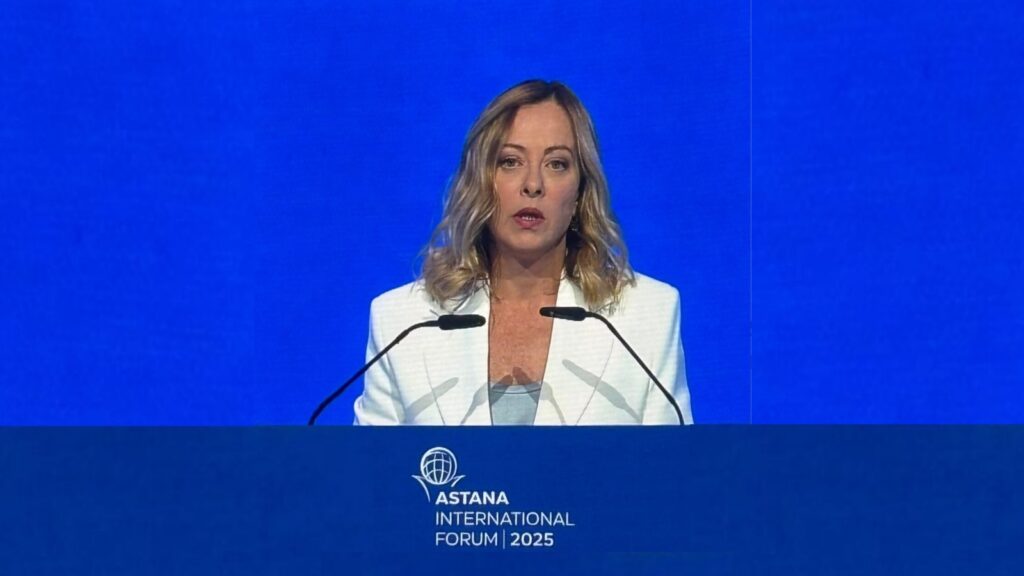
ASTANA - Central Asia is no longer on the periphery of global events, but a place where major countries come together with their ideas, money, and projects. In a turbulent and highly uncertain geopolitical environment, global powers are seeking to establish their presence in this strategic, energy-rich region. Italy is no exception. Italian Prime Minister Giorgia Meloni was initially scheduled to visit Kazakhstan in late April, but in light of Pope Francis' passing her trip to Astana was canceled. Coincidently or not, she came to the Kazakh capital on May 30 to attend the Astana International Forum (AIF) – a two-day event that saw the attendance of political, business, and thought leaders who gathered under an expanded agenda that included climate change, energy security, and sustainability. Meloni’s visit to Kazakhstan is part of her Central Asian tour; she previously visited Uzbekistan, where she met with the country’s President Shavkat Mirziyoyev. In Astana, she not only spoke at the AIF, emphasizing that the “Astana International Forum has become increasingly important in dialogue worldwide,” but also took part in the first-ever Central Asia–Italy summit. “Italy was the first Nation in the EU to decide to invest in relations with Central Asia and its individual member Nations, launching a permanent format in order to share ideas,” Meloni said at the AIF, emphasizing that the EU–Central Asia Summit, held in April in Samarkand, “elevated the relations between the region and the European Union to a strategic partnership.” In this relationship, Kazakhstan seems to play a crucial role. Italy is the largest Central Asian economy’s number one trading partner in Europe. According to Kazakhstan’s Ministry of Trade and Integration, trade turnover between Kazakhstan and Italy in 2024 amounted to $19.9 billion, which is 24% higher compared to the previous year ($16.1 billion). Oil is undoubtedly Kazakhstan’s main export to Italy, although critics argue that the third-most populous EU member is merely a transit country, as large amounts of Kazakh oil ultimately reach other European countries. “If we really want to shape the future, we must have the courage to look beyond our geographical boundaries and pave new paths. I am thinking of the energy sector, where our cooperation can help make a difference, and I am also referring to critical raw materials, where our collaboration aims to generate shared benefits and mutual opportunities,” Meloni stressed. Kazakhstan is one of the richest countries in the world in terms of natural resources. This makes it a nation of significant interest to Italy – with whom Astana signed a Strategic Partnership Agreement back in 2009 – as well as to other European states. But from the Kazakh perspective, it is important that this cooperation be mutually beneficial. Astana is seeking to avoid being seen merely as a source of raw materials and expects its partners to offer tangible benefits in return. That is why Kazakhstan’s President Tokayev has pushed forcefully for the renegotiation of oil agreements with foreign energy companies operating in the country. For Astana, it is...

1 year ago

Can Kazakhstan Lead Small and Middle Powers in Reforming the UN?

ASTANA – The United Nations, envisioned as a pillar of global cooperation, has often struggled to rise to the challenges it was created to address. Its inability to bridge cultural divides hampers meaningful solutions to regional issues, while structural weaknesses and the exclusion of diverse regional voices from the Security Council deepen its shortcomings. Compounding these flaws is the frequent deadlock among permanent members, whose competing agendas stifle consensus and action. These inefficiencies cast doubt on the organization's ability to hear and respond to regional voices, grievances, and expectations in a rapidly changing world. Amid these persistent challenges within the United Nations, Kazakhstan's proactive stance on global issues highlights its potential to lead efforts toward fostering peace and addressing critical gaps in international cooperation. For example, although Kazakhstan prioritizes nuclear energy in its national strategy, it simultaneously remains committed to advocating for the non-proliferation of nuclear and biological weapons. Such an approach, combined with its balanced foreign policy, enables the largest Central Asian nation to seek to position itself as a leading advocate for global peace. But how realistic is that in the current geopolitical climate? As conflicts and wars continue to rage around the world, leaders from several countries have gathered in Kazakhstan’s capital, Astana, for the Astana International Forum (AIF) to discuss key global challenges ranging from energy security and geopolitical cooperation to international trade and sustainable development. For Kazakhstan’s leadership, the event serves as an ideal opportunity to reaffirm its aspiration to position the country as a middle power. According to the Central Asian state’s President Kassym-Jomart Tokayev, it is middle powers that should be prepared to take on greater multilateral responsibilities. “We all should strongly remain adherent to the United Nations Charter with no biased and selective approaches to its principles,” Tokayev said on May 29 in calling for the expansion of the United Nations Security Council that, in his view, should include broader regional representation. This idea was firmly supported by President Gordana Siljanovska-Davkova of North Macedonia, who numbered among the major guests in Astana. She argues that small countries, along with middle powers, should be "the greatest advocates of effective multilateralism," as they stand to gain the most from institutions like the United Nations. “The Security Council should be expanded, reformed and democratized to make it more accountable and more responsible in maintaining international peace and security,” Siljanovska-Davkova stressed, adding that the international institution “should take its rightful place as a principal representative body, not only for debate and deliberative democracy but also for policymaking.” The problem, however, is that major global powers, as permanent members of the UN Security Council, are unlikely to voluntarily relinquish their positions within the organization. Small and middle powers will, therefore, undoubtedly have to work hard to achieve their ambitious geopolitical goals. In the meantime, they are expected to continue developing bilateral relations. “The task before us is clear – to preserve cooperation where it still exists and to restore it where it has broken down. We must widen this...

1 year ago

Kazakhstan’s Diplomatic Dance: Securing Power in Turbulent Times

For Kazakhstan, strengthening ties with neighboring Central Asian states – as well as with Russia, China, and the West – is a top foreign policy priority. That, however, does not mean that the energy-rich nation is not also seeking to build stronger relations with other actors on the international stage. The largest regional country views itself as an aspiring middle power. As such, it intends to continue pursuing what Roman Vassilenko, Kazakhstan’s Deputy Foreign Ministry, describes as a “balanced, constructive and pragmatic foreign policy.” Yet, in an increasingly turbulent world, this approach comes with its own sets of challenges. One of them is undoubtedly the construction of the nation’s first nuclear power plant. Kazakhstan’s President Kassym-Jomart Tokayev has repeatedly stated that an international consortium with participation by companies from China, France, Russia, and South Korea should be responsible for that. But how realistic is that under the current geopolitical circumstances? “No decision of the composition of the consortium has been made yet, although we are actively negotiating with the companies interested in the construction,” Vassilenko told The Times of Central Asia, emphasizing that Tokayev has stressed that Kazakhstan will need more than one nuclear power plant. That is why, in Vassilenko’s view, there will likely be different types of consortiums building different types of nuclear plants. Such an approach perfectly illustrates the Central Asian nation’s “multi-vector” foreign policy. “As the ninth largest country in the world, with only 20 million people, and neighboring such superpowers as Russia and China, we can naturally depend only on the best diplomacy we can deploy,” Vassilenko stressed. For that reason, Kazakhstan has initiated the Astana International Forum (AIF) – an event that reflects today’s interconnected global challenges, ranging from energy security and the climate crisis to technological innovation, sustainable development, and geopolitical cooperation. This year, the AIF – taking place in the Kazakh capital on May 29-30 – will host leaders from nations such as Rwanda, Qatar, Albania, Croatia, and North Macedonia, among others. The fact that Astana will host leaders from several Balkan countries clearly suggests that Kazakhstan plans to strengthen ties with this part of Europe. According to Vassilenko, Kazakhstan’s policymakers view the Balkans as a “promising market” which is why the Central Asian nation plans to establish direct flights to Serbia later this year. “We already have direct flights to Montenegro, and we aim to connect Kazakhstan with other European countries as well,” Vassilenko said, adding that his nation has recently opened embassies in Albania and North Macedonia. This approach demonstrates that Astana sees not only the European Union but also the EU candidate countries as potential partners. Still, for Kazakhstan – a major oil and gas producer – energy plays an important role in its foreign policy strategy. Given that the Central Asian state supplies large quantities of crude oil and petroleum products to Europe via Croatia, it’s no surprise that the Prime Minister of the former Yugoslav Republic, Andrej Plenkovic, is among the major speakers at the Astana International...

1 year ago

Central Asia’s Green Energy Dream: Too Big to Achieve?

Although most Central Asian nations are heavily dependent on fossil fuel production and exports, they are aiming to significantly increase the use of renewable energy, hoping to eventually become crucial suppliers of so-called green electricity to Europe. Achieving such an ambitious goal will be easier said than done, given that developing the green energy sector in the region requires massive investment. What Central Asian states – struggling to attract long-term private capital into clean energy projects – need is financing for projects that modernize power networks, improve grid stability, and enable cross-border electricity flows. These upgrades are essential for large-scale renewable energy deployment and regional trade in power. Most actors in Central Asia seem to have taken major steps in this direction. In November 2024, at the COP29 climate conference held in Baku, Kazakhstan signed several deals worth nearly $3.7 billion with international companies and development institutions to support green energy projects. Neighboring Uzbekistan, according to reports, has attracted more than €22 billion ($23.9) in foreign investment in renewable energy, while Kyrgyzstan, Turkmenistan, and Tajikistan – which is aiming to generate all its electricity from green energy sources by 2032 – have developed strategies to help increase their renewable potential. But to turn their goals into reality, all these nations will need funding – whether from oil-rich Middle Eastern countries, China, the European Union, or various international financial institutions. Presently, the development of the Caspian Green Energy Corridor – which aims to supply green electricity from Central Asia to Azerbaijan and further to Europe – remains the region’s most ambitious project. According to Yevgeniy Zhukov, the Asian Development Bank's (ADB) Director General for Central and West Asia, this initiative is a strategic priority for Kazakhstan, Uzbekistan, and Azerbaijan. “While the prospect of exporting green electricity to Europe is part of the long-term vision, the core goal of the initiative is to accelerate green growth within the region,” Zhukov told The Times of Central Asia. Together with the Asian Infrastructure Investment Bank, the ADB is funding a feasibility study for this proposed transmission corridor. The study will assess the technical and economic viability of such a system, along with the environmental and regulatory requirements. In the meantime, the ABD is expected to continue funding other green energy projects in the region. The financial entity, according to Zhukov, invested $250 million in Uzbekistan in 2023 to support renewable energy development and comprehensive power sector reforms, while in other Central Asian countries, it remains “firmly committed to driving the green energy transition.” “For instance, in Tajikistan we are exploring the potential to co-finance the Rogun Hydropower Project alongside the World Bank and other international partners. In Kyrgyzstan, our focus has been on supporting foundational reforms in the energy sector, including strengthening the policy and regulatory environment to attract private investment in renewables. In Turkmenistan, we’ve launched a total of $1.75 million technical assistance initiative to help lay the groundwork for future renewable energy development,” Zhukov stressed, pointing out that these efforts are part...

1 year ago