• KGS/USD = 0.01144 0%
  • KZT/USD = 0.00201 0%
  • TJS/USD = 0.10563 -0.09%
  • UZS/USD = 0.00008 0%
  • TMT/USD = 0.28490 0%
  • KGS/USD = 0.01144 0%
  • KZT/USD = 0.00201 0%
  • TJS/USD = 0.10563 -0.09%
  • UZS/USD = 0.00008 0%
  • TMT/USD = 0.28490 0%
  • KGS/USD = 0.01144 0%
  • KZT/USD = 0.00201 0%
  • TJS/USD = 0.10563 -0.09%
  • UZS/USD = 0.00008 0%
  • TMT/USD = 0.28490 0%
  • KGS/USD = 0.01144 0%
  • KZT/USD = 0.00201 0%
  • TJS/USD = 0.10563 -0.09%
  • UZS/USD = 0.00008 0%
  • TMT/USD = 0.28490 0%
  • KGS/USD = 0.01144 0%
  • KZT/USD = 0.00201 0%
  • TJS/USD = 0.10563 -0.09%
  • UZS/USD = 0.00008 0%
  • TMT/USD = 0.28490 0%
  • KGS/USD = 0.01144 0%
  • KZT/USD = 0.00201 0%
  • TJS/USD = 0.10563 -0.09%
  • UZS/USD = 0.00008 0%
  • TMT/USD = 0.28490 0%
  • KGS/USD = 0.01144 0%
  • KZT/USD = 0.00201 0%
  • TJS/USD = 0.10563 -0.09%
  • UZS/USD = 0.00008 0%
  • TMT/USD = 0.28490 0%
  • KGS/USD = 0.01144 0%
  • KZT/USD = 0.00201 0%
  • TJS/USD = 0.10563 -0.09%
  • UZS/USD = 0.00008 0%
  • TMT/USD = 0.28490 0%
20 February 2026

Our People > Nikola Mikovic

Nikola Mikovic's Avatar

Nikola Mikovic

Journalist

Nikola Mikovic is a freelance journalist, researcher and analyst based in Serbia. He covers mostly the foreign policies of Russia, Belarus and Ukraine, as well as energy-related issues.

Nikola primarily focuses on Russia’s involvement in post-Soviet space, the Middle East, and the Balkans. He writes for several publications such as Diplomatic Courier, Byline Times, CGTN, Lowy Institute, Global Comment, and World Geostratregic Insights, among others.

Articles

Kazakhstan, with China’s Help, Plans to Export Green Energy to Europe

Although Kazakhstan is a major producer of all fossil fuels – coal, crude oil, and natural gas – it also has the capacity to secure its energy future by prioritizing renewable energy. Fully aware of that, the European Union – one of the former Soviet republic’s most significant trade partners – aims to strengthen its energy ties with Astana, hoping to begin importing not only “green electricity” from the Central Asian nation, but also green hydrogen. On November 25, at Nazarbayev University in Astana, the “Energy in Transition – Powering Tomorrow” traveling exhibition was held, and one of the major topics discussed by energy experts was green hydrogen – hydrogen produced using renewable energy sources such as solar and wind power. It is unlikely a pure coincidence that the German Federal Foreign Office initiated the event. Over the past few years, Germany has shown interest in the development of the Kazakh green hydrogen sector. The most prominent green hydrogen project in Kazakhstan is currently being developed by Hyrasia One, a subsidiary of the German-Swedish energy company, Svevind. In 2021, the company announced its plans for €50 billion ($55 billion) green hydrogen project in the Mangystau Region in western Kazakhstan. It is expected that Hyrasia One will begin the production of green hydrogen in 2030, and the power plant will reach full capacity by 2032. Meanwhile, the authorities in Astana will need to find a way to export this form of renewable energy to Europe, a major energy market for Kazakhstan. Although Astana and Brussels signed a strategic partnership on the production of green hydrogen in November 2022, several challenges remain in the implementation of the deal. Issues such as the high cost, water scarcity in the largest Central Asian state (with water being the key component of green hydrogen production), and a lack of transport infrastructure, are significant barriers to exporting hydrogen from Kazakhstan to Europe. Using Russian gas pipeline systems for transportation of the Kazakh green hydrogen to Europe is not an option given current geopolitical circumstances. To resolve this transportation issue, the Kazakh authorities and their European partners could build hydrogen pipelines across the Caspian Sea, the Caucasus and Turkey to reach southern European countries. The problem is that building such a pipeline infrastructure is very expensive, and it remains uncertain who would be willing to fund such a project. That, however, does not mean that Kazakhstan cannot become Europe’s major green hydrogen supplier. What Astana would have to do, according to experts, is to convert the green hydrogen into green ammonia and then export it to Europe via the Middle Corridor – running through Kazakhstan, the Caspian Sea, Azerbaijan, and Georgia. On the Black Sea coast, ammonia would be loaded onto ships and transported past the Bosphorus to EU members such as Greece, Romania, and Bulgaria. From there, it would be sent further north, where green hydrogen would eventually be extracted from the ammonia. This is a rather complex process, and it is unclear how feasible and...

1 year ago
The Geopolitical Battle for Control Over Transportation Routes in Central Asia

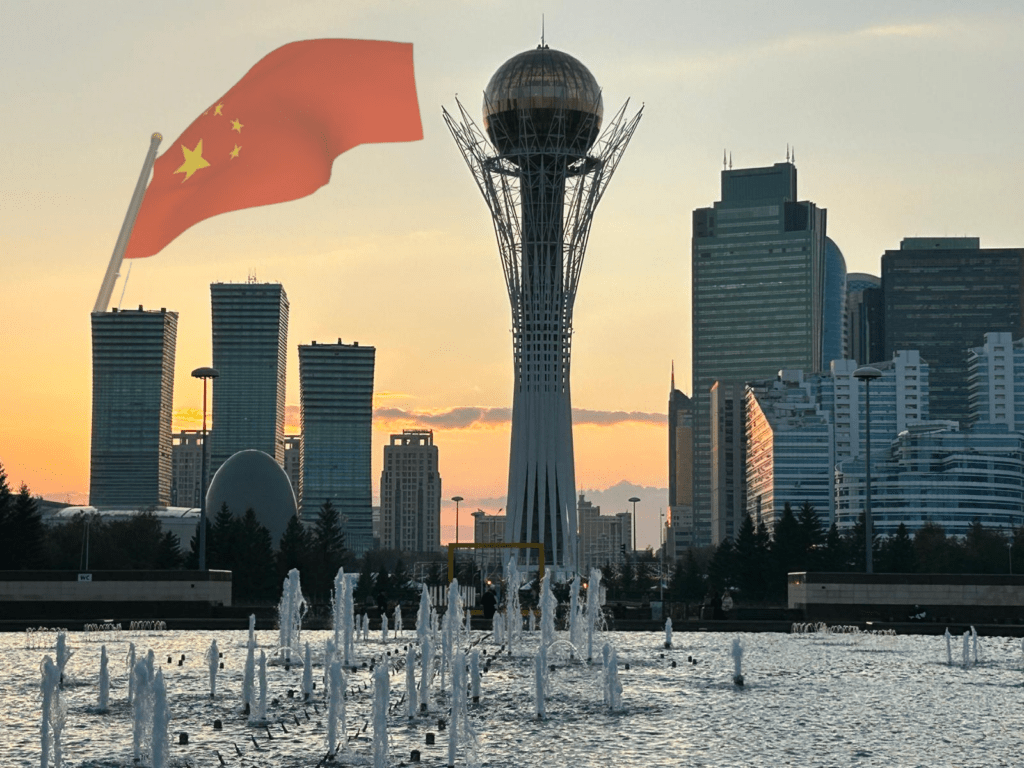
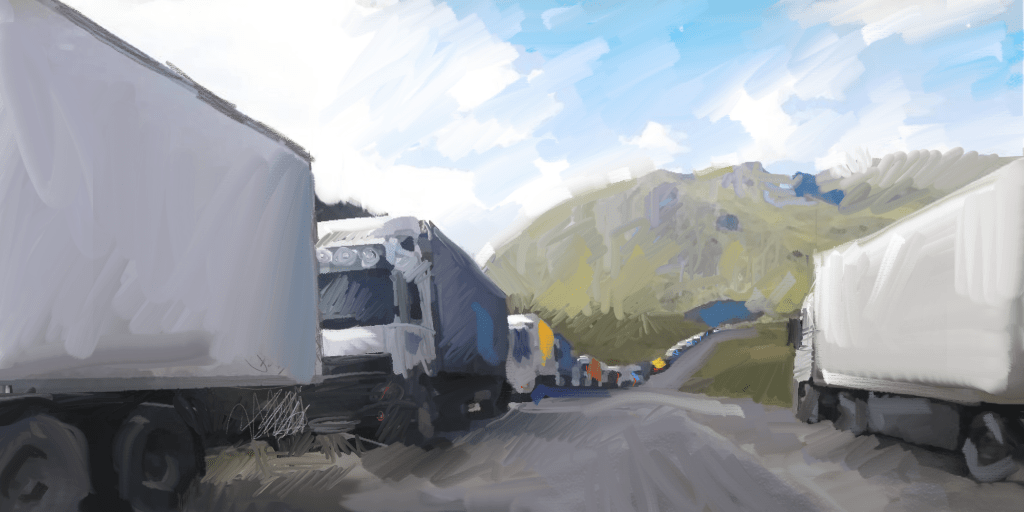
Russia and Kazakhstan may be nominal allies, but their geoeconomic interests are not always aligned. As Astana seeks to develop the Middle Corridor – a transportation link connecting China and Europe through Kazakhstan, the Caspian Sea, Azerbaijan, and Georgia, bypassing Russia – Moscow reportedly aims to build a trade and logistics route that would connect Russia and Kyrgyzstan, thereby circumventing Kazakhstan.  While various regional actors and international institutions actively invest in the Middle Corridor, also known as the Trans-Caspian International Transportation Route (TITR), a potential route linking Russia and Kyrgyzstan, through Uzbekistan and Turkmenistan, remains merely an idea. From the geopolitical perspective, the TITR is seen as an alternative to reach European and international markets and bypass Russia. But what is the primary goal of the Russia-Kyrgyzstan route? Although both Kyrgyzstan and Kazakhstan are members of the Russian-led Eurasian Economic Union, queues of trucks at the Kyrgyz-Kazakh state border seem to have become a norm. Bishkek accuses Kazakhstan of “artificially creating obstacles at the border to weaken competition from Kyrgyzstan”, while the Kazakh authorities claim that Kyrgyz truckers are “unwilling to comply with Astana’s requirements and submit fraudulent documents for cargo.” Since Kyrgyzstan’s main connection with Russia – the major market for its agricultural products – goes through Kazakhstan, it is Astana that has the upper hand over Bishkek. From a purely economic perspective, a new route, including sea transport across the Caspian Sea, would enable faster delivery of vegetables, fruits, as well as other goods from Kyrgyzstan to Russia. However, it remains highly uncertain if Uzbekistan and Turkmenistan, as transit countries, are genuinely interested in this project. “Both nations are far more interested in East-West trade, actual supply chain relocations into the region, and new gas contracts with the West,” Samuel Doveri Vesterbye, Managing Director of the European Neighborhood Council, told The Times of Central Asia. In his view, a Kyrgyzstan-Russia corridor would offer a limited amount of trade, due to the sanctions the West imposed on Moscow over its actions in Ukraine. But in spite of that, Kyrgyzstan, like all countries, tries to be part of any connectivity corridor. “There is a lot of ‘corridor competition’ at the moment. Most of it is bluff. It is important to look at which projects are being built and how much investments is going into them. The Russia-Kyrgyzstan corridor, at present, is more hot air than reality. There is no funding from the United States, the European Union, China or Turkey. Also, major players like the European Bank for Reconstruction and Development (EBRD) and the European Investment Bank (EIB) do not seem interested in funding the construction of this route. Therefore, its lifespan and potential look rather limited,” Vesterbye stressed. European institutions seem interested in further development of the Trans-Caspian International Transportation Route. From the European Union’s perspective, Russia’s invasion of Ukraine has increased the need to find alternative, reliable, safe and efficient trade routes between Europe and Asia. That is why Brussels is reportedly willing to invest €10 billion ($10.5...

1 year ago

Kazakhstan and Serbia Strengthen Ties Despite Different Geopolitical Paths

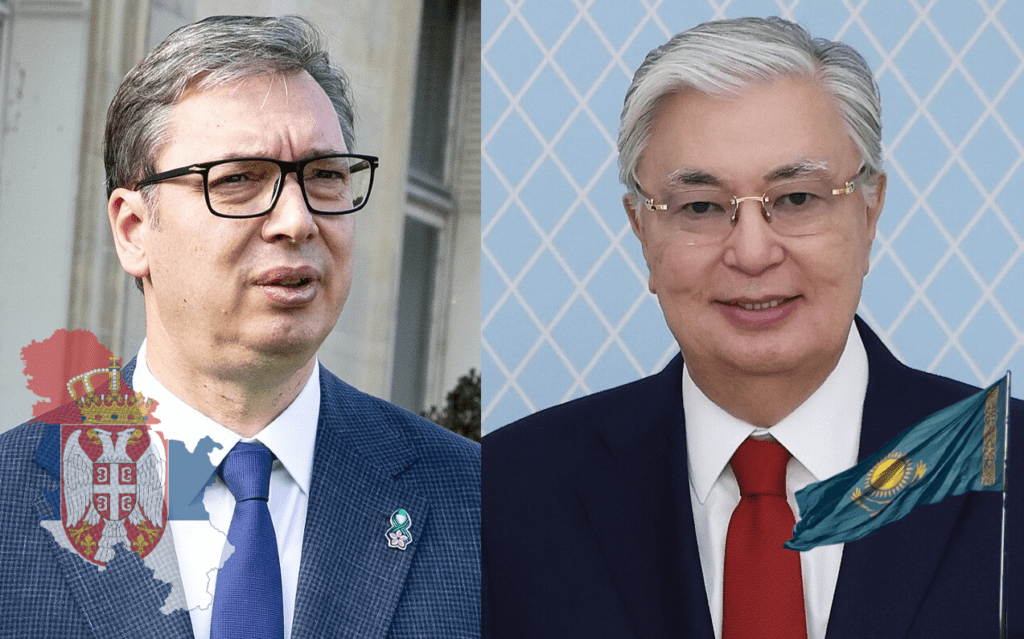
Serbian President Vucic (54) might physically resemble Kazakh leader Kassym-Jomart Tokayev (71), but the geopolitical positions of Sebia and Kazakhstan could not be more different. While the Balkan nation – a European Union candidate since 2012 – remains in the EU’s “eternal waiting room”, the Central Asian country – a member of the Russian-led Eurasian Economic Union – seems to have found a delicate balance between Russia, China, and the West. Those differences, however, have not prevented Serbia and Kazakhstan from strengthening their bilateral ties. Over the past six months, the two countries have been actively preparing for Tokayev’s trip to Serbia. This year, he spoke by phone with Vucic twice, while various Serbian and Kazakh officials held several meetings. On November 18-19, Tokayev finally visited the Southeastern European nation, where he met with his Serbian counterpart. According to the Kazakh leader, they discussed strengthening trade and economic relations and bilateral partnerships between the two nations. “It is essential that we develop cooperation. We had constructive talks and reached important deals,” Tokayev stressed. During his visit to the Balkan country, Serbian and Kazakh ministers signed several bilateral agreements. One of them is a 2025 plan on military cooperation. It is, therefore, no surprise that, following the talks in Belgrade, Vucic and Tokayev attended an exhibition of arms and military equipment at the Batajnica military airport near the Serbian capital. Indeed, military ties seem to be an important aspect of the Serbian-Kazakh relationship. Back in 2017, the two nations signed a memorandum of understanding in the field of military-technical collaboration. Six years later, in November 2023, Kazakhstan and Serbia inked intergovernmental agreements on military-technical cooperation, while in June of this year Serbian and Kazakh defense ministers discussed in Astana military relations between the two countries. Also, in September, Roman Vassilenko, Kazakhstan’s Deputy Foreign Minister, announced that Belgrade and Astana plan то expand cooperation in the defense industry. It remains to be seen how Moscow – Astana’s nominal ally in the Collective Security Treaty Organization (CSTO) – will react to Kazakhstan’s ambitions to deepen military ties with Serbia – a nominally neutral country that has indirectly supplied Ukraine with $885 million worth of weapons. Despite being in different geopolitical positions, Serbia and Kazakhstan seem to share the same approach regarding Ukraine. Both nations support the Eastern European country’s territorial integrity, while trying to preserve relatively good relations with the Kremlin. At the same time, they support each other’s territorial integrity, which is particularly important for Serbia given that Kazakhstan does not recognize the 2008 unilateral independence of Kosovo. In 2022, sitting next to Russian President Vladimir Putin, Tokayev said that if the right to self-determination is put into practice worldwide, then there will be over 600 countries instead of the 193 states which are currently members of the United Nations. “For this reason, we do not recognize either Taiwan, or Kosovo, or South Ossetia, or Abkhazia… This principle will also be applied to quasi-state territories, which, in our opinion, are Lugansk and...

1 year ago

Kazakhstan’s Tokayev in France: It’s All About Nuclear Energy

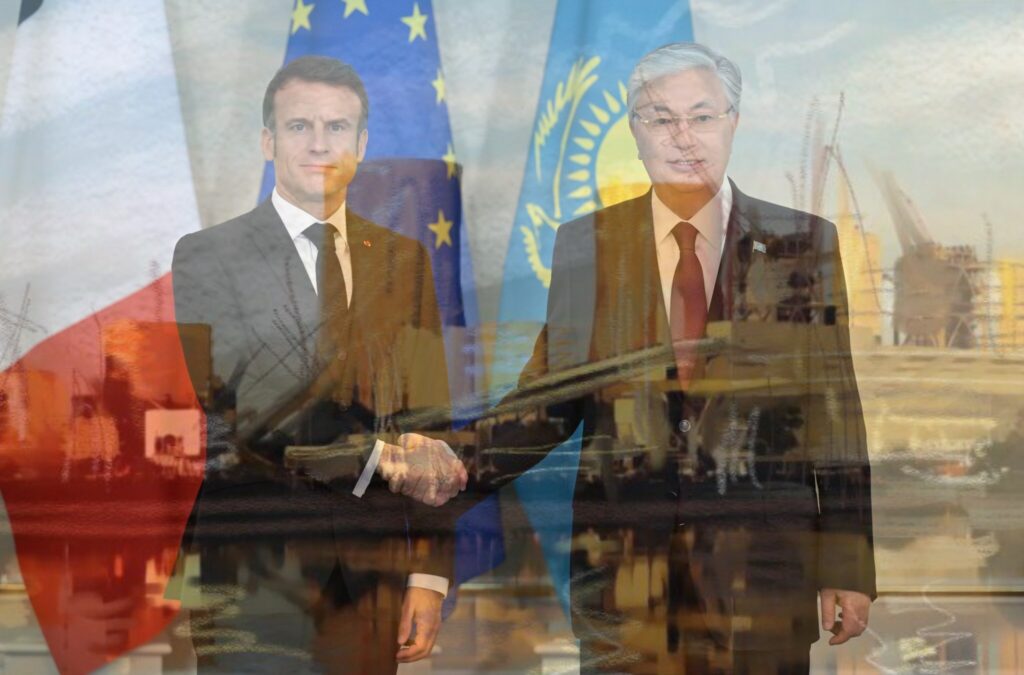
For France – a country that gets around 70% of its electricity from nuclear energy – Kazakhstan’s decision to build its first nuclear power plant presents an ideal opportunity to strengthen economic ties with the Central Asian state. For Astana, potential cooperation with French nuclear corporations could help reduce dependence on Russia and its State Nuclear Energy Corporation, Rosatom. But will things really go that smoothly? In November 2023, following the meeting between Kazakh President Kassym-Jomart Tokayev and his French counterpart Emmanuel Macron, in Astana, it became clear that, for Paris, establishing a strong nuclear partnership with the largest Central Asian nation was the top priority with regard to Kazakhstan. The following year, Tokayev flew to Paris for another round of talks with Macron. Reports suggest that nuclear cooperation was once again one of the key topics the two leaders discussed. On November 4, a day prior to the Macron-Tokayev summit, French and Kazakh officials signed 24 documents on cooperation worth $2 billion. Unsurprisingly, energy was a central focus. Kazakhstan agreed to establish closer ties with two French nuclear giants: Orano and Électricité de France (EDF). According to Gabidulla Osspankulov, Chairman of the Investment Committee of the Kazakh Foreign Ministry, Orano’s great experience in uranium extraction makes it a key partner for Astana. That is why the former Soviet republic aims to use the company’s technologies and experience in uranium production in Kazakhstan. Ospankulov also expects both Orano and EDF to be part of a consortium that will build the nuclear power plant in the Central Asian country. Paris, on the other hand, is likely seeks to not only be involved in the construction of the nuclear facility, but also to get Kazakhstan’s spent nuclear fuel for reprocessing. In exchange, Astana – possibly the world’s largest uranium producer – can increase its uranium exports to France. From the French perspective, such an arrangement would be very beneficial, especially after Niger's military government revoked Orano’s permit to operate at its Imouraren uranium mine – one of the biggest in the world. The problem, however, lies in geography and logistics. On the eve of the Macron-Tokayev summit, the French train manufacturer Alotom and the Kazakhstan Temir Zholy Electric Locomotive Assembly Plant signed a deal on the supply of 117 French-made freight electric locomotives, weighing up to 9,000 tons, to the former Soviet republic. Will they be used for the transport of Kazakh uranium to France? Russia and China, as the Central Asian nation’s giant neighbors, could easily, under any pretext, block the transport of Kazakh nuclear materials through their territories to Europe. Rail remains the dominant mode of transport for Kazakhstan’s uranium exports, but its reliance on Russian and Chinese routes poses a strategic challenge for Astana. To avoid using the two nations’ railways, Astana would have to boost uranium and potentially also spent nuclear fuel exports via the Caspian Sea Route, primarily through the Middle Corridor. It is, therefore, no surprise that modernization of this network remains Kazakhstan’s primary objective. But...

1 year ago

How Central Asia Is Shifting From Russia Towards Turkey

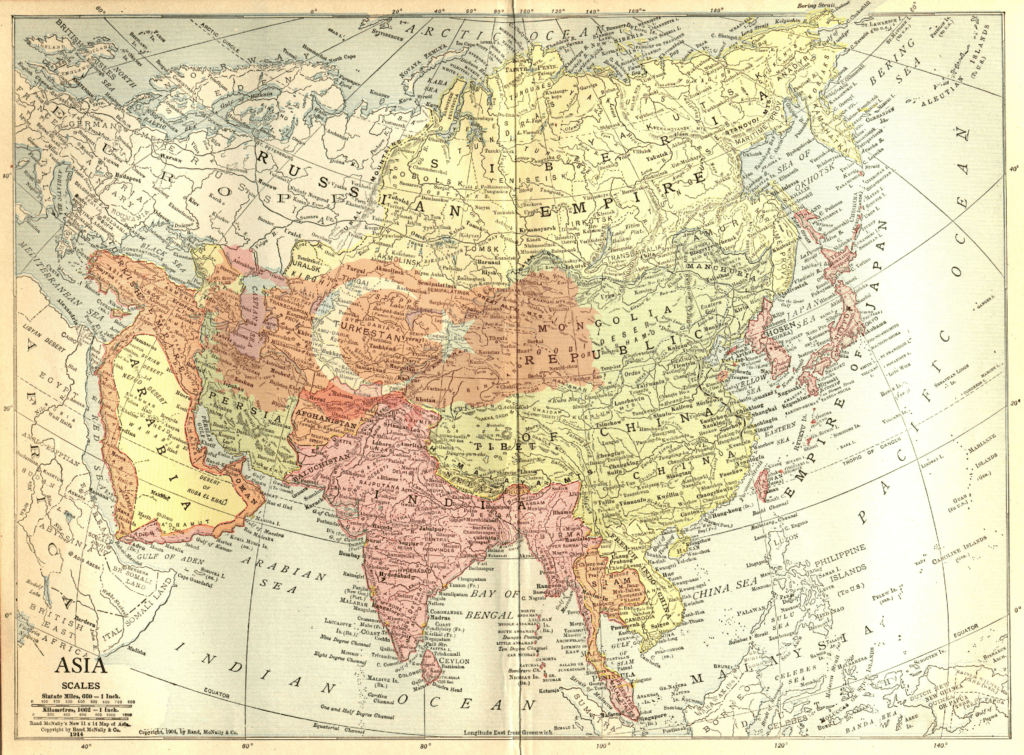
For Turkey, a NATO member and EU hopeful, the Organization of Turkic States (OTS) is an instrument that helps Ankara increase its presence in the strategically important region of Central Asia. For Kazakhstan, Kyrgyzstan, Uzbekistan, and Turkmenistan, the Turkish-dominated group seems to be a tool that allows them to achieve their economic goals, while also continuing to distance themselves from Russia. Although Moscow still has a relatively strong foothold in Central Asia, it does not seem able to prevent the growing role of the Organization of Turkic States in the post-Soviet space. This entity – whose members are Azerbaijan, Kazakhstan, Kyrgyzstan, Turkey, and Uzbekistan, while Turkmenistan, Hungary, and the self-proclaimed Turkish Republic of Northern Cyprus hold observer status – has the potential to eventually serve as a counterbalance not only to Russian, but also Chinese influence in the region. Since its foundation in 2009, the OTS has held ten summits of its leaders. Over this period, the intergovernmental organization’s working bodies have also convened dozens of times. On November 5-6 in the Kyrgyz capital Bishkek, the OTS heads of states will meet for the eleventh time to discuss the future of the Turkic world. Although the agenda has yet to be announced, it is believed that the OTS leaders will seek to strengthen economic cooperation between its members. Currently, their major trade partners are nations outside the bloc. For instance, Turkey’s largest trading partner is Germany, Azerbaijan’s is Italy, while China has recently become Kazakhstan’s biggest trade partner with bilateral trade hitting $31.5 billion. For neighboring Kyrgyzstan and Uzbekistan, China and Russia remain the most important economic partners. One of the group’s major problems is the fact that its members, excluding Turkey, are landlocked countries heavily-dependent on Russia and China geographically. Turkmenistan and Kazakhstan, as major energy exporters, rely on oil and gas pipelines traversing Russian territory to reach their customers in Europe. It is, therefore, no surprise that the Organization of Turkic States governments’ agreed in September to create a simplified customs corridor, aiming at reducing the number of documents required for customs operations and customs procedures between OTS member states. In other words, they plan to increase trade among themselves. According to Omer Kocaman, OTS Deputy Secretary-General, the Turkic nations are also looking to “continue cooperation to stimulate positive changes in their financial systems.” That is why the organization has recently launched the Turkic Investment Fund – the first joint financial institution for economic integration of the Turkic countries, with an initial capital of $500 million. Kyrgyzstan’s Chamber of Commerce and Industry announced on October 17 that, starting in January 2025, the Turkic Investment Fund will begin financing major joint projects in OTS nations. However, in July, Azerbaijani President Ilham Aliyev said that the current structure of the Organization of Turkic States does not meet its established goals, and that its budget is insufficient for their implementation. In order to change that, on October 19, ministers of economy and trade of the OTS nations met in Bishkek to...

1 year ago