• KGS/USD = 0.01144 0%
  • KZT/USD = 0.00216 0%
  • TJS/USD = 0.10456 0%
  • UZS/USD = 0.00008 0%
  • TMT/USD = 0.28490 0%
  • KGS/USD = 0.01144 0%
  • KZT/USD = 0.00216 0%
  • TJS/USD = 0.10456 0%
  • UZS/USD = 0.00008 0%
  • TMT/USD = 0.28490 0%
  • KGS/USD = 0.01144 0%
  • KZT/USD = 0.00216 0%
  • TJS/USD = 0.10456 0%
  • UZS/USD = 0.00008 0%
  • TMT/USD = 0.28490 0%
  • KGS/USD = 0.01144 0%
  • KZT/USD = 0.00216 0%
  • TJS/USD = 0.10456 0%
  • UZS/USD = 0.00008 0%
  • TMT/USD = 0.28490 0%
  • KGS/USD = 0.01144 0%
  • KZT/USD = 0.00216 0%
  • TJS/USD = 0.10456 0%
  • UZS/USD = 0.00008 0%
  • TMT/USD = 0.28490 0%
  • KGS/USD = 0.01144 0%
  • KZT/USD = 0.00216 0%
  • TJS/USD = 0.10456 0%
  • UZS/USD = 0.00008 0%
  • TMT/USD = 0.28490 0%
  • KGS/USD = 0.01144 0%
  • KZT/USD = 0.00216 0%
  • TJS/USD = 0.10456 0%
  • UZS/USD = 0.00008 0%
  • TMT/USD = 0.28490 0%
  • KGS/USD = 0.01144 0%
  • KZT/USD = 0.00216 0%
  • TJS/USD = 0.10456 0%
  • UZS/USD = 0.00008 0%
  • TMT/USD = 0.28490 0%

Our People > Sadokat Jalolova

Sadokat Jalolova's Avatar

Sadokat Jalolova

Journalist

Jalolova has worked as a reporter for some time in local newspapers and websites in Uzbekistan, and has enriched her knowledge in the field of journalism through courses at the University of Michigan, Johns Hopkins University, and the University of Amsterdam on the Coursera platform.

Articles

Uzbekistan Extends Agreement on Hairaton-Mazar-e-Sharif Railway with Afghanistan

Uzbekistan has reached an agreement with Afghanistan's Taliban interim government to extend the contract for operating and maintaining the Hairaton-Mazar-e-Sharif railway. Uzbekistan’s Minister of Transport, Ilhom Mahkamov, met with Mohammad Ishaq Sahibzada, Afghanistan’s Deputy Minister of Public Works for Railways, during talks held in Tashkent from January 21 to 23. Uzbekistan's Ministry of Transport agreement has confirmed the agreement. The meetings, chaired by Mahkamov, focused on accelerating the construction of the Trans-Afghan Railway project and planning the next stages of work. Both sides emphasized the importance of enhancing regional connectivity and ensuring the smooth operation of the existing railway infrastructure. Under the extended agreement, Sogdiana Trans LLC, a subsidiary of Uzbekistan Railways Joint Stock Company, will continue managing the Hairaton-Mazar-e-Sharif railway. This railway, constructed in 2010 for $129 million, has been operated by Sogdiana Trans since its completion. In August 2024, the Naibabad railway station — part of the Hairaton-Naibabad-Mazar-e-Sharif railway line — was reopened after restoration. The work was carried out by Sogdiana Trans in collaboration with the Termez Regional Railway Hub under a contract with the Afghan Railways Administration. Despite a 2022 proposal from Afghan authorities to transfer the railway’s management to local companies to reduce operational costs, the plan wasn't implemented. In 2024, the Hairaton-Mazar-e-Sharif railway facilitated the transport of 4,200 containers of goods between Afghanistan and China, according to the Afghan Ministry of Public Works. The Hairaton-Mazar-e-Sharif railway forms a critical part of the China-Kyrgyzstan-Uzbekistan-Afghanistan railway corridor. The corridor’s capacity is expected to expand significantly following the completion of the China-Kyrgyzstan-Uzbekistan railway. Currently, neither Kyrgyzstan nor Uzbekistan has a direct rail connection to China, with Central Asia’s rail access to China limited to a route through Kazakhstan. Construction of the China-Kyrgyzstan-Uzbekistan railway officially began on December 27, 2024. The 523-kilometer route will run from Kashgar (China) through Torugart, Makmal, and Jalal-Abad (Kyrgyzstan), before reaching Andijan (Uzbekistan). Once operational, the railway is expected to handle up to 15 million tons of cargo annually, creating a vital new trade link across the region. This agreement between Uzbekistan and Afghanistan secures the continued operation of the Hairaton-Mazar-e-Sharif railway and reinforces Uzbekistan’s commitment to regional cooperation and infrastructure development. These efforts aim to boost trade, connectivity, and economic opportunities across Central and South Asia.

1 year ago

Tver Court Convicts Salokhiddin Ashurov for Fraudulent Registrations Linked to Crocus City Hall Terror Case

A court in Tver, Russia, has found Salokhiddin Ashurov guilty of fraudulently registering individuals, including Aminchon and Dilovar Islomov, who are defendants in the Crocus City Hall terrorist attack case. The verdict was reported by RIA Novosti, citing court documents. In April 2024, the Moscow District Court of Tver placed Ashurov in custody for his involvement in the fictitious registration of Russian citizens at his residential address. Among those registered were the Islomov brothers, Dilovar and Aminchon. By the summer, the case was transferred to the interdistrict court, which later forwarded it to a justice of the peace for review. Ashurov was convicted on 14 charges of fraudulent registration of Russian citizens. According to RIA Novosti sources, the Islomov family — comprising father Isroil and sons Dilovar and Aminchon — were implicated in the Crocus City Hall case. The investigation revealed that Dilovar had owned a Renault Symbol vehicle, which the attackers reportedly used to flee the crime scene before being detained in Russia's Bryansk region. Although Dilovar sold the car in February, the insurance policy remained under his name. The Islomov brothers, Russian citizens who lived in Tver and worked as taxi drivers, deny any involvement in the terrorist act. Their father, Isroil, is a Tajik citizen with a Russian residence permit. Initially, the brothers faced charges of committing a terrorist act, but in September 2024, the charges were reduced to aiding and abetting a terrorist act under Part 3 of Article 205.1 of the Russian Criminal Code. The Russian Investigative Committee has charged 27 individuals in connection with the terrorist attack at Crocus City Hall in the Moscow Region, according to committee chairman Alexander Bastrykin. The case remains one of the highest-profile investigations in recent years, as authorities continue to probe the circumstances surrounding the attack.

1 year ago

CSTO to Strengthen Tajik-Afghan Border in 2025

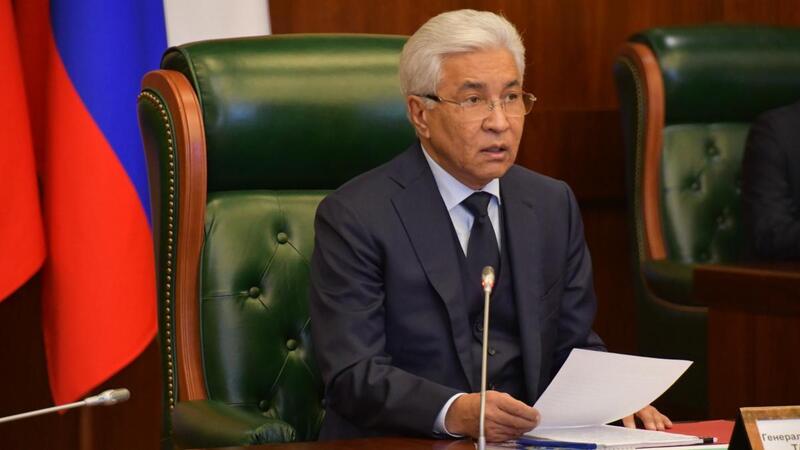
The Collective Security Treaty Organization (CSTO) will begin implementing a program to reinforce the Tajik-Afghan border in 2025, CSTO Secretary General Imangali Tasmagambetov announced during a meeting in Moscow on Thursday, according to Interfax. Tasmagambetov explained that the program outlines concrete measures to enhance security along the southern boundary of the CSTO’s area of responsibility. This announcement was made during a meeting reviewing the CSTO secretariat’s and joint staff’s activities in 2024, as well as outlining objectives for 2025. The meeting was attended by Andrei Serdyukov, head of the CSTO joint staff. In 2024, the CSTO finalized and signed agreements related to equipping its collective forces with modern weapons and military equipment. The organization also conducted joint operational and combat training exercises and actively collaborated with international organizations. As it looks ahead to 2025, the CSTO is drafting an action plan to focus on key priorities, including securing the Tajik-Afghan border, which has long been a source of concern for member states. The organization includes six member countries: Russia, Armenia, Belarus, Kazakhstan, Kyrgyzstan, and Tajikistan, though in December 2024, Armenian Prime Minister Nikol Pashinyan stated that his country’s relations with the CSTO have passed the “point of no return.” The Shamsiddin Shokhin section of the Tajik-Afghan border, spanning more than 100 kilometers, has been particularly problematic for years. This area has witnessed numerous security incidents, including hostage-taking and attacks on Tajik citizens and military personnel. The CSTO’s planned measures aim to address these challenges and bolster the security of this vulnerable region. By strengthening border security, the organization is seeking to reduce the risks posed by cross-border threats, including illegal trafficking and extremist activity.

1 year ago

Uzbekistan May Reduce Prison Sentences for Inmates Who Read Books

Uzbekistan is considering a new initiative that would reduce prison sentences for inmates who engage in reading, as part of efforts to promote rehabilitation and personal development. Proposal Details The Milliy Tiklanish (National Revival) party has been advocating for this initiative for several years, inspired by similar practices in other countries. According to the party’s press service, a draft law has now been developed to bring the proposal to life. Under the proposed legislation, prisoners who read one book from an approved list and pass an exam on its content could have their sentences reduced by three days. The program would allow inmates to read up to 10 books per year, potentially reducing their sentences by up to 30 days annually. The reading list will be curated and managed by the Republican Center for Spirituality and Enlightenment, ensuring that the selected books align with the program’s goals of fostering intellectual and moral growth. International Inspiration The concept of reducing prison sentences through reading is not unique to Uzbekistan. Last year, Russian politician Vladislav Davankov proposed a similar initiative for inmates in pretrial detention centers and prisons. Davankov argued that reading programs could play a vital role in the rehabilitation and resocialization of prisoners. Kazakhstan has already taken steps in this direction. In 2021, the country launched a pilot project in correctional facilities in the Karaganda region. Under this program, inmates read books from an approved list, retell the content to a commission, and write essays summarizing the material. Positive evaluations by the commission can lead to improved detention conditions or even early release. Broader Implications If implemented, the program in Uzbekistan could serve as a tool to encourage education, personal growth, and rehabilitation among inmates. By focusing on intellectual engagement, the initiative could help prisoners reintegrate into society upon release and reduce recidivism rates. While the draft law is still in the development stage, it reflects Uzbekistan’s broader efforts to modernize its prison system and promote rehabilitation over punishment. If successful, the initiative could become a model for other countries in the region seeking to implement progressive approaches to criminal justice.

1 year ago

Central Asia’s Economic Growth to Reach 5% in 2025

The World Bank’s Global Economic Prospects report offers projections for economic growth, risks, and challenges across Europe and Central Asia (ECA), highlighting mixed outcomes for the region as a whole. Regional Outlook Economic growth across ECA is projected to slow to 2.5% in 2025, with a modest recovery to 2.7% expected in 2026. This deceleration is largely attributed to weaker economic activity in Russia and Turkey, two key regional economies. Excluding these two countries and Ukraine, growth in the rest of the region is forecasted to average 3.3% in 2025-2026. The recovery in these areas will primarily be driven by private consumption and investment, as inflationary pressures ease and monetary policies gradually become less restrictive. Despite these projections, significant risks remain. Global policy uncertainty and potential changes in trade policies could negatively affect trade flows, capital investments, and economic growth. Geopolitical tensions - particularly stemming from Russia’s invasion of Ukraine - and persistent inflation in the region could also pose serious challenges to stability. Central Asia: A Bright Spot Central Asia is expected to outperform the broader ECA region, with growth projected to accelerate to 5% in 2025 before softening to 4.2% in 2026. This growth will be driven by increased oil production in Kazakhstan, which will serve as a critical engine of recovery for the region. Remittances will also continue to play a key role, particularly for Kyrgyzstan and Tajikistan. These inflows provide vital support to household consumption and help improve current account balances. However, international sanctions on Russia and financial restrictions on cross-border transfers could push some remittance flows into informal channels, potentially limiting their economic impact. Long-Term Challenges While short-term recovery appears promising, the ECA region’s long-term growth potential remains subdued. Between 2022 and 2030, annual growth is projected to average just 3.0%, down from 3.6% in the previous decade. Several factors contribute to this slowdown, including labor shortages caused by low workforce participation rates, aging populations, and significant emigration, particularly from the Western Balkans. Education remains a critical area for improvement. Although ECA boasts relatively strong educational systems, issues such as declining quality in higher education and ongoing brain drain have hindered human capital development. Addressing these issues and improving education systems could help the region move closer to high-income economies in the long term. Conclusion While Central Asia’s projected growth for 2025 presents an optimistic outlook, the region - and ECA as a whole - faces significant headwinds. Structural challenges, geopolitical instability, and demographic pressures will require governments to adopt forward-looking policies to sustain growth and promote resilience. As inflation cools and monetary policies ease, targeted investments in education and workforce development could unlock new opportunities for long-term economic stability.

1 year ago