
• KGS/USD = 0.01144 0%
  • KZT/USD = 0.00211 0%
  • TJS/USD = 0.10460 0%
  • UZS/USD = 0.00008 0%
  • TMT/USD = 0.28571 0.28%
  • KGS/USD = 0.01144 0%
  • KZT/USD = 0.00211 0%
  • TJS/USD = 0.10460 0%
  • UZS/USD = 0.00008 0%
  • TMT/USD = 0.28571 0.28%
  • KGS/USD = 0.01144 0%
  • KZT/USD = 0.00211 0%
  • TJS/USD = 0.10460 0%
  • UZS/USD = 0.00008 0%
  • TMT/USD = 0.28571 0.28%
  • KGS/USD = 0.01144 0%
  • KZT/USD = 0.00211 0%
  • TJS/USD = 0.10460 0%
  • UZS/USD = 0.00008 0%
  • TMT/USD = 0.28571 0.28%
  • KGS/USD = 0.01144 0%
  • KZT/USD = 0.00211 0%
  • TJS/USD = 0.10460 0%
  • UZS/USD = 0.00008 0%
  • TMT/USD = 0.28571 0.28%
  • KGS/USD = 0.01144 0%
  • KZT/USD = 0.00211 0%
  • TJS/USD = 0.10460 0%
  • UZS/USD = 0.00008 0%
  • TMT/USD = 0.28571 0.28%
  • KGS/USD = 0.01144 0%
  • KZT/USD = 0.00211 0%
  • TJS/USD = 0.10460 0%
  • UZS/USD = 0.00008 0%
  • TMT/USD = 0.28571 0.28%
  • KGS/USD = 0.01144 0%
  • KZT/USD = 0.00211 0%
  • TJS/USD = 0.10460 0%
  • UZS/USD = 0.00008 0%
  • TMT/USD = 0.28571 0.28%

Our People > Sadokat Jalolova

Sadokat Jalolova's Avatar

Sadokat Jalolova

Journalist

Jalolova has worked as a reporter for some time in local newspapers and websites in Uzbekistan, and has enriched her knowledge in the field of journalism through courses at the University of Michigan, Johns Hopkins University, and the University of Amsterdam on the Coursera platform.

Articles

New Arrests Made in Moscow Over Russian General’s Killing

Batukhan Tochiyev and Ramazan Padiyev have been detained in connection with the assassination of Russian General Igor Kirillov, head of the Radiation, Chemical, and Biological Defense (RCBD) Forces. According to a report by RIA Novosti, the arrests were announced by Svetlana Petrenko, the official representative of the Investigative Committee. “Based on the collected evidence, Tochiyev and Padiyev have been charged with carrying out a terrorist act as part of an organized group under Article 205 of the Russian Criminal Code. The court has been petitioned to place them under detention,” Petrenko said. Previously, The Times of Central Asia reported that the Russian Federal Security Service (FSS) had arrested another suspect, Akhmadzhon Kurbonov, a 1995-born Uzbek citizen. According to the investigation, Tochiyev and Padiyev rented a hostel room in the Moscow region for Kurbonov, who is alleged to have carried out the attack. Kurbonov was apprehended while attempting to flee after the bombing. Petrenko added that the authorities are continuing their investigation in collaboration with the FSS and Ministry of Internal Affairs to identify the individuals responsible for planning and organizing the attack. The suspects are believed to have operated under the guidance of a still-unknown curator. The Basmanny Court of Moscow has ordered the detention of Tochiyev and Padiyev until February 17. General Igor Kirillov and his assistant, Major Ilya Polikarpov, were killed on December 17 at approximately 6:00 a.m. when a bomb concealed in a scooter exploded near the entrance of a residential building on Ryazansky Prospekt as they exited the building. Kurbonov was detained the following day. According to investigators, he claimed he'd been acting on the orders of Ukrainian special services and that he was promised $100,000 and relocation to a European Union country in exchange for carrying out the attack. Authorities are now focused on uncovering the broader network behind the plot, which they believe was orchestrated as part of a larger plan by external forces.

1 year ago

Two Turkmen Citizens Arrested in Istanbul for Counterfeit Alcohol Production

Turkish authorities have detained two Turkmen citizens in Istanbul for their alleged involvement in the production and distribution of counterfeit alcoholic beverages, according to Turkish news agency NTV. The arrests come in the wake of a serious public health crisis in Istanbul, where 38 people have been poisoned by counterfeit alcohol within the past 24 hours. Of those hospitalized, 11 have tragically died. The suspects were reportedly operating in the Ziya Gökalp district of Istanbul. During a search of their residence, police discovered approximately 50 liters of counterfeit alcohol, 36 narcotic pills, fake migrant identification cards, and a large quantity of medical supplies. The Istanbul police have launched a comprehensive investigation into the incident. Authorities have revealed that 26 of those hospitalized due to poisoning were foreign nationals, underscoring the broader impact of the counterfeit alcohol trade. The Consulate General of the Republic of Uzbekistan in Istanbul has confirmed that six Uzbek citizens have died as a result of consuming the counterfeit alcohol. Among the deceased are five men and one woman. Further details about the investigation and potential charges against the detained suspects are awaited.

1 year ago

27 Defendants Charged in Crocus City Hall Terror Attack

The Russian Investigative Committee has formally charged 27 individuals in connection with the terrorist attack at Crocus City Hall in the Moscow Region. The announcement was made by Alexander Bastrykin, chairman of the Russian Investigative Committee. “The most serious and tragic incident of last year was the terrorist attack at the Crocus City Hall concert hall, where 146 people were killed. The Main Investigative Department has charged 27 people as defendants in this case,” Bastrykin stated in an interview with Российская газета (Russian Newspaper). The attack occurred on March 22, 2024, at Crocus City Hall in Krasnogorsk, Moscow Region, with the assailants opening fire with automatic weapons on people inside the building before setting the auditorium on fire. According to the authorities, the primary suspects in the case are citizens of Tajikistan. Reports indicate that twelve individuals have already been arrested in connection with the attack. Additionally, The Times of Central Asia previously reported that the Istanbul Prosecutor’s Office had sought prison sentences ranging from 7.5 to 15 years for five Central Asian nationals accused of being involved in last spring’s terrorist attack at Crocus City Hall.

1 year ago

Mirziyoyev: Central Asia Can Become a Global Green Energy Hub

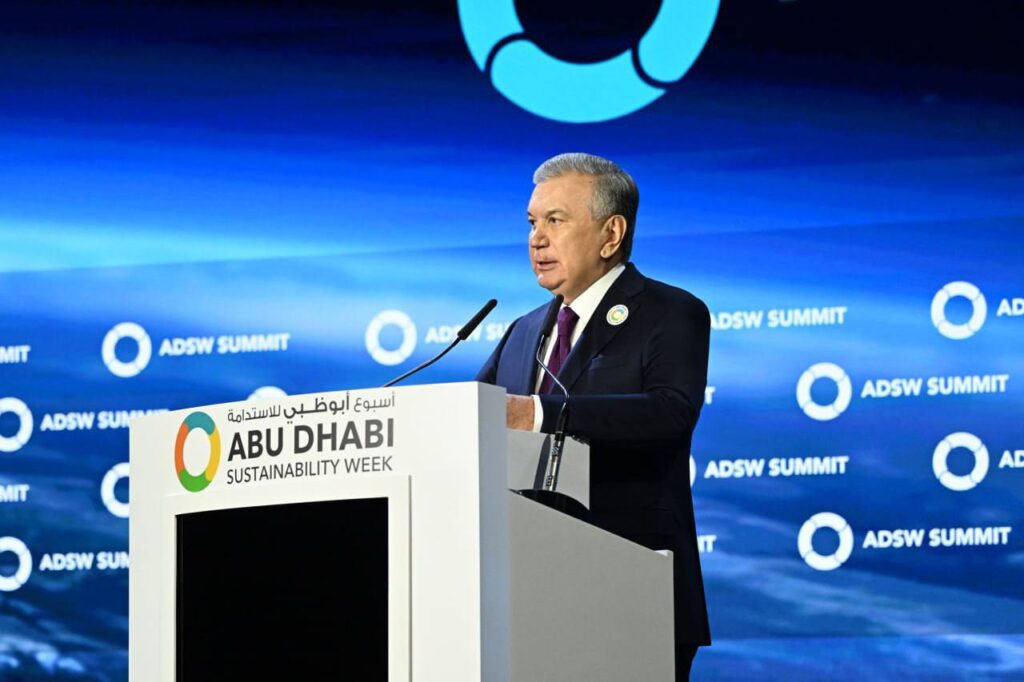
President Shavkat Mirziyoyev of Uzbekistan delivered a keynote address at the Sustainability Week Summit in Abu Dhabi on January 14. The event, hosted by UAE President Sheikh Mohammed Al Nahyan, gathered global leaders, including the presidents of Azerbaijan and Kazakhstan, the prime ministers of Italy, Malaysia, and Finland, as well as heads of international organizations and financial institutions. The Urgency of Transitioning to a Green Economy In his speech, Mirziyoyev emphasized the critical need for a green economic transition, stating: “The diversification of energy sources and a drastic reduction of hydrocarbons are now critical conditions for mitigating climate change and ensuring global security.” Mirziyoyev noted that Uzbekistan has declared 2025 as the “Year of Environmental Protection and Green Economy.” The country’s strategic goal, under the "New Uzbekistan" framework, is to achieve sustainable economic growth through environmental sustainability and resource conservation. Low-Carbon Development Goals Outlining Uzbekistan’s low-carbon development strategy, Mirziyoyev announced plans to integrate green finance into 50% of investment projects over the next five years; reduce greenhouse gas emissions by 35% by 2030; "Green" at least 30% of urban areas; and ensure that 100% of agricultural lands adopt water-saving technologies. Mirziyoyev also highlighted Uzbekistan’s achievements in renewable energy, stating: “In the past five years, we have attracted almost $20 billion in foreign investments, commissioning modern energy capacities of 9.6 gigawatts. This includes 14 solar and wind power plants with a total capacity of 3.5 gigawatts.” Uzbekistan is currently collaborating with foreign partners on over 50 major energy projects worth $26 billion, aiming to reach a total energy capacity of 24 gigawatts by 2030. By that time, renewable energy is expected to account for 54% of the country’s total energy generation. Regional Collaboration and Global Ambitions Mirziyoyev underscored the importance of regional cooperation, saying: “We aim to turn Central Asia into one of the global centers for green economy and clean energy.” He highlighted a multilateral agreement with Kazakhstan and Azerbaijan to export green energy to Europe and restore the Great Silk Road through energy connectivity. The president shared success stories of partnerships with companies like Masdar, which have generated 1.5 gigawatts of renewable energy in Uzbekistan. Additional projects are underway to create 1.6 gigawatts of generating capacity and build energy storage systems with a capacity of about 520 megawatts per hour. He also noted Uzbekistan’s untapped renewable energy potential, citing the ability to produce 500 gigawatts of solar, 100 gigawatts of wind, and 10 gigawatts of hydro energy. Advancing Green Research and Innovation Mirziyoyev referenced the establishment of the Green University in Tashkent - which will serve as a hub for global scientific collaboration - and proposed creating an international research network focused on combating land degradation and desertification. He also reiterated Uzbekistan’s initiatives introduced at COP-28 and COP-29, including the creation of an International Center for Damage and Loss Assessment and a regional hub for water-saving technologies. “We are ready to begin practical work in these areas with all our partners,” he stated. A Nationwide Green Movement Concluding his address,...

1 year ago

Tajikistan Leads Central Asia in Energy Transition Index

Tajikistan has secured the top position among Central Asian countries in the World Economic Forum’s (WEF) annual Energy Transition Index (ETI). Ranking 71st out of 120 nations, Tajikistan achieved a score of 53.6. This performance places Tajikistan ahead of its regional neighbors, including Kyrgyzstan, which ranked 80th with a score of 52.7, and Kazakhstan, which came in 98th with 50.1. Uzbekistan and Turkmenistan were not included in the ranking. The ETI evaluates global energy systems based on two primary criteria: Energy system efficiency (60% weighting); and readiness for a sustainable energy transition (40% weighting). Key factors influencing scores include energy affordability, sustainability, innovation, infrastructure, policy support, and investment activity. While Tajikistan’s score of 53.6 was slightly below the global average of 56.5, it outperformed many other nations in Central Asia. Globally, Northern European countries dominated the rankings. Sweden led the index with 78.4 points, followed by Denmark (75.2) and Finland (74.5). Among the Commonwealth of Independent States (CIS) and Caspian countries, Azerbaijan ranked highest, securing 38th place with a score of 60.3. The Times of Central Asia previously reported on Tajikistan’s decision to rejoin Central Asia’s unified energy system. Originally established in 1960, the system interconnected the power networks of Uzbekistan, southern Kyrgyzstan, northern Tajikistan, and southern Kazakhstan’s Shymkent region. These systems were linked by 110- and 220-kilovolt power lines and operated independently of the Soviet Union’s central energy network. Tajikistan’s leadership in the Energy Transition Index reflects its ongoing commitment to energy sustainability and regional collaboration.

1 year ago