• KGS/USD = 0.01144 0%
  • KZT/USD = 0.00208 0%
  • TJS/USD = 0.10783 -0.74%
  • UZS/USD = 0.00008 0%
  • TMT/USD = 0.28490 -0.28%
  • KGS/USD = 0.01144 0%
  • KZT/USD = 0.00208 0%
  • TJS/USD = 0.10783 -0.74%
  • UZS/USD = 0.00008 0%
  • TMT/USD = 0.28490 -0.28%
  • KGS/USD = 0.01144 0%
  • KZT/USD = 0.00208 0%
  • TJS/USD = 0.10783 -0.74%
  • UZS/USD = 0.00008 0%
  • TMT/USD = 0.28490 -0.28%
  • KGS/USD = 0.01144 0%
  • KZT/USD = 0.00208 0%
  • TJS/USD = 0.10783 -0.74%
  • UZS/USD = 0.00008 0%
  • TMT/USD = 0.28490 -0.28%
  • KGS/USD = 0.01144 0%
  • KZT/USD = 0.00208 0%
  • TJS/USD = 0.10783 -0.74%
  • UZS/USD = 0.00008 0%
  • TMT/USD = 0.28490 -0.28%
  • KGS/USD = 0.01144 0%
  • KZT/USD = 0.00208 0%
  • TJS/USD = 0.10783 -0.74%
  • UZS/USD = 0.00008 0%
  • TMT/USD = 0.28490 -0.28%
  • KGS/USD = 0.01144 0%
  • KZT/USD = 0.00208 0%
  • TJS/USD = 0.10783 -0.74%
  • UZS/USD = 0.00008 0%
  • TMT/USD = 0.28490 -0.28%
  • KGS/USD = 0.01144 0%
  • KZT/USD = 0.00208 0%
  • TJS/USD = 0.10783 -0.74%
  • UZS/USD = 0.00008 0%
  • TMT/USD = 0.28490 -0.28%

Viewing results 1 - 6 of 12

Central Asia Feels Fuel Strain as Kazakhstan Prices Edge Higher

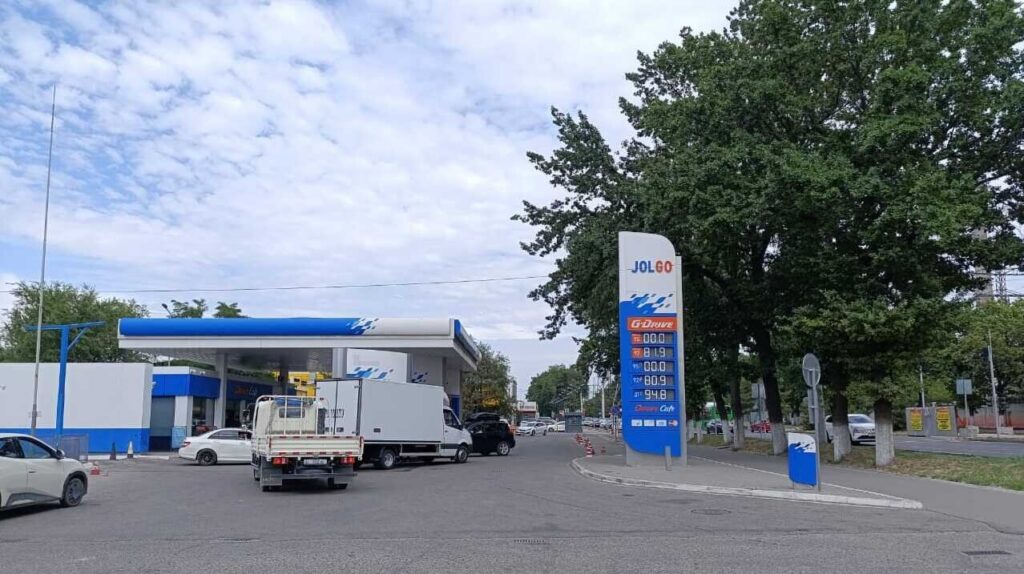
Kazakhstan's fuel market is moving into a new phase after the end of the government freeze on AI-92 gasoline and diesel. Pump prices have risen by small amounts so far. Retail prices are rising cautiously amid growing pressure from neighbors where fuel costs more. Kazakhstan still has some of the cheapest gasoline in the region, but that advantage creates a risk: cheap fuel attracts cross-border demand and makes it harder to fund the refining capacity the country says it needs. On October 16, 2025, Kazakhstan's government introduced a moratorium on further increases in AI-92 gasoline and diesel as part of a wider anti-inflation package. The decision also put the Energy Ministry, the competition agency, and regional authorities in charge of keeping supplies stable. The measure came after inflation and tariff reforms had raised concerns about household costs. The freeze ended on April 1, 2026, but by mid-April, the Energy Ministry was still trying to calm expectations. Kazinform cited Vice Minister of Energy Kaiyrkhan Tutkyshbayev on April 14 as saying most prices had risen mainly by one tenge after the moratorium was lifted, and that the state would not allow a sharp jump. The tone matched what drivers were seeing: a controlled rise rather than a sudden reset. The memory of January 2022, when an LPG price jump helped spark unrest, still hangs over fuel policy. The end of the freeze also fed into inflation expectations. National Bank Governor Timur Suleimenov warned in April that renewed growth in fuel prices and utility tariffs had to be handled cautiously, because a sharp reset could reverse the slowdown in inflation. The National Bank later said reforms in utility tariffs and fuel prices accounted for 32.9% of household inflation expectations in March. That made the fuel moratorium more than a pump-price measure: it was one of the state’s main tools for containing expectations while inflation remained in double digits. An April 9 check by Tengri Auto found that most filling stations in Almaty and the surrounding area were still selling fuel close to the previous price range. Several major networks, however, had already moved AI-92 toward 240 tenge per liter. AI-95, which was not covered by the main freeze, had risen to 328 tenge at one network. A Kazinform market check published on May 25 showed the same gradual pattern. AI-92 was listed at 238-239 tenge per liter in Astana, 238-241 tenge in Almaty, and 224-227 tenge in Shymkent. Diesel stood at 329 tenge in Astana, 330-337 tenge in Almaty, and 332-335 tenge in Shymkent. The figures point to a market that is moving, but still under close control. Fuel is also feeding into Kazakhstan's broader inflation picture. The Bureau of National Statistics put annual inflation at 10.6% in April 2026. Petrol prices were up 16.1% year-on-year and added 0.53 percentage points to annual price growth. Transport as a category added 1.1 percentage points. Fuel is one of the costs households notice most directly, and its effects spread through freight, food distribution, agriculture, taxis,...

Kyrgyz Government Considers Countermeasures as Fuel Prices Rise

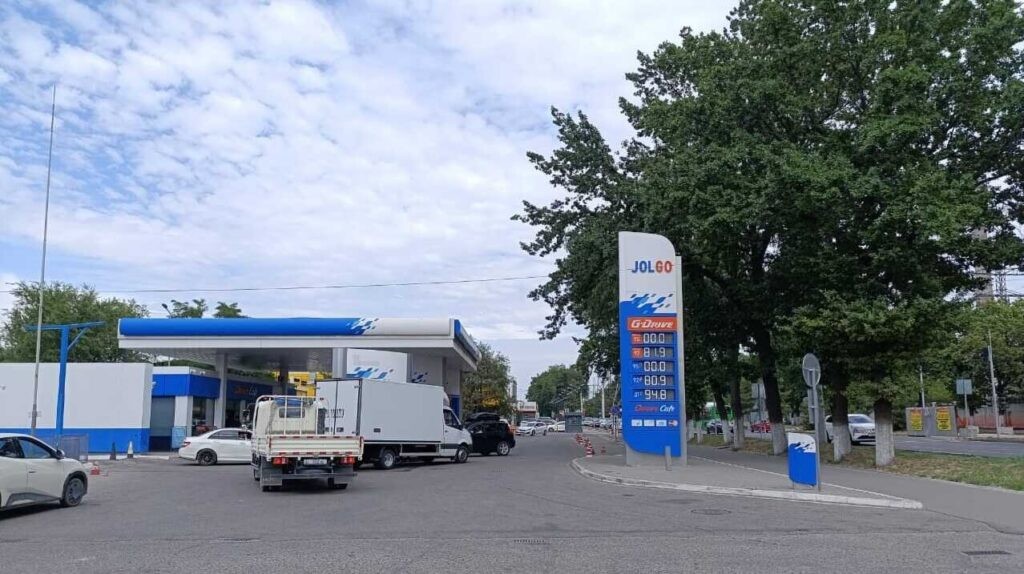
In recent months, there has been a gradual but steady increase in motor fuel prices in Kyrgyzstan, driven in part by higher import costs from Russia, the country’s main supplier of gasoline and diesel. Analysts have linked pressure on regional fuel markets to higher global crude prices following the U.S.-Israeli war with Iran, as well as reduced Russian refinery output after Ukrainian drone strikes on oil-processing facilities. In Bishkek, AI-92, a widely used lower-octane gasoline grade, cost an average of 78.4 soms (about $0.89) per liter as of May 14, making it more expensive than comparable fuel in both Russia and Kazakhstan. On May 21, Chairman of the Cabinet of Ministers and Head of the Presidential Administration Adylbek Kasymaliev met with the heads of the country’s major fuel trading companies to discuss domestic fuel supplies. Kasymaliev said the latest price increases were linked to instability in the Middle East, which has pushed up international petroleum prices. According to him, the government has so far managed to prevent sharp increases at gas stations through the use of accumulated fuel reserves. Officials also reviewed possible financial and tax support measures for the sector if instability in global markets continues. Among the options under consideration is direct state subsidization of fuel imports. Kasymaliev urged fuel traders to work closely with the government to help maintain supplies and limit pressure on consumers. He also instructed authorities to monitor the market for signs of hoarding, artificial fuel shortages or speculative price increases. Despite rising fuel prices in Kyrgyzstan, the country's fuel market remains relatively stable thanks to guaranteed deliveries from Russia. According to the country’s Antimonopoly Regulation Service, current fuel reserves are sufficient for between one and one-and-a-half months. The agency said that if fuel prices continue to rise, the government could introduce additional stabilization measures. These could include temporary tax cuts for importers of Russian fuel, subsidy programs and preferential lending mechanisms. Officials say such measures could help smooth price fluctuations in the domestic market and maintain stability amid the current geopolitical environment. Kyrgyzstan’s annual demand for motor fuel is estimated at approximately 1.6 million tons. According to First Deputy Chairman of the Cabinet of Ministers Daniyar Amangeldiev, the country currently imports around 1.2 million tons of fuel annually. The Junda oil refinery in northern Kyrgyzstan is capable of producing up to 800,000 tons per year. However, the facility is currently undergoing large-scale modernization aimed at reducing harmful emissions. On May 19, Kasymaliev met with the Chinese management of the Junda refinery to discuss the progress of modernization work and the timeline for resuming production. Kasymaliev said bringing the refinery back online would be important for Kyrgyzstan as global energy markets remain volatile.

Fuel Prices Surge in Tajikistan Amid Middle East Conflict

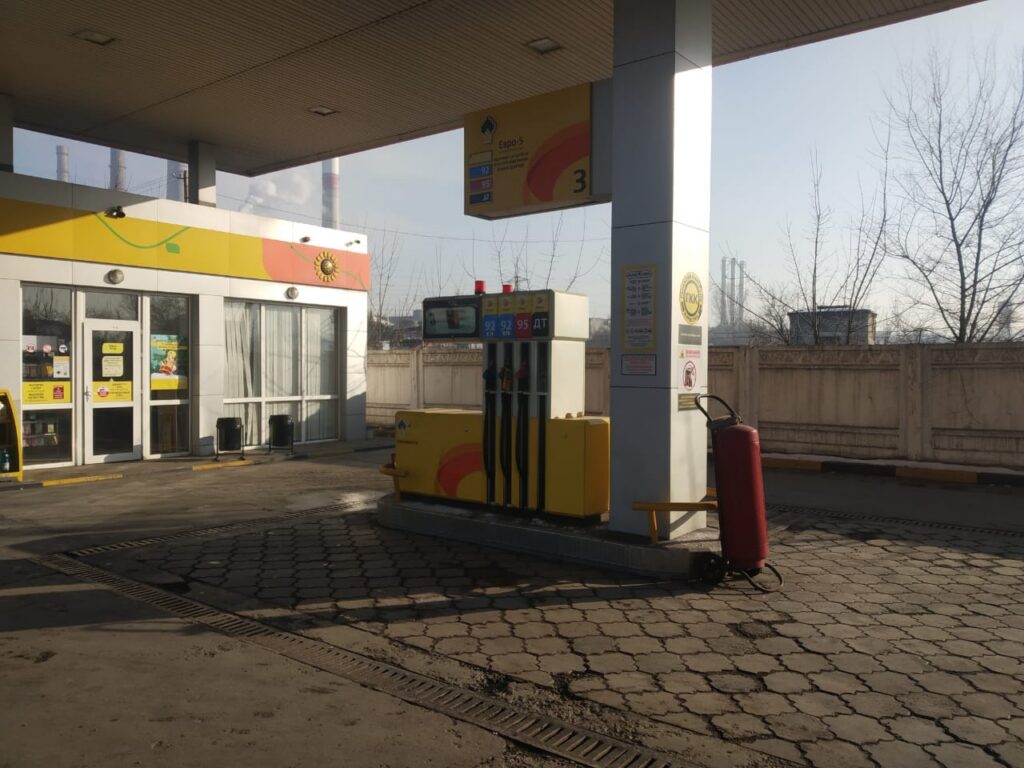
Fuel prices at gas stations in Dushanbe have risen sharply since early March, increasing on average by 8-9%. The increase has been driven by domestic factors as well as adverse developments in the global energy market. The most widely used AI-92 gasoline has risen in price from $1.05 to $1.13 per liter. Diesel has followed a similar trend, increasing from $1.14 to $1.24 per liter. Prices for liquefied petroleum gas (LPG) have risen more modestly, by about 6%, to $0.62 per liter. Prices also vary by location, with drivers noting that fuel in central Dushanbe is traditionally more expensive than in outlying areas. Suppliers attribute the increases to higher prices from producers, but the situation largely depends on external supply chains. Russia remains the primary source of petroleum products for Tajikistan. In 2025, the country imported more than 1.2 million tonnes of fuel and LPG from Russia, accounting for over 70% of total imports. Supplies also come from Kazakhstan, Uzbekistan, and Turkmenistan, though their share is significantly smaller. According to official statistics, Tajikistan imported more than 325,000 metric tons of petroleum products in the first quarter of this year, valued at over $251 million, or approximately $772 per metric ton. Compared with the same period last year, import volumes increased by 11.4%, while their total value rose by 8.6%. Experts say external factors are the main driver of rising prices. They point to international media reports that the conflict involving the United States, Israel, and Iran has triggered a chain reaction in the fuel market, affecting the supply chain from crude oil to refining and retail prices. A key factor has been disruption in the Strait of Hormuz, through which roughly 20% of global oil supplies pass. At the same time, price trends have varied significantly across countries. Al Jazeera reported that fuel prices rose by nearly 70% in Cambodia, 50% in Vietnam, 35% in Nigeria, 33% in Laos, and 28% in Canada. In Central Asia, however, price increases have been more moderate, ranging from 2% to 5% in March and April. In Uzbekistan and Turkmenistan, prices have remained largely stable, which analysts attribute to pricing policies by Russian producers and the availability of domestic fuel supplies.

Central Asia Avoids Fuel Shock as Global Pressures Build

Central Asia has so far avoided the immediate fuel shocks spreading across much of the world following the U.S. and Israel’s war with Iran. There are no lines at gas stations, no visible shortages, and no signs of panic buying. But that stability sits within a rapidly tightening global market, where disruptions in Asia and policy responses in Europe are reshaping fuel flows in ways the region will struggle to avoid. Across Southeast Asia, governments are already taking precautionary steps. Some state agencies and private firms are shifting parts of their workforce to remote work to reduce fuel consumption and prepare for potential price spikes and logistics disruptions, while Thailand is preparing contingency measures, including possible fuel rationing. China, one of Asia’s largest suppliers of refined fuels, has moved to restrict exports of gasoline, diesel, and jet fuel in an effort to prevent domestic shortages linked to the war. The move is expected to tighten supplies across Asia, especially for countries that rely on Chinese fuel imports. China supplied about one-third of Australia’s jet fuel last year, highlighting the wider regional impact, and roughly half of the Philippines’ and Bangladesh’s in 2024. Vietnam has already warned airlines to prepare for flight reductions in April due to the risk of shortages caused by these export restrictions. Indonesia is also imposing limits on fuel sales.  Fuel-related pressures have begun to emerge in Europe as well. Poland has introduced tax measures aimed at reducing fuel prices, with the government saying this will lower prices for consumers. Slovenia, meanwhile, has introduced significant restrictions on fuel consumption. Under new rules, private motorists are limited to purchasing a maximum of 50 liters per day, while businesses and farmers may purchase up to 200 liters daily. The combined effect of war-driven energy shocks and renewed tariff barriers is raising global costs and adding pressure across trade, transport, and inflation. Against this backdrop, Central Asia’s apparent stability is misleading. It is highly unlikely that import-dependent states such as Kyrgyzstan and Uzbekistan will be as well protected as Kazakhstan, which may benefit in the short term from higher crude prices. Starting April 1, Russia is banning gasoline exports in an effort to stabilize its own domestic market. Russia is a key fuel supplier to Central Asia. However, according to assurances from the Ministry of Energy of the Russian Federation, the temporary export ban will not affect supplies to Uzbekistan. Deliveries under intergovernmental agreements are expected to continue, ensuring that at least part of the region’s supply remains uninterrupted. In Kyrgyzstan, despite recent developments, fuel prices and supplies remain relatively stable. The government is considering lowering taxes or temporarily waiving excise duties for fuel importers should the crisis continue. Information from Turkmenistan is difficult to verify independently. Despite reports of fuel shortages at gas stations last year, official media are now indicating a significant increase in domestic gasoline production. The production plan for January-February 2026 was reportedly fulfilled at 122.7%, according to Deputy Chairman of the Cabinet of Ministers Guvancha...