Kyrgyzstan has opened a new international trade and logistics center designed to strengthen transport links between China, Central Asia and wider post-Soviet markets, as Bishkek seeks to expand its role as a regional transit hub.
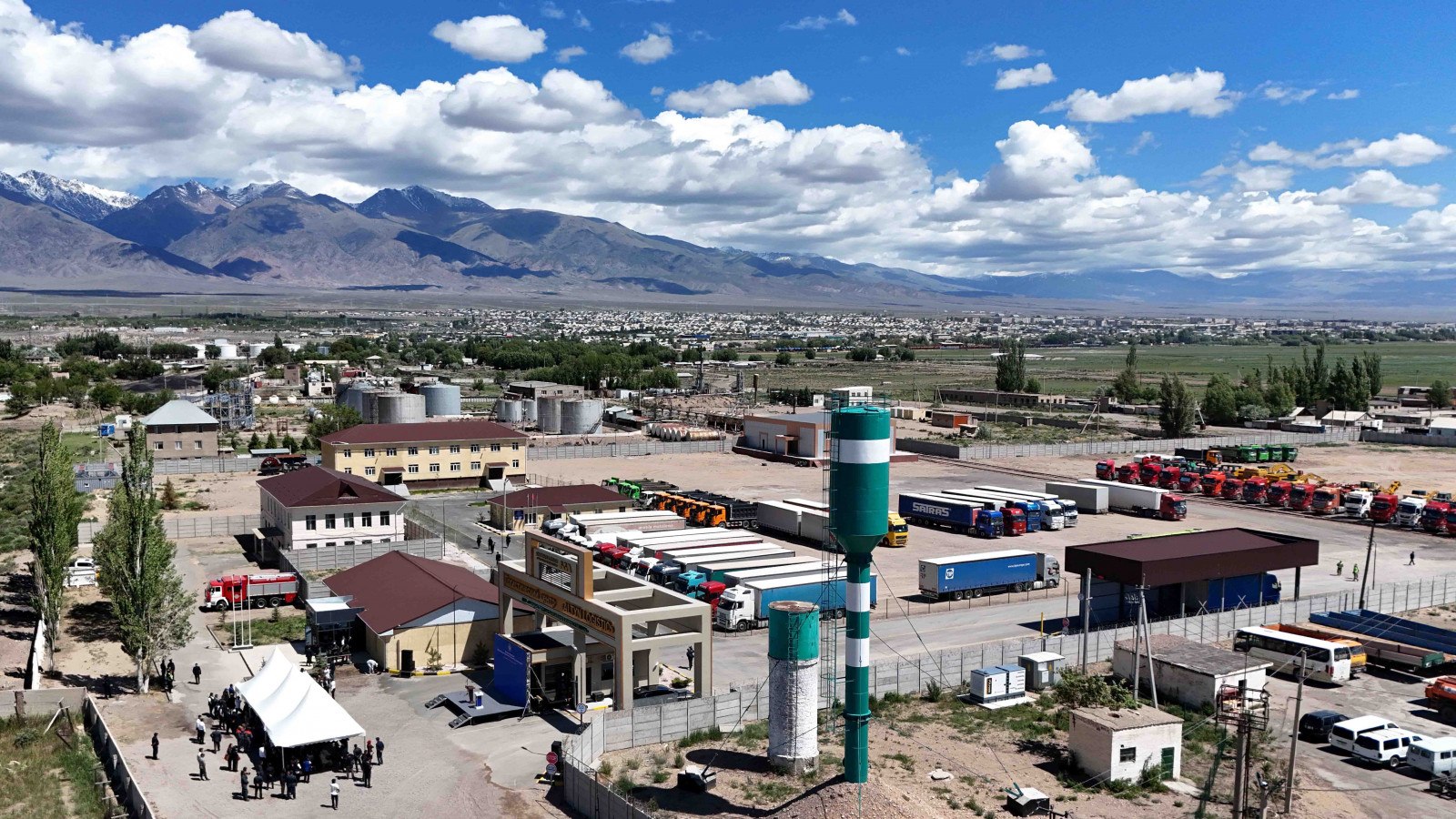
The new facility, Altyn Logistic, officially opened on May 28 in the city of Balykchy, at the western end of Lake Issyk-Kul.
The 5.5 hectare logistics center includes warehouses, a railway line with loading and unloading infrastructure, and a large open parking area. According to officials, the complex is capable of handling up to 200 trucks per day and is expected to create around 80 jobs.
Speaking at the opening ceremony, Kyrgyzstan’s Chairman of the Cabinet of Ministers Adylbek Kasymaliev said the country is seeking to grow its transit and logistics potential due to its strategic position along international transport corridors.
“The center is located on one of the key routes of the Silk Road, and I am confident that it will effectively function as a major logistics hub linking China, Central Asian countries and CIS states,” Kasymaliev said.
The choice of Balykchy is strategically important as the city already serves as a transport junction in northern Kyrgyzstan. Located at the western end of Lake Issyk-Kul, it is the final stop on the railway line from Bishkek and sits on the road corridor running from the capital toward Naryn and the Torugart Pass on the Chinese border.
Balykchy is also the starting point for the Balykchy-Kochkor-Kara-Keche railway, a 186-kilometer line under construction since 2022. The route is intended to connect the existing northern rail network with Kochkor and the Kara-Keche coal deposit in Naryn Region, one of the main sources of coal for Bishkek’s thermal power plant.
Authorities plan eventually to integrate this line with the China-Kyrgyzstan-Uzbekistan railway, which is currently under construction inside Kyrgyzstan. If that happens, Balykchy would become a central node in a wider rail system linking the country’s north with new east-west freight routes through Naryn, Jalal-Abad and onward to Uzbekistan.
The city’s road position is also becoming more important. TCA has previously reported that Kyrgyzstan’s alternative North-South highway is designed to link Balykchy with Jalal-Abad, cutting the journey between the two cities from around 13 hours to six once fully operational. That would give Balykchy a stronger role in domestic freight movement, not only in trade with China and Kazakhstan.
The new logistics center also fits into Kyrgyzstan’s wider effort to turn its limited rail network into a transit asset. Kyrgyzstan’s railway system still spans only 425 kilometers and remains split between northern and southern sections, but that freight turnover has begun recovering after years of stagnation.
For Bishkek, the value of Altyn Logistic will depend on whether those larger rail and road projects are completed. For now, the center strengthens Balykchy’s role as a northern cargo hub; in the longer term, it could become a link between Kyrgyzstan’s existing rail connection to Kazakhstan and the new routes being built toward China and Uzbekistan.