• KGS/USD = 0.01144 0%
  • KZT/USD = 0.00208 0%
  • TJS/USD = 0.10439 0%
  • UZS/USD = 0.00008 0%
  • TMT/USD = 0.28571 0%
  • KGS/USD = 0.01144 0%
  • KZT/USD = 0.00208 0%
  • TJS/USD = 0.10439 0%
  • UZS/USD = 0.00008 0%
  • TMT/USD = 0.28571 0%
  • KGS/USD = 0.01144 0%
  • KZT/USD = 0.00208 0%
  • TJS/USD = 0.10439 0%
  • UZS/USD = 0.00008 0%
  • TMT/USD = 0.28571 0%
  • KGS/USD = 0.01144 0%
  • KZT/USD = 0.00208 0%
  • TJS/USD = 0.10439 0%
  • UZS/USD = 0.00008 0%
  • TMT/USD = 0.28571 0%
  • KGS/USD = 0.01144 0%
  • KZT/USD = 0.00208 0%
  • TJS/USD = 0.10439 0%
  • UZS/USD = 0.00008 0%
  • TMT/USD = 0.28571 0%
  • KGS/USD = 0.01144 0%
  • KZT/USD = 0.00208 0%
  • TJS/USD = 0.10439 0%
  • UZS/USD = 0.00008 0%
  • TMT/USD = 0.28571 0%
  • KGS/USD = 0.01144 0%
  • KZT/USD = 0.00208 0%
  • TJS/USD = 0.10439 0%
  • UZS/USD = 0.00008 0%
  • TMT/USD = 0.28571 0%
  • KGS/USD = 0.01144 0%
  • KZT/USD = 0.00208 0%
  • TJS/USD = 0.10439 0%
  • UZS/USD = 0.00008 0%
  • TMT/USD = 0.28571 0%

Our People > Sergey Kwan

Sergey Kwan's Avatar

Sergey Kwan

Journalist

Sergey Kwan has worked for The Times of Central Asia as a journalist, translator and editor since its foundation in March 1999. Prior to this, from 1996-1997, he worked as a translator at The Kyrgyzstan Chronicle, and from 1997-1999, as a translator at The Central Asian Post.
divider
Kwan studied at the Bishkek Polytechnic Institute from 1990-1994, before completing his training in print journalism in Denmark.

Articles

Spring Sowing Begins in Kyrgyzstan as Officials Stress Food Security

Spring sowing has begun in Kyrgyzstan, where agricultural crops are expected to be planted on a total of 1.25 million hectares in 2026, according to the Ministry of Water Resources, Agriculture, and Processing Industry. Of this area, about 818,000 hectares are irrigated land and 432,000 hectares are rainfed. As of March 12, sowing was underway in the southern regions of Osh, Jalal-Abad, and Batken, as well as in the Chui Valley. Fieldwork has not yet started in the colder regions of Talas, Issyk-Kul, and Naryn. Farmers have so far planted grain crops, including wheat and barley, along with potatoes and various vegetables. The ministry has recommended that farmers prioritize crops considered important for national food security. Turatbek Idrisov, head of the ministry’s Department of Plant Growing, Horticulture, and Cooperatives, said producers should focus on socially significant crops such as wheat, barley, potatoes, onions, and sugar beet. He noted that grain crops and sugar beet are included in the country’s list of strategic food reserves. According to ministry monitoring data, the expansion of livestock farming in recent years has led to increased cultivation of fodder crops, particularly barley and maize. Officials also noted that crops such as maize, raspberries, and strawberries have demonstrated relatively high profitability for farmers. The ministry is encouraging producers to adopt water-saving irrigation technologies, including drip and sprinkler systems. Farmers who implement such methods are eligible for state-supported concessional loans with reduced interest rates. Authorities say Kyrgyzstan is currently fully self-sufficient in six of nine socially significant food products, potatoes, milk, meat, vegetables, eggs, and sugar. However, the country remains partially dependent on imports of three key staples: bread products (including flour and grain), vegetable oil, and fruit.

6 days ago
Kyrgyzstan Plans Gradual Electricity Tariff Increases to Address Energy Sector Deficit

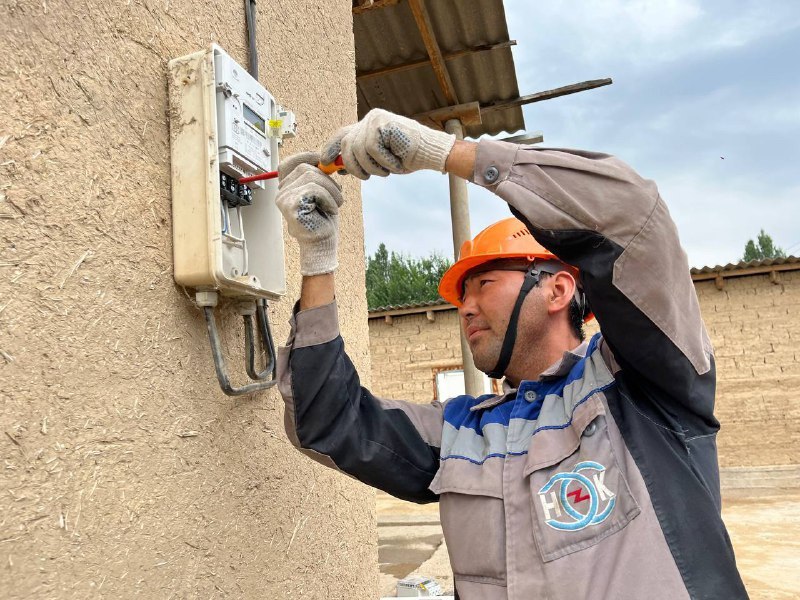
Kyrgyzstan will raise household electricity tariffs starting May 1, as part of a broader reform program aimed at reducing subsidies and bringing tariffs closer to the actual cost of power generation. Under the new policy, the household tariff will increase by approximately $0.003 per kilowatt-hour, reaching $0.018 per kWh. According to the Ministry of Energy, tariffs are expected to continue rising each May until at least 2030, when they are projected to fully cover production costs. The government has outlined a tentative schedule for further increases: 2027: rise of about $0.004 per kWh 2028: rise of about $0.0045 per kWh 2029: rise of about $0.005 per kWh 2030: rise of about $0.0065 per kWh Even after the planned increase in 2026, households will cover only around 45% of the real cost of electricity, Timur Orozaliev, Director of the Department for Regulation of the Fuel and Energy Complex, told the Kabar state news agency. He said the cost of electricity production in 2026 is estimated at approximately $0.034 per kWh, meaning the new tariff will pay for less than half of actual generation costs. Electricity tariffs for industrial enterprises, financial institutions, restaurants, and government agencies are already two to three times higher than those for households. Despite the planned increases, electricity prices in Kyrgyzstan remain among the lowest in Central Asia. Electricity demand continues to grow. In 2025, national consumption reached 19.3 billion kWh, an increase of 900 million kWh compared with the previous year. Of this total, 15.4 billion kWh was generated domestically, while 3.9 billion kWh was imported from Turkmenistan, Uzbekistan, Kazakhstan, and Russia. Kyrgyzstan regularly experiences seasonal power shortages, particularly during winter, when many households rely on electricity for heating. To address the deficit, the government is working to build new hydropower plants and modernise existing facilities as part of a broader strategy to stabilise the national energy system and reduce dependence on electricity imports.

1 week ago

Kyrgyzstan Launches Electronic Queuing System for Trucks at China Border

Kyrgyzstan’s State Customs Service has launched a pilot electronic queuing system for trucks at the Torugart border crossing in the Naryn region on the Kyrgyz-Chinese border. According to the Customs Service, the system is designed to streamline truck flows and reduce congestion that previously formed near the crossing. Queues of heavy vehicles sometimes stretched for up to 25 kilometres, placing significant strain on road infrastructure and negatively affecting the environment around Lake Chatyr-Kul. The new system allows transport operators to pre-register trucks for border clearance. Vehicles are directed to the checkpoint from a designated waiting area in accordance with their place in the electronic queue. In addition, a new waiting facility for drivers and representatives of transport companies has been opened at the crossing. Torugart is currently undergoing modernisation. Planned upgrades include the expansion of checkpoint territory, installation of modern non-intrusive inspection equipment, increased throughput capacity, and the construction of additional parking areas. The initiative is aimed at improving the efficiency of the crossing amid growing trade turnover between Kyrgyzstan and China. According to Chinese Ambassador to Kyrgyzstan Liu Jiangping, bilateral trade reached a record $27.2 billion in 2025, representing a 20% increase compared with the previous year. Torugart is one of Kyrgyzstan’s two fully operational road crossings with China, alongside the Irkeshtam checkpoint in the Osh region. In September 2024, Kyrgyzstan opened a third road crossing with China. The Bedel checkpoint, initially launched under a simplified regime, is located in a remote mountainous area roughly equidistant from Karakol in Kyrgyzstan and Aksu in China. Its full-scale development with infrastructure meeting international standards is expected to be completed by 2027.

1 week ago

Freight Volumes on Middle Corridor Through Kazakhstan Rise Fivefold in Seven Years

Freight volumes transported along the Trans-Caspian International Transport Route (TITR) through Kazakhstan have increased more than fivefold over the past seven years, highlighting the growing importance of the corridor as companies seek alternatives to routes passing through Russia. According to Kazakhstan’s Ministry of Transport, volumes have risen from 0.8 million tons to 4.5 million tons annually. Also known as the Middle Corridor, the TITR is a multimodal transport route linking China and Europe via Central Asia and the South Caucasus. The rapid growth of the route reflects wider shifts in Eurasian logistics since Russia’s full-scale invasion of Ukraine in 2022. With many Western companies seeking alternatives to traditional northern routes through Russia, governments and logistics operators across Central Asia and the South Caucasus have accelerated investment in the Trans-Caspian corridor, hoping to position it as a key artery linking Asian manufacturing hubs with European markets. Container transportation has been one of the fastest-growing segments of the corridor. In 2025, approximately 77,000 TEUs were transported along the TITR. Authorities aim to increase this figure to 300,000 TEUs by 2029. Despite rapid growth, the corridor still carries far less cargo than traditional northern routes through Russia, underscoring both its potential and the scale of investment still required. The expansion reflects ongoing infrastructure development and growing cooperation among participating countries and logistics operators. Key contributing factors include improved conditions for international freight transport, such as simplified customs procedures, as well as significantly shorter delivery times, reduced from roughly 28-32 days to 13-17 days. Demand has also risen for integrated “single-window” logistics services designed to enhance transparency and reliability. Kazakhstan, Azerbaijan, and Georgia continue to coordinate efforts under joint roadmaps to eliminate remaining bottlenecks along the corridor. To ensure year-round navigation and strengthen competitiveness, Kazakhstan is investing in infrastructure on the Caspian Sea coast. Dredging has already been completed at Kuryk Port, while similar work is planned at Aktau Port this year to increase depth and improve vessel access. Construction is also underway at Kuryk on the Sarzha multifunctional terminal, a project being implemented in cooperation with Abu Dhabi Ports Group from the United Arab Emirates. The terminal is expected to have an annual capacity of five million tons. Meanwhile, a container hub has been launched at Aktau Port, further enhancing maritime logistics capacity along the corridor. Kazakhstan has also expanded its transport infrastructure abroad. A Kazakh-operated terminal with a capacity of 120,000 TEUs has been launched at the Georgian port of Poti, improving cargo handling efficiency along the TITR. The European Union is also supporting the corridor’s development. A grant has been allocated for the reconstruction of Berths No. 3 and No. 12 at Aktau Port. The funding will be used to purchase wind-resistant ship-to-shore cranes to ensure stable operations during adverse weather conditions. On the railway side, Kazakhstan is upgrading more than 2,000 kilometres of rail infrastructure connected to the corridor. In 2025, construction and modernisation work were completed on 911 kilometres of railway lines. Key projects include the construction of second...

1 week ago

Kyrgyzstan’s Health Ministry Proposes Higher Taxes on Sugary Drinks and Salty Foods to Protect Public Health

Kyrgyzstan’s Ministry of Health has proposed reforms to the country’s excise tax system targeting sugar-sweetened beverages and foods with high salt content in an effort to reduce their consumption and improve public health. The proposal was discussed on March 9 at a meeting involving representatives of the Ministry of Economy and Commerce, the Ministry of Finance, the State Tax Service, the Ministry of Agriculture, the World Health Organization (WHO), UNICEF, and leading business associations. Currently, Kyrgyzstan applies a uniform excise tax of 3 soms (about $0.03) per liter on sugar-sweetened non-alcoholic beverages, regardless of their sugar content. The Ministry of Health proposes introducing a differentiated excise tax system in which the rate would depend on the amount of sugar in a beverage: Up to 5 grams of sugar per 100 ml - 5 soms (about $0.06) per liter 5-8 grams per 100 ml - 7 soms (about $0.08) per liter 8-11 grams per 100 ml - 9 soms (about $0.10) per liter More than 11 grams per 100 ml - 11 soms (about $0.12) per liter Officials say the new structure would encourage manufacturers to reduce sugar content in beverages, promote healthier consumer habits, and decrease consumption of high-sugar products. The ministry also proposes introducing a fixed excise tax of 20 soms (about $0.20) per liter on energy drinks, citing their high levels of sugar and caffeine and the potential health risks they pose, particularly for adolescents. Authorities are also considering similar differentiated taxation for foods with high salt content, including fried and salty snacks such as chips, salted crackers, and similar products. The goal is to discourage excessive consumption of high-salt foods and reduce related health risks. Representatives of the World Health Organization and UNICEF have expressed support for the proposal. WHO representative Alina Altymyshova noted that similar measures are widely used around the world. According to her, 116 countries already apply various forms of taxation or regulation on foods and beverages high in sugar and salt to help prevent noncommunicable diseases and promote healthier diets. She also highlighted numerous international studies demonstrating the negative health impacts of regular consumption of sugary beverages, particularly among children and adolescents. Deputy Health Minister Temirbek Erkinov warned that unhealthy diets are becoming a growing public health challenge in Kyrgyzstan. According to data from the National Statistical Committee for 2023, about 9% of children in Kyrgyzstan, roughly one in eleven, are overweight. Other indicators highlight widespread unhealthy dietary habits: 75% of children aged 6-23 months consume unhealthy foods 78% regularly drink sugary beverages 16% do not consume fruits and vegetables daily More than 84,000 people in Kyrgyzstan are currently registered with diabetes, with the number increasing by 5,000 to 7,000 cases each year. “The issue of nutrition and related diseases is becoming one of the most serious challenges for the public health system,” Erkinov said. Health officials believe measures to reduce the consumption of foods high in sugar and salt should become an important tool in preventing noncommunicable diseases and improving the country’s...

1 week ago