• KGS/USD = 0.01144 0%
  • KZT/USD = 0.00196 -0%
  • TJS/USD = 0.10899 -0%
  • UZS/USD = 0.00008 -0%
  • TMT/USD = 0.28490 0%
  • KGS/USD = 0.01144 0%
  • KZT/USD = 0.00196 -0%
  • TJS/USD = 0.10899 -0%
  • UZS/USD = 0.00008 -0%
  • TMT/USD = 0.28490 0%
  • KGS/USD = 0.01144 0%
  • KZT/USD = 0.00196 -0%
  • TJS/USD = 0.10899 -0%
  • UZS/USD = 0.00008 -0%
  • TMT/USD = 0.28490 0%
  • KGS/USD = 0.01144 0%
  • KZT/USD = 0.00196 -0%
  • TJS/USD = 0.10899 -0%
  • UZS/USD = 0.00008 -0%
  • TMT/USD = 0.28490 0%
  • KGS/USD = 0.01144 0%
  • KZT/USD = 0.00196 -0%
  • TJS/USD = 0.10899 -0%
  • UZS/USD = 0.00008 -0%
  • TMT/USD = 0.28490 0%
  • KGS/USD = 0.01144 0%
  • KZT/USD = 0.00196 -0%
  • TJS/USD = 0.10899 -0%
  • UZS/USD = 0.00008 -0%
  • TMT/USD = 0.28490 0%
  • KGS/USD = 0.01144 0%
  • KZT/USD = 0.00196 -0%
  • TJS/USD = 0.10899 -0%
  • UZS/USD = 0.00008 -0%
  • TMT/USD = 0.28490 0%
  • KGS/USD = 0.01144 0%
  • KZT/USD = 0.00196 -0%
  • TJS/USD = 0.10899 -0%
  • UZS/USD = 0.00008 -0%
  • TMT/USD = 0.28490 0%
08 December 2025

Tajikistan: US embassy hands over new post on border with Afghanistan

DUSHANBE (TCA) — On November 30, US Chargé d’Affaires Kevin Covert joined Colonel-General Rajabali Rahmonali, commander of the Main Department of Border Guards under the State Committee on National Security of the Republic of Tajikistan, to open a new border post at Ushturmullo in Shahrituz District on Tajikistan’s border with Afghanistan, the US Embassy in Dushanbe reported.

Continue reading

Kyrgyzstan: How to make the mining sector investor friendly

BISHKEK (TCA) — Investors in Kyrgyzstan’s mining industry are facing three main problems — inconsistent fiscal policy, unjustified inspections by regulatory authorities and relations with the local population, Executive Director of the International Business Council (IBC) based in Bishkek, Askar Sydykov, said at a roundtable to discuss challenges of the mining industry’s regulatory framework.

For the first time, the Parliament’s Committee on Fuel and Energy Complex and Subsoil Use initiated a broad-based meeting with the business, and the IBC supported the idea to build an open dialogue useful for all stakeholders.

Committee head MP Kojobek Ryspaev and First Deputy Prime Minister Kubatbek Boronov listened to subsoil users, assuring that the Parliament and the Government were ready to support investors of the budget-forming industry.

“Over recent years, the Parliament has been developing normative legal acts aimed at creating favorable conditions for mining companies,” Ryspaev said, adding that he recognized the existence of problems in the industry. “Conflicts with the local population remain the main problem for us,” he said.

Pressure on businesses

According to the National Statistics Committee, foreign direct investments declined by 33.2% in the first half of the year.

“There are currently few investors in the mining industry due to the unpredictable legislation and poor protection of private property,” the IBC’s Askar Sydykov said.
According to the State Tax Service, in 2017, out of 256 court cases involving tax disputes, only 19 decisions were made in taxpayers’ favor.

Recently, several largest companies, including those with foreign participation, were involved in financial and criminal liability cases. The actions of law enforcement agencies were accompanied by violations of the fiscal and criminal legislation.

The situation is aggravated by the Procedure of distribution of funds reimbursed to the State by the law enforcement agencies. According to this document approved by the Government in June, certain percentage of funds reimbursed in favor of the State as a result of judicial acts in criminal cases initiated by law enforcement and supervisory authorities shall be transferred to the law enforcement agencies.

To obtain a designated percentage of funds, law enforcement agencies initiated and transferred to the judicial authorities cases against business people without sufficient legal grounds. It turned out that law enforcement agencies, using various power levers of influencing the business, “earn” bonuses. Having analyzed the accumulated total amount of the Single Deposit Account, experts concluded that a significant part was paid by businesses, but not corrupt ones.

Inconsistent state policy

According to the business, Kyrgyzstan’s subsoil use legislation contains many uncertain provisions and does not allow the subsoil users to make independent and effective decisions on production activities. The current legislation is burdensome for subsoil users who pay taxes not practiced in countries aimed at attracting foreign investment.

The current subsoil legislation is subject to frequent changes and the environmental one has a repressive bias, which creates a threat of bankruptcy of subsoil users or loss of business, which is a deterring factor for investors.

Since 2012, several innovations have been introduced into Kyrgyzstan’s legislation which had a negative impact on the mining enterprises. Moreover, government agencies are currently proposing new initiatives that would deteriorate the economic activities of subsoil users and could lead to their withdrawal from the Kyrgyz market.

The Kyrgyz Parliament proposes introducing of export customs duty on the export of ores and concentrates of precious metals. The Government discusses the expediency of increasing the tax rates on income for gold mining companies, as well as increasing bonuses (one-time payment for the right of subsoil use) and payments for license retention.

At the initiative of the IBC and the State Committee for Industry, Energy and Subsoil Use, from September 2017 to February 2018, the Ernst & Young international consulting company conducted a study on the overall contribution of gold mining to the economy of Kyrgyzstan and the possible impact of the above mentioned fiscal initiatives on it. The report was presented to the Prime Minister’s Office, the Parliament and the general public.

The results of the study showed that the desire to replenish the state budget by increasing the tax burden can only bring additional revenues for a very short period, but in the future it will have the opposite effect. Companies can move to richer and simpler deposits while other deposits will remain under-invested or unclaimed.
Meanwhile, mining could be carried out on those fields, benefiting the country and the local people.

However, the government ignored the results of the study.

Investors’ problems

After ten years of research and exploration works on the Chaarat gold field, the Chaarat Zaav CJSC has to proceed directly to its development. In October, special equipment was delivered for construction of a gold mining factory. The company planned to receive the first gold by the end of 2020.

“Unfortunately, in 2020 there will be no gold,” Alexander Novak, the company’s Board chairman said. The obstacle is the ban on the cutting of especially valuable tree species, including junipers. The law on the abolition of this ban was adopted in 2015, but the government’s decree on bringing it into force has not yet been adopted. The company is ready to compensate for damage in the case of cutting down junipers and start construction.

“We cannot start work and suffer heavy losses,” Novak said. According to forecasts, gold reserves of the Chaarat gold field are about 200 tons.

The meeting participants also raised the issue of VAT refunds, which is accumulated for the import of equipment. This practice exists in the country, but for some reason it does not work in relation to subsoil users. For instance, the refund for KAZ Minerals Bozymchak has amounted to $26 million.

In addition, the companies cannot use their waste for their own needs, including road filling and repair of bridges.

Stabilization regime

The roundtable discussed why the stabilization regime does not work in the country. The Law “On Investments” provides for the use of the stabilization regime by signing an agreement with the Government.

According to the business community, there are some flaws in its regulation. Provisions for subsoil users have not been spelled out. The Government Regulation implies a possible refusal of the state body to sign and return documents to investors, delaying the signing process.

Interaction with local population

Conflicts between subsoil users and the local population occur mainly due to the lack of balance between the interests of the State, investors and the local population, IBC believes. Discontent of the local population spilled over into acts of civil disobedience in several fields, and sometimes criminals were involved.

As a result of the confrontation of the local population, work at several fields is on the verge of stopping or has been suspended. The companies suffer losses, the local population remains without work, and the national budget does not receive taxes.

Local governments should conduct explanatory work with the population on the legislation and benefits from the activities of investors in the country and regions. To respect the interests of local communities, effective reforms have been carried out over the past few years including the transparency of the tender commission and additional deductions provided to local budgets in the form of social packages, funds from tenders and auctions, as well as payments for license retention. Local budgets receive 2% of the mining companies’ revenues, part of royalties, land tax, property tax, income tax, etc. But the local population often is not aware of it.

Business recommendations

The roundtable adopted a resolution on improving conditions for the activities of mining companies and the sustainable development of the industry.

Business recommended the Government to pursue a consistent state policy in subsoil use, including taking into account the results of the IBC study.

It is necessary to ease the stabilization regime for investors and make appropriate changes to the Tax Code.

The business recommended decriminalizing “entrepreneurial” offenses, choosing non-custodial measures for business people. It is necessary to consider alternative methods of stimulating the activities of law enforcement agencies not related to collecting money from private business entities.

To reduce conflicts with the local population, social investments and sustainable projects are needed to provide the population with jobs.

Weekly Digest of Central Asia

BISHKEK (TCA) — The Publisher’s note: Throughout the 19th and 20th centuries, Central Asia was the scene of intense geopolitical struggle and the Great Game between the British and Russian Empires, and later between the Soviet Union and the West, over Afghanistan and neighboring territories. Into the 21st century, Central Asia has become the area of a renewed geopolitical interest, dubbed the New Great Game, largely based on the region’s hydrocarbon and mineral wealth. On top of that, the region now is perhaps the most important node in the implementation of China’s One Belt, One Road initiative through which Beijing aims to get direct access to Western markets. Every week thousands of news appears in the world’s printed and online media and many of them may escape the attention of busy readers. At The Times of Central Asia, we strongly believe that more information can better contribute to peaceful development and better knowledge of this unique region. So we are presenting this Weekly Digest which compiles what other media have reported on Central Asia over the past week.

KAZAKHSTAN

Kazakhstan’s Struggle to Modernize

Kazakhstan needs new cadres to run the economy and society which are in acute need of modernization

Nov 26 — “Kazakhstan, large in territory, but scarcely populated Central Asian republic, rarely gets attention in world news. The country is most known for vast oil fields and as the largest uranium exporter in the world. Nursultan Nazarbayev, Kazakhstan’s President who also holds the official title of the “Leader of the Nation,” uses the country’s natural resources for personal enrichment, but also for advancing some daring reforms. A former communist boss and autocrat, Nazarbayev has ruled Kazakhstan since 1989.” READ MORE: https://www.insidehighered.com/blogs/world-view/kazakhstan’s-struggle-modernize

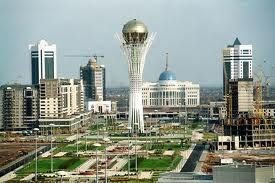
Incredible Bird-Shaped Fountain Invites Visitors to Kazakhstan’s Presidential Park

Astana’s Presidential Park uses its unique landscape architecture to show the independence of the new Kazakh capital city

Nov 27 — “In the heart of Kazakhstan’s capital lays Presidential Park, a massive public area that stretches out in front of the Ak Orda Presidential Palace. This unique landscape and architecture is part of Astana’s rebirth as the capital of the former Soviet country. Spilling over nearly 60 acres, the green oasis sits within the city, filled with eye-catching symbolism.” READ MORE: https://mymodernmet.com/astana-presidential-park/

Kazatomprom IPO With Astana International Financial Center (AIX) Shows Global Appetite For Uranium

As Russia and China find themselves subject to U.S. sanctions, and Central Asia continues to grow, the Astana International Financial Center may become an important stock market between Frankfurt and Shanghai

Nov 27 — “Some say nuclear energy is the stepdaughter of the energy industry. Many investors beg to differ. On November 14, Kazatomprom (KAP), the state-owned uranium production company of Kazakhstan made history by becoming the first initial public offering of a large Kazakh company in more than a decade. This is a dramatic finale for two important entities: the newly launched Astana International Financial Center’s (AIFC) stock market, and Kazatomprom, which is compared to the Saudi Aramco of uranium production.” READ MORE: https://www.forbes.com/sites/arielcohen/2018/11/27/kazatomprom-ipo-with-astana-international-financial-center-aix-shows-global-appetite-for-uranium/#74027cdf519d

Hackers eyeing Kazakhstan as a safe haven

Kazakhstan has faced the growing threat of international cybercrime groups penetrating the country, but Kazakh authorities lack qualified personnel to address the problem

Nov 29 — “Imagine a small town in the middle of Kazakhstan’s steppes. An elderly lady is speaking to her grandson over Skype. He moved to the big city for university. “Come home for the holidays. I’ll make you beshbarmak,” the grandmother says. “Ok then, I will,” the young man says. As the woman shares some gossip and asks if her grandson is making sure to wrap up warm, her laptop is unbeknownst to her performing a series of illicit operations. Money is being spirited out of a bank account halfway across the planet.” READ MORE: https://timesca.com/index.php/news/20550-hackers-eyeing-kazakhstan-as-a-safe-haven

KYRGYZSTAN

Kyrgyzstan Drawn Into China’s Muslim Crackdown

Kyrgyzstan is tied to China by a multitude of trade and ethnic links, and is also dependent on Chinese infrastructure investments

Nov 29 — “Kazakhs caught up in China’s detention camps in the Xinjiang region have been a vital source of information on the secretive system, and forced the government in Astana to take note. Now it appears that Kyrgyzstan may also be forced to address its relationship with Beijing in light of its intensive campaign against Muslims.” READ MORE: https://www.tol.org/client/article/28088-kazakhstan-china-muslims-uighurs-minority-xinjiang.html

Kyrgyz MP Wants Only Good News

Kyrgyzstan is trying every ways possible to increase the number of tourists coming to the country, but sometimes such efforts look odd enough

Nov 30 — “A member of Kyrgyzstan’s parliament proposedbanning the publication of bad news in Russian and on the internet in order to attract foreign tourists to the country.” READ MORE: https://thediplomat.com/2018/11/kyrgyz-mp-wants-only-good-news/

Kyrgyzstan: Governments change but the environmental problems remain

Bishkek’s environmental problems, including the smog over the city in winter, require complex solutions

Nov 30 — “Kyrgyzstan’s capital Bishkek is gradually turning from one of the greenest cities of the former Soviet Union into a gassed and smoggy one. The public outrage intensifies in cold seasons, when a shroud of smog covers Bishkek, and subsides in spring. The Government and state agencies regularly make decisions to improve the environmental situation in the capital but it is getting worse every year.” READ MORE: https://timesca.com/index.php/news/26-opinion-head/20555-kyrgyzstan-governments-change-but-the-environmental-problems-remain

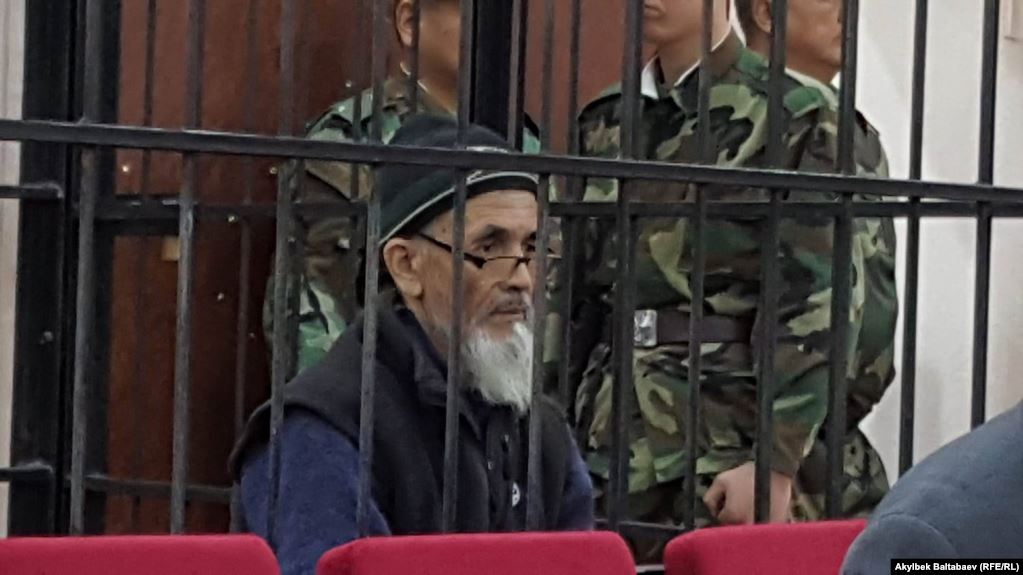
Xinjiang Authorities Arrest Leading Kyrgyz Historian For ‘Undecided’ Crime

Several prominent intellectuals have gone missing in Xinjiang in recent months and are believed detained in “political” re-education camps, where authorities have detained Uyghurs and other Muslim ethnic minorities accused of harboring “strong religious views” and “politically incorrect” ideas

Nov 30 — “Authorities in northwest China’s Xinjiang Uyghur Autonomous Region (XUAR) have arrested a leading Kyrgyz historian for an as of yet “undecided” crime after he published dozens of articles and several books examining the golden era of his ethnic group’s history, according to official sources. Askar Yunus, a 49-year-old researcher at the History Research Department of the Academy of Social Sciences of Xinjiang, was taken into custody late last month from his home in the regional capital Urumqi, a staff member from the institution told RFA’s Uyghur Service, speaking on condition of anonymity.” READ MORE: https://www.rfa.org/english/news/uyghur/historian-11302018164026.html

TAJIKISTAN

What Really Happened at Khujand Prison in Tajikistan?

Claims by the Islamic State to be behind the Tajik prison riot may have serious implications for the poor Muslim country and its authorities

Nov 27 — “Last week, the government of Tajikistan broke its general silence about a recent outbreak of violence at a prison in the country’s north. What has been described as a “riot” apparently broke out near midnight on November 7 at a high-security prison in Khujand. Initial reports varied, as typically happens with breaking news events, with the casualty number ranging from 13 inmates to more than 25, before skyrocketing in the days that followed.” READ MORE: https://thediplomat.com/2018/11/what-really-happened-at-khujand-prison-in-tajikistan/

Tajikistan toughens punishment for brothel keeping

Prostitution has traditionally been a taboo topic in Tajikistan, but in legal terms it is only a misdemeanor offense punishable by a fine, and there is a rise in the number of sex workers in the country

Nov 28 — “Deputies of Tajikistan’s lower house (Majlisi Namoyandagon) of parliament (Majlisi Oli) have unanimously voted for amendments proposed by the government to the country’s Penal Code. The amendments toughen punishment for brothel keeping, news.tj reports.” READ MORE: https://en.trend.az/casia/tajikistan/2986399.html

Perspectives | Light and nostalgia in Tajikistan

Many Tajiks associate the recently launched giant Roghun mega-dam with a revival of Soviet-style development

Nov 29 — “Building the world’s tallest dam seems almost anachronistic in an age when the environmental and social costs of big dams are widely acknowledged. Yet Tajikistan this month launched the first turbine in its massive Roghun Dam.” READ MORE: https://eurasianet.org/perspectives-light-and-nostalgia-in-tajikistan

TURKMENISTAN

Policymakers overlook Turkmenistan at their peril

Considering that Turkmenistan sits in the heart of the Eurasian landmass and has the world’s 6th largest proven natural gas reserves, what is happening there should be of interest to the world’s policymakers

Nov 23 — “Turkmenistan is a strategic nation in the region, with deep influence over Russian expansionism in the region, stability in Pakistan and Afghanistan, and energy security worldwide. Is this sustainable and what’s at risk? The president of Turkmenistan, Gurbanguly Berdymukhammedov, recently made headlines when a video surfaced of him lifting a weightlifting barbell (without weights) during a cabinet meeting to the applause of his ministers.” READ MORE: https://www.trtworld.com/opinion/policymakers-overlook-turkmenistan-at-their-peril-21899

Turkmenistan: Brussels sprouts and pipeline routes

In its ‘Akhal-Teke: A Turkmenistan Bulletin’, Eurasianet reviews the main news and events in the Central Asian country for the previous week

Nov 27 — “The 12-starred blue flag of the European Union will soon flutter more confidently over the soil of Turkmenistan. Explaining EU plans to upgrade its liaison office in Ashgabat to a permanent mission next year, European Commission High Representative for Foreign Affairs Federica Mogherini averred that Turkmenistan is looking for a “reliable partner for reforms [and] modernization.” READ MORE: https://eurasianet.org/turkmenistan-brussels-sprouts-and-pipeline-routes

Turkmenistan invites foreign investors to develop oil sector in Caspian Sea

Turkmenistan plans to further explore and develop the promising oil fields on the Caspian Sea shelf, which requires foreign investment

Nov 28 — “The Caspian Basin is a region rich in energy and strategically important in terms of regional energy security, since Asian and European main transportation corridors pass through its territtory. Moreover, the Turkmen sector of the Caspian Sea is extremely rich in promising areas for hydrocarbon explorations. Over 200 oil and gas fields have been discovered in Turkmenistan so far.” READ MORE: https://www.azernews.az/region/141705.html

UZBEKISTAN

Uzbek Leaders Insist Reforms Are Designed to Endure

VOA’s Navbahor Imamova examines Uzbekistan President Mirziyoyev’s commitments and their implementation

Nov 25 — “Uzbek officials say a program of broad government reforms initiated by President Shavkat Mirziyoyev is meant to be permanent, a point regularly stressed by the president himself as he seeks to build the state’s credibility with citizens who lived under the autocratic rule of his predecessor, Islam Karimov, for 27 years. But how far have these reforms gone, and what is the ultimate political goal?” READ MORE: https://www.voanews.com/a/uzbek-leaders-insist-reforms-are-designed-to-endure/4669094.html

Long-Closed Uzbekistan Opens Up to the World

VOA’s Navbahor Imamova examines what Uzbekistan under President Shavkat Mirziyoyev wants from the world and how the international community has responded

Nov 25 — “For the first time in a generation, Tashkent has an outward-looking foreign policy. During its first 25 years of independence, Uzbekistan was a prickly neighbor, mired in disputes with its Central Asian neighbors and swinging from support to opposition and back again in its relations with the major powers. But the launch of economic reforms by a new leadership in 2017 shuffled the deck.” READ MORE: https://www.voanews.com/a/long-closed-uzbekistan-opens-up-to-the-world/4669101.html

Uzbekistan granted duty-free entry to EU market

The EU is ready to grant Uzbekistan unilateral tariff benefits within the framework of the “General System of Preferences Plus”, which will facilitate the duty-free entry of more than 6,200 types of Uzbek goods into the European market

Nov 26 — “EU is ready to provide Uzbekistan with the opportunity to supply more than 6,200 types of goods to the European market without duties, Uzbek media reports. This became known after the visit of the governmental delegation of Uzbekistan headed by Foreign Minister Abdulaziz Kamilov to Brussels.” READ MORE: https://www.azernews.az/region/141581.html

Uzbekistan’s bourse is open for business

The stock market is rapidly developing in Uzbekistan as the country has pursued much-needed economic reforms and opened up to the outside world

Nov 26 — “These are busy times for the Tashkent Stock Exchange. Foreign delegations visit almost daily, not only from Korea, which bought a stake, but also from Kazakhstan, Russia, Japan and China. Europeans have been slower to react to the opening up of the country and few European faces are seen on the streets of Tashkent at the moment, but we are welcomed warmly. TSE was founded in 1994, a few years after gaining independence, but lay moribund ever since.” READ MORE: http://www.intellinews.com/uzbekistan-s-bourse-is-open-for-business-152600/

AFGHANISTAN

The risk to the U.S. in abandoning Afghanistan

America is still in Afghanistan because the terror groups operating there would have the unfettered ability to again thrive if the U.S. were to withdraw the last of its troops

Nov 28 — “The latest U.S. casualties in America’s interminable war in Afghanistan are three Special Forces soldiers who had been tasked with helping Afghan troops wrest from the Taliban the southeastern city of Ghazni. On Tuesday their convoy set off a roadside bomb. Three days earlier, another American soldier, a 25-year-old Army Ranger from Washington state, was killed in a firefight with al-Qaida militants.” READ MORE: https://www.chicagotribune.com/news/opinion/editorials/ct-edit-afghanistan-war-taliban-endgame-20181128-story.html

Why are we still in Afghanistan?

The worse scenario for the US is staying in Afghanistan indefinitely, sacrificing American lives to preserve a stalemate

Nov 28 — “The old peacenik slogan was, “What if they gave a war and nobody came?” Today, the question is, “What if they gave a war and nobody noticed?” The American mission in Afghanistan has borrowed a page from Harry Potter, draping itself in a cloak of invisibility. Our war has lasted 17 years and cost upward of $1 trillion, including $45 billion this year. It has killed more than 2,300 Americans and wounded more than 20,000.” READ MORE: https://www.chicagotribune.com/news/opinion/chapman/ct-perspec-chapman-afghanistan-soldiers-killed-trump-1129-20181128-story.html

What are U.S. Soldiers Dying for in Afghanistan?

The question every American—and especially US leaders in Washington—must answer is this: what benefit has been accrued to the country as a result of the sorrows and pain borne by those whose loved ones died in Afghanistan?

Nov 29 — “How much more blood must be spilled in Afghanistan before Washington acknowledges reality and ends the war? Three more American troops were killed in Afghanistan by a roadside bomb on Tuesday and three others wounded; their names are being withheld pending notification of next of kin. These deaths, along with Sgt. Leandro Jasso who was killed in a firefight last Saturday, bring the number of troops killed in Afghanistan this year to thirteen. Unless major changes are made in U.S. strategic policy, they will not be the last to die.” READ MORE: https://nationalinterest.org/feature/what-are-us-soldiers-dying-afghanistan-37487

The US-led coalition is bombing Afghanistan at record levels but it doesn’t seem to be changing the war’s deadly ‘stalemate’

The number of bombs falling on Afghanistan may be spiking, but victory over the Taliban remains elusive, as casualties for the US and especially Afghan forces mount

Nov 30 — “The US and its coalition partners have dropped more bombs on Afghanistan in the first ten months of 2018 than any year in the past five years, the US military revealed Thursday. Between January and October of this year, the US-led coalition dropped 5,982 bombs in support of Operation Freedom Sentinel and Operation Resolute Support, significantly more than the previous years.” READ MORE: https://www.businessinsider.com/the-us-led-coalition-is-bombing-afghanistan-at-record-levels-2018-11

WORLD

Central Asia countries pin hopes on tourism

The tourism industry can become a locomotive of economic development in Central Asian countries

Nov 25 — “Central Asia countries possess abundant resources and great potential for tourism development. The unique heritage, nature and traditions of different peoples and cultures along the Great Silk Road attract tourists from all over the world.” READ MORE: https://timesca.com/index.php/news/26-opinion-head/20533-central-asia-countries-pin-hopes-on-tourism

China’s Trojan Ports

Beijing’s systematic acquisition of European ports is an important component of an ambitious and insidious strategy as part of the Belt and Road Initiative

Nov 30 — “As China continues to project its presence, money, and influence into Western Europe, long-forgotten histories are resurfacing by way of analogy to the present challenge. According to one such narrative, Chinese strategy resembles that of the ancient Sea Peoples—a mysterious confederation that attacked territories in the East Mediterranean largely controlled by the Egyptian empire between 1200 and 900 B.C.E. The metaphor is an imperfect one. Not traditionally of the sea, China has long been a continental power, only now attempting to make the difficult transition to a maritime superpower.” READ MORE: https://www.the-american-interest.com/2018/11/29/chinas-trojan-ports/