• KGS/USD = 0.01144 0%
  • KZT/USD = 0.00196 -0%
  • TJS/USD = 0.10899 -0%
  • UZS/USD = 0.00008 -0%
  • TMT/USD = 0.28490 0%
  • KGS/USD = 0.01144 0%
  • KZT/USD = 0.00196 -0%
  • TJS/USD = 0.10899 -0%
  • UZS/USD = 0.00008 -0%
  • TMT/USD = 0.28490 0%
  • KGS/USD = 0.01144 0%
  • KZT/USD = 0.00196 -0%
  • TJS/USD = 0.10899 -0%
  • UZS/USD = 0.00008 -0%
  • TMT/USD = 0.28490 0%
  • KGS/USD = 0.01144 0%
  • KZT/USD = 0.00196 -0%
  • TJS/USD = 0.10899 -0%
  • UZS/USD = 0.00008 -0%
  • TMT/USD = 0.28490 0%
  • KGS/USD = 0.01144 0%
  • KZT/USD = 0.00196 -0%
  • TJS/USD = 0.10899 -0%
  • UZS/USD = 0.00008 -0%
  • TMT/USD = 0.28490 0%
  • KGS/USD = 0.01144 0%
  • KZT/USD = 0.00196 -0%
  • TJS/USD = 0.10899 -0%
  • UZS/USD = 0.00008 -0%
  • TMT/USD = 0.28490 0%
  • KGS/USD = 0.01144 0%
  • KZT/USD = 0.00196 -0%
  • TJS/USD = 0.10899 -0%
  • UZS/USD = 0.00008 -0%
  • TMT/USD = 0.28490 0%
  • KGS/USD = 0.01144 0%
  • KZT/USD = 0.00196 -0%
  • TJS/USD = 0.10899 -0%
  • UZS/USD = 0.00008 -0%
  • TMT/USD = 0.28490 0%
08 December 2025

ADB approves new partnership strategy for Kyrgyzstan

BISHKEK (TCA) — The Asian Development Bank’s (ADB) Board of Directors has endorsed a new 5-year country partnership strategy (CPS) to promote sustainable economic growth, leverage regional cooperation to reap the benefits of access to larger markets, and improve the quality of life in Kyrgyzstan.

The 2018–2022 strategy is expected to provide $641 million in grants and sovereign loans to the Kyrgyz Republic, which joined ADB in 1994. Sovereign operations will focus on energy, transport, education, public sector management, water supply and sanitation, and agriculture. Private sector support will explore opportunities in agribusiness, energy, and telecommunications. To date, ADB has provided about $1.7 billion in loans and grants to the country. ADB is the Kyrgyz Republic’s largest multilateral development partner.

“We are committed to helping the government achieve its development plans,” said ADB Country Director for the Kyrgyz Republic Ms. Candice McDeigan. “Our new CPS is focused on achieving higher and broader-based economic growth, creating jobs, and reducing poverty levels, especially in rural areas.”

The Kyrgyz Republic, a landlocked country with a small population of just over 6 million, needs to attract investments and diversify its economy. Economic growth has been driven largely by one commodity, gold, and remittances from workers in Kazakhstan and Russia. The economy faces constraints to create adequate jobs in the formal sectors, and about 25% of the population lives below the poverty line, with many of those living in rural areas and in the south of the country, the ADB said in a press release on September 25.

A priority for the government is to identify and invest in new areas of economic growth in select regional centers and towns. It is also focused on increasing the effectiveness of public spending, managing debt levels and trade imbalances, and strengthening the investment environment.

Given the wide-ranging needs of the country, ADB’s strategy builds upon its previous operations and aligns with evolving government priorities. The CPS supports economic diversification through investments in transport and energy, particularly improving the country’s aging hydropower plants to increase supply and boost power exports to neighboring countries. To improve the investment climate for private enterprise, ADB will provide policy-based support for reforms that make it easier to trade and do business.

The CPS will improve access to public and social services. ADB will reengage in the agriculture sector through project financing to improve services, increase productivity and the sector’s resilience to climate change and natural disasters, as well as improve supply chains to enable improved access to regional markets. ADB will continue its support for policies and programs to help students and workers acquire the training and skills they need to find work in a modern economy. A priority will be placed on reforms to secondary and tertiary education to help produce more science and technology graduates. The new CPS will also deliver safe drinking water and provide better sanitation systems in select urban and rural areas where infant mortality rates almost double that of the cities.

A key obstacle to further economic development has been the Kyrgyz Republic’s lack of advanced business facilities, including poor internet connectivity. To address this issue, the government has launched the Taza Koom digital transformation program, which aims to increase access to the internet, improve government services, and attract more private sector investment to the ICT industry. ADB will assist in the planning and management of this ambitious program.

The CPS will also leverage regional cooperation and integration initiatives to assist economic diversification and improve competitiveness. ADB will continue to support the government’s push to strengthen regional ties through the Central Asia Regional Economic Cooperation (CAREC) Program, under which the improvement of transport and trade corridors will continue to be important. The CPS will also provide multisector support to horticultural trade and tourism services, especially in the country’s north and south, to increase competitiveness and open up new markets outside of the country.

Uzbekistan and Tajikistan conduct first joint military exercises

BISHKEK (TCA) — Improved relations between Uzbekistan and Tajikistan have translated into their military and security cooperation — given that both nations share their borders with war-torn Afghanistan. We are republishing this article on the issue, written by John C. K. Daly, originally published by The Jamestown Foundation’s Eurasia Daily Monitor:

A notable aspect of the foreign policy of Uzbekistan’s first president, Islam Karimov, was its increasing aloofness from engaging in joint military maneuvers with post-Soviet neighbors. Notably, Karimov’s Uzbekistan twice withdrew from the Collective Security Treaty Organization (CSTO). But since his death, in September 2016, Karimov’s successor, President Shavkat Mirziyoyev, has moved to repair ties with all neighboring states (see EDM, October 26, 2016; March 16, 2017; September 18, 2017; March 12, 2018). In one of the more striking illustrations of Tashkent’s desire for improved relations, on September 18, 600 Uzbekistani troops joined 17,000 Tajikistani soldiers and practiced anti-terrorism operations at the Chorukhdarron military training ground, in Tajikistan’s Sughd Region, 200 miles north of Dushanbe (Toptj.com, September 21, 2018). According to the head of Tajikistan’s defense ministry press center, Major Orif Nozimov, the troops involved in the exercise used not only light weaponry but unmanned aerial vehicles (UAV), tanks, armored vehicles, helicopters and mortars, as well (News.tj, September 20).

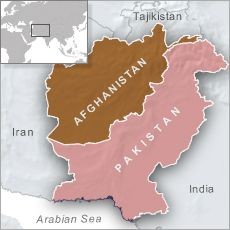
The Unbreakable Fraternity 2018 military exercise is emblematic of a concern to both countries: possible terrorist attacks emanating from Afghanistan, spilling across their borders. This mid-September military operation followed a smaller bilateral exercise held in August (Sputnik-tj.com, September 21).

Uzbekistan has long been concerned about rising extremism in Afghanistan, especially as jihadists from the Islamic Movement of Uzbekistan relocated there.
Nevertheless, the late president Karimov’s heavy skepticism toward engaging in regional military maneuvers precluded joint anti-terrorist operations with Turkmenistan and Tajikistan, who also share a border with northern Afghanistan. Further complicating relations between Tajikistan and Uzbekistan were the latter’s worries about hydroelectric development in Tajikistan’s Pamir Mountains, whose spring runoff is essential for irrigating Uzbekistan’s agricultural output—primarily, cotton.
Uzbekistan was especially concerned about the development of two post-Soviet hydroelectric dam projects, Nurek and Rogun, as their completion would not only divert waters needed to fill the reservoirs, but subsequently reduce the regular or downstream releases of water needed for agricultural output. In the past year, however, Mirziyoyev’s government has actually declared its willingness to join the Rogun Dam project (President.tj, March 9; see EDM, March 12).

Among those Central Asian countries that share a border with Afghanistan—Turkmenistan, Uzbekistan and Tajikistan—Tajikistan’s is the longest, stretching nearly 850 miles. The poverty along the Tajikistani-Afghan border, combined with the rough and mountainous terrain, result in a largely porous frontier, with people, contraband, weaponry, and drugs flowing easily across it. During the Soviet era, Moscow’s concern about Tajikistan being the Union of Soviet Socialist Republics’ (USSR) “soft underbelly” led it to establish there the 201st Motorized Rifle Division, which participated in Soviet military operations in Afghanistan. The division remained there after the collapse of Communism, in 1991, as a foreign Russian military base. Subsequently, this unit participated in the 1992–1997 Tajik Civil War, assisting the government against the Islamist-supported United Tajik Opposition (Krasnaya Zvezda, June 4, 2008). More recently, the 201st Motorized Rifle Division has been involved in anti-terrorism operations and exercises. As recently as September 22, 400 Russian troops and 40 pieces of equipment carried out drills to destroy a simulated terrorist base at the Laura testing range, which had earlier been “detected” by a UAV (Mil.ru, September 22).

Adding to regional instability today is Afghanistan’s rising opium production, much of which is exported via the so-called “northern route,” running through the Tajikistani-Afghan border. Afghan heroin and opium traveling along this route enter “black markets” in Central Asia and, from there, move northward and westward to Russia and Europe. According to the United Nations Office on Drugs and Crime (UNODC), in 2017 Afghanistan had its largest ever opium harvest, resulting in the production of 550–900 tons of heroin of export quality, with a 50–70 percent purity rate. The production generated an estimated $4.1 billion–$6.6 billion in 2017, representing 20–32 percent of Afghanistan’s GDP, far exceeding the value of Afghanistan’s licit exports of goods and services, which made up roughly 7 percent of GDP (Unodc.org, May 21).

This past May, Radzhabali Rakhmonali, the commander of Tajikistan’s Border Guard Service, warned that up to 7,000 Taliban militants were believed to have been recently transferred from the south to the north of Afghanistan and were now deployed at 29 training bases in the provinces of Balkh, Kunduz, Takhor and Badakhshan, scattered along the Tajikistani-Afghan border. Rahmonali added that many of these militants were allegedly of Central Asian origin (Radio Ozodi, May 3). On August 27, Dushanbe’s concerns over the situation brewing along its border exploded: Tajikistan’s air force conducted an airstrike in the Darqad district of Afghanistan’s northern Takhar province against Taliban drug smugglers, who had earlier killed two Tajikistani border guards (Pajhwok.com, August 27).

The beginning of joint military exercises between Uzbekistan and Tajikistan underline growing regional awareness that the thirty-year Afghan civil war, fueled by a lethal mix of militancy and drug money, shows no sign of ending anytime soon, and growing belief that collective security initiatives are the best way to at least constrain the chaos to Afghanistan itself. While none of the former Soviet regional actors—Russia, Turkmenistan, Uzbekistan or Tajikistan—have committed “boots on the ground” in Afghanistan, increasingly they are viewing collective security as preferable to isolationism, the policy that was pursued by the late Uzbekistani president. Tajikistan, in particular, appears to welcome this trend, particularly given the country’s poverty and porous southern frontier, both of which could provide fuel for rising chaos within the country itself. Beyond warming military relations with Uzbekistan, Tajikistan ostensibly has, as a backup, the 201st Motorized Rifle Division, Russia’s largest military base beyond its frontiers. Under an October 2012 agreement, the Russian presence on its soil can remain there until 2042, by which time Afghanistan will hopefully be pacified.

Indian company plans to invest $1 billion in Kazakhstan poultry industry

ASTANA (TCA) — At the initial stage, VH Group — the largest poultry conglomerate in India — plans to construct a bio-technical park in Kazakhstan, which will include a laboratory for production of vaccines. Total volume of planned investments in Kazakhstan amounts to more than US$1 billion, Kazakh Invest national investment support and promotion company says.

Continue reading