• KGS/USD = 0.01144 0%
  • KZT/USD = 0.00196 -0%
  • TJS/USD = 0.10904 0%
  • UZS/USD = 0.00008 0%
  • TMT/USD = 0.28490 0%
  • KGS/USD = 0.01144 0%
  • KZT/USD = 0.00196 -0%
  • TJS/USD = 0.10904 0%
  • UZS/USD = 0.00008 0%
  • TMT/USD = 0.28490 0%
  • KGS/USD = 0.01144 0%
  • KZT/USD = 0.00196 -0%
  • TJS/USD = 0.10904 0%
  • UZS/USD = 0.00008 0%
  • TMT/USD = 0.28490 0%
  • KGS/USD = 0.01144 0%
  • KZT/USD = 0.00196 -0%
  • TJS/USD = 0.10904 0%
  • UZS/USD = 0.00008 0%
  • TMT/USD = 0.28490 0%
  • KGS/USD = 0.01144 0%
  • KZT/USD = 0.00196 -0%
  • TJS/USD = 0.10904 0%
  • UZS/USD = 0.00008 0%
  • TMT/USD = 0.28490 0%
  • KGS/USD = 0.01144 0%
  • KZT/USD = 0.00196 -0%
  • TJS/USD = 0.10904 0%
  • UZS/USD = 0.00008 0%
  • TMT/USD = 0.28490 0%
  • KGS/USD = 0.01144 0%
  • KZT/USD = 0.00196 -0%
  • TJS/USD = 0.10904 0%
  • UZS/USD = 0.00008 0%
  • TMT/USD = 0.28490 0%
  • KGS/USD = 0.01144 0%
  • KZT/USD = 0.00196 -0%
  • TJS/USD = 0.10904 0%
  • UZS/USD = 0.00008 0%
  • TMT/USD = 0.28490 0%
08 December 2025

In Russia’s remote Kamchatka, Central Asians slow population decline

BISHKEK (TCA) — In many Russian regions that suffer from population decline, labor immigrants from Central Asia are welcome guests and often indispensible workforce. We are republishing this article on the issue, written by Nicholas Muller*, originally published by Eurasianet:

For some visitors, the Kamchatka Peninsula – an eight-hour flight from Moscow – doesn’t quite feel like Russia anymore.

“The police greet us every morning and shake our hands. In Moscow, they grab us and take us away,” said Mansur, a brawny Tashkent native who works in the timber and fishing industries and sells fruit whenever he returns from Uzbekistan. “I can make good money out here and not deal with the stresses of Moscow.”

Kamchatka – a volcano-strewn promontory the size of Montana – is the definition of remote, even in a vast country like Russia. Government subsidies dried up after the Soviet Union collapsed, driving a sharp rise in prices for basic necessities. This was especially felt in places like Kamchatka, where many goods have to be shipped in from great distances. So people left.

Since 1991, over 20 percent of Kamchatka’s population has emigrated, according to a recent briefing from the Carnegie Endowment. An estimated 10,000 have departed since the 2010 census alone. The population is now just above 300,000, with about six in 10 living in the regional capital, Petropavlovsk-Kamchatsky.

Today Central Asian labor migrants help staunch the population decline and keep critical industries afloat.

Feruz, a 26-year-old from Samarkand, moved to Petropavlovsk two years ago, hoping to save enough to get married. He had been deported from Moscow for visa violations.

“There is a lot of work here and less pressure than in Moscow, with nicer people who are a lot more welcoming,” he told Eurasianet. Depending on the season, Feruz splits his time working in a restaurant, in a fish factory and on construction projects. He reckons hundreds or thousands of Central Asians do the same.

The number of labor migrants working in Kamchatka is anyone’s guess. Many inhabit the gray economy. According to Kamchatka’s official statistical service, international arrivals during the first five months of this year more than doubled over 2017, to 2,251 people. About 40 percent are from Central Asia, mostly Kyrgyzstan and Uzbekistan.

One lure is the wages. According to official data, they’re almost twice the average in other Russian cities.

Local government data show that more than 80 percent of budget revenues are derived from the fishing industry. There are also naval bases in Kamchatka, including Russia’s largest submarine fleet; the military plays a pivotal economic role in this strategic region jutting into the Pacific.

And although infusions of cash from Moscow are nothing like they were in Soviet times, Kamchatka remains heavily subsidized. It will receive the third-largest federal grant this year, more than 39.3 billion rubles ($587 million), less only than violence-prone Dagestan and vast Yakutia, according to business outlet RBC.

In recent years, the Kremlin has marketed Kamchatka as a sightseeing destination. Tourists help stoke the demand for a larger labor force. There is currently a push to repair and build new roads on the peninsula.

This development has boosted demand for labor migrants. Some come to Kamchatka for seasonal work; others stay all year.

Dilibek Kuchkarov, a trained electrician from Andijan, arrived last year with his wife after both worked in Moscow for several years. He found a job through other local Uzbeks, and earns more than he was paid in Moscow, he explained over tea in Samarkand Cafe, a local Uzbek eatery. Kuchkarov takes home 60 to 100 thousand rubles per month, depending on the season. Minus the 20 to 25 thousand he spends on an apartment, he’s able to save enough to travel home every year.

And unlike the hardships Central Asians often face in Moscow – police harassment, racism, bureaucratic hurdles – migrants seem to talk about Kamchatka with warmth.

Farid, for example, arrived from Bishkek 10 years ago to stay with relatives.

Now he works in the caviar business, shuttling salmon and their roe by the bucketload to Moscow. He hunts remote waterways far from the regional capital, noting that around Petropavlovsk the rivers have been depleted by overfishing.

Winter on the peninsula is not as harsh as many expect. “People [back home in Kyrgyzstan] still don’t know what it is like to live and work here, and imagine Kamchatka far different than how it actually is. It’s not too cold for me, nor are the conditions too difficult here, despite lots of snow,” Farid said.

* Nicholas Muller is an American photojournalist and writer covering the post-Soviet space

Weekly Digest of Central Asia

BISHKEK (TCA) — The Publisher’s note: Throughout the 19th and 20th centuries, Central Asia was the scene of intense geopolitical struggle and the Great Game between the British and Russian Empires, and later between the Soviet Union and the West, over Afghanistan and neighboring territories. Into the 21st century, Central Asia has become the area of a renewed geopolitical interest, dubbed the New Great Game, largely based on the region’s hydrocarbon and mineral wealth. On top of that, the region now is perhaps the most important node in the implementation of China’s One Belt, One Road initiative through which Beijing aims to get direct access to Western markets. Every week thousands of news appears in the world’s printed and online media and many of them may escape the attention of busy readers. At The Times of Central Asia, we strongly believe that more information can better contribute to peaceful development and better knowledge of this unique region. So we are presenting this Weekly Digest which compiles what other media have reported on Central Asia over the past week.

KAZAKHSTAN

What The Caspian Sea’s New Legal Status Means For Kazakhstan

Kazakhstan may gain the most from the signing of the Caspian convention, which may allow the country to claim 30 percent of the Caspian Sea’s seabed and subsoil with their resources

Aug 20 — “Four former Soviet republics plus Iran signed the Convention on the Legal Status of the Caspian Sea last week, after more than two decades of disagreement and debate amongst the countries over the future of the world’s largest lake. How the Caspian Sea’s new legal status will impact the economies of all five littoral states is a topic of discussion amongst policymakers from Moscow to Tehran.” READ MORE: https://caspiannews.com/news-detail/what-the-caspian-seas-new-legal-status-means-for-kazakhstan-2018-8-20-9/

Kazakhstan: Activist fined over menstruation picket

A female activist was trying to lift the veil of embarrassment from a commonplace phenomenon of menstruation in the conservative Kazakh society

Aug 21 — “A court in Kazakhstan’s business capital has fined an activist after she held a picket to promote greater public sensitivity toward menstruation — a taboo issue in this often-conservative nation.” READ MORE: https://eurasianet.org/s/kazakhstan-activist-fined-over-menstruation-picket

Russia, Kazakhstan sign agreement on creation of Baiterek launch complex at Baikonur

Russia has agreements with Kazakhstan to lease the Baikonur Cosmodrome until 2050, which is jointly managed by the Russian space agency Roscosmos and Russia’s Aerospace Forces

Aug 22 — “Russia and Kazakhstan signed an agreement to create the Baiterek launch complex for a new Soyuz-5 medium-range missile at the Baikonur cosmodrome, Russia’s RIA Novosti news agency reported. Director General of Roscosmos Dmitry Rogozin and Minister of Defense and Aerospace Industries of Kazakhstan Beibut Atamkulov signed the document within the “Army-2018” forum.” READ MORE: https://www.azernews.az/region/136542.html

Kazakhstan increases car manufacturing

Today, every third car sold in Kazakhstan is domestically manufactured

Aug 23 — “As many as 17,246 cars have been produced in Kazakhstan since early 2018. According to the Association of Kazakhstan’s Automotive Business, in July, 2,586 vehicles of all types were produced, which is 7.3 percent less than in June.” READ MORE: https://www.azernews.az/region/136554.html

KYRGYZSTAN

Kyrgyzstan’s Development Strategy until 2040: same old goals and promises

There are no words in the new Strategy about methods and means of implementing the projects and financing sources to achieve the goals

Aug 20 — “The long-term development strategy of Kyrgyzstan until 2040 was approved earlier this month at the meeting of the National Sustainable Development Council of Kyrgyzstan chaired by President Sooronbai Jeenbekov.” READ MORE: https://timesca.com/index.php/news/26-opinion-head/20150-kyrgyzstan-s-development-strategy-until-2040-same-old-goals-and-promises

Paul Manafort went to Kyrgyzstan to ‘strengthen Russia’s position’

Investigation claims that the former Trump campaign chair was sent in 2005 to Kyrgyzstan where he promoted Russian interests, including the closure of the US air force base at Bishkek’s Manas airport

Aug 22 — “Paul Manafort, whose work as a political consultant in Russia and Ukraine led to his conviction in a Virginia courtroom on Wednesday, worked more extensively in the former Soviet Union than was previously reported, a new investigation has claimed.” READ MORE: https://www.theguardian.com/us-news/2018/aug/22/paul-manafort-went-to-kyrgyzstan-to-strengthen-russias-position

Fighting forced marriage in Kyrgyzstan: Bride abduction is not cool

What sounds like an entertaining popular sport in Kyrgyzstan is actually the widespread practice of kidnapping women and forcing them into marriage. With her initiative “Ala kachuu is no cool!” Kyrgyzstan’s Svetlana Dzardanova is taking a stand against the alleged custom of bride abduction

Aug 22 — “In 2017 Deutsche Welle – Germanyʹs international broadcasting company – reported that every 30 minutes a woman in Kyrgyzstan is abducted and forced into marriage. The fact that young women are being dragged into cars in broad daylight, usually by several men, and brought to their future husband’s parents’ house is not regarded as a crime by many Kyrgyz, but rather as the preservation of a tradition.” READ MORE: https://en.qantara.de/content/fighting-forced-marriage-in-kyrgyzstan-bride-abduction-is-not-cool

East Idaho resident takes on 1,000-mile bicycle race in Kyrgyzstan

Kyrgyzstan is an ideal place for cycling due to its virgin mountainous landscapes. Moreover, the country is safe and hospitable for travellers

Aug 23 — “Never content to just set new records in races he’s already participated in, endurance cyclist Jay Petervary left the country last week to take part in a new and ambitious race in Kyrgyzstan. The Silk Road Mountain Race is an unsupported 1,000-mile race in the Tian Shan mountains near Bishkek, the capital of Kyrgyzstan. This is the first year of the event. The route follows gravel, double and single track, and forgotten military roads through isolated high-elevation valleys surrounded by 16,000-foot peaks.” READ MORE: https://idahostatejournal.com/outdoors/xtreme_idaho/east-idaho-resident-takes-on–mile-bicycle-race-in/article_b4aab387-a5b5-5326-95ba-1b8a3c3f21a4.html

TAJIKISTAN

Can Social Media Help Deliver Justice In Tajikistan?

Stronger support for human rights in Tajikistan by international actors is urgently needed, as it may force Tajik authorities to at least weaken the persecution of opposition activists, journalists and their family members

Aug 21 — “This summer has brought Tajikistan a lot of attention, most of it of the very negative variety. In July, Tajikistan became the site of Central Asia’s first deadly terrorist attack on Westerners and also the first attack in the region seemingly inspired by the militant group Islamic State (IS). If that wasn’t enough, Tajik authorities have continued a spectacular crackdown on manifestations of dissent in the country” READ MORE: https://www.rferl.org/a/can-social-media-help-deliver-justice-in-tajikistan-/29446009.html

Feed the Future Tajikistan Fights Malnutrition and Infant Mortality

The program helps Tajikistan overcome key hurdles in nutrition, sanitation and hygiene to achieve optimum economic growth

Aug 22 — “Given that Tajikistan is home to 1.2 million children under the age of 5, healthcare and nutrition have become major focus areas. In recent years, they have also received international attention as the United States government has invested in a new program, Feed the Future Tajikistan Health and Nutrition Activity, through the United States Agency for International Development (USAID).” READ MORE: http://www.borgenmagazine.com/feed-the-future-tajikistan/

Tajikistan: alleged security services agent reveals assassination plot

Authorities in Tajikistan persecute members of the banned Islamic Renaissance Party of Tajikistan and their family members, and the latest sensational allegation posted on social media by a renegade security agent claims that they have even resorted to an assassination plot

Aug 23 — “A man identifying himself as an officer with Tajikistan’s security services has claimed he was tasked with assassinating the self-exiled leader of a banned opposition party. The sensational allegations could not immediately be confirmed, but within hours of the 16-minute video featuring the claim being uploaded to Facebook on August 22, the social media website was blocked inside Tajikistan. The video was also posted on YouTube, which has also been blocked. Officials in Tajikistan have not commented on the allegations.” READ MORE: https://timesca.com/index.php/news/20163-tajikistan-alleged-security-services-agent-reveals-assassination-plot

TURKMENISTAN

The house demolition campaign is still underway in Ashgabat

Residential houses are being demolished in the Turkmen capital to free land for a luxury hotel

Aug 21 — “According to correspondents of “Chronicles of Turkmenistan”, a new campaign to demolish residential house is still underway in Ashgabat. Two-storey apartment blocks are being pulled down between Turkmenbashi avenue and Andalib streets, not far from Nogin street. Five buildings have already been demolished and ten more are expected to be knocked down.” READ MORE: https://en.hronikatm.com/2018/08/the-house-demolition-campaign-is-still-underway-in-ashgabat/

Turkmenistan: Digging your way out of trouble

In its ‘Akhal-Teke: A Turkmenistan Bulletin’, Eurasianet reviews the main news and events in the Central Asian country for the previous week

Aug 21 — “There is a sequence in Barbet Schroeder’s 1974 documentary about the late Ugandan leader Idi Amin in which the larger-than-life dictator is shown challenging his younger associates to a race in the swimming pool. A clearly clumsy and inept swimmer, Amin nonetheless wins — obviously.” READ MORE: https://eurasianet.org/s/turkmenistan-digging-your-way-out-of-trouble

Cure or poison? Pertaining to the situation in Turkmenistan’s pharmaceuticals market

It is rather difficult to get quality and cheap medications in Turkmenistan

Aug 22 — “On 21 July President Gurbanguly Berdymukhammedov extended his greetings to healthcare practitioners in connection with their professional holiday. In his address to medical doctors the head of state boasted that Turkmenistan “had strengthened its position in the global arena as a powerful nation with highly-advanced medicine” and added that “all the necessary conditions have been created to extend life expectancy, prevent diseases and develop medical science”. READ MORE: https://en.hronikatm.com/2018/08/cure-or-poison-pertaining-to-the-situation-in-turkmenistans-pharmaceuticals-market/

UZBEKISTAN

Coca-Cola intends to produce record volume of products in Uzbekistan

Coca-Cola company employs more than 1,350 people in Uzbekistan — almost 100 percent of whom are local citizens

Aug 19 — “In 2018, Coca-Cola company plans to produce 350 million liters of finished products in Uzbekistan, which is a record in the history of the company’s activity in Uzbekistan, the company said. The company plans to achieve a similar record in honor of the 25th anniversary of activity in Uzbekistan and the 20th anniversary of “Mega-factory” in Tashkent.” READ MORE: https://www.marketwatch.com/press-release/coca-cola-intends-to-produce-record-volume-of-products-in-uzbekistan-2018-08-19

GM Increases Production in Uzbekistan

General Motors’ plant in Uzbekistan employs about 8,000 workers and has a capacity to produce about 250,000 vehicles a year — which makes the country a leading automobile manufacturer in Central Asia

Aug 20 — “GM Uzbekistan, a joint venture of General Motors with local auto companies in Uzbekistan – a doubly landlocked sovereign state in Central Asia – announces its intention to produce the Chevrolet Tracker model this year, the company says.” READ MORE: https://www.wardsauto.com/industry/gm-increases-production-uzbekistan

Uzbekistan and Tajikistan talk up new era of amity

Uzbekistan and Tajikistan have signed a Strategic Partnership Treaty — a move unimaginable some two years ago and now made possible thanks to bridge-building efforts of Uzbek President Mirziyoyev

Aug 21 — “For the first time since coming to power in the early 1990s, Tajikistan’s President Emomali Rahmon traveled to Uzbekistan on a state visit. The occasion was billed as a historic, and even unexpected, breakthrough that would put to rest decades of ill-feeling between the fractious neighbors.” READ MORE: https://timesca.com/index.php/news/20154-uzbekistan-and-tajikistan-talk-up-new-era-of-amity

The President Wants Big(gish), Not-So-Fat Uzbek Weddings

A wedding can easily cost up to $20,000 in Uzbekistan, where people earn an average of $100-$300 a month, but the Uzbek Senate issued a decree on August 13 ordering the formation of local committees throughout the country to limit lavish wedding celebrations

Aug 22 — “Hundreds of guests, tables of endless food, live bands, and expensive cars. As elsewhere in Central Asia, people in Uzbekistan like their weddings big, and splurge on such celebrations even if it breaks the family bank. But not everyone in this country of some 32 million, where nearly 13 percent of the population lives below the poverty line, is pleased with that.” READ MORE: https://www.rferl.org/a/the-president-wants-big(gish)-not-so-fat-uzbek-weddings/29447162.html

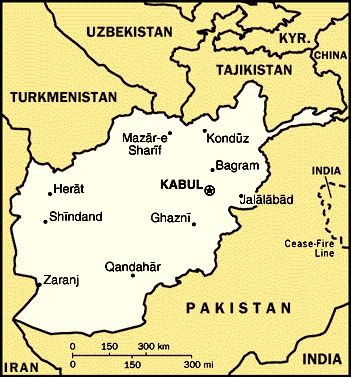
AFGHANISTAN

India’s Controversial Afghanistan Dams

Indian-built dams in Afghanistan are causing problems for Kabul’s relations with downstream Iran and Pakistan

Aug 20 — “India is expected to begin work on the $236 million Shahtoot Dam project on the Kabul River in Afghanistan in the coming weeks. Scheduled to be completed in three years, the dam has evoked concern in the lower riparian country, Pakistan. In addition to reducing water flow into Pakistan, the project could erode already fraying relations between Afghanistan and Pakistan.” READ MORE: https://thediplomat.com/2018/08/indias-controversial-afghanistan-dams/

The Only Escape from Afghanistan’s Cycle of Violence Is to Leave

US writer and journalist says it’s time to bring the US troops back home

Aug 21 — “Afghanistan has experienced an especially deadly level of violence in recent weeks, as a suicide bomber killed forty-eight people in an attack in Kabul, and Taliban insurgents killed thirty-nine soldiers and police in attacks on a military base and a police checkpoint in the northern part of the country. On Monday, August 13, Taliban captured or killed another 106 soldiers in an attack on another Afghan military base.” READ MORE: https://nationalinterest.org/blog/only-escape-afghanistans-cycle-violence-leave-29417

He’s Despised, He’s Reviled, But Erik Prince Has A Point About Afghanistan

Last year, Prince proposed a plan to the US administration to create a “viceroy” in Afghanistan and to transfer most support activities to long-serving contractors, including the advising of Afghan forces and the conduct of air operations

Aug 22 — “Erik Prince is back, publicizing his plan for the Afghan war that is both heretical and worth considering. For those unfamiliar with the name, Prince founded the security company, Blackwater, which provided private security details in Iraq. He claimed never to have lost the client, but the company was accused of atrocities, particularly a 2007 incident in Baghdad where 20 people were killed. To say he is controversial would be an understatement.” READ MORE: https://www.forbes.com/sites/markcancian/2018/08/22/hes-despised-hes-reviled-but-erik-prince-has-a-point-about-afghanistan/#37e3812656b4

One Year On, Little to Show for Trump’s Afghanistan Strategy

The Pentagon says the United States is winning the Afghan war, but after 17 years, there’s still no end in sight

Aug 23 — “One year after President Donald Trump announced a new strategy for winning the war in Afghanistan, the United States appears to be no closer to stabilizing the country and quelling the Taliban insurgency, according to analysts and a report issued by U.S. Defense Department.” READ MORE: https://foreignpolicy.com/2018/08/23/one-year-on-little-to-show-for-trumps-afghanistan-strategy/

WORLD

Turkish lira casts pall over Caucasus and Central Asia

The fall of the Turkish lira against the US dollar may have a negative impact on Central Asia and Caucasus countries which have extensive trade and economic relations with Turkey, with the economy of Turkmenistan facing the most serious consequences

Aug 22 — “The Turkish lira last week ended one of the most turbulent weeks in its history, settling uneasily at six to the dollar. Turkey’s borrowing spree and President Recep Tayyip Erdoğan’s insistence on low interest rates hastened the lira’s fall. But more trouble could be around the corner as a spat rumbles on between Erdoğan and his equally capricious American counterpart, Donald Trump. Such are the trade, political and person-to-person contacts between Turkey, Central Asia and the Caucasus that many fear the rot could spread.” READ MORE: https://timesca.com/index.php/news/20158-turkish-lira-casts-pall-over-caucasus-and-central-asia

India’s Soft Power at Play in Central Asia

Tension between Indian medical students and locals has brewed in Kyrgyzstan more than in neighboring countries, despite high-level diplomatic efforts to extend India’s soft power in the region

Aug 23 — “Analysis of India’s Connect Central Asia Policy — first unveiled in Bishkek in 2012 — has largely centered on opportunities from expansion of trade, cooperation on infrastructure projects, and joint military training. While ties with Central Asia’s economies and energy sectors are certainly important for India, which fears losing access to the region as China and Russia dig in deeper, efforts in cultural exchange and education are also crucial for understanding India’s ambitions in the region.” READ MORE: https://thediplomat.com/2018/08/indias-soft-power-at-play-in-central-asia/

Kazakhstan uses ‘green’ technologies for effective management of water resources

ALMATY, Kazakhstan (TCA) — An opening ceremony of the pilot project “Efficient management of water infrastructure: reconstruction of the drainage system, use of water saving technologies and improvement of drinking water quality in Almaty region” was held on August 24 in Yenbekshikazakh district. This event was organized within the framework of the joint EU/UNDP/UNECE project “Supporting Kazakhstan’s transition to a Green Economy Model”. The Akim (Governor) of Almaty region, Mr. Amandyk Batalov, the UN Resident Coordinator and UNDP Resident Representative in Kazakhstan, Mr. Norimasa Shimomura, and the Head of the Cooperation Section of the EU Delegation Mr. Johannes Stenbaek Madsen participated in the event.

Continue reading

Five Central Asian leaders hold Aral Sea summit in Turkmenistan

ASHGABAT (TCA) — Presidents of five former Soviet republics in Central Asia met in Turkmenistan on August 24 to discuss the ways to save the Aral Sea, which for decades has been facing severe environmental issues.

Turkmenistan President Gurbanguly Berdymukhammedov hosted Presidents Nursultan Nazarbayev of Kazakhstan, Sooronbai Jeenbekov of Kyrgyzstan, Emomali Rahmon of Tajikistan, and Shavkat Mirziyoyev of Uzbekistan in the Avaza tourist zone near the city of Turkmenbashi on the Caspian coast.

The Kazakh presidential press service cited Nazarbayev as telling the summit that the talks “will give an additional boost to the process of regional cooperation in using water resources.”

The five countries are founding members of the International Fund for Saving the Aral Sea (IFSAS) that was established in 1993.

During the August 24 summit, the presidents chaired sessions of the Interstate Commission for the IFSAS Development, the Interstate Coordination Commission for Water Resources, and the IFSAS’ directorate, RFE/RL reported.

In January last year, just weeks after he was inaugurated as Uzbekistan’s new president, Shavkat Mirziyoyev announced that his country would spend $2.6 billion over five years to develop the area around the Aral Sea.

Once the world’s fourth largest landlocked natural water reservoir, the Aral Sea has lost 90 percent of its size since the 1960s — in part because the two major rivers feeding the sea, the Amu Darya and Syr Darya, were diverted for Soviet irrigation projects.

The shrinking of the Aral Sea is considered one of the planet’s worst environmental disasters, and has led to significant environmental challenges in the region shared by Uzbekistan’s autonomous Karakalpakstan region and Kazakhstan.