• KGS/USD = 0.01143 0%
  • KZT/USD = 0.00213 0%
  • TJS/USD = 0.10593 0.47%
  • UZS/USD = 0.00008 0%
  • TMT/USD = 0.28571 0%
  • KGS/USD = 0.01143 0%
  • KZT/USD = 0.00213 0%
  • TJS/USD = 0.10593 0.47%
  • UZS/USD = 0.00008 0%
  • TMT/USD = 0.28571 0%
  • KGS/USD = 0.01143 0%
  • KZT/USD = 0.00213 0%
  • TJS/USD = 0.10593 0.47%
  • UZS/USD = 0.00008 0%
  • TMT/USD = 0.28571 0%
  • KGS/USD = 0.01143 0%
  • KZT/USD = 0.00213 0%
  • TJS/USD = 0.10593 0.47%
  • UZS/USD = 0.00008 0%
  • TMT/USD = 0.28571 0%
  • KGS/USD = 0.01143 0%
  • KZT/USD = 0.00213 0%
  • TJS/USD = 0.10593 0.47%
  • UZS/USD = 0.00008 0%
  • TMT/USD = 0.28571 0%
  • KGS/USD = 0.01143 0%
  • KZT/USD = 0.00213 0%
  • TJS/USD = 0.10593 0.47%
  • UZS/USD = 0.00008 0%
  • TMT/USD = 0.28571 0%
  • KGS/USD = 0.01143 0%
  • KZT/USD = 0.00213 0%
  • TJS/USD = 0.10593 0.47%
  • UZS/USD = 0.00008 0%
  • TMT/USD = 0.28571 0%
  • KGS/USD = 0.01143 0%
  • KZT/USD = 0.00213 0%
  • TJS/USD = 0.10593 0.47%
  • UZS/USD = 0.00008 0%
  • TMT/USD = 0.28571 0%

Harsh Turkish condemnation of Xinjiang cracks Muslim wall of silence

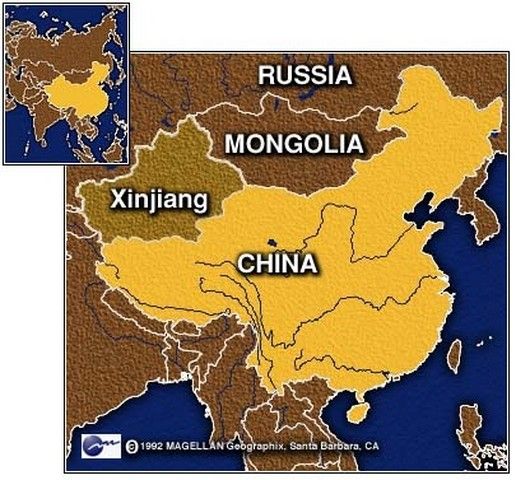
BISHKEK (TCA) — Turkey has called on Beijing to respect the rights of Uyghurs, a Turkic ethnic minority living in China’s northwestern Xinjiang Uyghur Autonomous Region, and to close the so-called re-education camps where up to a million Uyghurs are reportedly held. “We invite the Chinese authorities to respect the fundamental human rights of Uighur Turks and to close the internment camps. We call on the international community and the Secretary General of the United Nations to take effective measures in order to bring to an end this human tragedy in Xinjiang,” spokesman for the Turkish Foreign Ministry Hami Aksoy said in a statement published on the ministry’s website on February 9. We are republishing the following article on the issue, written by James M. Dorsey*:

In perhaps the most significant condemnation to date of China’s brutal crackdown on Turkic Muslims in its north-western province of Xinjiang, Turkey’s foreign ministry demanded this weekend that Chinese authorities respect human rights of the Uighurs and close what it termed “concentration camps” in which up to one million people are believed to be imprisoned.

Calling the crackdown an “embarrassment to humanity,” Turkish Foreign Ministry spokesman Hami Aksoy said the death of detained Uighur poet and musician Abdurehim Heyit had prompted the ministry to issue its statement.

Known as the Rooster of Xinjiang, Mr. Heyit symbolized the Uighurs’ cultural links to the Turkic world, according to Adrian Zenz, a European School of Culture and Theology researcher who has done pioneering work on the crackdown.

Turkish media asserted that Mr. Heyit, who was serving an eight-year prison sentence, had been tortured to death.

Mr. Aksoy said Turkey was calling on other countries and United Nations Secretary-General Antonio Guterres to take steps to end the “humanitarian tragedy” in Xinjiang.

The Chinese embassy in Ankara rejected the statement as a “violation of the facts,” insisting that China was fighting separatism, extremism and terrorism, not seeking to “eliminate” the Uighurs’ ethnic, religious or cultural identity.

Mr. Aksoy’s statement contrasted starkly with President Recep Tayyip Erdogan’s declaration six months earlier that China was Turkey’s economic partner of the future.
At the time, Turkey had just secured a US$3.6 billion loan for its energy and telecommunications sector from the Industrial and Commercial Bank of China (ICBC).

The Turkish statement constitutes the first major crack in the Muslim wall of silence that has enabled the Chinese crackdown, the most frontal assault on Islam in recent memory. The statement’s significance goes beyond developments in Xinjiang.

Like with Muslim condemnation of US President Donald J. Trump’s decision last year to recognize Jerusalem as the capital of Israel, Turkey appears to want to be seen as a spokesman of the Muslim world in its one-upmanship with Saudi Arabia and to a lesser degree Iran.

While neither the [Saudi] kingdom or Iran are likely to follow Turkey’s example any time soon, the statement raises the stakes and puts other contenders for leadership on the defensive.

The bulk of the Muslim world has remained conspicuously silent with only Malaysian leaders willing to speak out and set an example by last year rejecting Chinese demands that a group of Uighur asylum seekers be extradited to China. Malaysia instead allowed the group to go to Turkey.

The Turkish statement came days after four Islamist members of the Kuwaiti parliament organized the Arab world’s first public protest against the crackdown.

By contrast, Pakistani officials backed off initial criticism and protests in countries like Bangladesh and India have been at best sporadic.

Like the Turkish statement, a disagreement between major Indonesian religious leaders and the government on how to respond to the crackdown raises questions about sustainability of the wall of silence.

Rejecting a call on the government to condemn the crackdown by the Indonesian Ulema Council, the country’s top clerical body, Indonesian vice-president Jusuf Kalla insisted that the government would not interfere in the internal affairs of others.

The council was one of the first, if not the first, major Muslim religious body to speak out on the issues of the Uighurs. Its non-active chairman and spiritual leader of Nahdlaltul Ulama, the world’s largest Muslim organization, Ma’ruf Amin, is running as President Joko Widodo’s vice-presidential candiate in elections in April.

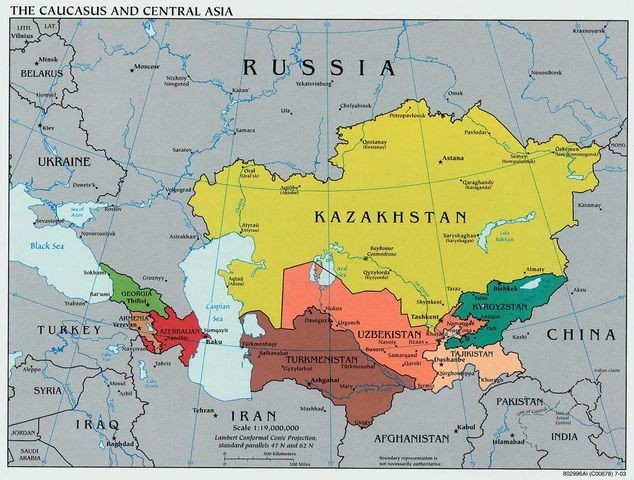
The Turkish statement could have its most immediate impact in Central Asia, which like Turkey has close ethnic and cultural ties to Xinjiang, and is struggling to balance relations with China with the need to be seen to be standing up for the rights of its citizens and ethnic kin.

In Kazakhstan, Turkey’s newly found assertiveness towards China could make it more difficult for the government to return to China Sayragul Sautbay, a Chinese national of ethnic Kazakh descent and a former re-education camp employee who fled illegally to Kazakhstan to join her husband and child.

Ms. Sautbay, who stood trial in Kazakhstan last year for illegal entry, is the only camp instructor to have worked in a reeducation camp in Xinjiang teaching inmates Mandarin and Communist Party propaganda and spoken publicly about it.

She has twice been refused asylum in Kazakhstan and is appealing the decision. China is believed to be demanding that she be handed back to the Xinjiang authorities.

Similarly, Turkey’s statement could impact the fate of Qalymbek Shahman, a Chinese businessman of Kazakh descent, who is being held at the airport in the Uzbek capital of Tashkent after being denied entry into Kazakhstan.

“I was born in Emin county in China’s Xinjiang Uyghur Autonomous Region to a farming family. I wanted to go to Kazakhstan, because China’s human rights record was making life intolerable. I would have my ID checked every 50 to 100 meters when I was in Xinjiang, This made me extremely anxious, and I couldn’t stand it anymore,” Mr. Shahman said in a video clip sent to Radio Free Asia from Tashkent airport.

A guide for foreign businessmen, Mr. Shahman said he was put out of business by the continued checks that raised questions in the minds of his clients and persuaded local businessmen not to work with him.

Said Mr. Zenz, the Xinjiang scholar, commenting on the significance of the Turkish statement: “A major outcry among the Muslim world was a key missing piece in the global Xinjiang row. In my view, it seems that China’s actions in Xinjiang are finally crossing a red line among the world’s Muslim communities, at least in Turkey, but quite possibly elsewhere.”

* Dr. James M. Dorsey is a senior fellow at the S. Rajaratnam School of International Studies, co-director of the University of Würzburg’s Institute for Fan Culture, and co-host of the New Books in Middle Eastern Studies podcast. James is the author of The Turbulent World of Middle East Soccer blog, a book with the same title and a co-authored volume, Comparative Political Transitions between Southeast Asia and the Middle East and North Africa as well as Shifting Sands, Essays on Sports and Politics in the Middle East and North Africa and recently published China and the Middle East: Venturing into the Maelstrom

Uzbekistan, EU start negotiations on enhanced partnership and cooperation agreement

TASHKENT (TCA) — The first round of negotiations on the Enhanced Partnership and Cooperation Agreement between Uzbekistan and the European Union was held in Tashkent last week. Through an Enhanced Partnership and Cooperation Agreement (EPCA), the European Union would be able to better support the ongoing ambitious reforms in Uzbekistan, in particular the recent steps towards democratisation and market economy, as well as the new dynamism in regional cooperation and people-to-people exchanges, the Delegation of the European Union to Uzbekistan said.

Continue reading

Kyrgyzstan: Government proposes to corporatize the state railways enterprise

BISHKEK (TCA) — The Kyrgyz Government proposed to corporatize the Kyrgyz Temir Jolu State Enterprise (Kyrgyz Railways). The issue was discussed on February 5 at a meeting of the Parliamentary Committee on Transport, Communications, Architecture and Construction.

“At the initial stage, we propose to create a joint venture with a potential investor in freight forwarding. We believe that this will allow us to attract additional financial resources for the development of the railway industry. It is also planned to introduce a mechanism of state and private participation in financing the railway transport modernization,” said Kyrgyz Temir Jolu General Director Kanatbek Abdykerimov, who was appointed to head the company three months ago. Former CEO Almazbek Nogoibaev was dismissed after being accused of corruption by MPs.

Some deputies are skeptical about the idea of the enterprise’s transformation into a joint stock company. The Kyrgyz Temir Jolu had already been renamed into the national company, but it has not brought any results. In is necessary to develop the railway network and connect the north and south of the country by the railways, the MPs said.

Timber, metal building materials from Russia and other cargoes that pass along the Bishkek—Osh highway have put this motor road in poor condition, MPs said. It is necessary to transport such cargoes through railways only, the MPs believe. They asked the Transport Ministry to make every effort to remedy the situation.

The Kyrgyz Temir Jolu is now negotiating with banks on buying of new passenger and freight cars this year. The shortage of freight cars hinders the development of the country’s coal industry and creates difficulties for entrepreneurs, the MPs added.

The purchase of freight cars in the near future would allow increasing the exports of goods from the southern regions of the country.

Following the discussion, the parliamentary committee members suggested the Government to reduce by 50% the company’s net profit payment to the national budget and to allocate the released funds for modernization of the track infrastructure.

Background

The Kyrgyz Temir Jolu was established in 2005 as a successor to the Kyrgyz Railways, which, in turn, inherited the functions of the Frunze branch of the Alma-Ata Railways in 1992.

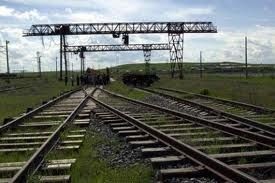
The length of Kyrgyzstan’s railways was 470 kilometers in 2006, and it is 426 kilometers now. The track network is fragmented, and the rolling stock including coaches, locomotives and freight wagons, is outdated. Rail transport accounts for only 3% of the cargo turnover in the country.

4,812 people are now working in the state-owned enterprise.

Rolling stock

Over the 27 years of independence, Kyrgyzstan has bought only six locomotives. The rest have been exploited for 40 years, despite the expired usage period, Kyrgyz Temir Jolu General Director Abdykerimov said.

More than 52.5% of freight cars and 51.6% of coaches are inoperative. From 2020, 94 coaches will be sent for scrap.

To restore the freight car fleet and fully meet the needs of business entities until 2022, it is necessary to purchase 200 freight cars annually for more than 571 million soms.

Last year, 15 coaches and four freight cars were repaired. The overhaul of wagons is being done in Uzbekistan, while the Kyrgyz Temir Jolu can carry out routine maintenance only.

With the money borrowed from the Russian-Kyrgyz Development Fund, the enterprise bought 150 freight wagons that were sent to stations in the south of the country.

The Kyrgyz Temir Jolu also plans to buy two shunting diesel locomotives.

Growth of freight and passenger traffic

In 2018, the Kyrgyz Temir Jolu transported 7.4 million tons of cargo, 4% more compared to 2017, Abdykerimov said.

The growth in cargo transportation was largely due to the country’s accession to the Eurasian Economic Union. From 2016 to 2018, the volume of goods transported by the railway increased by 23.4%.

The increase was achieved due to the growth in exports of goods including coal (60%), oil products (tenfold increase), construction materials (fourfold), and cement (threefold).

The company’s southern branch doubled the transportation in 2018 because Uzbekistan provided a 30% discount on the transportation of goods from Kyrgyzstan.

The passenger traffic has increased by 10 thousand people over the past year. About 300 thousand passengers travel by railways of Kyrgyzstan annually. In 2018, there were 324.4 thousand, 10.4% more than in 2017.

291.6 thousand passengers used the local train routes and 33.1 thousand were interstate passengers.

On the company’s sale to Russia

“We are not negotiating the sale of the enterprise,” Abdykerimov said answering journalists’ questions about selling the company to Russia.

At a press conference in Bishkek on February 7, Security Council Secretary Damir Sagynbayev did not comment on rumors that Kyrgyz Temir Jolu and other strategic facilities would be transferred to Russia.

To assess the proposal for the company’s reorganization, it is necessary to conduct a comprehensive economic analysis of the relevant decisions, he added. Regarding the sale of Kyrgyzgaz (Kyrgyz Gas) to the Russian side, it is a good example. Local citizens saw that household gas comes to their houses without fail and at a low price, he said.

Rumors on the sale of the state-owned Kyrgyz Temir Jolu to Russia began to circulate after the recent meeting of the Kyrgyz Temir Jolu General Director with the head of the Russian Railways Oleg Belozerov in Moscow.

They discussed the development of a preliminary feasibility study of projects for Kyrgyzstan’s railway network development, the issue of purchase of Russian coaches and reducing the fare for passengers in the Russian-Kyrgyz train connections, and on the transfer to the ownership of Kyrgyz Railways of the locomotives of the Russian Railways which are now leased by the Kyrgyz Temir Jolu. There was no issue of selling the company on the agenda, the company spokesman Erkin Kaimov told Azattyk Radio.

Railways development concept

Kyrgyz Temir Jolu General Director Kanatbek Abdykerimov presented a draft Concept of Kyrgyzstan’s railway transport development for 2019-2025 to Prime Minister Mukhammedkaly Abylgaziyev.

Within the Concept, it is planned to build a new model of enterprise management including corporatization and public-private partnership mechanisms, Abdykerimov said.

Attraction of highly qualified personnel is among the important tasks of the Concept.

“It is unacceptable that such a strategic facility as the Kyrgyz Temir Jolu national company be in such a state as it is now. It is necessary to take decisive measures to radically change the situation in the railway transport and to make the company profitable, modernized and developing,” stressed PM Abylgaziyev.

He ordered to accelerate the implementation of measures for the development of railway transport related to the Kyrgyz Temir Jolu corporatization.