BISHKEK (TCA) — The Publisher’s note: Throughout the 19th and 20th centuries, Central Asia was the scene of intense geopolitical struggle and the Great Game between the British and Russian Empires, and later between the Soviet Union and the West, over Afghanistan and neighboring territories. Into the 21st century, Central Asia has become the area of a renewed geopolitical interest, dubbed the New Great Game, largely based on the region’s hydrocarbon and mineral wealth. On top of that, the region now is perhaps the most important node in the implementation of China’s One Belt, One Road initiative through which Beijing aims to get direct access to Western markets. Every week thousands of news appears in the world’s printed and online media and many of them may escape the attention of busy readers. At The Times of Central Asia, we strongly believe that more information can better contribute to peaceful development and better knowledge of this unique region. So we are presenting this Weekly Digest which compiles what other media have reported on Central Asia over the past week.
KAZAKHSTAN
Easy As ABC? Not In Kazakhstan
The Kazakh government cites modernization as a reason why a shift to Latin is necessary, but the wider implications of the shift point to an effort to distance Kazakhstan from its larger, domineering neighbour — Russia
Jan 1 — “Montrealers and out-of-province students alike may marvel at the complex linguistic politics of Quebec – but the daily difficulties of “Bonjour-Hi” are insignificant to many Kazakhs, who will have to learn an entirely new alphabet in the coming years. Announced in 2017, Kazakhstan plans to switch from a Cyrillic alphabet (think: Russian) to a Latin script, like English.” READ MORE: https://www.mironline.ca/easy-as-abc-not-in-kazakhstan/
Kazakh Officer Fired Over Gangland Jargon In New Year’s Message
In a video that went viral on social networks, a Kazakh police officer used criminal jargon in reference to the police and hinted at corrupt ties within law enforcement
Jan 3 — “A Kazakh police officer who proudly called the Central Asian nation’s police forces a “gang” in a New Year’s greeting has been sacked. A Kazakh Interior Ministry spokesman, Almas Sadubaev, said on Facebook on January 3 that the officer, identified as A.R. Tastaibekov, had been fired and his supervisors officially reprimanded.” READ MORE: https://www.rferl.org/a/kazakh-officer-takes-heat-over-gangland-jargon-in-new-year-s-message/29688379.html
Kazakhstan sets record for beef exports
Kazakhstan’s agricultural sector is aimed at increasing yields and exports of agricultural products
Jan 3 — “Beef exports have reached 18,800 tonnes in 2018, 25 percent more than the 15,000 tonnes planned by the Ministry of Agriculture. Almost half was exported by the Turkestan region. By comparison, beef exports in 2017 totalled 5,500 tonnes. Large-scale implementation of a long-term programme to develop animal husbandry began in the second half of 2018. The programme is based on small and medium-sized farms, and Sybaga, a special preferential credit product, has been initiated for its execution.” READ MORE: https://astanatimes.com/2019/01/kazakhstan-sets-record-for-beef-exports/
Kazakhstan: Latest Nazarbayev biopic leads a path to sleep
A new movie has become an addition to the Kazakh presidential cult of personality
Jan 4 — ““What began as the dream of one man has now become the victory of a whole nation.” These are among the last words spoken by the narrator in Leader’s Path: Astana, the latest in a series of fawning, state-funded biopics about Kazakhstan’s President Nursultan Nazarbayev. Even by the overtly propagandistic standards of the Leader’s Way series, which debuted in 2011, film number six is clumsy.” READ MORE: https://eurasianet.org/kazakhstan-latest-nazarbayev-biopic-leads-a-path-to-sleep
KYRGYZSTAN
Why Did Kyrgyz Stage a Protest Outside the Chinese Embassy?
In Bishkek, Kyrgyz demonstrated against mass detainment of Muslims in China’s Xinjiang
Dec 29 — “On December 20, a crowd of about 150 people gathered near the Chinese Embassy in Bishkek for a protest. Security didn’t allow the protesters to approach the embassy, but the crowd — made up of mostly young men — huddled in the snow to listen to the demands of Kyrk Choro leaders.” READ MORE: https://thediplomat.com/2018/12/why-did-kyrgyz-stage-a-protest-outside-the-chinese-embassy/
Kyrgyzstan in 2018: Growing GDP and debt, decreasing investments
In 2018, the economy of Kyrgyzstan had positive trends in the main sectors, with the national currency, the som, remaining stable throughout the year and the average annual inflation not exceeding 2%
Dec 30 — “Favorable conditions for business have been created in Kyrgyzstan, President Sooronbai Jeenbekov said at a news conference on the 2018 results. New enterprises are exempt from inspections of fiscal authorities for three years. The registration procedure for entrepreneurs has been simplified, and it does not exceed three days now.” READ MORE: https://timesca.com/index.php/news/26-opinion-head/20665-kyrgyzstan-in-2018-growing-gdp-and-debt-decreasing-investments
Continuing support for reconstruction in earthquake-affected villages of Chong-Alai
In rural Kyrgyzstan, houses are made out of mud and straw and can hardly withstand strong earthquakes
Dec 31 — “ACTED has completed a six-month project to provide material assistance to vulnerable families affected by the 2017 earthquake in Chong-Alai District. The project built upon the success of a previous intervention to address the needs of people affected by the earthquake. When an earthquake hit northern Tajikistan in 2017, reverberations ranging from 4 to 6 on the Richter scale shocked several villages of Chong-Alai in southwestern Kyrgyzstan.” READ MORE: https://reliefweb.int/report/kyrgyzstan/continuing-support-reconstruction-earthquake-affected-villages-chong-alai
TAJIKISTAN
OUTLOOK 2019 Tajikistan
In Tajikistan, 2018 was marked by the long-awaited launch of the giant Rogun hydropower plant, designed to make the country energy independent
Dec 29 — “There is a possibility that for Emomali Rahmon, officially Tajikistan’s “Founder of Peace and National Unity, Leader of the Nation”, 2019 will be his last full year in office as president. The 66-year-old, who has led Central Asia’s poorest nation since 1992, surviving a five-year civil war along the way, appears to have been grooming his son Rustam Emomali, to succeed him, and 2020 brings the next Tajik presidential election.” READ MORE: http://www.intellinews.com/outlook-2019-tajikistan-154033/
Saudis, Chinese Eyeing Tajikistan’s Biggest Bank: Reports
The Tajik government pumped about $285 million into the troubled Tojiksodirotbank two years ago to keep it afloat, but the bank badly needs large foreign investments to survive
Jan 2 — “Tajikistan’s largest bank, the Finance Ministry-owned Tojiksodirotbank, was in talks with several potential buyers, including a Saudi group that made a preliminary offer for a 51 percent stake earlier this year, Tajik media reported last month, according to bNe Intellinews. In addition to the offer from Saudi Investment Group, the reports said the bank was considering selling a 70 percent stake to a Chinese company, Junan.” READ MORE: https://www.tol.org/client/article/28144-tajikistan-banking-finance-tojiksodirotbank-economy.html
Agroforestry helps Tajikistan farmers overcome resource pressures
Tajikistan is a dry and mountainous country where agroforestry is helping to stabilize soils degraded by decades of monoculture farming during the Soviet era
Jan 2 — “Ayubhudja Yahyehudjaev stands between rows of fruit trees in the hills above town, glad and proud that this agroforestry test garden of nearly 0.6 hectares (1.5 acres) created by the local farmers is providing promising yields. “Here we grow plums, apples, cherries, merry [or bird cherries, Cerasus avium], apricots, pears. We also use [spaces between the tree] rows to plant cabbages, tomatoes, pumpkins, red peppers,” the agricultural cooperative chairman says.” READ MORE: https://news.mongabay.com/2019/01/agroforestry-helps-tajikistan-farmers-overcome-resource-pressures/
TURKMENISTAN
“BizBärde”: reforms Turkmen-style
The restrictions are the first thing that a user of the Turkmen Internet is confronted with
Jan 1 — “24 hours passed after “Chronicles of Turkmenistan” had launched its own fan page in the new Turkmen social network before the entire network was shut down for “maintenance works”. After that the webpage of “Chronicles of Turkmenistan” disappeared and our web address was included in “the black list”. We have had an opportunity to experience firsthand how the Turkmen Internet censorship works.” READ MORE: https://en.hronikatm.com/2019/01/bizbarde-reforms-turkmen-style/
Russian telecom major MTS packing up its kit, exiting Turkmenistan
Russia’s MTS began dismantling its base stations in Turkmenistan and sending its equipment back to Russia in December
Jan 2 — “Leading Russian telecoms company Mobile TeleSystems (MTS) is dismantling its equipment and pulling out of Turkmenistan after the government cut off its services yet again in a dispute over profit sharing. One of Russia’s big three mobile phone operators, MTS has been working in Turkmenistan since 2005. However, the government has on three occasions closed the operation down, each time to demand a larger share of the profits.” READ MORE: http://www.intellinews.com/russian-telecom-major-mts-packing-up-its-kit-exiting-turkmenistan-154142/
Turkmenistan: In space, nobody can hear you shill
In its ‘Akhal-Teke: A Turkmenistan Bulletin’, Eurasianet reviews the main news and events in the Central Asian country for the previous week
Jan 2 — “The government of Turkmenistan’s need for validation has now extended to outer space. As the state news agency reported on the final day of 2018, Turkmen-born Russian cosmonaut Oleg Kononeko has taken the national flag and a copy of a book about the Silk Road written by President Gurbanguly Berdymukhamedov up to the International Space Station.” READ MORE: https://eurasianet.org/turkmenistan-in-space-nobody-can-hear-you-shill
UZBEKISTAN
Off the beaten track: Uzbekistan
Uzbekistan’s ancient Silk Road cities, undiscovered bazaars, hypnotic mosaics and artisan ceramics make the country worth a trip
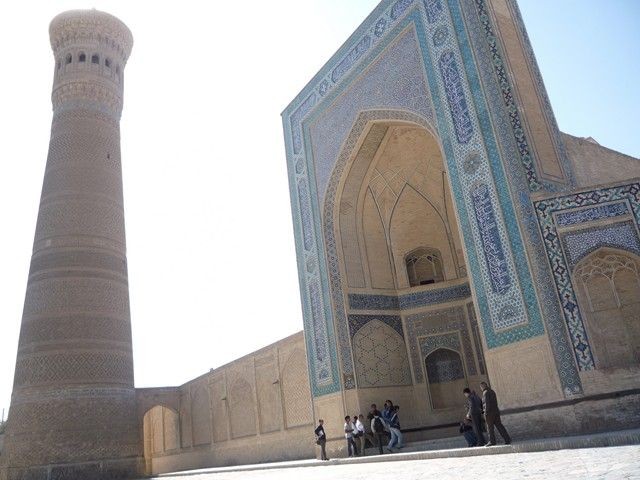
Jan 2 — “Uzbekistan is home to selection of ancient Silk Road cities largely unfrequented by westerners. But this hidden gem of Central Asia is not going to stay a secret for long. According to the State Committee for Tourism, there’s been a whopping 40 per cent increase in tourism since last year. With infrastructure investment gushing in from China, now may be the perfect time for intrepid travellers to hit the road while the path is still unbeaten.” READ MORE: https://life.spectator.co.uk/2019/01/off-the-beaten-track-uzbekistan/
(Why) we want to start a city guide for Tashkent Uzbekistan!
A few interesting facts about the capital of Uzbekistan that would make travelers wish to go there
Jan 2 — “In 2019 we plan to expand to less-known but at least as interesting capitals in Eastern Europe, Central Asia and The Middle-East. Why this move? In many of “our” cities, an overload of tourists is becoming a problem for locals. We personally think the best solution to the “overtourism” problem would be moving tourism from cities that “everybody” is going to, to little visited cities that can actually use more tourism. Read more about our vision on overtourism here and our crowdfunding campaign to combat overtourism.” READ MORE: https://www.spottedbylocals.com/blog/tashkent/
Uzbekistan Abolishes Exit Visa System
Uzbekistan has discarded one more vestige of the Soviet past in a move away from its authoritarian system
Jan 3 — “One more vestige of the Soviet past has been discarded in Uzbekistan: the infamous exit visa. An August 2017 decree signed by President Shavkat Mirziyoyev ordered the introduction of biometric passports and the abolition of the exit visas as of January 1, 2019. Previously, in order for an Uzbek citizen to travel beyond the Commonwealth of Independent States (CIS) — that is, the territory of the former Soviet Union — an individual needed to obtain an exit authorization sticker from the Interior Ministry’s visa and registration department (OVIR).” READ MORE: https://thediplomat.com/2019/01/uzbekistan-abolishes-exit-visa-system/
Turkey to explore metallic minerals in Uzbekistan
Uzbekistan continues attracting foreign investors into its mining sector
Jan 3 — “Turkey is about to sign a final agreement to explore metallic mineral fields in Uzbekistan, which will mark Turkey’s second country after Sudan to conduct foreign operations in this sector, Turkey’s Deputy Energy and Natural Resources Minister Mithat Cansiz announced on Thursday.” READ MORE: https://www.aa.com.tr/en/economy/turkey-to-explore-metallic-minerals-in-uzbekistan/1355272
AFGHANISTAN
Time to Get Out of Afghanistan
The United States is spending beyond its means on a mission that might only be helping its strategic rivals, a senior fellow at the Center for a New American Security believes
Jan 1 — “The decision by President Trump to withdraw 7,000 of the roughly 14,000 American troops left in Afghanistan, possibly by summer, hasraised new concerns about his impulsive behavior, especially given his nearly simultaneous decision to pull out all American forces from Syria against the advice of Defense Secretary Jim Mattis. But the downsizing of the Afghan mission was probably inevitable. Indeed, it may soon be time for the United States to get out of the country altogether.” READ MORE: https://www.nytimes.com/2019/01/01/opinion/afghanistan-war-american-troops-withdraw.html
Will the never-ending war in Afghanistan ever end?
Afghanistan is truly a never-ending war. A major reason is that we have never been clear about the overall mission of our engagement, the president of the Chicago Council on Global Affairs and a former U.S. ambassador to NATO says
Jan 3 — “As 2018 wound down, President Donald Trump reminded his Twitter followers of one of his most solemn promises. “I campaigned against the NEVER ENDING WARS, remember!” The tweet sought to address criticism of his sudden decision to pull U.S. troops out of Syria. But the real target may well have been the longest of America’s “never-ending” wars — the conflict in Afghanistan.” READ MORE: https://www.chicagotribune.com/news/opinion/commentary/ct-perspec-afghanistan-war-never-ending-trump-ivo-daalder-0104-20190103-story.html
‘Right To Be There’? Afghan Officials, Observers Dispute Trump’s View Of Soviet Occupation
Trump said Moscow’s involvement in the nine-year Soviet-Afghan war led to the bankruptcy and dissolution of the Soviet Union and called on other countries in the region to join the fight against extremists in Afghanistan
Jan 3 — “U.S. President Donald Trump’s claim that the Soviet Union was in the “right” when it occupied Afghanistan for nearly a decade did not go down well with many Afghans, and his take on Moscow’s justification for invading the country was also questioned. Trump made the controversial comments during a January 2 cabinet meeting in which he argued against the long-term presence of U.S. troops in Afghanistan.” READ MORE: https://www.rferl.org/a/they-were-right-to-be-there-afghan-officials-observers-dispute-trump-s-view-of-soviet-occupation/29690046.html
Lapis Lazuli Corridor: Reconnecting Central Asia and Afghanistan
Synchronizing with each other at some point, the China Pakistan Economic Corridor (CPEC), Lapis Lazuli Corridor and the Ashgabat Agreement all serve to open land-locked Central Asia and Afghanistan to the rest of the region
Jan 3 — “Connecting Afghanistan to Europe via the Black Sea route, the Lapis Lazuli Corridor just became operational a few weeks ago. Inaugurated by the Afghan President Ghani in Herat, the first track is ready and shipments have already been sent to Europe using the Turkmenbashi port on the shores of the Caspian Sea.” READ MORE: http://english.alarabiya.net/en/views/news/middle-east/2019/01/03/Lapis-Lazuli-Corridor-Reconnecting-Central-Asia-and-Afghanistan.html
WORLD
Integration without liberation in Central Asia
Analyst at the Carnegie Endowment for International Peace on 2018 results and the year ahead
Dec 29 — “Twenty-seven years after the collapse of the Soviet Union, the prospects for Central Asian integration finally look brighter. This development comes amid political and economic liberalisation in Uzbekistan, hardening authoritarianism elsewhere in the region, widespread economic distress and China’s growing influence — the five major trends that marked Central Asia in 2018.” READ MORE: http://www.eastasiaforum.org/2018/12/29/integration-without-liberation-in-central-asia/
To Russia or Turkey? A Central Asian Migrant Worker’s Big Choice
As the appeal of the Russian labor market has decreased, Turkey has become a more attractive option for Central Asian labor migrants
Jan 2 — “Russia has long been the biggest recipient of Central Asian labor migrants, but this trend may be changing. Russian dominance as a migrant worker destination has been the product of several factors such as visa-free regimes with Central Asian countries, comparatively high wages, and the region’s familiarity with the Russian language and culture. However, in the last few years, there has been an evident decrease in the number of migrants traveling to Russia for two main reasons.” READ MORE: https://thediplomat.com/2019/01/to-russia-or-turkey-a-central-asian-migrant-workers-big-choice/



 TCA
TCA