• KGS/USD = 0.01144 0%
  • KZT/USD = 0.00213 0%
  • TJS/USD = 0.10456 0.19%
  • UZS/USD = 0.00008 0%
  • TMT/USD = 0.28490 0%
  • KGS/USD = 0.01144 0%
  • KZT/USD = 0.00213 0%
  • TJS/USD = 0.10456 0.19%
  • UZS/USD = 0.00008 0%
  • TMT/USD = 0.28490 0%
  • KGS/USD = 0.01144 0%
  • KZT/USD = 0.00213 0%
  • TJS/USD = 0.10456 0.19%
  • UZS/USD = 0.00008 0%
  • TMT/USD = 0.28490 0%
  • KGS/USD = 0.01144 0%
  • KZT/USD = 0.00213 0%
  • TJS/USD = 0.10456 0.19%
  • UZS/USD = 0.00008 0%
  • TMT/USD = 0.28490 0%
  • KGS/USD = 0.01144 0%
  • KZT/USD = 0.00213 0%
  • TJS/USD = 0.10456 0.19%
  • UZS/USD = 0.00008 0%
  • TMT/USD = 0.28490 0%
  • KGS/USD = 0.01144 0%
  • KZT/USD = 0.00213 0%
  • TJS/USD = 0.10456 0.19%
  • UZS/USD = 0.00008 0%
  • TMT/USD = 0.28490 0%
  • KGS/USD = 0.01144 0%
  • KZT/USD = 0.00213 0%
  • TJS/USD = 0.10456 0.19%
  • UZS/USD = 0.00008 0%
  • TMT/USD = 0.28490 0%
  • KGS/USD = 0.01144 0%
  • KZT/USD = 0.00213 0%
  • TJS/USD = 0.10456 0.19%
  • UZS/USD = 0.00008 0%
  • TMT/USD = 0.28490 0%

Kyrgyzstan: Judicial reform aims to restore public confidence

BISHKEK (TCA) — In order to seize the property of foreign citizens and investors in Kyrgyzstan, some judges make illegal decisions in the interests of organized criminal groups. Such phenomena decrease the investment attractiveness of the state, block foreign investment and cause great damage to the country’s economy, Kyrgyz President Sooronbai Jeenbekov said at a meeting of the Judicial Reform Council on December 27.

The Council discussed the implementation of the President’s decree on measures taken as part of the ongoing judicial reform and new bills in this area.

From January 1, 2019, five new codes and two laws will come into force in Kyrgyzstan. The new codes provide for the introduction of new institutions such as the Unified Register, the investigating judge, the digitization of the investigative offices and courtrooms, and probation. Successful judicial and legal reform will directly depend on the work of these institutions.

“People’s confidence in the judiciary will be restored,” the President said. He explained the peculiarities of the current reform. Earlier, the judicial and legal reforms were carried out separately while they will be implemented together from 2019. It is impossible to consider them separately, Jeenbekov added.

Old-fashioned thinking

On the President’s initiative, an expert working group was established to monitor the activities of the judicial and legal reform in May.

“According to the WG, this work is still hampered by our old-fashioned thinking. Law enforcement and supervisory authorities do not want to abandon the old repressive laws, and some government agencies lack the political will to carry out the reform,” the President said.

The Government and Parliament are late in adopting certain very relevant laws. The reform’s preparatory stage has been completed, and the time has come to work in the new legal space from January 1, 2019, he added.

The reform should change the population’s attitude to the authorities, including the judiciary.

“Our people waited for this reform for a long time. The revolutions of 2005 and 2010 occurred due to the lack of such reforms and because of corruption and injustice,” Jeenbekov said.

Minor crimes

When the codes come into force, the courts and investigators will have much more work. Not very serious crimes have been removed from the Criminal Code and transferred to the Code of Misdemeanors. They are not considered crimes now. The new code does not provide for the imprisonment of those who have committed minor crimes, the President explained.

“For instance, the Сode imposes fines and correctional works for those who had stolen a bicycle, TV set, or a chicken. Sentences for certain types of crimes will be reduced. The society should educate criminals, but not just punish them,” he said.

There is no practice of applying the new laws in the country. Therefore, law enforcement, control and judicial authorities, together with the monitoring working group, should analyze the practice of applying new laws, travel to all regions of the country and hold meetings.

Unfair decisions

People often complaint about the work of judicial and law enforcement bodies.

“Our citizens are mostly dissatisfied with court decisions and the behavior of judges. Unfair decisions of judges excite the public and cause dissatisfaction of citizens,” Jeenbekov said.

Citizens also began to complain more about the Supreme Court judges, saying they unreasonably cancel the decisions of local courts and return them for reconsideration. The unreasonable delay in trials cause great criticism, said the head of state citing several cases.

The President told about the civil case of a person who appealed to him. The simplest, ordinary civil case has been delayed since 2013 until now. The Supreme Court considered it four times and did not make decision, sending it for reconsideration. In addition, the Chui Regional Court made the wrong decision in this case, making mistakes. Then the court spent time correcting them. As a result, the case has lasted five years.

Focus on human rights

The current judicial and legal reform has positive differences from the previous attempts, said Gulmira Mamatkerimova, a Judicial and Legal Reform Council member.
The reform is focused on human rights and the rule of law. If it is implemented in the coming years, there will be no more powerlessness and judicial and police arbitrariness that occur now.

In 2019, a working group will be established to draft new amendments to the codes. Reform task groups should be created in the relevant state bodies to train specialists in the regions.

Business involvement

The International Business Council based in Bishkek developed a package of proposals to improve the judicial system and ensure the rule of law in Kyrgyzstan and submitted it to the Government. Several proposals were included in the draft Action Plan for the implementation of the Judicial System Development Program of the Kyrgyz Republic for 2018-2022.

IBC Executive Director Askar Sydykov voiced the opinion of the business community on this issue at the meeting of President Jeenbekov with the business community on September 17. In June 2018, the Government opened a special account for financial proceeds from the fight against corruption.

“Now the account is being actively replenished but we would not want this to turn into extortion of money from the business,” Sydykov said.

There is a rule according to which a certain percentage of funds recovered in favor of the State as a result of judicial acts in criminal cases initiated by law enforcement and supervisory authorities should be transferred in favor of such a body. To get such money, security bodies initiated and submitted to the judicial bodies cases on business issues without sufficient legal grounds.

The IBC proposed to consider alternative methods of encouraging the work of law enforcement agencies without collecting money from private business entities.

Transparency of courts

To ensure the independence of judges, the business association proposed to limit the intervention of state bodies in the activities of courts.

Fearing to be dismissed or prosecuted, judges have currently to follow the instructions of higher courts and other state bodies. When considering tax disputes that may lead to a substantial replenishment of the state budget, judges, fearing of dissatisfaction of state bodies, make decisions in favor of the State, often in the absence of legal grounds.

According to surveys, about 90 percent of tax disputes in courts were decided in favor of the state, which undermines public confidence.

To increase the transparency of the courts, IBC proposed to oblige judges to post electronic version of all materials on economic cases decided or under consideration, including evidence, copies of contracts and other documents not containing secrets protected by the law.

The IBC also proposed to conduct audio recording of court sessions along with paper protocols using audio recording media (voice recorder, mobile phone, etc.). The introduction of audio recordings does not entail significant financial costs and is an effective way of recording court proceedings to avoid errors and inaccuracies in written protocols. Audio recordings should be attached to written protocols and posted on the websites of the courts.

At the Judicial Reform Council meeting, President Jeenbekov stressed the need to complete the work on equipping all courtrooms with audio and video equipment for recording protocols as soon as possible.

Minister names top 10 tourist destinations in Kazakhstan

ASTANA (TCA) — Minister of Culture and Sports Arystanbek Mukhamediuly spoke about the ongoing work on the development of the tourism industry in Kazakhstan at a press conference on December 28, the official website of the Prime Minister of Kazakhstan reported.

According to the minister, in 2019 the State Program for the Development of Tourism will be adopted, which will allow Kazakhstan to fully realize the potential for attracting foreign tourists.

Three main objectives of the program are to increase the flow of mass international tourists; develop the market and create new jobs to increase the number of people employed in the tourism industry; and increase the investment attractiveness of the tourism industry and the share of tourism in the total GDP of Kazakhstan to 8% by 2025.

The core of the state program is the Map of Kazakhstan’s touristization. Top 10 destinations of the national level and 50 regional ones have been determined. The successful implementation of the Top 10 project will allow to increase the tourist flow fourfold by 2025, and to create up to 64 thousand new jobs.

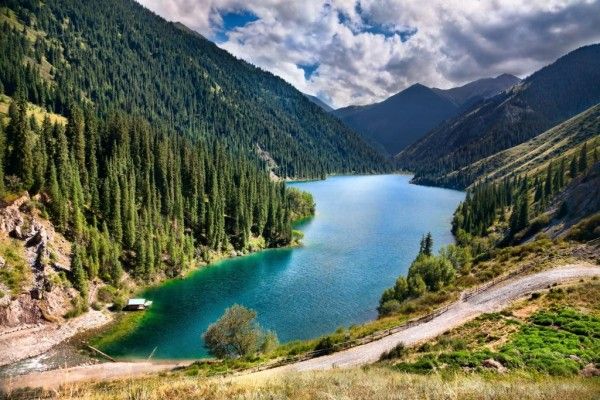
Top 10 destinations of the national level are:

1) Astana — with a potential of 1,000,000 tourists per year;

2) Burabai resort zone — with a potential of 2,000,000 tourists per year (current flow is 750,000);

3) Lake Alakol — with a potential of 2,500,000 tourists per year (the current flow is 772,000 tourists per year);

4) Mountain cluster of the Almaty region — with a potential of 2,500,000 tourists per year (current flow — 500,000);

5) Bayanaul resort area — with a potential of 450,000 tourists per year (the current flow is 200,000);

6) Imantau-Shalkar resort area — with a potential of 400,000 tourists per year (current flow is 130,000);

7) Lake Balkhash — with a potential of 400,000 tourists per year (the current flow is 130,000);

8) Turkestan city — with a potential of 1,500,000 tourists per year (current flow is 500,000);

9) Baikonur space complex;

10) Mangystau — with a potential of 750,000 tourists per year.

The phantom white knights that would save Tajikistan’s banking sector

DUSHANBE (TCA) — Tajikistan badly needs foreign investments that would help save the country’s large and ailing bank, but finding such investors has proven to be a difficult task. We are republishing this article on the issue, originally published by Eurasianet:

It seemed like a golden opportunity: A flamboyant, rich sheikh with links to the royal family of Saudi Arabia arrived in Tajikistan in May with a handshake offer to buy a controlling stake in a severely ailing local bank.

On the face of it, there was no obvious reason for an investor to buy into Tojiksodirotbank, which is weighed down by crushing liabilities. But the Saudis have been proudly boasting of their efforts to squeeze Iran out of Tajikistan in recent years. So this proposed acquisition appeared like a piece of that broader strategic vision.

Closer scrutiny revealed some odd inconsistencies, however. And this was not the only time Tojiksodirotbank’s claims to have found a white knight proved unconvincing. The accounts of tens of thousands of customers hang in the balance. Unless Tojiksodirotbank is able to find a savior soon, countless families face the prospect of their savings definitively going up in smoke.

So who exactly is Al Waleed Al Dahash Al Tuwaijri? The name is indeed vaguely similar to that of some members of the sprawling Saudi ruling family. But the man himself has little online presence other than his social media accounts. Multiple people in the Saudi business community queried by Eurasianet professed never to have heard of him.

And what of his company, Saudi Investment Group? The name appears designed to mislead for its similarity to the Saudi Investment Company, a Geneva-headquartered entity that represents the vast Saudi Binladin Group conglomerate. Company details included in the Panama Papers leaks reveal the existence of something called Saudi Investment Group Ltd., although there does not seem to be any link.

A source in the Saudi Embassy in Tajikistan told Eurasianet their mission was not involved in al Waleed’s visit. The same source also professed to have no knowledge of Saudi Investment Group.

The man going by the name of Al Waleed Al Dahash Al Tuwaijri does exist though, as his voluminous social media activity attests. A flurry of photos posted to Instagram in May show him being given the red-carpet treatment by Tajik financial officials. Elsewhere on Instagram, al Waleed regularly intersperses photos of himself traveling the world among those of senior members of the Saudi royal family. He is never shown in images actually alongside figures of the Saudi elite, however, which raises suspicions that the ties may not be real.

A Eurasianet correspondent reached out to al Waleed on several of his social media accounts and received no response for days. Finally, somebody responded.

“This Dr.Ali From The PR Time Of H.e.sheikh AlWaleed,” read the message, delivered through Twitter on December 14. “I Have To Check With H.E Office And Com Back to You”.

After that, silence.

Tojiksodirotbank failed to respond to phone and written queries for clarifications about al Waleed and about whether the businessman was intending to follow through on his purported promise to buy a 51 percent stake in the Dushanbe-based lender.

The tale of the mysterious Al Waleed might have been but a curious blip on the radar screen if executives at Tojiksodirotbank had not claimed subsequently to have attracted Chinese interest from something called the Junan Railroad Corporation. A source at the lender told Asia-Plus news website that this company might invest up to $200 million.

The name of the Junan Railroad Corporation is similar to Shandong-based China Railway Jinan Group, or CR Jinan, but these two entities are not known to be related. Junan Railroad Corporation, in fact, offers even fewer online breadcrumbs than Saudi Investment Group.

In the same industry newsletter interview in which a Tojiksodirotbank executive claimed his bank was object of courtship from the Junan Railroad Corporation, he said management was also engaged in investment talks with other banks, like Russia’s VTB and Sberbank, Kazakhstan’s Kazkommertsbank and companies from Hong Kong, Slovakia and Malaysia.

Getting to the bottom of how real all these negotiations actually are is difficult given how uncommunicative Tojiksodirotbank’s press office has been.

What is clear is that time is running out for the bank and its long-suffering customers.

At the start of 2017, the government pumped in 2.25 billion somoni (around $285 million at the time) worth of liquidity to keep the bank afloat. In exchange, the Finance Ministry acquired an 85 percent stake in Tojiksodirotbank. A condition for this bailout was that the bank should lure foreign investment to fund an incremental five-year buyback operation.

According to the National Bank, Tojiksodirotbank has to date paid back $12.6 million or so, thereby reacquiring a 5 percent stake – as required by the terms of the bailout. The schedule envisions a 20 percent buyback in 2019, which implies a transaction worth more than $50 million.

The money that Tojiksodirotbank has scrabbled together so far has come in part from selling off assets, such as regional branches, computer equipment, payment terminals and ATMs.

Only a foreign investor is likely to have the heft to enable the continuation of the buyback exercise. But the only foreign investors to have offered that vital role may not actually exist.

Failure to receive an imminent injection of cash may lead to the government pulling Tojiksodirotbank’s license in the coming days and weeks. Once that happens, the fate of savings accounts on its books will likely be grim.

That is despite assurances from President Emomali Rahmon in December 2016 that the government would do everything possible to make sure savers would get their money.

“Tell account-holders not to worry,” Rahmon advised banks.

They may need to start worrying now.

Uzbekistan diplomats tasked to attract foreign investment, promote export, lure tourists

TASHKENT (TCA) — On December 27, First Deputy Minister of Foreign Affairs of Uzbekistan Ilhom Nematov held a video-conference at the Ministry of Foreign Affairs, which summed up the activities of the Ministry and diplomatic missions abroad in fulfilling the guidelines of President Shavkat Mirziyoyev on attracting foreign investments into the economy of the country, promoting and expanding the export volumes, and increasing the tourist flow to Uzbekistan. The priority activity areas for 2019 were also identified, the Jahon information agency reported.

The meeting was attended by heads of diplomatic missions of Uzbekistan abroad via online video facilities.

It was emphasized that the head of state pays great attention to the effectiveness of foreign economic work of Uzbek diplomatic missions abroad.

In order to increase exports of Uzbek products, the missions abroad have done the following:

– analyzing the markets of host countries, the existing tariff and non-tariff barriers;
– close cooperation with quarantine authorities had been established to remove quarantine restrictions of foreign countries on the import of fruits and vegetables from Uzbekistan;
– a comprehensive assistance is rendered to Uzbek exporters in promoting their goods in foreign markets, their participation in exhibitions and fairs abroad, the signing of export contracts;
– a widespread awareness activity has been undertaken to promote domestic goods abroad under the brand “Made in Uzbekistan”;
– targeted activity to promote export from the provinces of Uzbekistan.

In 2018, the Foreign Ministry and diplomatic missions carried out consistent work aimed at increasing the number of inbound tourists.

In 11 months of this year, 4.9 million foreigners visited Uzbekistan, which is 94% more than in the same period of 2017 (2.5 million).

In 2018 in order to increase the tourists flow, a visa-free procedure was introduced for citizens of 9 countries, including France, Indonesia, Israel, Japan, Republic of Korea, Malaysia, Singapore, Tajikistan and Turkey. Today, the total number of visa free countries to visit Uzbekistan is 18.

Over the last year, representations overseas held over 250 presentations of the tourism potential of Uzbekistan. Diplomatic missions participated in more than 50 tourist exhibitions held abroad. Publications in foreign print and electronic media, as well as a demonstration of 1.2 thousand materials about the tourist potential of Uzbekistan on foreign TV-channels were arranged.

At the video-conference, the heads of diplomatic missions were tasked to implement the instructions of the head of state to intensify the foreign economic activity of the Foreign Ministry and missions abroad in 2019.