• KGS/USD = 0.01144 0%
  • KZT/USD = 0.00193 -0%
  • TJS/USD = 0.10851 0.28%
  • UZS/USD = 0.00008 0%
  • TMT/USD = 0.28571 0.28%
  • KGS/USD = 0.01144 0%
  • KZT/USD = 0.00193 -0%
  • TJS/USD = 0.10851 0.28%
  • UZS/USD = 0.00008 0%
  • TMT/USD = 0.28571 0.28%
  • KGS/USD = 0.01144 0%
  • KZT/USD = 0.00193 -0%
  • TJS/USD = 0.10851 0.28%
  • UZS/USD = 0.00008 0%
  • TMT/USD = 0.28571 0.28%
  • KGS/USD = 0.01144 0%
  • KZT/USD = 0.00193 -0%
  • TJS/USD = 0.10851 0.28%
  • UZS/USD = 0.00008 0%
  • TMT/USD = 0.28571 0.28%
  • KGS/USD = 0.01144 0%
  • KZT/USD = 0.00193 -0%
  • TJS/USD = 0.10851 0.28%
  • UZS/USD = 0.00008 0%
  • TMT/USD = 0.28571 0.28%
  • KGS/USD = 0.01144 0%
  • KZT/USD = 0.00193 -0%
  • TJS/USD = 0.10851 0.28%
  • UZS/USD = 0.00008 0%
  • TMT/USD = 0.28571 0.28%
  • KGS/USD = 0.01144 0%
  • KZT/USD = 0.00193 -0%
  • TJS/USD = 0.10851 0.28%
  • UZS/USD = 0.00008 0%
  • TMT/USD = 0.28571 0.28%
  • KGS/USD = 0.01144 0%
  • KZT/USD = 0.00193 -0%
  • TJS/USD = 0.10851 0.28%
  • UZS/USD = 0.00008 0%
  • TMT/USD = 0.28571 0.28%
19 December 2025

Mirziyoyev Begins Japan Visit With Central Asia Leaders’ Reception in Tokyo

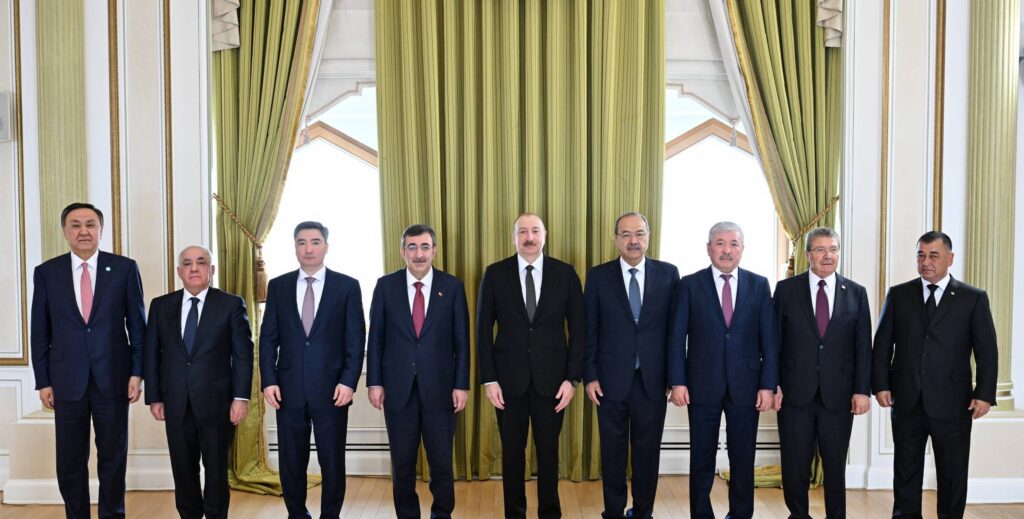
President Shavkat Mirziyoyev of Uzbekistan began his visit to Japan on Thursday by attending an official reception hosted by Japan’s Prime Minister Sanae Takaichi at the Akasaka Palace in Tokyo. The event marked the opening of a series of engagements bringing together the leaders of Central Asia and Japan, with a focus on strengthening regional cooperation.

The reception brought together the presidents of all five Central Asian states. Alongside Mirziyoyev were President Kassym-Jomart Tokayev of Kazakhstan, President Sadyr Japarov of Kyrgyzstan, President Emomali Rahmon of Tajikistan, and President Serdar Berdimuhamedov of Turkmenistan. The gathering underscored Japan’s effort to engage the region as a group, rather than solely through bilateral ties.

Mirziyoyev’s presence at the Akasaka Palace, a venue reserved for state-level diplomacy, highlighted Uzbekistan’s growing role in Central Asia and its expanding foreign policy outreach beyond the immediate region. In recent years, Tashkent has sought to deepen ties with Asian partners, including Japan, in areas ranging from infrastructure and energy to education and technology.

According to the visit programme, Mirziyoyev will hold high-level talks with Japanese government officials on December 20. Those discussions are expected to focus on trade and investment, technological cooperation, and sustainable development, including green energy and climate resilience. Japan has been a long-standing development partner for Uzbekistan, providing loans, grants, and technical assistance through agencies such as the Japan International Cooperation Agency.

The visit will feature the inaugural leaders-level “Central Asia + Japan” Dialogue Summit, bringing all six sides together in a multilateral format. The summit is intended to build on earlier dialogue mechanisms and explore joint approaches to economic connectivity, regional stability, and long-term growth.

For Mirziyoyev, the Tokyo meetings offer an opportunity to reinforce Uzbekistan’s reform agenda on an international stage and to position the country as an active participant in shaping Central Asia’s collective engagement with major partners such as Japan.

UK Adds Uzbekistan-Based Companies and Tashkent Businessman to Russia Sanctions List

Britain has expanded its Russia sanctions regime to include four companies based in Uzbekistan and one Tashkent-born businessman, according to official documents published on 18 December 2025. The measures form part of a wider update that added 24 new individuals and entities to the UK’s consolidated sanctions list under the Russia (Sanctions) (EU Exit) Regulations 2019.

The update was set out in a Financial Sanctions Notice issued by HM Treasury and an accompanying Foreign Office policy paper, “List of Russia sanctions targets, 18 December 2025.” The documents confirm that all newly designated names are now subject to an asset freeze and associated financial restrictions in the UK.

The four Uzbekistan-linked companies named in the notice are Fargona Kimyo Zavodi LLC, also listed under the English alias Fergana Chemical Plant; Gelion Business Trade MCHJ, registered in Tashkent; Raw Materials Cellulose MCHJ, based in the Jizzakh region; and LLC JV Chemistry International, located in the Navoi region. Each company is subject to an asset freeze, requiring that any funds or economic resources they own or control in the UK be frozen and that UK persons do not make funds or resources available to them without a licence.

The Treasury notice also applies restrictions on trust services. Under UK sanctions law, this restricts UK persons from providing trust services to or for the benefit of designated persons unless an exemption applies or a licence is granted. Compliance guidance is published by the Office of Financial Sanctions Implementation and linked through the British government’s Sanctions List.

The documents do not provide detailed descriptions of the companies’ commercial activities, instead using standard statutory wording. In each case, the Secretary of State notes that there are reasonable grounds to suspect the entity “is or has been involved in destabilising Ukraine or undermining or threatening the territorial integrity, sovereignty or independence of Ukraine,” including by making available goods or technologies that could contribute to those outcomes.

The sanctions update also includes Rustam Muminov, born in Tashkent in 1953. The Treasury notice lists his nationalities as Uzbek, Israeli, and Russian. Muminov is subject to an asset freeze and trust services restrictions, with the reason stated being that the British authorities have reasonable grounds to suspect he has been involved in destabilizing Ukraine by providing financial services or by making available funds, economic resources, goods, or technology.

The Foreign Office policy paper groups the new designations with others added on the same date, which include entities linked to Russia’s energy sector, financial circumvention, and the military-industrial complex. The government says the measures are intended to limit access to financial services and resources that could support Russia’s actions against Ukraine.

EDB Forecasts Strong Economic Growth in 2026 for Kazakhstan, Kyrgyzstan, Tajikistan, and Uzbekistan

On December 18, the Eurasian Development Bank (EDB) published its Macroeconomic Outlook for 2026-2028, reviewing recent economic developments and offering projections for its seven member states: Armenia, Belarus, Kazakhstan, Kyrgyzstan, Russia, Tajikistan, and Uzbekistan.

According to the report, aggregate GDP growth across the EDB region is forecast to reach 2.3% in 2026. Kyrgyzstan (9.3%), Tajikistan (8.1%), Uzbekistan (6.8%), and Kazakhstan (5.5%) are expected to remain the region’s fastest-growing economies.

After two years of rapid expansion, the region’s GDP growth is set to moderate to 1.9% in 2025, down from 4.5% in 2024, mainly due to a slowdown in Russia’s economy.

Although lower oil prices are expected to reduce export revenues for energy exporters such as Kazakhstan and Russia, the impact on overall growth will be limited. Meanwhile, net oil importers, including Armenia, Belarus, Kyrgyzstan, Tajikistan, and Uzbekistan, will benefit from improved terms of trade and reduced inflationary pressure. High global gold prices will support foreign exchange earnings for key regional exporters, including Kyrgyzstan, Tajikistan, and Uzbekistan.

The report also notes a gradual decline in the U.S. dollar’s share in central bank reserves across the region, though its role in international settlements remains stable.

Kazakhstan

Kazakhstan’s economy is projected to grow by 5.5% in 2026, supported by the implementation of the National Infrastructure Plan and the state program “Order for Investment,” which are expected to cushion the effects of lower oil prices. Growth in non-commodity exports will also play a stabilizing role. Inflation is forecast to decline to 9.7% by the end of 2026, after peaking early in the year due to a value-added tax (VAT) increase. The average tenge exchange rate is expected to be KZT 535 per U.S. dollar, underpinned by a high base interest rate and rising export revenues.

Kyrgyzstan

Kyrgyzstan is forecast to lead the region in GDP growth at 9.3% in 2026, driven by higher investment in transport, energy, water infrastructure, and housing construction. Inflation is expected to ease to 8.3%, although further declines will be constrained by higher tariffs and excise taxes. The average exchange rate is projected at KGS 89.2 per U.S. dollar, supported by robust remittance inflows and high global gold prices, gold being the country’s main export commodity.

Tajikistan

Tajikistan is projected to maintain high GDP growth of 8.1% in 2026, fueled by capacity expansion in the energy and manufacturing sectors, along with rising prices for gold and non-ferrous metals. Inflation is expected to reach 4.5% by year-end. The somoni is expected to remain stable, with an average exchange rate of TJS 9.8 per U.S. dollar, supported by growth in exports and remittances.

Uzbekistan

Uzbekistan’s economy is forecast to expand by 6.8% in 2026, sustained by strong investment activity and favorable gold prices. Inflation is projected to decline to 6.7%, helped by tight monetary policy and a stable exchange rate. The average soum exchange rate is expected to be UZS 12,800 per U.S. dollar, supported by high remittances and increased metal exports.

Kazakhstan Proposes Doubling Insurance Payments for Traffic Accident Victims

Kazakhstan is considering major changes to its compulsory motor insurance legislation, with members of parliament proposing to double compensation payments for victims of traffic accidents.

Presenting the bill in the Mazhilis, MP Nartay Sarsengaliyev said the initiative aims to restore social justice and strengthen financial protection for citizens. He said current compensation levels no longer reflect the country’s actual economic conditions.

At present, in the event of a fatal traffic accident, the dependents of an adult victim receive approximately $13,600. Under the proposed amendments, this amount would rise to around $29,100. The bill also outlines a similar twofold increase in compensation for children and individuals who become disabled as a result of accidents.

A key provision of the legislation addresses how compensation is distributed in the event of a fatality. Currently, payouts are made only to dependents or those under the care of the deceased. If no such individuals exist, no compensation is paid. Lawmakers propose amending this policy to allow funds to be transferred to the spouse or parents of the deceased in such cases. According to Sarsengaliyev, denying compensation despite regular insurance premium payments during a person’s lifetime is unjust.

The proposed legislation would also require insurance companies to proactively contact the families of deceased victims and hire independent experts to assess damages. While the initiative has broad parliamentary support, lawmakers acknowledged the financial risks involved.

Deputy Tatyana Savelyeva noted that while the government supports the proposal in principle, the Cabinet has warned that doubling insurance payouts could result in a more than threefold increase in the cost of insurance policies.

Maria Khadzhieva, Deputy Chair of the Agency for Regulation and Development of the Financial Market, highlighted the financial pressure already facing insurers. Over the past five years, auto insurance payouts have increased 3.7 times to reach $135.1 million, while premiums collected have grown by just 47% to $67 million. She argued that further increases in payouts would be unsustainable without a corresponding rise in insurance premiums.

As previously reported by the Times of Central Asia, Kazakhstan set a national record for new car sales this year, further straining the country’s auto insurance system.

From the Central Asian Steppe to Manhattan: A Turkmen Bard in New York

A halal Chinese Muslim restaurant in New York City is an unlikely setting for a concert by a highly acclaimed bard of the Turkmen tradition. Yet on a Saturday afternoon in Manhattan’s Kips Bay neighborhood, before an audience of attentive listeners and curious onlookers peering through the window, the multi-award-winning Mohammad Geldi Geldi Nejad filled Beef Up Noodle with sustained melodic phrases and guttural embellishments. At times, his dexterous strumming of the dutar, a two-stringed long-necked lute, deliberately mimicked the rhythm of galloping horse hooves central to the Turkmen bardic style.

Mohammad was raised in the Turkmen community of Gonbad-e Kavus in northeastern Iran. At age ten, he became only the second musician ever to receive the honorary title Oghlan Bakhshi, meaning Child Bard. His musical education in Turkmen bardic traditions began in early childhood, before more formal training in Turkmenistan’s capital, Ashgabat.

Turkmen culture, shaped by a nomadic heritage, extends across Turkmenistan, Iran, Afghanistan, Uzbekistan, and Kazakhstan, with smaller populations in Turkey, Iraq, and the North Caucasus. It draws on nomadic traditions where performance serves as a primary vehicle of cultural expression. Central Asian music and culture, carried by diasporic communities from these regions, has found a growing audience in the United States. Turkmen traditions, however, given the minuscule size of the Turkmen population in the U.S., remain largely unfamiliar to most audiences.

Even so, Mohammad has brought his music to audiences beyond Turkmenistan and Iran, performing in parts of Europe and the U.S., including recent concerts at the Lowell Folk Festival in Massachusetts and at Roulette in Brooklyn. At the latter, he offered Western listeners rare access to a musical lineage sustained within a family across generations. Performing under his honorific alias Oghlan Bakhshi, he appeared alongside his father, the gyjak, or spike fiddle, master Abdolghaffar Geldinejad, and his wife and regular musical collaborator, Zyyada Jumayeva, a dutar player who represents the female bardic tradition of Turkmenistan. His album Journey Across the Steppes is the first international release of Turkmen folk music in 30 years. His work has also been documented in a book series, The Music of Central Asia.

At Beef Up Noodle, Mohammad’s performance, titled Songs of the Bakhshi: Turkmen Bardic Heritage, formed part of a broader curatorial landscape shaped by ethnomusicologist Mu Qian, whose work spans scholarship, publishing, and community-based music making. From Zayton to New York is the concert series he curates, exploring how music travels through histories of migration and exchange. Mohammad’s appearance opened a Central Asian trilogy within the series, to be followed by programs devoted to Kyrgyz and Kazakh musical traditions in early 2026. This trilogy represents one strand of Mu Qian’s wider mission, developed through the See & Sea Cultural Foundation, to support minority musicians and bring underrepresented musical cultures from across Asia into conversation with audiences beyond their places of origin.

Mu Qian with Mohammad Geldi Geldi Nejad; image: Paul Adams

British expat Margaret Murray, an audience member whose chance meeting with Mu Qian led her to attend several concerts in the series, remarked that Mohammad’s Saturday afternoon performance stood out for its diverse Western audience, although one Turkmen attendee made his presence known during Mu Qian’s introduction. Other shows curated by Mu Qian, she observed, are often attended primarily by New York audiences who share geographic or cultural roots with the performers.

In this interview, Mohammad discusses his Oghlan Bakhshi origin story, his deep attachment to Turkmen culture through his craft, and the path that led him to become an Ivy League doctoral student living and performing in the U.S.

TCA: You began playing the dutar at the age of six, growing up in a household where music was part of everyday life. What do you remember most about those early experiences of listening and learning?

Mohammad: I was born into a musical family. My mother sang Turkmen folk songs and lullabies at home, and my father is a master of the spike fiddle. We call it a gyjak. Our home was a place where master musicians from across Turkmenistan and Iran came to practice before concerts and folk festivals, so from an early age, I was surrounded by music.

I started accompanying my father wherever he went. He played at weddings, and I remember that when I was five years old, a master bard from Turkmenistan performed at a wedding for Iranian Turkmens, with my father accompanying him. The performance lasted very late into the night, and an elder, joking, said, “Kids your age are sleeping and having sweet dreams. It’s 3 a.m.! What are you doing here?” I think I was the youngest in the audience, and that moment opened my eyes. I was fascinated by what was going on.

Image: Mohammad Geldi Geldi Nejad

TCA: At what point did elders or master musicians begin to recognize your abilities as something unusual for your age?

Mohammad: By the time I was ten years old, I’d learned a large portion of the bardic repertoire, including solo dutar pieces and songs based on heroic and romantic epics. That was when the council of Turkmen music masters gave me the honorary title, Oghlan Bakhshi. I was the second person in the history of Turkmen music to receive this title, after the great Sahy Jepbarow.

TCA: How do Turkmen bards balance responsibility to tradition with individual creativity?

Mohammad: When you receive a blessing from the masters, you also receive responsibility. You need to transmit and teach this music to the next generation, but you also need to develop your own performance style. It shouldn’t be that when someone listens, they say it’s exactly the same.

I wrote about this in my article published in Asian Music, called Pata and Diploma. Pata means blessing. There is a unique concept in Turkmen music called disciple in absentia. This means becoming a disciple of a master who passed away long ago, not face-to-face, but through recordings and through the stories your master carries.

This was how I learned from the first Oghlan Bakhshi. When I received this blessing, my masters told me that I’m a disciple in absentia of that master, someone who brings that charisma alive through performance. In our bardic repertoire, each song often contains a section that serves as a master’s signature. This is how individuality exists within the lineage.

TCA: Your family founded a music school in Iran that bears the name Oghlan Bakhshi. Why was establishing that school important to you and your family?

Mohammad: As a family, we established the first private music school among Iranian Turkmen in 2005. After the Islamic Revolution, many families were reluctant to send their children to learn music. There was a feeling that music didn’t have any future. My father wanted to show that music plays an important role in understanding culture. Over time, the school blossomed. Today, I see many young musicians learning instruments and singing, and it’s fascinating to see how attitudes have changed.

TCA: What led you to continue your studies in Turkmenistan as a teenager?

Mohammad: When I was fifteen, I joined a world music festival in Prague, and I was selected as one of the best young singers. In Iran, we didn’t have an academic school for learning Turkmen music, so I went to Turkmenistan to study with masters there. I studied at the Turkmen State Music College and then continued my studies at the Turkmen National Conservatory in Ashgabat. In Turkmenistan, I had the chance to learn from many masters, and I’m always grateful for that opportunity. I received pata from one of the most respected dutar masters, Çary Suwçy.

TCA: What differences did you notice when you began living and studying in Turkmenistan?

Mohammad: There were small differences, like vocabulary. In Iran, we use Persian words, and in Turkmenistan, Russian words are more common. What interested me most was how bardic styles are divided into regional schools in Turkmenistan, while Iranian Turkmen musicians are more open to singing across styles. At the same time, each master still has their own individual style. For Iranian Turkmen children, music is one of the main ways to learn Turkmen culture today. They don’t have schools where they can learn the Turkmen language or history, so music plays a very important role. In Turkmenistan, there are conservatories, colleges, and masters working within a formal system, so the resources are very different. I also learned the differences between Iranian Turkmen performance styles and those practiced in Turkmenistan.

Nowadays, many bards from Turkmenistan come to Iran to perform, and Iranian Turkmen musicians go to Turkmenistan. So, there is an ongoing exchange.

After finishing the conservatory, I became interested in exploring the music of other Turkic-speaking peoples. I spent time in Turkey, where I worked closely with Turkish musicians who play the bağlama and performed with them in many concerts. This period was important for me in understanding musical connections across Turkic traditions.

During the pandemic, I spent more time listening and researching, and realized how little Turkmen music has been documented academically. My masters encouraged me to contribute through scholarship. I started learning English while I was still in Turkmenistan. In 2021, I entered Wesleyan University, completed my master’s degree, and then applied to Brown University, where I’m now doing my PhD in Musicology and Ethnomusicology.

Image: Paul Adams

TCA: What does it feel like, on a personal level, to bring a deeply place-rooted art form into the very different cultural environment of the U.S.?

Mohammad: That’s a great question. When I first came to the U.S., it wasn’t easy to openly discuss what’s important in Turkmen music. Even though I moved to Turkmenistan at age 16 and lived there for about ten years, and also spent time in Turkey, the U.S. was a completely different environment. I love the U.S. environment so much. It challenged me and made me think about what might seem obvious to someone within the culture, and how it could be different for someone who has never heard this music.

I must admit that, to this day, I really enjoy audiences in the U.S. and how curious they are about Turkmen music. During my performances, I received many questions that pushed me to think more deeply about the music and reflect on my ancestors’ creative musical life. In many ways, these questions helped me find answers through my academic work, questions I might not have encountered if I were performing, say, in Turkmenistan. I’ve also made many good friends here, for which I’m very grateful.

TCA: Western listeners hear your music without the cultural memories Central Asians bring to it. What do you hope audiences feel or understand when experiencing your interpretations of Turkmen epic and lyrical traditions?

Mohammad: When Western listeners hear this music, they may not share the cultural memories that Turkmens and other Central Asians bring to it, but they still have their own emotional landscapes. In my performances in the U.S., I’ve been amazed at how the audience feels the intimacy and intensity that live inside these epic songs, even if they don’t understand the language. The songs speak of love, loss, exile, and devotion, resonating with universal human experiences.

TCA: The Turkmen diaspora in the U.S. is small and dispersed. Have you had meaningful interactions with Turkmen or broader Central Asian audiences here?

Mohammad: Yes, seeing Central Asian people at my concerts has always been great. There’s a strong solidarity among Central Asian-rooted people in the U.S. I’ve participated in cultural events, and it’s always amazing to meet new people.

TCA: Looking ahead, what is your long-term academic and artistic vision?

Mohammad: I hope to be in an academic environment where I can combine research, teaching, and performance. I started teaching music at age nine to my peers, and since then, teaching has become my joy. Research is important to me because it helps me find answers to questions I find interesting. Reading literature on various musical traditions worldwide helps me connect Turkmen music with broader histories and traditions, and more importantly, learn about different musical cultures. For my music, I continue performing and creating new songs and pieces. Performance is a great source of inspiration and possibility, helping me imagine new ideas.

For me, teaching, performing, and researching are inseparable. Each one reshapes the others. This interconnectedness constantly renews my curiosity and creativity. It allows me to envision the future of Turkmen bardic art not just as a matter of preservation and transmission, but as an evolving form of expression.

Tajik Schoolboy Killed in Moscow Area Sparks Central Asian Outrage

The fatal stabbing of a 10-year-old Tajik boy at a school in the Moscow area has sparked widespread condemnation across Central Asia.

Russia’s Foreign Ministry extended “deep condolences” to Tajikistan following the killing. Ministry spokesperson Maria Zakharova said Moscow offered immediate assistance to the Tajik Embassy in Russia after the incident was reported by the press on December 16. She confirmed that the embassy sent a diplomatic note requesting an objective investigation. Official requests were subsequently forwarded to Russia’s Investigative Committee and the Interior Ministry to clarify the circumstances and support the Tajik side.

The attack occurred at Uspensky School, where a 15-year-old ninth-grade student, identified as Timofey Kulyamov, allegedly stabbed and killed the victim, Qobiljon Aliyev. Witnesses reported that the suspect asked the child about his nationality before launching the fatal attack. On the day of the incident, he was reportedly wearing a shirt bearing the phrase “No lives matter.”

Qobiljon’s family moved to Russia from the Hisor region of Tajikistan four years ago. His father passed away three years prior, and his mother has been working as a cleaner at the same school to support her three children.

Journalists, civil society leaders, and public figures in Tajikistan and Uzbekistan condemned the killing, linking it to rising hostility toward Central Asian migrants in Russia.

Tajik political analyst Muhammad Shamsuddinov took to social media to denounce what he described as systemic discrimination. “Who killed Qobiljon? The system,” he wrote. Shamsuddinov accused Russian public discourse and policies of fueling an environment of xenophobia, referencing remarks by State Duma members, law enforcement actions, and state-run media coverage. “Qobiljon was killed by Mironov’s constant statements. By Bastrykin’s speeches. By the State Duma’s draft laws. By Russian state television. By nationalist Telegram channels. By the constant and very public raids against migrants. By hours-long detentions at airports,” he wrote.

He also criticized the Russian Embassy in Tajikistan for its silence, noting that while it continued to post routine updates and commemorative messages, it had not acknowledged the boy’s death. “As a society, where is the sympathy? The condolences? Nothing,” he wrote.

Sherzodkhon Kudratkhuja, Chairman of the Supervisory Board of the Uzbekistan National Media Association and Rector of the University of Journalism and Mass Communications, also voiced his outrage. “No mother should ever go through this. None,” he said, after reportedly watching a video of the incident. He called the murder of a child based on national identity “impossible to describe in words.”

Kudratkhuja urged Russia to introduce formal education on national tolerance in its schools and criticized the normalization of ethnic slurs among adults. “Children learn from adults, and this is the mirror of today’s society,” he said. He emphasized the need to foster values of tolerance, adding that all people “descended from Adam and Eve and are equal in dignity.”