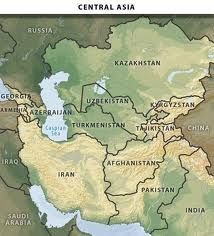
BISHKEK (TCA) — The Publisher’s note: Throughout the 19th and 20th centuries, Central Asia was the scene of intense geopolitical struggle and the Great Game between the British and Russian Empires, and later between the Soviet Union and the West, over Afghanistan and neighboring territories. Into the 21st century, Central Asia has become the area of a renewed geopolitical interest, dubbed the New Great Game, largely based on the region’s hydrocarbon and mineral wealth. On top of that, the region now is perhaps the most important node in the implementation of China’s One Belt, One Road initiative through which Beijing aims to get direct access to Western markets. Every week thousands of news appears in the world’s printed and online media and many of them may escape the attention of busy readers. At The Times of Central Asia, we strongly believe that more information can better contribute to peaceful development and better knowledge of this unique region. So we are presenting this Weekly Digest which compiles what other media have reported on Central Asia over the past week.
KAZAKHSTAN
Kazakhstan opens doors to new foreign investment
The President significantly strengthened the economic diplomacy credentials of the Ministry of Foreign Affairs by giving it oversight over the work on attracting foreign investment and promoting Kazakh exports abroad
Jan 8 — “The President of Kazakhstan Nursultan Nazarbayev has re-shuffled the cabinet, appointed a new foreign minister and given the ministry new powers and responsibilities for attracting foreign investment. On 26 December, Nazarbayev reorganised three ministries and appointed new ministers through a string of presidential decrees.” READ MORE: https://www.euractiv.com/section/central-europe/news/kazakhstan-opens-doors-to-new-foreign-investment/
Kazakhstan spends more than $5.3 billion to improve housing in last two years
Since December 2016, the Nurly Zher program has provided housing to 197,573 families in Kazakhstan and aims to improve housing availability for 1.5 million families in the next 15 years
Jan 9 — “Approximately two trillion tenge (US$5,332,054,000) was invested in housing through the Nurly Zher housing programme over the past two years, with 5.5 tenge (US$0.02) of private investment attracted for every 1 tenge (US$0.0027) of public funds, reports Primeminister.kz. Approximately 354.4 billion tenge (US$840,864,915) and 1.73 trillion tenge (US$4,612,226,710) of private funds were invested in housing in 2017 and 2018, respectively.” READ MORE: https://astanatimes.com/2019/01/kazakhstan-spends-more-than-5-3-billion-to-improve-housing-in-last-two-years/
Deadly Brawl in Kazakhstan Sparks Anti-Armenian Unrest
Inter-ethnic relations have always been an issue in many regions of Kazakhstan, which is home to different ethnic minorities
Jan 9 — “Ethnic tensions have flared up in Kazakhstan following a deadly New Year’s Eve brawl involving Armenians. According to reports, an alcohol-fueled fight broke out at the Ancient Rome restaurant in Kazakhstan’s central town of Karaganda. Officials say a 23 year-old Kazakh man was stabbed to death. Four others were also injured. Kazakhstani police announced the arrests of two ethnic Armenians and one Kazakh in connection with the incident. A third Armenian suspect, Narek Gururyan, is apparently still at large.” READ MORE: https://armenianweekly.com/2019/01/09/deadly-brawl-in-kazakhstan-sparks-anti-armenian-unrest/
Kusto Group’s Yerkin Tatishev Builds New Partnerships at Kazakhstan-Singapore Business Forum
Although the Kusto Group was founded in Kazakhstan in 2002, in 2013 the Group’s headquarters moved from Almaty to Singapore, which has now become Kusto’s adopted home
Jan 10 — “The chairman of Kusto Group, Yerkin Tatishev, is once again putting his well-defined business philosophy to use. Tatishev honed his vision on lessons learned back in the late 1990s when he and a group of like-minded friends began, in what seemed an impossible task, to successfully turn around stagnated state mining assets in the former Soviet Union.” READ MORE: https://www.equities.com/news/kusto-groups-yerkin-tatishev-builds-new-partnerships-at-kazakhstan-singapore-business-forum
KYRGYZSTAN
Kyrgyzstan Instagram star comes of age and flies the nest
The Internet’s vast potential for self-expression seems more relevant in Central Asia, and Kyrgyzstan, than ever before
Jan 7 — “By the time she settled down in a café in one of Almaty’s most popular malls, blue-haired Kyrgyz Internet sensation Eldana Satybaldieva was wincing in pain. Satybaldieva, better known by her Instagram moniker Eldana Foureyes, had just been crushed in a long, unsolicited embrace initiated by an excited teenage fan. The admirer was euphoric after securing one of the most sought-after-selfies in a city that Satybaldieva recently adopted as her home.” READ MORE: https://eurasianet.org/kyrgyzstan-instagram-star-comes-of-age-and-flies-the-nest
Kyrgyzstan: Fine for spitting raises hackles
$80 fine for spitting is a high amount to pay in a country where average monthly salaries are around $300
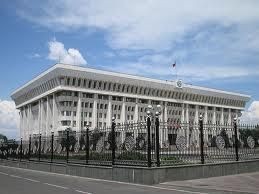
Jan 8 — “Spitting is the latest hot issue to divide opinions in Kyrgyzstan. Under rules that came into force on January 1, people caught spitting in the street could face fines of up to $80. Both the law and the size of the fine have given way to a surge of grumbling. One young man was so incensed by this provision that he filmed himself engaging in an act of illegality outside the gates of the White House in Bishkek, where parliamentarians and government officials work.” READ MORE: https://eurasianet.org/kyrgyzstan-fine-for-spitting-raises-hackles
Kyrgyzstan Women Fight to End Bride Kidnapping
Bride kidnapping was outlawed in 2013 in Kyrgyzstan where authorities recognized it could lead to marital rape, domestic violence, and psychological trauma, but the practice still remains commonplace in the country
Jan 9 — “Walking proudly down a catwalk, the lights and glamour seemed like a lifetime away from Elzat Kazakbaeva’s nightmare ordeal five years ago when she was grabbed off a Kyrgyzstan street by a group of men wanting to marry her to an uninvited suitor. Kazakbaeva is one of thousands of woman abducted and forced to marry each year in the former Soviet republic in Central Asia where bride kidnappings continue, particularly in rural areas.” READ MORE: https://www.voanews.com/a/kyrgyzstan-women-fight-to-end-bride-kidnapping/4736733.html
Kyrgyzstan debunks rumors around Chinese loans
The anti-China sentiments have intensified in Kyrgyzstan in recent months amid reports about the persecution of Kyrgyz and other Muslim minorities in China’s Xinjiang region
Jan 11 — “Kyrgyz land won’t be given to China because of debts, said Kubatbek Boronov, the first deputy prime minister of Kyrgyzstan, in response to the rising concern over the country’s debt issues. Boronov said at the Wednesday’s media conference in the Government House that recently some people were intentionally spreading rumors on social media that Kyrgyzstan will give away land to repay its debt to China.” READ MORE: http://www.globaltimes.cn/content/1135437.shtml
TAJIKISTAN
Kapitan’s Last Stand? Tajik Army Sticks With Russian Terms For Now
In recent years Tajikistan has renamed dozens of towns and villages, changing their Russian, Uzbek, or Arabic names to pure Tajik words
Jan 5 — “Tajikistan’s state language committee has recommended that the former Soviet country’s army stop using Russian military terms and replace them with pure Tajik-Persian words. The Defense Ministry, however, is in no rush to switch from what it describes as a widely-used “international” vocabulary to a national one.” READ MORE: https://www.rferl.org/a/tajik-army-sticks-with-russian-terms-for-now/29693185.html
‘Even by leaving us she gave us a lesson’: Fearless rights defender’s death shocks Tajikistan
In recent years, the prominent Tajik lawyer Vohidova suffered from regular harassment of Tajik authorities, verbal attacks from regime supporters and a curtailment of her professional activities
Jan 7 — “Fayzinisso Vohidova, a prominent Tajik lawyer who was renowned for her preparedness to defend political arrestees and constant criticism of Tajikistan’s authoritarian system, passed away on January 4. On Facebook, where open criticism of authorities in the Central Asian country is growing rarer and rarer, the outpouring of grief told its own story.” READ MORE: https://globalvoices.org/2019/01/07/even-by-leaving-us-she-gave-us-a-lesson-fearless-rights-defenders-death-shocks-tajikistan/
Tajikistan’s tiny Orthodox community celebrates Christmas
Tajikistan’s Russian community dwindled after the country gained independence following the Soviet Union’s 1991 collapse and the ensuing civil war
Jan 8 — “The Orthodox Christian community in Tajikistan is considered the smallest in Central Asia, with a parish of only around 500. Serving this dwindling community are six churches – in the capital, Dushanbe, in the largest city in the north, Khujand, in the towns of Bokhtar, Tursunzoda and Buston, and on the territory of Russia’s 201st military base outside Dushanbe. There is also a little chapel in Nurek.” READ MORE: https://eurasianet.org/tajikistans-tiny-orthodox-community-celebrates-christmas
TURKMENISTAN
Turkmenistan: Can’t stop the (sinking) feeling
In its ‘Akhal-Teke: A Turkmenistan Bulletin’, Eurasianet reviews the main news and events in the Central Asian country for the previous week
Jan 8 — “To open the new year, schools in Turkmenistan removed portraits of the president from their walls. Nothing dramatic. Updated images of a more gray, more wistfully Solomonic leader immediately went up in their place. This is what passes for change in Turkmenistan. It made international headlines in August when Gurbanguly Berdymukhamedov, who turns 62 this year, was seen in public with flecks of silver in his theretofore inky black mop.” READ MORE: https://eurasianet.org/turkmenistan-cant-stop-the-sinking-feeling
China says Turkmenistan gas supply has returned to normal after November hiccup
China remains the largest, and still only, buyer of Turkmen natural gas
Jan 9 — “Natural gas supplies to China from Turkmenistan’s state-owned energy major Konzern were expected to return to planned levels from Jan. 8, after a supply disruptions in November, the Chinese state planner said. Gas imports from China’s largest supplier of piped natural gas fell several times in November” READ MORE: https://energy.economictimes.indiatimes.com/news/oil-and-gas/china-says-turkmenistan-gas-supply-has-returned-to-normal-after-november-hiccup/67455865
Little-known Turkmenistan Branded a ‘Dangerous and Unstable’ Place to do Business
Companies investing in Turkmenistan often face serious political risk factors including state interference, appropriation of assets, corruption, and wider investor abuse
Jan 10 — “In recent years, Turkmenistan has received little media coverage, either in the mainstream media or in business journalism. It remains, though, a highly closed society, does not operate or allow a free press and independent and reliable news is scarce. The Turkmen government is aggressively seeking foreign direct investment including via the Chinese-led Belt & Road Initiative (BRI).” READ MORE: https://intpolicydigest.org/2019/01/10/little-known-turkmenistan-branded-a-dangerous-and-unstable-place-to-do-business/
UZBEKISTAN
TASHKENT TO OPEN GREECE VISA CENTER
A new visa center in Tashkent will provide Uzbekistan citizens with services for obtaining Schengen visas for entry into Greece
Jan 7 — “The Consulate General of the Republic of Uzbekistan in Greece organized a presentation on opening of the Greece Visa Center in the city of Tashkent. The opening of the Greece Visa Center in Uzbekistan was initiated and worked out by the Consulate General of the Republic of Uzbekistan in Athens following the visit of the Deputy Chairman of the State Committee of the Republic of Uzbekistan for Tourism Development A.Akkulov to Greece in May 2018.” READ MORE: http://www.jahonnews.uz/en/obshchestvo/347/50849/
Foreign investors eye Uzbekistan’s banking sector
Uzbekistan is opening up its economy to foreign investors by implementing reforms aimed at economic liberalization
Jan 7 — “The opening up of central Asia’s largest market after a decade of isolation has sparked intense interest in its underdeveloped banking sector among fund managers and regional groups alike.” READ MORE: https://www.euromoney.com/article/b1ck4ysyh4rmdq/foreign-investors-eye-uzbekistans-banking-sector
Rosatom official outlines Uzbek project schedule
Russia and Uzbekistan signed a cooperation agreement in September 2018 to build the first nuclear power plant in the Central Asian country
Jan 8 — “Rosatom expects a site to be selected for Uzbekistan’s first nuclear power plant by the end of March and a construction contract to be signed by the end of this year. In an interview last month with news agency Kun.uz, Alexander Lokshin, Rosatom’s first deputy director general for operational management, also said construction of the plant itself was expected to start at the end of 2021. The Russian state nuclear corporation published a transcript of the interview on its website.” READ MORE: http://www.world-nuclear-news.org/Articles/Rosatom-official-outlines-Uzbek-project-schedule?feed=feed
Citizens of 45 More Countries to Get Visa-Free Access to Uzbekistan
Uzbekistan aims to attract a record high number of foreign tourists this year
Jan 9 — “The grand opening continues in Uzbekistan with the granting of visa-free access, for up to 30 days, as of February 1 for travelers from 45 countries. The visa-free expansion was announced on January 5 by President Shavkat Mirziyoyev and follows other moves to open the country to tourists and investors alike.” READ MORE: https://thediplomat.com/2019/01/citizens-of-45-more-countries-to-get-visa-free-access-to-uzbekistan/
AFGHANISTAN
Should Trump withdraw from Afghanistan?
A recent survey found that 57 percent of Americans, including 69 percent of military veterans, said they would support a decision by the president to remove all troops from Afghanistan
Jan 7 — “Almost immediately after President Trump directed the Pentagon withdraw all U.S. troops from Syria, he ordered a reduction of U.S. forces in Afghanistan—more than 7,000 soldiers, which is about half of the current force. Given the hysterical reaction of Washington’s foreign policy establishment about the president’s Syria decision, there will certainly be an even more shrill “the sky is falling” chorus regarding Afghanistan.” READ MORE: https://www.foxnews.com/opinion/should-trump-withdraw-from-afghanistan
The U.S. Isn’t Really Leaving Syria and Afghanistan
The planned pullout of US troops from Afghanistan could actually take many years
Jan 8 — “President Donald Trump caused a political furor when he announced in December that he would quickly withdraw all 2,000 American troops in Syria, together with half of the 14,000 U.S. soldiers in Afghanistan. Democrats (and many Republicans) condemned the exit strategy as a boon for America’s enemies. Secretary of Defense James Mattis resigned in protest, as did the special envoy for the counter-ISIS campaign, Brett McGurk, and the Pentagon chief of staff, Kevin Sweeney. Other prominent voices praised the drawdown.” READ MORE: https://www.theatlantic.com/ideas/archive/2019/01/us-isnt-really-leaving-syria-and-afghanistan/579712/
Who will control Afghanistan?
Washington, Moscow, Tehran, and Kabul want to talk to the Taliban and want to play a role in the peace negotiations with the group, the analyst says
Jan 10 — “Every year the American mega sale event Black Friday falls right after Thanksgiving. The joke among Americans-which I suspect is made by immigrants since outsiders anywhere can detect what locals take for granted-is that right after people in America express their gratitude for being in America and for having so much in life, they go on a crazy shopping spree basically negating that they have enough in life.” READ MORE: https://www.globalvillagespace.com/who-will-control-afghanistan/
The U.S. Spent $8 Billion on Afghanistan’s Air Force. It’s Still Struggling.
For years, part of the American exit strategy has been to build and train the Afghan military — including the air force — so that it could fight the insurgents on its own
Jan 10 — “The A-29 attack plane was a white speck in the bright skies over eastern Afghanistan as it launched a dummy bomb that exploded just yards from the target, a wrecked truck. “Spot on!” said an American adviser watching the exercise. The plane’s Afghan pilot had been guided by an Afghan coordinator on the ground — but only after previous bombing runs had struck well wide of the truck.” READ MORE: https://www.nytimes.com/2019/01/10/world/asia/afghanistan-air-force.html
WORLD
The Belt and Road Initiative Still Afloat in South Asia
South Asian countries are becoming increasingly cautious about involvement in China’s Belt and Road Initiative and its implications for the region
Jan 5 — “On November 23, three militants of the Balochistan Liberation Army attacked the PRC consulate in Karachi, the latest in a series of assaults by Baloch militants on PRC projects and personnel in Pakistan (Global Times, November 24). Baloch opposition to the China-Pakistan Economic Corridor (CPEC) is a primary motivating factor for these attacks, with many Balochis alleging that CPEC, a flagship component of China’s Belt and Road Initiative (BRI), exploits Baloch resources while only benefiting the Chinese and non-Baloch Pakistanis (Express Tribune, December 17, 2015).” READ MORE: https://jamestown.org/program/the-belt-and-road-initiative-still-afloat-in-south-asia/
Eurasian Economic Union: achievements, problems and forecasts
The “gray” import from China, going through Kyrgyzstan and Kazakhstan, and non-tariff barriers in the markets for goods and services are among the most acute problems of the EEU common market
Jan 6 — “2018 was difficult for the Eurasian Economic Union (EEU). Some analysts say that this union is in crisis since certain conflicts have arisen between the former Soviet republics. Nevertheless, there were positive results. Established in January 2015, the EEU unites Russia, Belarus, Kazakhstan, Kyrgyzstan, and Armenia to remove trade barriers and stimulate business development.” READ MORE: https://timesca.com/index.php/news/26-opinion-head/20690-eurasian-economic-union-achievements-problems-and-forecasts



 TCA
TCA