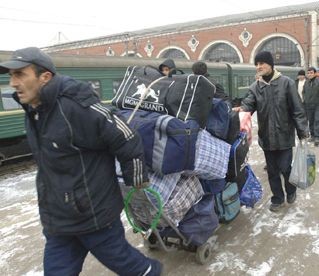
Kyrgyzstan: labor migrants need social protection, investment incentives
-
By
 Maria Levina
BISHKEK (TCA) — There are about 100 thousand Kyrgyz labor migrants in Kazakhstan, Kyrgyzstan’s State Migration Service says. Some of them work legally in the regions closer to Kyrgyzstan — the South-Kazakhstan, Karaganda and Almaty oblasts and Almaty city.
Host state for migrants
The problems faced by labor migrants in Kazakhstan including the absence of labor contracts and difficulties with the registration and obtaining of permits were discussed during a teleconference in Bishkek earlier this month.
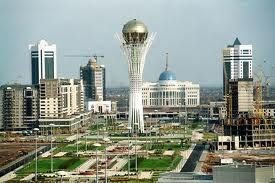
Citizens of Kyrgyzstan can stay in Kazakhstan for a month without registration. Within a pilot project, migration services of the two countries established a Migration Services Center in Astana which showed good results, and such centers will be created in all regional centers of Kazakhstan by the end of the year.
When it comes to migration, Central Asian states are traditionally known as donor countries, whose migrants mainly look for jobs in Russia. The exception is Kazakhstan, which in recent years has become a host state for migrants, changing the economic balance in the region.
In 2016, the influx of labor migrants to Kazakhstan doubled compared to 2000 and continues to grow. Many labor migrants from neighboring Central Asian states consider Kazakhstan more attractive than Russia. According to the International Organization for Migration in Almaty, the total amount of labor migrants in Kazakhstan in 2017 was two million people, mainly from neighboring countries.
As a result, Kazakhstan is increasing its economic influence in the region. However, the situation may change when the Russian economy improves.
At the same time, the economies of Kyrgyzstan and Tajikistan are dependent on remittances from labor migrants. According to the latest data, the amount of remittances from Russia is almost 37% of Tajikistan’s GDP.
Vulnerable migrants
Women and children are still the most vulnerable migrants, says a report that monitored the implementation of the law of the Kyrgyz Republic on state support of compatriots abroad, which was recently discussed by the Kyrgyz Parliament.
Women migrants experience serious difficulties with reproductive health. Women who have given birth to a child in a foreign state experience much more difficulties than their compatriots who gave birth to children in their homeland. Their children are also vulnerable, the report says.
The legal status of migrants is important in obtaining access to medical services. If migrants have not entered into labor contracts with their employers and accordingly do not have social protection, they do not have access to medical services.
Authorities of Kyrgyzstan should provide support to socially unprotected categories of compatriots on the basis of international treaties and in accordance with the legislation of the country.
However, control over the implementation of the law showed that the Ministry of Labor and Social Development of Kyrgyzstan does not consider compatriots abroad to be beneficiaries of social protection services, the report says.
Law execution
The Law “On state policy to support compatriots abroad”, adopted five years ago, remains valid but its legal regulation is outdated and requires improvement, MPs told a press conference in Bishkek. A parliamentary working group carried out a research in Russia from June to December 2017.
More than a million Kyrgyz citizens are now abroad looking for job, and some of them have accepted the citizenship of other states, the WG said. The Kyrgyz State should render more effective assistance to labor migrants who independently solve the problems of their home villages, without asking for help from the State.
Labor migrants should travel abroad legally prepared, knowing the legislation of the host country, their rights and duties. Vulnerable groups including girls, women and children need legal and social assistance from the government of Kyrgyzstan, the MPs stressed.
Blacklisted migrants
In 2017, more than 10.7 thousand Kyrgyzstan citizens were banned to re-enter Russia for three years, the State Migration Service of Kyrgyzstan said.
The main violation committed by Kyrgyz citizens was that they did not register as migrants. Currently, the blacklist of the Russian Federal Migration Service includes 72,000 Kyrgyz citizens who are prohibited from entering the country.
The State Migration Service of Kyrgyzstan recommended Kyrgyz citizens to comply with two basic rules: first, to carefully study the rules of registration for migrants, and secondly, to properly observe labor contracts.
Russian citizenship
Since Kyrgyzstan’s independence, more than 570 thousand Kyrgyz citizens have accepted Russian citizenship.
After Kyrgyzstan’s accession to the Eurasian Economic Union in 2015, the interest in changing citizenship has significantly decreased. Earlier, from 15,000 to 20,000 Kyrgyz citizens accepted Russian citizenship annually. In 2017, only 8.7 thousand accepted it.
After Kyrgyzstan joined the EEU, migrants should be registered only if they reside in Russia for more than 30 days. Therefore, the number of people who entered and left became greater as most of the people stay in Russia for less than 30 days.
In 2017, Russia issued 7.7 thousand permits for temporary residence to Kyrgyzstan citizens.
Remittances of labor migrants
Labor export is among the most effective means of supporting the economy of Kyrgyzstan, analysts say. Last year, labor migrants transferred $2.48 billion (about 40% of the country’s GDP) to Kyrgyzstan, more than 90% of which from Russia.
There is an opinion that any labor migrant who transfers money to his country becomes an investor in its economy. There are no studies on real contributions of labor migrants to the Kyrgyz economy but it is known that most of the money transferred was spent not for starting production facilities and creating jobs but on family needs.
The next generation of migrants may lose contact with Kyrgyzstan, MP Aida Kasymalieva believes. Children of migrants forget the Kyrgyz language and do not consider themselves to be Kyrgyz.
According to experts, the current generation still sends money and takes care of relatives back home, but the next generation, which has grown up in other countries and have foreign citizenship, will no longer come home and send money to their home country. Their bridge with Kyrgyzstan can disappear, the MP concluded.
It is necessary to increase the financial literacy of local citizens, experts say. To attract migrants’ money into Kyrgyzstan’s economic projects, the Government should create attractive investment conditions for them including incentives to open production in the country.