BISHKEK (TCA) — The Publisher’s note: Throughout the 19th and 20th centuries, Central Asia was the scene of intense geopolitical struggle and the Great Game between the British and Russian Empires, and later between the Soviet Union and the West, over Afghanistan and neighboring territories. Into the 21st century, Central Asia has become the area of a renewed geopolitical interest, dubbed the New Great Game, largely based on the region’s hydrocarbon and mineral wealth. On top of that, the region now is perhaps the most important node in the implementation of China’s One Belt, One Road initiative through which Beijing aims to get direct access to Western markets. Every week thousands of news appears in the world’s printed and online media and many of them may escape the attention of busy readers. At The Times of Central Asia, we strongly believe that more information can better contribute to peaceful development and better knowledge of this unique region. So we are presenting this Weekly Digest which compiles what other media have reported on Central Asia over the past week.
KAZAKHSTAN
‘How Can We Stay Silent?’ Kazakh Mother Mourns Daughter Killed After Joining Islamic State
About 800 Kazakh citizens have left their homeland to join IS militants in the Middle East since early 2014
Nov 11 — “The last time Gulzhan Imasheva saw her daughter, Gulbanu Asanova, was in May 2015, when Asanova was a teen secretly preparing to run away from her hometown in northwestern Kazakhstan and join Islamic State (IS) extremists abroad.” READ MORE: https://www.rferl.org/a/how-can-we-stay-silent-kazakh-mother-mourns-daughter-killed-after-joining-islamic-state/29594384.html
Swiss oil trader accused of profiting from ties to elites in Kazakhstan
Corruption in the government and the country’s elites remains a major hurdle to doing business in Kazakhstan
Nov 14 — “The NGO Public Eye has accused Vitol, the second largest company in Switzerland, of using a discreet joint venture to conceal links to powerful elites in Kazakhstan, helping the company win lucrative contracts in the country. Public Eye has called on the Swiss Federal Council to strengthen standards for transparency and due diligence in commodity trading.” READ MORE: https://www.swissinfo.ch/eng/business/vitol_swiss-oil-trader-accused-of-profiting-from-ties-to-elites-in-kazakhstan/44544454
India, Kazakhstan eye expanding trade turnover by 5 times
Kazakhstan and India cooperate in the areas of space, military-technical cooperation, IT, Fintech, oil and gas, and banking. Kazakhstan is also the main supplier of uranium to India
Nov 14 — “India and Central Asias biggest nation Kazakhstan on Wednesday desired to push their trade turnover to five billion usd from the current one billion usd taking advantage of favourable business climate in both countries. The Kazakh-Indian Investment Forum held in Delhi from 12 to 14 November was dedicated in expanding business ties across sectors.” READ MORE: https://economictimes.indiatimes.com/news/economy/foreign-trade/india-kazakhstan-eye-expanding-trade-turnover-by-5-times/articleshow/66621153.cms
Kazakhstan: The jihadis that never were?
Under the pretext of fighting terrorism and extremism, authorities in Kazakhstan are waging a war on opposition and dissent
Nov 16 — “Askhat Sharbat stood up in a Kazakh court earlier this month and admitted to a litany of grave offenses. He allowed his rented apartment to be used as an improvised studio for a video propagandizing terrorism. And then, last November, he distributed this footage through a popular messaging app. Sharbat even agreed he had expressed support for a political organization now banned by the government for purported extremism.” READ MORE: https://timesca.com/index.php/news/20501-kazakhstan-the-jihadis-that-never-were
KYRGYZSTAN
Kyrgyzstan: Why the agrarian country cannot provide itself with agricultural products
The situation in the Kyrgyz agrarian sector is difficult mainly due to the poor work of the Agriculture Ministry, lawmakers believe
Nov 11 — “Prime Minister of Kyrgyzstan Mukhammedkaly Abylgaziyev sharply criticized the Ministry of Agriculture, Food Industry and Land Reclamation at a recent Government meeting. Agriculture Minister Nurbek Murashev optimistically reported on the achievements in the sector. However, a good harvest was not due to the Ministry’s efforts, but due to favorable weather and hard work of farmers.” READ MORE: https://timesca.com/index.php/news/20478-kyrgyzstan-why-the-agrarian-country-cannot-provide-itself-with-agricultural-products
Kyrgyzstan survives on money made by migrant workers, but it doesn’t know how to spend it
No country in the world is as dependent on remittances from labor migrants as Kyrgyzstan. But this money is often used by families to survive, and allows the state to avoid its obligations to its citizens
Nov 12 — “Altynai, 24, doesn’t know what she will do if her parents stop sending money from Russia. She’ll be in a hopeless situation without those 20,000 soms (£220) a month — this money is her only way of surviving. For the past three years, Altynai (name changed) has been living with her grandmother, whose pension isn’t enough to buy anything.” READ MORE: https://www.opendemocracy.net/od-russia/kyrgyzstan-survives-on-money-made-by-migrant-workers-but-it-doesn-t-know-how-to-spend-it
Farmers in Kyrgyzstan try to capitalize on global quinoa fad
Getting agricultural products to the international market remains a problem for Kyrgyz farmers
Nov 14 — “Step into a grocery store anywhere in Kyrgyzstan and ask for quinoa, chances are you will receive little more than blank stares. All the same, one farmer on the southern shores of Issyk-Kul lake has for the past few years been trying his hand at cultivating this most trendy of grains. Azamat Kaseyev, 44, got his first batch of quinoa seeds – the South American strains of Regalona and Titicaca – in 2012. The results have been impressive.” READ MORE: https://eurasianet.org/farmers-in-kyrgyzstan-try-to-capitalize-on-global-quinoa-fad
Exclusive interview with Sooronbai Jeenbekov. Part 2
Kyrgyzstan’s president reviews the first year of his presidency
Nov 16 — “The first anniversary of the presidency of Sooronbai Jeenbekov is approaching. By tradition, the first persons of the country sum up their work. Also, traditionally, the heads of our state preferred to sum up the results to government media. Sooronbai Jeenbekov broke with this tradition. He made an exception and gave his first interview as the president of the Kyrgyz Republic not to state-owned TV channels or government newspapers, but to an independent 24.kg news agency. The country’s leader also agreed to answer very personal questions.” READ MORE: https://24.kg/english/101467_Exclusive_interview_with_Sooronbai_Jeenbekov_Part_2/
TAJIKISTAN
Agroforestry saves soil and boosts livelihoods in Tajikistan
Soil degradation and climate change have adversely affected Tajikistan’s agriculture and smallholder farms
Nov 13 — “Mirzoli Azizov, a 54-year-old farmer, is sorting apples from the second harvest this year from his agroforestry gardens in this district 50 kilometers (30 miles) east of the Tajik capital, Dushanbe. It’s still warm and sunny in early October in this mountainous part of Central Asia, which is enjoying a new bounty from what used to be a heavily degraded landscape.” READ MORE: https://news.mongabay.com/2018/11/agroforestry-saves-soil-and-boosts-livelihoods-in-tajikistan/
Families Get Official Silent Treatment Following Deadly Tajik Prison Riot
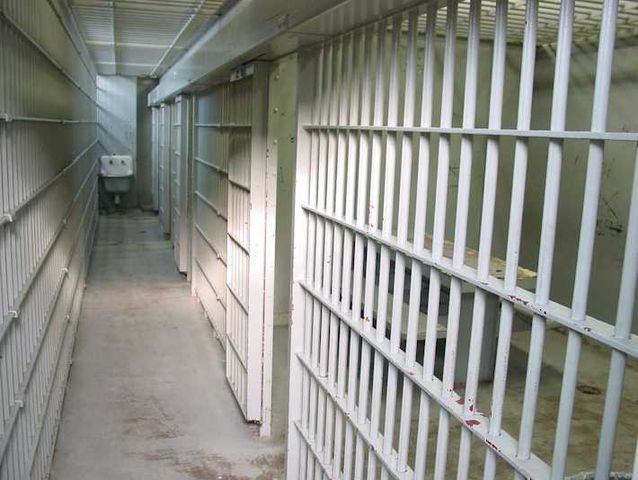
At least 50 inmates were reportedly killed, along with two guards, and numerous others injured in the riot that broke out at a Tajik prison on November 7
Nov 13 — “The bodies of inmates killed in a deadly riot in northern Tajikistan are being abruptly buried under the watchful eyes of police officers who — in some cases — don’t allow the families to identify the victims. “I begged them to let me lift the shroud to let me see my son’s face for the last time and at least make sure that this really is my son, not someone else,” says Ruqiya Ismoilova, who was informed that her 23-year-old son had been killed in the November 7 incident.” READ MORE: https://www.rferl.org/a/families-get-official-silent-treatment-following-deadly-tajik-prison-riot/29598805.html
Tajikistan launches giant dam to end power shortage
The start of the Rogun hydropower plant’s operation will help Tajikistan achieve energy independence and turn the country into an electricity exporter
Nov 16 — “Tajikistan on Friday inaugurates a $3.9 billion hydro-electric power plant, a mega project that will enable the impoverished country to eliminate domestic energy shortages and export electricity to Afghanistan and Pakistan. Built on the Vakhsh River in southern Tajikistan, the plant championed by President Emomali Rahmon is expected to reach a height of 335 metres (1,099 feet) in a decade, becoming the world’s tallest hydro-electric dam.” READ MORE: https://phys.org/news/2018-11-tajikistan-giant-power-shortage.html
TURKMENISTAN
The Gas Man Cometh: In Turkmenistan, Free Energy No More
Only weeks are left before the energy-rich but economically challenged Turkmenistan will halt generous subsidies for natural gas, water, and electricity for its citizens
Nov 11 — “As Turkmenistan prepares to put an end to the era of free energy, authorities in the country’s capital are banging on doors to make sure citizens are prepared to pay. “They came multiple times, two people at a time. They knocked on the same doors several times over the course of two days and asked, ‘Have you installed a meter?'” one Ashgabat resident told RFE/RL’s Turkmen Service.” READ MORE: https://www.rferl.org/a/turkmen-energy-consumers-get-shock-treatment/29594173.html
Turkmenistan: Reading between the lines
In its ‘Akhal-Teke: A Turkmenistan Bulletin’, Eurasianet reviews the main news and events in the Central Asian country for the previous week
Nov 13 — “Turkmenistan is hitting the books. In the days of the late President Saparmurat Niyazov, who died in 2006, libraries were deemed something of an unneeded frippery. So much so that the erratic leader once ordered the closure of rural libraries, insisting that village folk had no interest in reading.” READ MORE: https://eurasianet.org/turkmenistan-reading-between-the-lines
Turkmenistan unexpectedly reduces the cost of TAPI construction from $10 to 7 billion
As Turkmenistan is experiencing a severe economic crisis, the Turkmenistan-Afghanistan-Pakistan-India gas pipeline, if completed, will bring in the much-needed hard-currency revenues for the gas-rich country
Nov 14 — “At the ADIPEC oil and gas conference, which is held in Abu-Dhabi from 12 to 15 November, Muhammetmyrat Amanov, chief executive officer of TAPI pipeline Company Ltd announced that the construction of Turkmenistan-Afghanistan-Pakistan-India pipeline (TAPI project) is now estimated at $7 billion, from an initial estimate of $10 billion” READ MORE: https://en.hronikatm.com/2018/11/turkmenistan-unexpectedly-reduces-the-cost-of-tapi-construction-from-10-to-7-billion/
UZBEKISTAN
Foreigners regret investing in Uzbekistan?
A study showed that the free economic zones did not become the locomotives of industrial development in Uzbekistan, as their share in the total industrial production is negligible
Nov 13 — “Most foreign investors regretted that they had invested in free economic zones (FEZ) of Uzbekistan, Spot.uz portal reported referring to the results of a study conducted by the Center for Development Strategy together with the Swiss Foundation PeaceNexus.” READ MORE: https://en.trend.az/business/economy/2979110.html
Major Reforms In The Energy Sector In Uzbekistan
Uzbekistan aims to modernize its electric power industry which is heavily dependent on burning coal and natural gas
Nov 14 — “To improve the organizational and legal framework of public administration in the electric power industry based on the experience of the leading countries, modern innovative ideas, developments and technologies, the President of the Republic of Uzbekistan signed a new resolution “On the Accelerated Development and Provision of Financial Stability into Electricity Sector” (the Resolution). The Resolution approved the “Roadmap”, which provides for the realization of seven investment projects on the modernization of the existing and the creation of a new generating capacity of 1,984 MW until 2020.” READ MORE: http://www.mondaq.com/x/750718/Oil+Gas+Electricity/Major+Reforms+In+The+Energy+Sector+In+Uzbekistan
Uzbekistan steps up railway diplomacy
Uzbekistan aims to become a regional transport hub, and for this purpose, Tashkent has suggested several trans-Afghanistan railway projects
Nov 15 — “An official delegation from Uzbekistan, led by Foreign Minister Abdulaziz Kamilov, visited Pakistan on November 1–2. Kamilov and his retinue were received by Pakistan’s Prime Minister Imran Khan and held meetings with Foreign Minister Mahmood Qureshi as well as the host country’s top military brass. In the discussions with Pakistani officials, the Uzbekistani foreign minister proposed several ground-breaking initiatives, including a railroad connection between the two countries that would pass through Afghanistan” READ MORE: https://timesca.com/index.php/news/26-opinion-head/20496-uzbekistan-steps-up-railway-diplomacy
The superfast silk road in Uzbekistan
High-speed trains now link the capital Tashkent with the ancient cities of Samarkand and Bukhara in Uzbekistan, making traveling in the country much more easier and comfortable
Nov 16 — “Forget camel trains. My journey to see the delicate mosaics and shimmering domes of the Silk Road city of Samarkand was by high-speed train; it took just a couple of hours. At 200km/h, the clean streets and modern buildings of Tashkent, the capital, yielded to dusty desert punctuated by villages of squat houses and three-wheeled tractors. My seat was quiet and comfortable, the perfect spot to nod off after a seven-hour night flight from London.” READ MORE: https://www.ft.com/content/3e8d88b6-e746-11e8-8827-ff56e7163c11
AFGHANISTAN
Afghanistan’s Rivers Could Be India’s Next Weapon Against Pakistan
India is funding an ambitious dam near Kabul that could reduce water flow to its rival downstream, Pakistan
Nov 13 — “Most of Afghanistan is currently experiencing a 60 percent drop in the rain and snowfall needed for food production. The rapid expansion of Kabul’s population, extreme drought conditions across the country, and the specter of climate change have exacerbated the need for new water infrastructure. But building it is politically complicated; the Afghanistan-Pakistan border region is defined by its complex maze of transboundary rivers and there is no legal framework in place to avoid major conflict between the nations.” READ MORE: https://foreignpolicy.com/2018/11/13/afghanistans-rivers-could-be-indias-next-weapon-against-pakistan-water-wars-hydropower-hydrodiplomacy/
Why victory isn’t the goal in Afghanistan
U.S. support has made the Afghan forces more effective than they were, but unable to stand up on their own
Nov 13 — “When Lt. Gen. David Petraeus returned from an inspection tour of Afghanistan in 2005 to brief then Secretary of Defense Donald Rumsfeld, he began with a simple image. “The very first slide in the briefing that I gave to him was, ‘Afghanistan ≠ Iraq.’ And I then laid out to him the areas and issues in which you could compare and contrast the two countries and situations,” Petraeus recalled in an interview this month. “That comparison clearly established why, frankly, Afghanistan is a tougher nut to crack.” READ MORE: https://www.washingtonexaminer.com/policy/defense-national-security/why-victory-isnt-the-goal-in-afghanistan
What game is Russia playing in Afghanistan?
Russia is seeking to re-assert itself in the southern part of Central Asia and Afghanistan in particular
Nov 14 — “Earlier this month, the Russian government hosted a much-awaited peace conference on Afghanistan, which was attended by representatives from the Taliban. After the event, Russian Foreign Minister Sergey Lavrov was photographed posing next to members of the Taliban leadership, who, paradoxically, are still on Russia’s terror list.” READ MORE: https://www.aljazeera.com/indepth/opinion/game-russia-playing-afghanistan-181113160715311.html
Russia’s peace conference on Afghanistan: What does it mean?
Russia tries to regain its influence in Afghanistan and thus strengthen its position in the Central Asia region, seeking to make the Taliban achieve peace with the Kabul government thus helping to eliminate the growing threat of Islamic State influence in the war-torn country
Nov 14 — “Last week (November 9), Russia finally convened its long-heralded peace conference on Afghanistan. Attending the conference were members of the Taliban as well as the governments of Pakistan, Kazakhstan, Kyrgyzstan, Tajikistan, Uzbekistan, Iran and China. A representative of the Embassy of the United States in Moscow also attended as an observer, as did members of the Afghan government’s Peace Council, but no member of the formal government in Kabul (Al Jazeera, November 9; TASS, November 12). The so-called “Moscow format consultations” are intended “to coordinate the development of an inclusive intra-Afghan dialogue toward promoting the process of national reconciliation and the restoration of peace as soon as possible in the long-suffering Afghan state” READ MORE: https://timesca.com/index.php/news/20491-russia-s-peace-conference-on-afghanistan-what-does-it-mean
WORLD
China will ‘firmly reject’ diplomatic request to visit Uighur camps
Reports say that China is engaged in a major crackdown on the local ethnic Muslim minority in Xinjiang
Nov 15 — “China will “firmly reject” a request from a group of western diplomats seeking to visit a region reportedly suffering under widespread repression, a top diplomat said Thursday. “Certain Western diplomats claimed that they would go to Xinjiang for the so-called investigation on the human rights conditions there,” Chinese Foreign Ministry spokeswoman Hua Chunying told reporters. “This is above and beyond the duties of a diplomat and exceeds their mandate under the Vienna Convention on Diplomatic Relations. So we will by no means allow them to do so.” READ MORE: https://www.washingtonexaminer.com/policy/defense-national-security/china-will-firmly-reject-diplomatic-request-to-visit-uighur-camps
Are China’s cheap loans to poor nations a development boost or a debt trap?
China offers concessional loans for large-scale infrastructure projects, but if countries fail to pay them back, Beijing can start making demands
Nov 16 — “China is in the midst of a rapid push to gain economic and political ascendancy across the globe — and it is splashing out billions of dollars in concessional loans to developing countries in the process. This money is used to construct much-needed major infrastructure projects, but what happens when these poorer countries cannot pay China back?” READ MORE: https://www.abc.net.au/news/2018-11-16/are-china-cheap-loans-to-poor-nations-a-debt-trap/10493286



 TCA
TCA