• KGS/USD = 0.01144 0%
  • KZT/USD = 0.00196 -0%
  • TJS/USD = 0.10899 -0%
  • UZS/USD = 0.00008 -0%
  • TMT/USD = 0.28490 0%
  • KGS/USD = 0.01144 0%
  • KZT/USD = 0.00196 -0%
  • TJS/USD = 0.10899 -0%
  • UZS/USD = 0.00008 -0%
  • TMT/USD = 0.28490 0%
  • KGS/USD = 0.01144 0%
  • KZT/USD = 0.00196 -0%
  • TJS/USD = 0.10899 -0%
  • UZS/USD = 0.00008 -0%
  • TMT/USD = 0.28490 0%
  • KGS/USD = 0.01144 0%
  • KZT/USD = 0.00196 -0%
  • TJS/USD = 0.10899 -0%
  • UZS/USD = 0.00008 -0%
  • TMT/USD = 0.28490 0%
  • KGS/USD = 0.01144 0%
  • KZT/USD = 0.00196 -0%
  • TJS/USD = 0.10899 -0%
  • UZS/USD = 0.00008 -0%
  • TMT/USD = 0.28490 0%
  • KGS/USD = 0.01144 0%
  • KZT/USD = 0.00196 -0%
  • TJS/USD = 0.10899 -0%
  • UZS/USD = 0.00008 -0%
  • TMT/USD = 0.28490 0%
  • KGS/USD = 0.01144 0%
  • KZT/USD = 0.00196 -0%
  • TJS/USD = 0.10899 -0%
  • UZS/USD = 0.00008 -0%
  • TMT/USD = 0.28490 0%
  • KGS/USD = 0.01144 0%
  • KZT/USD = 0.00196 -0%
  • TJS/USD = 0.10899 -0%
  • UZS/USD = 0.00008 -0%
  • TMT/USD = 0.28490 0%
08 December 2025

Kazakhstan: president comes up with large social initiatives

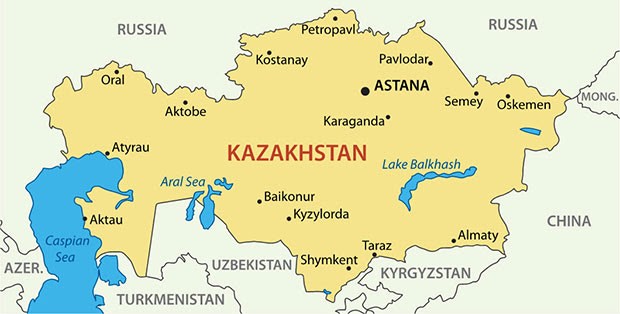
ASTANA (TCA) — At a joint session of Kazakhstan’s parliament on March 5, President Nursultan Nazarbayev said that “the time has come to focus on large social projects” in the country.

Nazarbayev addressed the people of Kazakhstan with the “Five Social Initiatives of the President,” which include the new opportunities to purchase housing for each family, reduction of the tax burden to increase the wages of low-paid workers, increase in the accessibility and quality of higher education and improvement of the living conditions of student youth, expansion of micro-crediting, and further gasification of the country, the president’s press service reported.

Nazarbayev stressed that the new social initiatives are aimed at strengthening the social unity of Kazakh society and further improving the well-being of every Kazakhstani citizen.

In particular, Nazarbayev suggested increasing the affordability of mortgage lending for Kazakhstan citizens by launching a program under which every working citizen could receive a mortgage loan in the national currency for purchasing housing at not more than 7 percent per annum (compared to 14-16% today) with initial payment of not more than 20 percent of the housing cost (30-50% today) and for up to 25 years (10-15 years now).

To support low-paid citizens, the president suggested, starting from 1 January 2019, to reduce their tax burden 10-fold — down to 1 percent. As a result, a third of employees in Kazakhstan — or some two million people — will have their salaries raised without increasing the tax burden on the employers.

Concerning gasification, Nazarbayev said that today, almost 50 percent of the country’s population has natural gas, but the central and northern regions of the country still have no access to gas. The president suggested construction of a gas pipeline along the route Karaozek (Kyzylorda province)-Zhezkazgan-Karaganda-Temirtau-Astana through borrowed funds including from international financial institutions.

Nazarbayev ordered the Government and the National Bank to work out the mechanisms for implementation of his social initiatives.

Kazakhstan railway company discusses cargo transportation in Eurasia

ASTANA (TCA) — A delegation of Kazakhstan’s national railways company Kazakhstan Temir Zholy (KTZ), led by Vice President for Logistics Sanzhar Elyubaev, last week participated in the meeting of the Organisation for Co-operation between Railways’ (OSJD) Commission on Cargo Transportation in Warsaw, Poland. The meeting summed up the results of work for 2017 and agreed on the volumes of transportation of export, import and transit cargos by railway transport for 2018, KTZ’s press-office reported.

Continue reading

Uzbekistan explores new markets at Fruit Logistica Berlin 2018 fair

TASHKENT (TCA) — Currently in Uzbekistan, many farmers, traders and trade facilitators are trying to open new market opportunities for Uzbek agriculture products in EU countries. To support these initiatives the EU-funded Project “Sustainable Development in Rural Areas of Uzbekistan” in February organized a study visit to Germany for a number of fruit growers and processors from Project regions to participate in International Exhibition “Fruit Logistica Berlin 2018”. To join such a high level event is a great chance to explore new markets for Uzbek growers and exporters, the Delegation of the European Union to Uzbekistan reported.

Continue reading

Kyrgyzstan: US gov’t supports conference on community policing, crime prevention

BISHKEK (TCA) — Chargé d’Affaires a.i. of the U.S. Mission to the Kyrgyz Republic Alan Meltzer delivered concluding remarks at a two-day Community Policing and Crime Prevention Conference which took place in Bishkek last week. The Conference was sponsored by the U.S. State Department’s Bureau of International Narcotics and Law Enforcement Affairs (INL) and organized by its implementing partners the United Nations Office on Drugs and Crime (UNODC) and Saferworld, the US Embassy in Kyrgyzstan said.

Continue reading

Can state benefit payments reduce poverty in Kyrgyzstan?

BISHKEK (TCA) — According to the Ministry of Labor and Social Development of Kyrgyzstan, 360.2 thousand people from low-income families receive monthly state benefit payments, and most of those families have children (275.9 thousand). The number of applicants for state benefits grows by 2% a year.

In 2018, the State will allocate 5.330 billion soms from its budget for this purpose, which is 1.8 billion soms more than in 2017.

The criteria for determining the family’s poverty are being revised now. “Ownership of a car or a tractor, a land plot that generates income, as well as a livestock is now taken into account,” Labor and Social Development Minister Taalaykul Isakunova said on March 2 at a Parliament’s meeting to discuss the implementation of legislation on state benefits.

Meanwhile, the minister is not sure that these benefits are effective and help people get out of poverty. “No studies have been conducted on this issue. As for me, I believe this does not help,” the minister said.

In Kyrgyzstan, 271,000 families live below the subsistence minimum, which is 4,900 soms ($72) per person per month, MP Ruslan Kazakbaev said. According to him, 120 thousand families spend less than $1 a day. “In rural areas, one-day expenditures of one family do not reach even one dollar,” he said.

The implementation of the law “On State Benefit Payments” adopted in 2017 has many shortcomings, Kazakbaev added. “About 7-8 billion soms is necessary to implement the law but there are no sources of financing,” he said.

“According to the International Labor Organization, about 580,000 children work in Kyrgyzstan, and 13% of children receive state benefits, while 27% do not receive this support from the state,” the MP said. He stressed the importance of increasing benefits to families in real need, and families with children with disabilities.

Poverty still high

According to World Bank experts, poverty is decreasing in Kyrgyzstan. Nevertheless, about 1.6 million of the country’s six million population lives below the poverty line defined at 31,151 soms per capita per year.

The extreme poverty is still high, 0.8% of the population. Eight out of ten people living below the poverty line live in rural areas. Households that are large with young children have a much higher probability of living below the poverty line.

Agriculture and services are still the main sectors of the economy in terms of employment. A third of the population and about 36% of those among the poorest persons works in the agricultural sector.

Labor incomes per capita have increased, which together with the increased remittances allowed raising welfare and reducing poverty. Yet these remittances were mostly used to increase private consumption and the construction of housing rather than investment in the economy.

Significant territorial differences affected the poverty reduction, which fell significantly in Bishkek and Jalal-Abad cities due to significant economic growth and a more active trade development.

According to the WB forecast, poverty reduction is expected this year.

A modest increase in agricultural and construction growth forecasts and a further increase in remittances are likely to contribute to poverty reduction in rural areas in 2018. It is expected that wages in the private sector will grow slowly, which will lead to a small reduction in poverty in the cities.

Planned increase of pensions also should help poor households, considering that pensions account for about 15% of income of low-income citizens. The poverty level is expected to drop to 22.2% in 2018 compared to 25.6% in 2016.

Tackling poverty depends on the Government’s economic policies including the regional distribution of state budget funds. It is likely that poverty will continue to fall in the short-term with greater out-migration and remittance income, the WB says.

Housing program

The current state housing program is not available for the majority of Kyrgyzstan’s citizens. First of all, the most vulnerable budget-paid employees — doctors and teachers — suffer, MP Aida Kasymalieva said at a parliament session on the implementation of the Affordable Housing 2015-2020 Government program.

“Out of more than 11 thousand applicants for mortgage loans, 2.7 thousand only were included in the list, and 1.3 thousand withdrew their applications,” Kasymalieva said, adding that the solvency of budget-paid employees does not allow them to get a loan. She stressed the growing number of citizens’ complaints about the lack of access to information about the procedure for obtaining a loan.

“It is necessary to extend the period of state mortgage lending to 25 years and reduce interest rates. Teacher and doctors cannot pay 20 thousand soms a month,” MP Isa Omurkulov said.

According to the head of the State Mortgage Company (SMC), Baktybek Shamkeev, the SMC in engaged in refinancing, that is, receiving budgetary loans for mortgage lending to the population. Since 2016, more than 2,700 citizens have purchased housing through mortgage loans at 8-10% interest for 15 years while commercial banks provide loans at 18-26% for five years.

The SMC also participates in the mortgage securities market development. The Government recently decided to invest 140 million soms in mortgage-backed securities.

The State Mortgage Company plans to build eight thousand square meters of housing in 2018 and 130 thousand square meters in 2019.