Kyrgyzstan, Tajikistan border impasse: finding a way out of a tight spot

BISHKEK (TCA) — The largely non-delimited state border between Kyrgyzstan and Tajikistan, as well as long-lasting disputes over water resources and irrigation facilities in border areas, remain the main problem in the relations between the two neighboring countries. We are republishing this article on the issue by Nurjamal Djanibekova, originally published by Eurasianet:
The districts of Batken and Lelik are tucked away in a southwest corner of Kyrgyzstan with the northern part of Tajikistan on either side. On occasion, this remote corner of the Fergana Valley is the site of sudden outbreaks of unrest, as rival communities on either side of the border vie for control over the sparse resources the unyielding land has to provide.
The problem is compounded by lingering uncertainty and indecision on where exactly national borders ought to be drawn.
On February 15, experts convened at the University of Central Asia for a roundtable – “Promoting Social Cohesion and Conflict Migration along the Kyrgyz-Tajik border” – to discuss the findings of their research on these pressing issues and to debate how best to resolve the impasse.
Kemel Toktomushev, research fellow at the Institute of Public Policy and Administration of the University of Central Asia, said that he saw the roots of sporadic conflicts in the inability of the Kyrgyz SSR to take preventative measures.
Tensions between one particular set of communities have been exacerbated over the years by disagreement on how to manage the Tortgul Reservoir, which was built in the 1970s to collect the flow of water from the Isfara, a river that snakes along either side of the border.
But Toktomushev said that despite the oft-cited insistence that water shortages cause arguments, only by finally ending the process of delimiting borders will the periodic flare-ups stop. Borders need to be both clearly defined and yet open for local residents to cross with ease.
“For more than 25 years we have been unable to address this problem. We still have uncertain borders and enclaves. These shortcomings exacerbate conflict — as well as economic tensions and interethnic hatred — in the region. Strict border regimes only hinder free movement and destroy fragile peace, instead of strengthening relations,” he said.
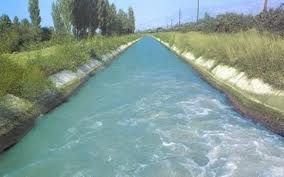
Toktomushev noted that tensions tend to surge during the growing season as many of the canals and irrigation systems are in bad shape. Since neither government is willing to commit to the cost of renovations outside their national borders, the faulty infrastructure itself makes resource-sharing problematic.
Asel Murzakulova, a senior research fellow at UCA’s Mountain Societies Research Institute, agreed that Tajikistan and Kyrgyzstan are failing to address the problem at the local level and are instead politicizing it.
“We see how almost all republic-status canals are not being maintained. There is no sense of ownership, there is constant competition: that’s mine and this is mine. People don’t view canals as infrastructure but as a place where to plant one’s flag. This politicization of the issue leaves no space for development,” Murzakulova said.
Murzakulova added that the local communities should maintain better and more regular lines of communication with one another, but that the opposite is happening: “With the construction of roads circumventing enclaves, communities have begun to become more isolated from each other. Interactions are decreasing and tensions have become worse. The conflict has nothing to do with interethnic hostility — it is about mistaken management decisions.”
Murzakulova said that the hazy borders also create a fertile ground for extortion and corruption by border guards. The only way out of the situation will be to involve all sections of the population and civil servants in the problem-solving process, she said.
“To expect presidents to reach an agreement and for us to begin prospering just won’t do. We need careful work by scholars and civil society,” she said.
The head of the Tajikistan-based Sharq research center, Saodat Olimova, suggested that smuggling and extortion is occurring mainly in Kyrgyzstan. While authorities in Tajikistan have these areas of criminality under control, she said, the bodies in Kyrgyzstan tasked with doing the same are struggling.
Incidents along the Kyrgyz-Tajik border happen all but every year. The most recent serious flare-up occurred in January 2017, when Tajik officials accused the informal leader of the Kyrgyz village of Kok-Tash, Raziya Osorova, of forcing Tajik citizens to adopt Kyrgyz passports. Osorova in turn maintained that 30 men had crossed over from Tajikistan, abducted her and then later beat her up.
Rows invariably degenerate into similar dueling narratives that stray far from the real initial bone of contention. In that instance last year, the standoff culminated with residents of both villages throwing stones at one another, damaging a vehicle and several buildings.