Weekly Digest of Central Asia
-
By
 TCA
TCA
BISHKEK (TCA) — The Publisher’s note: Throughout the 19th and 20th centuries, Central Asia was the scene of intense geopolitical struggle and the Great Game between the British and Russian Empires, and later between the Soviet Union and the West, over Afghanistan and neighboring territories. Into the 21st century, Central Asia has become the area of a renewed geopolitical interest, dubbed the New Great Game, largely based on the region’s hydrocarbon and mineral wealth. On top of that, the region now is perhaps the most important node in the implementation of China’s One Belt, One Road initiative through which Beijing aims to get direct access to Western markets. Every week thousands of news appears in the world’s printed and online media and many of them may escape the attention of busy readers. At The Times of Central Asia, we strongly believe that more information can better contribute to peaceful development and better knowledge of this unique region. So we are presenting this Weekly Digest which compiles what other media have reported on Central Asia over the past week.
KAZAKHSTAN
Kazakhstan: In two minds about cryptocurrencies
The emerging cryptocurrency business has both critics and new followers in Kazakhstan, while authorities warn the population of risks of investing in cryptocurrencies
July 30 — “The cryptocurrency business can be a flash in the pan. In Kazakhstan, few know that better than Zhomart Mametkarim. Late last year, with Bitcoin surging in value, he opened a cafe in the business capital, Almaty, and branded it a Crypto Hub. The establishment was intended as a celebration of all things cryptocurrency-related. Items on the menu included bit burgers and a take on beshbarmak, Kazakhstan’s beloved noodle and meat dish, which the cafe recast as bit barmak.” READ MORE: https://timesca.com/index.php/news/20064-kazakhstan-in-two-minds-about-cryptocurrencies
Protecting businesses and investment important to Kazakhstan
Head of the Department for Civil Service Affairs and Anticorruption of the Karaganda region on measures to protect foreign investors from corruption in Kazakhstan
July 30 — “Creating a favourable investment climate and increasing the confidence of businesses and investors in the institutions of state power is the most important factor in ensuring the competitiveness of the public administration system and Kazakhstan as a whole.” READ MORE: https://astanatimes.com/2018/07/protecting-businesses-and-investment-important-to-kazakhstan/
Kazakh court frees woman who fled Chinese re-education camp
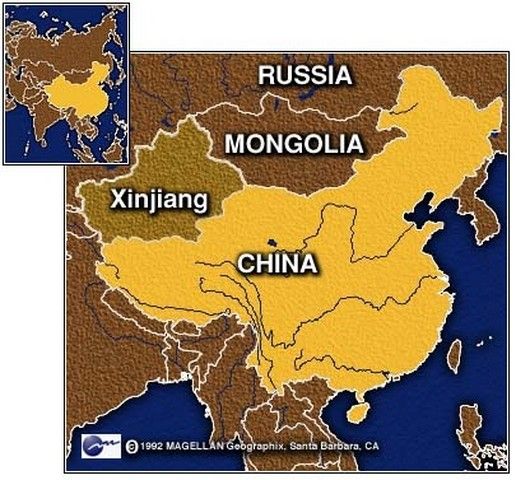
Sauytbay spoke about a re-education camp in Xinjiang where she had worked, saying it held about 2,500 ethnic Kazakhs. China denies the camps exist
Aug 1 — “A Chinese national who gave rare public testimony about China’s secretive “re-education” camps in Xinjiang will be allowed to stay in Kazakhstan, where she has applied for asylum. Sayragul Sauytbay, an ethnic Kazakh from Xinjiang, had been at risk of deportation to China after being charged with illegally crossing the border.” READ MORE: https://www.theguardian.com/world/2018/aug/01/kazakh-court-frees-woman-who-fled-chinese-re-education-camp
India, Kazakhstan agree to further strengthen defence cooperation
India is making inroads into Kazakhstan, its largest trade and investment partner in Central Asia
Aug 3 — “India and Kazakhstan on Friday agreed to further strengthen defence cooperation as External Affairs Minister Sushma Swaraj met the country’s top leaders to discuss ways to consolidate the strategic partnership in areas like trade, energy, security and information technology.” READ MORE: https://timesofindia.indiatimes.com/india/india-kazakhstan-agree-to-further-strengthen-defence-cooperation/articleshow/65257241.cms
KYRGYZSTAN
Kyrgyzstan: Prominent opposition leader moved from prison for health reasons
One of the country’s most outspoken opposition leaders during former President Almazbek Atambayev’s time in power, Omurbek Tekebayev may now see the authorities’ attitude to him being changed
Aug 1 — “A dogged opponent of Kyrgyzstan’s former president has been moved from prison to a heart clinic in a possible sign that the current leadership is seeking to rebuild bridges. Omurbek Tekebayev, who has been held at a prison colony for the past nine months, serving a sentence on corruption charges, will remain under observation indefinitely.” READ MORE: https://eurasianet.org/s/kyrgyzstan-prominent-opposition-leader-moved-from-prison-for-health-reasons
Kyrgyzstan authorities clash with owners of massive Kumtor Gold Mine
The Kyrgyz government has sent mixed signals that it may once again review its agreements with Canada’s Centerra Gold over Kumtor gold mine — a move that will in no way improve the country’s investment climate
Aug 1 — “In mid-July, Kyrgyzstan’s capital of Bishkek hosted a roundtable dedicated to the future of the Kumtor Gold Mine, one of the largest gold deposits in the world. According to Kumtor Gold Co., a wholly-owned subsidiary of Canada’s Centerra Gold, which operates the mine, the deposit contributed over 21 percent of Kyrgyzstan’s industrial output and approximately 9.7 percent of its gross domestic product (GDP) last year. The company states that it has channeled almost $3.5 billion to the Kyrgyzstani budget since 1994, including more than $1 billion in various taxes, customs duties and other mandatory charges.” READ MORE: https://timesca.com/index.php/news/20074-kyrgyzstan-authorities-clash-with-owners-of-massive-kumtor-gold-mine
Kyrgyzstan’s Most Wanted Ex-Premier Pops Up in Belarus
Belarus has twice refused Kyrgyzstan’s request to extradite former PM Usenov on the grounds that ‘he faced persecution on the basis of his political convictions’
Aug 2 — “A former head of government with a life sentence over his head has found safe haven in Belarus, and Bishkek is furious about it. It is “absolutely unacceptable” that Daniyar Usenov “is residing and conducting activities on the territory of Belarus,” the Kyrgyz Foreign Ministry fumed in a 28 July protest note” READ MORE: https://www.tol.org/client/article/27876-kyrgyzstan-belarus-daniyar-usenov-bakiev-asylum-revolution.html
Economy Ministry eyes increasing sales tax rate from 2% to 5%
The Kyrgyz government looks to unpopular measures to find ways of replenishing state budget revenues
Aug 3 — “Minister of Economy Oleg Pankratov explained to Tazabek the draft amendments to the tax code of Kyrgyzstan, which propose to increase the sales tax rate from 2% to 5%. When the fiscal policy concept was under development, one of the suggestions was to change the function of sales tax from fiscal to regulatory, Pankratov said.” READ MORE: https://akipress.com/news:609465
TAJIKISTAN
Saudis brag about giving Tajikistan $200M in aid
In recent years, Saudi Arabia has taken steps to push its rival — Iran — out of Tajikistan, with which Iranians share a common language and culture
July 29 — “Saudi Arabia’s ambassador to Tajikistan has revealed in an interview that Riyadh has granted more than $200 million in aid to Dushanbe over the years. Speaking to Avesta news agency, Abdulaziz ibn Muhammad al-Badi made little attempt to disguise the fact that his government’s generosity stems from a desire to push Iran, a nation whose Persian heritage presents obvious commonalities with Tajikistan, out of the region.” READ MORE: https://timesca.com/index.php/news/20059-saudis-brag-about-giving-tajikistan-200m-in-aid
Tajiks Accuse Familiar Foe Despite IS Claim In Attack On Cyclists
The speed with which Tajik authorities managed to implicate a group the government has long been trying to eliminate and a country with which Dushanbe is now at odds (Iran) could raise questions about impartiality in pursuit of the perpetrators
July 31 — “When Tajik police announced on July 31 that the banned Islamic Renaissance Party of Tajikistan (IRPT) was behind the deadly July 29 attack on a group of foreign cyclists, it was hardly surprising. Nor was it shocking that Tajik authorities mentioned an Iranian link in the attack.” READ MORE: https://www.rferl.org/a/tajiks-accuse-familiar-foe-despite-is-claim-in-attack-on-cyclists/29401482.html
Tajikistan’s Relations With Its Creditors To Prove Key Source Of Risk
Political risk in Tajikistan is increasingly stemming from the government’s high levels of borrowing, with China accounting for almost half of Tajikistan’s external debt
July 31 — “The heavily indebted government of Tajikistan will seek to maintain strong relations with its creditors, particularly China, to avoid a sudden strain on its finances or heightened regional tensions. That said, the government’s ability to meet its debt obligations is diminishing and this will prove a key source of political risk over the coming years.” READ MORE: https://www.fitchsolutions.com/country-risk-sovereigns/tajikistans-relations-its-creditors-prove-key-source-risk-31-07-2018
Tajik Police Appear To Keep Lid On Reporting About Suspects In Deadly Attack On Cyclists
Official Tajik statements have all but ignored any IS component in the attack in favor of initial suggestions that members of the banned Islamic Renaissance Party of Tajikistan were behind the attack
Aug 2 — “Days after a deadly attack on a group of foreign cyclists in a remote region of Tajikistan, information remains scarce on the possible road to radicalization of the suspects — at least some of whom were said to have died in a shootout with security police and subsequently turned up in a video pledging loyalty to the militant group Islamic State (IS).” READ MORE: https://www.rferl.org/a/tajik-police-cyclist-attack-journalists-harassed/29407351.html
TURKMENISTAN
“Great accomplishments” of Turkmenistan in 2016 as viewed by the state information agency TDH and by “Chronicles of Turkmenistan”
Independent website Chronicles of Turkmenistan recalls significant events of 2016 and presents an alternative picture of the developments in the country
July 30 — “A new volume of “Chronicles of great accomplishments” devoted to the accomplishments of Turkmenistan and its President in 2016 has been released in Turkmenistan. The book describes the development of the Turkmen economy and the improved well-being of its residents.” READ MORE: https://en.hronikatm.com/2018/07/great-accomplishments-of-turkmenistan-in-2016-as-viewed-by-the-state-information-agency-tdh-and-by-chronicles-of-turkmenistan/
Turkmenistan: The more it changes, the more it stays the same
In its ‘Akhal-Teke: A Turkmenistan Bulletin’, Eurasianet reviews the main news and events in the Central Asian country for the previous week
July 31 — “Finally some good news is on the horizon for Turkmenistan. In comments carried by Moscow’s state-run news outlet TASS, Russia’s Deputy Energy Minister Anatoly Yanovsky said on July 27 that Gazprom may resume negotiations on purchasing Turkmen gas this autumn. Gazprom has not purchased any Turkmen gas since the beginning of 2016. Ashgabat and Moscow remain embroiled in an arbitration spat over prices.” READ MORE: https://eurasianet.org/s/turkmenistan-the-more-it-changes-the-more-it-stays-the-same
Turkmenistan’s small and medium business – how to survive?
Chronicles of Turkmenistan author on the obstacles confronted by small and medium business in Turkmenistan and how the construction industry survives
Aug 2 — “Today small and medium businesses in Turkmenistan, including vendor stalls in bazaars, privately-owned retail outlets, stores, markets, small companies, consumer services shops, cafes and snack bars, car repair shops and beauty parlors, are going through hard times. These businesses always rely on the purchasing power and financial solvency of their customers, including state-run enterprises.” READ MORE: https://en.hronikatm.com/2018/08/turkmenistans-small-and-medium-business-how-to-survive/
UZBEKISTAN
Turkish holding plans to implement a number of projects in Uzbekistan
Turkey’s Anadolu Group is interested in such areas of Uzbek economy as agriculture, healthcare, textile industry, production of construction materials, and machine building
July 31 — “The interest of Turkish companies in the markets of Central Asian countries is increasing. One of the largest Turkish holdings Anadolu Group is showing interest in implementing a number of projects in various spheres of the economy of Uzbekistan, Podrobno.uz reported. This became known following the talks held between Deputy Prime Minister, Finance Minister Jamshid Kuchkarov and the delegation of the Anadolu Group holding led by Chairman Tuncay Ozilhan.” READ MORE: https://www.azernews.az/region/135590.html
Over 500 Chinese citizens get e-visa to Uzbekistan
The government is taking measures to attract even more foreign tourists to Uzbekistan
Aug 2 — “Citizens of 41 countries have submitted 2,784 applications to the system for processing and issuing electronic entry visas in Uzbekistan since its launch on July 15, Uzbek media reported. The largest number of applications came from citizens of China – 533, the USA – 361 and the United Kingdom – 335.” READ MORE: https://www.azernews.az/region/135677.html
Uzbekistan hopes to have 237 cars per 1,000 people by 2025
Uzbekistan remains a leading automobile manufacturer in Central Asia, with Uzbek-made cars being exported to Kazakhstan and Russia
Aug 3 — “Uzbekistan plans to reach the level of 237 cars per 1,000 people by 2025, Umidzhan Salimov, deputy chairman of the board of Uzavtosanoat said. Today the country is seriously lagging behind this indicator from other CIS countries. So, for example, in Russia in 2017, there were 334 cars per 1,000 people, in Kazakhstan – 250 cars, in Ukraine – 204, and in Uzbekistan – only 83.” READ MORE: https://www.azernews.az/region/135739.html
AFGHANISTAN
Is Afghanistan Ready for Peace?
Many players — including regional and great world powers — can finally end the war in Afghanistan if they want to
July 30 — ““We used to appreciate the hard work of the United States for development in Afghanistan,” Iqbal Khyber, a 27-year-old medical student from Helmand Province, told me in Kabul on July 2. “Unfortunately, things happened. The international forces started searching houses, thinking we had links to the Taliban. Special forces raids, misaimed bombs—these caused hatred among the people.” READ MORE: https://www.foreignaffairs.com/articles/afghanistan/2018-07-30/afghanistan-ready-peace
Afghanistan: Recovering from the Brink of Economic Collapse?
Afghan President Ghani’s plan for the next four years is to focus on four main pillars to grow Afghanistan’s economy: agriculture, extractive industry, regional connectivity and human capital
July 31 — “As recently as four years ago, Afghanistan’s war economy was on the brink of collapse when unemployment soared following the departure of thousands of American and foreign forces that had, in effect, created a parallel economy. At the time, the Afghan government had no functioning fiscal policy, formal corruption and mismanagement beset its taxation and revenue collection efforts, and the national budget was unbalanced and disorganized, spent mostly on white elephant projects.” READ MORE: https://nationalinterest.org/blog/middle-east-watch/afghanistan-recovering-brink-economic-collapse-27362
Iran ramps up support to Taliban in western Afghanistan
Iran’s alleged support of the Taliban in bordering Afghan regions is likely to be caused by Tehran’s intention to control local water resources and its opposition to dam projects in western Afghanistan
July 31 — “During an official visit to Iran in May, Tariq Shah Bahrami, Afghanistan’s defense minister, received assurances that Tehran was fully committed to helping Kabul fight terrorism. It was a welcome guarantee, coming as Afghan forces faced a fresh onslaught from the Taliban, which typically mounts an annual offensive in April. Within months, however, the promise appeared to ring hollow as Afghan officials increasingly blamed Iran for the fighting in Afghanistan’s western Farah province.” READ MORE: https://timesca.com/index.php/news/20069-iran-ramps-up-support-to-taliban-in-western-afghanistan
Things Are So Bad In Iran That Afghan Migrants Are Going Home
More than 400,000 Afghan migrants left Iran for Afghanistan so far in 2018 amid a crippling economic crisis in Iran
Aug 1 — “Sporting a long, graying beard and a dusty scarf, Noor Mohammad exits a gritty restaurant in the Afghan capital, where he has been trying to find work for weeks. Mohammad moved back to his native Kabul after living more than 10 years in Iran, where he washed cars and worked in construction to earn money to send back to his family of eight in Afghanistan.” READ MORE: https://www.rferl.org/a/iran-s-economic-crisis-fuels-mass-exodus-of-afghan-migrants/29405068.html
WORLD
Afghanistan-Iran trade corridors to bear fruit for both India and China
Afghanistan’s economy, agriculture and growing exports are set to benefit from China’s transport infrastructure and trade expansion projects in Central and South Asia
Aug 2 — “A strategic deployment of trade corridors is taking shape across Afghanistan and Iran as both India and China subvert each other’s trade strategies through key geoeconomic states. Afghanistan’s land corridor to Chabahar port connects it to India by sea, creating a Persian-Gulf to Caspian Sea corridor, while the Afghan air corridor to India provides a parallel, more direct trade route.” READ MORE: https://timesca.com/index.php/news/26-opinion-head/20079-afghanistan-iran-trade-corridors-to-bear-fruit-for-both-india-and-china
China’s Empire of Money Is Reshaping Global Trade
Bloomberg reports on the impact of Xi Jinping’s new Belt and Road initiative designed to promote economic development and extend China’s influence in Eurasia
Aug 2 — “China is building a very 21st century empire—one where trade and debt lead the way, not armadas and boots on the ground. If President Xi Jinping’s ambitions become a reality, Beijing will cement its position at the center of a new world economic order spanning more than half the globe. Already, China has extended its influence far beyond that of the Tang Dynasty’s golden age more than a millennium ago.” READ MORE: https://www.bloomberg.com/news/features/2018-08-01/china-s-empire-of-money-is-reshaping-lives-across-new-silk-road