Weekly Digest of Central Asia
-
By
 TCA
TCA
BISHKEK (TCA) — The Publisher’s note: Throughout the 19th and 20th centuries, Central Asia was the scene of intense geopolitical struggle and the Great Game between the British and Russian Empires, and later between the Soviet Union and the West, over Afghanistan and neighboring territories. Into the 21st century, Central Asia has become the area of a renewed geopolitical interest, dubbed the New Great Game, largely based on the region’s hydrocarbon and mineral wealth. On top of that, the region now is perhaps the most important node in the implementation of China’s One Belt, One Road initiative through which Beijing aims to get direct access to Western markets. Every week thousands of news appears in the world’s printed and online media and many of them may escape the attention of busy readers. At The Times of Central Asia, we strongly believe that more information can better contribute to peaceful development and better knowledge of this unique region. So we are presenting this Weekly Digest which compiles what other media have reported on Central Asia over the past week.
KAZAKHSTAN
Fighting patriarchy in Kazakhstan: problems and perspectives
In 2017, Kazakhstan was number 52 out of 144 countries in terms of gender equality levels — and gender inequality issues are yet to be resolved in the country
June 19 — “Feminism and gender studies are still a subject for academic research for Kazakhstan’s first generation of feminist activists. The younger generation of activists are defending the rights of the LGBT community, and public officials are simply ignoring feminism and gender equality altogether.” READ MORE: https://www.opendemocracy.net/od-russia/botagoz-seydakhmetova/fighting-patriarchy-in-kazakhstan
Kazakhstan has ‘enormous opportunities’ to develop tourism, expert says
Kazakhstan’s tourism industry faces an ambitious task of increasing its share in GDP from 1 percent in 2016 to 8 percent by 2025
June 19 — “Tourism is undoubtedly one of the most important sectors of any economy, accounting for a significant share of income into the state budget of many countries. In Kazakhstan, the industry is only beginning to gain momentum. A lot has been done for the development of the tourist cluster, and so it is unsurprising that tourism inflow and other indicators have also increased.” READ MORE: https://astanatimes.com/2018/06/kazakhstan-has-enormous-opportunities-to-develop-tourism-expert-says/
EBRD ‘excited’ about Kazakhstan’s modernisation
Kazakhstan is one of the top five countries in which the EBRD invests, and in the last few years it has started to become what many economists call a middle income country
June 20 — “Europe’s reconstruction and development bank is excited about investing in Kazakhstan under the announced third stage of the country’s modernisation, always looking to combine investment with policy reform and technical advice, the head of the bank’s Brussels office said on Tuesday (19 June).” READ MORE: https://www.euractiv.com/section/central-asia/news/ebrd-excited-about-kazakhstans-modernisation/
Kazakhstan: Senate speaker signals Nazarbayev won’t run in 2020
The state power succession is a relevant issue in Kazakhstan, and the most recent developments show that the authorities have crafted a transition scheme
June 21 — “The speaker of Kazakhstan’s parliament has dropped a political bombshell by stating in an interview that President Nursultan Nazarbayev may not run for re-election in 2020. “He is a very wise man, he is absolutely reasonable. And I think that in 2020 we shall have presidential elections with other candidates,” Tokayev told BBC’s Hard Talk program in an interview aired on June 20.” READ MORE: https://timesca.com/index.php/news/19903-kazakhstan-senate-speaker-signals-nazarbayev-won-t-run-in-2020
KYRGYZSTAN
Kyrgyzstan: After hot debates, Parliament approves Government’s report for 2017
Despite the growth in the economy and exports, many problems have not been resolved in Kyrgyzstan
June 17 — “For the first time in Kyrgyzstan’s history, a Prime Minister had to report for the work of two Governments in which he did not work a day. On June 14, Prime Minister Mukhammedkaly Abylgaziev, who has been heading the Cabinet since April 20 this year, reported on the Government’s work for 2017 at the session of the Parliament of Kyrgyzstan.” READ MORE: https://timesca.com/index.php/news/26-opinion-head/19884-kyrgyzstan-after-hot-debates-parliament-approves-government-s-report-for-2017
Better from a friend or from a bank? Kyrgyzstan between informal and formal financial services
A third of Kyrgyzstan’s GDP sits in informal institutions. A researcher spoke to people who use these systems to find out how it works — and why it’s important
June 18 — “As the taxi driver prepares to embark on his daily route connecting Bishkek, the capital of Kyrgyzstan, to Talas, a city located in the country’s north east, a passer-by hands him stacks of money. The man explains that the money (which is the national currency, the som) is for his village. The driver appears accustomed to this sort of request: he charges his fee and takes the stacks.” READ MORE: https://www.opendemocracy.net/od-russia/iliyas-mamadiyarov/kyrgyzstan-between-informal-and-formal-financial-services
Tiny central Asian nation – Kyrgyzstan – hoards gold as shield against trade war
Kyrgyzstan hopes to increase the share of gold in its US $2 billion international reserves to 50% from around 16% now
June 21 — “WHAT do you do when your two biggest trading partners are embroiled in economic standoffs with the United States? You buy as much gold as you possibly can. At least that’s what Kyrgyzstan’s central bank is doing in a bid to protect itself from currency volatility in China and Russia.” READ MORE: https://www.businesstimes.com.sg/banking-finance/tiny-central-asian-nation-kyrgyzstan-hoards-gold-as-shield-against-trade-war
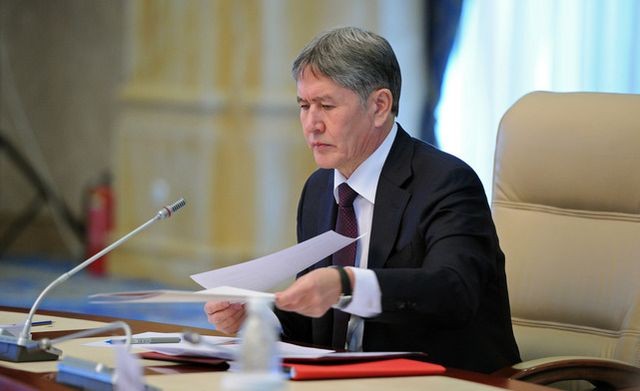
Kyrgyzstan’s ex-president paying the price for years of abrasive rule
It is now clear that “operation successor” designed by former President of Kyrgyzstan Almazbek Atambayev has failed, and that he may end up like some of his currently disgraced loyalists
June 22 — “Over the six years in which he ran Kyrgyzstan, former President Almazbek Atambayev made enemies left and right, paying little heed for the consequences. Now that he is out of power, his often abrasive and arbitrary style of rule is returning to haunt him.” READ MORE: https://timesca.com/index.php/news/19908-kyrgyzstan-s-ex-president-paying-the-price-for-years-of-abrasive-rule
TAJIKISTAN
Pakistan, Tajikistan agree to boost annual trade to $500m
Pakistan and Tajikistan attach great importance to the early completion of the CASA-1000 electricity transmission project
June 20 — “Pakistan and Tajikistan on Tuesday agreed to further strengthen their relations by adopting measures to take bilateral trade to $500 million per annum, immediate revival of air links and early implementation of the CASA-1000 (Central Asia South Asia) electricity project.” READ MORE: https://www.dawn.com/news/1414898
World Bank says Tajik Rogun power plant financing off the table
The World Bank vice president for Europe and Central Asia said the bank would instead focus on upgrading another major Tajik hydro plant
June 21 — “Tajikistan has chosen not to borrow from the World Bank to finance the construction of the Rogun hydroelectric power plant, a bank executive told Reuters. The former Soviet republic issued its debut $500 million Eurobond last year to raise money for the $3.9 billion megaproject, but it remains unclear where further funding will come from.” READ MORE: https://www.reuters.com/article/us-tajikistan-worldbank-rogun/world-bank-says-tajik-rogun-power-plant-financing-off-the-table-idUSKBN1JH0PD
Water can be a true source of prosperity for Central Asia
The World Bank’s Regional Vice President for Europe and Central Asia on how countries in Central Asia can address the challenges and fully capitalize on the development opportunities offered by water
June 22 — “Earlier this week, I met with colleagues in Dushanbe, the capital of Tajikistan, where I heard from them about the difficulty so many Tajik households still face in accessing that essential ingredient for life – water. The challenges are especially acute in remote, rural areas of the country, where many communities have no direct access to safe drinking water, or to an irrigated water supply for farming. This is all the more surprising given that Tajikistan is rich in water resources.” READ MORE: https://timesca.com/index.php/news/26-opinion-head/19907-water-can-be-a-true-source-of-prosperity-for-central-asia
TURKMENISTAN
Turkmenistan’s Leader — Protector Or Loner?
Turkmen President Gurbanguly Berdymukhammedov might seem to need more friends than he’s made so far — especially as his country is facing hard times
June 19 — “It seems that Turkmen President Gurbanguly Berdymukhammedov, known in Turkmenistan as “Arkadag” (The Protector), does not much like to socialize. Maybe he should be called “Garasoymez” (The Loner). Since May 2017, he has had several opportunities to attend major international events but did not go. In fact, Berdymukhammedov has not seemed to stray far from home lately.” READ MORE: https://www.rferl.org/a/turkmenistan-leader—-protector-or-loner-/29305027.html
Turkmenistan: If I go there will be trouble, and if I stay it will be double
In its ‘Akhal-Teke: A Turkmenistan Bulletin’, Eurasianet reviews the main news and events in the Central Asian country for the previous week
June 19 — “Turkmen President Gurbanguly Berdymukhamedov took time out of his crammed schedule this week to bash out a couple of birthday messages. One note was addressed on June 14 to President Donald Trump and included a hopeful line about Berdymukhamedov’s “continued readiness for further development and strengthening of friendly relations.” The other, one day later, was to Chinese leader President Xi Jinping, who turned 65.” READ MORE: https://eurasianet.org/s/turkmenistan-if-i-go-there-will-be-trouble-and-if-i-stay-it-will-be-double
Turkmenistan readies for polygamy crackdown
A new amendment to the Turkmen family code clears up any ambiguity, stating that polygamy “refers to cohabitation with two or more women at the same time” and stressing that this is “not permitted”
June 20 — “Reclusive Turkmenistan appeared to be cracking down on polygamous relationships on Tuesday, with the parliament issuing new legislation against the practice in the majority-Muslim ex-Soviet republic.
Polygamy is already formally banned and punishable by up to two years of corrective labour in ex-Soviet Turkmenistan. But nevertheless it has a degree of social acceptability and was traditionally practised before the Soviet era.” READ MORE: https://en.qantara.de/content/turkmenistan-readies-for-polygamy-crackdown
UZBEKISTAN
Uzbekistan tempts tourists with bars of gold
Officials are seeking to make Uzbekistan a destination for international shoppers, which would help the country earn more hard currency
June 15 — “Gold: Uzbekistan’s latest wheeze for drawing foreign visitors. President Shavkat Mirziyoyev last week approved legislation allowing retailers to sell gold bars in weights from five grams to one kilogram. That marks a change from before, when the metal was traded only on industrial scale or available in the form of jewelry.” READ MORE: https://eurasianet.org/s/uzbekistan-tempts-tourists-with-bars-of-gold
Ordered To Grow Red-Hot Chili Peppers, Uzbek Farmers May As Well Give ‘Em Away Now
Uzbekistan is diversifying its agriculture away from cotton in favor of fruits and vegetables that can be exported, mainly to Russia
June 16 — “Farmers in Uzbekistan’s tightly controlled agriculture sector have been ordered by state authorities to grow cotton since the waning days of the Soviet Union. But this year, under an order from President Shavkat Mirziyoev, some are now cultivating a crop they’ve never grown before — red-hot chili peppers.” READ MORE: https://www.rferl.org/a/uzbekistan-ordered-to-grow-chili-peppers-farmers-may-as-well-give-em-away-now/29292953.html
Uzbekistan: Ferghana farmers seek fortune in Karakalpakstan wilderness
The government of Uzbekistan has encouraged farmers from the fertile Ferghana Valley to relocate to the northwestern region of Karakalpakstan, to develop agriculture in that region with harsh climatic conditions
June 20 — “It is five in the morning. Khayotjon Mamadaliyev is doing the rounds of his fields. Overnight, he irrigated his red peppers, cotton and grain. He needs to keep a close eye on the water to make sure there is enough to go around. Water around his farm is in grave shortage and is rationed. Mamadaliyev’s land extends over 105 hectares, equal to around one-third the size of New York’s Central Park. For somebody from the Ferghana Valley, that is almost inconceivably vast.” READ MORE: https://timesca.com/index.php/news/19898-uzbekistan-ferghana-farmers-seek-fortune-in-karakalpakstan-wilderness
Denver federal jury finds Uzbekistan refugee guilty of aiding terror group
In recent years, Uzbekistan has become an “exporter” of terrorists to Western countries
June 21 — “An Uzbekistan refugee was found guilty Thursday of three counts of aiding a terrorist organization after the Aurora man swore allegiance to the Islamic Jihad Union and told his daughter to pray that he die a martyr in a holy war.” READ MORE: https://www.denverpost.com/2018/06/21/denver-jury-jamshid-muhtorov-guilty/
AFGHANISTAN
Was Afghan Cease-Fire A Sign Of Hope?
A security analyst about a recent three-day cease-fire in the war in Afghanistan and what it means for peace talks
June 20 — “There are signs of hope, maybe even some change in Afghanistan. The Taliban and the Afghan government both briefly took part in cease-fires. There were these photos circulating online of Taliban fighters and Afghan tribal elders coming together to celebrate the end of Ramadan. Gestures like these were giving Afghans a rare excuse for optimism in this long war. But the Taliban rejected the idea of an extension of the cease-fire. So what good did all of it do, if any?” READ MORE: https://www.npr.org/2018/06/20/621726970/afghanistan-cease-fire-ends
Peace marchers from Helmand look to change Afghanistan’s narrative
The peace march has covered 700 kilometres on foot through four of Afghanistan’s most insecure provinces – Helmand, Zabul, Ghazni and Maidan Wardak. Marchers began as 7 people but acquired 59 others over the course of their journey
June 21 — “A total of 10,453 civilian casualties — 3,438 people killed and 7,015 injured — were documented in 2017 in Afghanistan. After Kabul, the capital city, it was residents of the southern province of Helmand that had it worst. The #HelmandPeaceMarch movement led by youth from the province tells a story of fatigue from war and spotlights the next generation’s search for a better life in a country riven by violence.” READ MORE: https://globalvoices.org/2018/06/21/peace-marchers-from-helmand-look-to-change-afghanistans-narrative/
Baby Powder Is the Secret Weapon in the Afghanistan War
Mining materials like talc could bring Afghanistan great wealth, but for now only fuels corruption and violence
June 21 — “After a few days of hopeful cease-fire for the Eid holiday — and remarkable images of Taliban and government security forces embracing — Afghanistan seems headed back to the insurgency that has plagued it for 15 years.” READ MORE: https://www.bloomberg.com/view/articles/2018-06-21/baby-powder-can-end-the-war-in-afghaistan
The Taliban has successfully built a parallel state in many parts of Afghanistan, report says
“Life Under the Taliban Shadow Government,” a study published by the Overseas Development Institute, describes a “sophisticated system of parallel governance” by the Taliban in the areas under its control
June 21 — “For those who imagine that Taliban control in some regions of Afghanistan consists mainly of men being beaten for failing to pray and girls being forced to stay home from school, a new report based on scores of interviews in those areas paints a very different portrait, but one that in some ways may be equally disturbing.” READ MORE: https://www.washingtonpost.com/news/worldviews/wp/2018/06/21/the-taliban-has-successfully-built-a-parallel-state-in-many-parts-of-afghanistan-report-says/?noredirect=on&utm_term=.75f70e61439b
WORLD
Global capitalism in Central Asia and competing economic imaginaries
Central Asia is an area of competing economic influences between the US, Russia and China
June 18 — “The US, Russia and China have competing visions and strategies of economic development in Central Asia, partly in response to economic problems and contradictions in their own advanced and emerging capitalist economies. In seeking to regulate Central Asia, the major powers are also competing to shape global capitalism and the international order.” READ MORE: https://www.opendemocracy.net/od-russia/balihar-sanghera-and-elmira-satybaldieva/global-capitalism-in-central-asia
As SCO admits new members, Central Asian countries want greater focus on economic issues
The Shanghai Cooperation Organization now tends to shift its focus from security to regional economic issues, as it meets the interests and needs of the bloc’s member states in Central Asia and beyond
June 19 — “From June 8 to 10, the Chinese port city of Qingdao hosted the Shanghai Cooperation Organization’s (SCO) annual head of states meeting. For the first time, seventeen years after the creation of SCO in 2001, the organization officially welcomed new members—India and Pakistan.” READ MORE: https://timesca.com/index.php/news/26-opinion-head/19893-as-sco-admits-new-members-central-asian-countries-want-greater-focus-on-economic-issues