• KGS/USD = 0.01144 0%
  • KZT/USD = 0.00216 0%
  • TJS/USD = 0.10659 0%
  • UZS/USD = 0.00008 0%
  • TMT/USD = 0.28530 0%
  • KGS/USD = 0.01144 0%
  • KZT/USD = 0.00216 0%
  • TJS/USD = 0.10659 0%
  • UZS/USD = 0.00008 0%
  • TMT/USD = 0.28530 0%
  • KGS/USD = 0.01144 0%
  • KZT/USD = 0.00216 0%
  • TJS/USD = 0.10659 0%
  • UZS/USD = 0.00008 0%
  • TMT/USD = 0.28530 0%
  • KGS/USD = 0.01144 0%
  • KZT/USD = 0.00216 0%
  • TJS/USD = 0.10659 0%
  • UZS/USD = 0.00008 0%
  • TMT/USD = 0.28530 0%
  • KGS/USD = 0.01144 0%
  • KZT/USD = 0.00216 0%
  • TJS/USD = 0.10659 0%
  • UZS/USD = 0.00008 0%
  • TMT/USD = 0.28530 0%
  • KGS/USD = 0.01144 0%
  • KZT/USD = 0.00216 0%
  • TJS/USD = 0.10659 0%
  • UZS/USD = 0.00008 0%
  • TMT/USD = 0.28530 0%
  • KGS/USD = 0.01144 0%
  • KZT/USD = 0.00216 0%
  • TJS/USD = 0.10659 0%
  • UZS/USD = 0.00008 0%
  • TMT/USD = 0.28530 0%
  • KGS/USD = 0.01144 0%
  • KZT/USD = 0.00216 0%
  • TJS/USD = 0.10659 0%
  • UZS/USD = 0.00008 0%
  • TMT/USD = 0.28530 0%

Taliban resumption of fighting should not bury Afghanistan’s peace process

BISHKEK (TCA) — The recent ceasefire between the Kabul government and the Taliban has signaled the existence of opportunities for a successful peace process in Afghanistan. We are republishing this article on the issue, written by Sudha Ramachandran, originally published by the CACI Analyst:

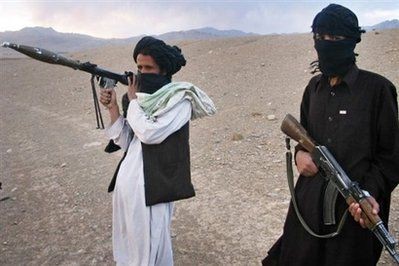
A day after Taliban fighters stunned the world with photographs of themselves embracing and celebrating Eid with personnel of the Afghan security forces, the Taliban leadership announced its decision not to extend the ceasefire. This dashed the hopes of millions of Afghans who were looking forward to a respite from the war. While the Taliban’s refusal to extend the ceasefire is disappointing, it is not the end of the road for the peace process. In recent months, Afghanistan has witnessed powerful demonstrations calling on the government and the Taliban to end the fighting. President Ashraf Ghani must draw on these peace constituencies to keep the peace process alive.

BACKGROUND: Afghanistan has seen unprecedented violence this year – even supposedly tightly guarded neighborhoods in Kabul have come under repeated attack from the Taliban and its affiliated Haqqani Network, as well as the Islamic State of Khorasan Province (ISKP), the Afghan branch of the terrorist organization known as the Islamic State of Iraq and Syria (ISIS).

Under these circumstances, President Ghani offered the Taliban “unconditional talks” on February 28, offering the Taliban recognition as a political party, a ceasefire, an exchange of prisoners, and permission to set up an office in Kabul.

Unlike in the past, the Taliban did not reject the offer immediately. They remained silent for several weeks, which analysts attributed to ongoing discussions within the group on whether or not to accept Ghani’s olive branch. In late April, while announcing the start of their annual “spring offensive,” the Taliban finally rejected the government’s offer to hold talks, describing it as a “conspiracy” to divert public attention “from the illegitimate foreign occupation of the country.”

Yet Ghani announced a unilateral ceasefire on June 7, coinciding with the end of the Muslim fasting month of Ramadan. His offer excluded other militant groups, such as ISKP. This time the Taliban announced a three-day truce against the Afghan police and soldiers, for the first time since their ouster from power in late 2001. Their fighters, however, would continue their attacks on the U.S.-led troops in Afghanistan.

The first day of the Taliban’s ceasefire saw unprecedented scenes of Eid celebrations in Afghanistan, with Taliban fighters embracing Afghan soldiers and taking selfies with civilians. On the second day, Ghani announced that his government would extend the ceasefire for an additional 10 days. However, later the same day, a suicide attack on a gathering of civilians, security forces and Taliban militants at an Eid celebration in Nangarhar killed at least 25 people. On the final day of the Taliban’s three-day truce, another suicide attack in Nangarhar killed fifteen people and injured 45. Both attacks have been attributed to ISKP.

Within hours of the second attack, the Taliban announced that they would not extend the ceasefire. “Our fighters will now resume their operations across the country against the foreign invaders and their internal puppets,” its spokesperson said.

IMPLICATIONS: Those skeptical of a political and negotiated solution to the Afghan conflict will argue that the Taliban reaffirmed their commitment to violence by ending the ceasefire even before it could take root. Indeed, the Taliban carried out a major attack on the security forces just hours before their ceasefire took effect and ended it at the first sign of trouble.

Still, the ceasefire was a giant step for the Taliban, which have been in a state of continuous combat throughout the 24 years since their emergence. Consequently, upholding a ceasefire, albeit for a very short period, was hugely significant and perhaps even confusing for the organization. After the suicide attacks at Nangarhar, the Taliban slipped into their default mode, i.e. fighting. The Taliban leadership likely decided to end the truce fearing a revolt from commanders who opposed the ceasefire in the first place.

Expecting the Taliban to participate in talks or even extend the ceasefire at the present juncture is unrealistic; they are currently in a resurgent mode and gaining ground, and probably believe that victory is possible on the battlefield and within its grasp. A ceasefire offer from the government will likely be more productive when the Taliban are on the defensive.

Although those in the Afghan government and the international community who favor talks with the Taliban will be disappointed with their failure to extend the truce, this is not the end of the road. A peace process is a long and arduous process with periods of strife punctuated by ceasefires. The Taliban’s announcement of a ceasefire was a breakthrough, and they could become more amenable to such ceasefires, perhaps for longer periods, in the future.

Several factors, foreign and domestic, seemingly contributed to the ceasefire. Pakistani media has claimed that Pakistan and China “played a key role in brokering the ceasefire deal.” Although none of the main actors in the conflict has confirmed these claims, China has facilitated talks between the Afghan government and the Taliban as well as between Pakistan and Afghanistan. In December last year, the Chinese, Pakistani and Afghan governments jointly called on the Taliban to engage in talks. Ghani’s offer followed soon thereafter. If the Pakistani media reports are true, the ceasefires were the first tangible results of China’s efforts as a peace broker in Afghanistan.

U.S. President Donald Trump’s suspension of US$ 900 million in security aid to Pakistan earlier this year could also have prompted the Pakistani military to nudge the Taliban to announce the ceasefire, so that the U.S. would resume the aid. Despite their different approaches, there is scope for the U.S. and China to coordinate their efforts in Afghanistan.

International conflict resolution efforts are rarely successful in the absence of a favorable domestic situation, and growing public sentiment in favor of peace also pushed the Afghan government and the Taliban to announce ceasefires. In recent months, Afghanistan has witnessed scores of street demonstrations critical of both the Ghani government and the Taliban, and demanding peace. Indeed, Helmand province, often described as the Taliban’s “southern heartland,” has been the epicenter of powerful protests. Activists even marched from Helmand to Kabul to rally support for their cause.

Several parliamentarians have accused Ghani of announcing the ceasefire without consulting them. Amrullah Saleh, the former chief of the National Directorate of Security (NDS) and a strong critic of Ghani, opposed the ceasefire offer as it would enable Taliban fighters to infiltrate cities for future attacks. If this proves correct in the coming weeks, Ghani’s critics will stand vindicated and will weaken Ghani’s already slipping hold on power.

The recent experience will likely prompt internal contradictions also within the Taliban, whose leadership was seemingly caught off-guard by the hunger for normalcy among its rank and file. The bonhomie between Taliban fighters, security forces and civilians has reportedly annoyed the leadership. For many Taliban fighters, the recent ceasefire was an eye-opener – they experienced “peace” and the joys of civilian life for the first time. This could weaken the grip of hardliners within the Taliban.

Since early 2015, clashes between the Taliban and the ISKP have grown in frequency and ferocity. Although the ISKP was initially able to win over a few disgruntled Taliban commanders and fighters, gaining ground in Nangarhar and Farah provinces, the Taliban has since dislodged the ISKP from Farah and confined it to a few districts in Nangarhar. However, the ISKP has continued to carry out high-profile attacks in Kabul, a matter of serious concern to the Taliban as this could eat into their support from friendly foreign governments and intelligence agencies funding Islamist extremism. Eliminating the ISKP is therefore a priority for both the Taliban and the Afghan government. The two ISKP attacks during the recent ceasefire, killing both Taliban fighters and Afghan security forces, reminded the government and the Taliban that they share a common enemy, which opens space for future collaboration.

CONCLUSIONS: The recent ceasefires provide useful insights into the Afghan conflict. The Taliban have signaled that they are not averse to ceasefires per se, and that a better-timed government initiative could persuade them to reciprocate. External actors can at best support a ceasefire and talks; requiring a better co-ordination of external efforts. Yet favorable domestic conditions are key to building a sustainable peace. The recent experience underscores the role that the Afghan public can play in pushing the conflicting actors to announce a ceasefire. It shows the importance of strategically building peace constituencies among the masses as well as the usefulness of a bottom-up approach to peacebuilding.

Although disappointing, the Taliban’s refusal to extend the ceasefire does not spell the end of the peace process. The Ghani government should persist with its efforts to get the Taliban to the negotiating table. The recent ceasefires have likely incentivized changes within the Taliban. Many of its fighters, who participated in the Eid celebrations, seemed weary of the endless fighting and keen to return to civilian life. Far from being a blunder, Ghani’s ceasefire has opened up space for a peace process in Afghanistan.
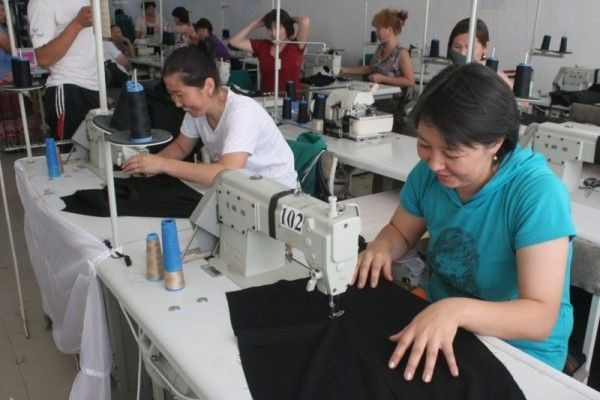

USAID helps Kyrgyzstan garment producers break into international markets

BISHKEK (TCA) — On June 28, the United States Agency for International Development (USAID) hosted a business forum to create a networking platform for Kyrgyzstani garment manufacturers and foreign brands and buyers. The “Technologies, Investments and Opportunities for the Textile and Garment Industry of Kyrgyzstan” forum brought together over 20 European and Russian brands and fashion retailers, international apparel equipment manufacturers, and software developers with Kyrgyzstani apparel firms and factories. An exhibition of the latest garment technologies and business-to-business meetings for buyers, investors, and Kyrgyzstani apparel manufacturers took place during the forum, the US Embassy in Kyrgyzstan reported.

Continue reading

EBRD and EU promote export engagement of Turkmenistan SMEs

ASHGABAT (TCA) — Promoting foreign trade activity and raising awareness of the opportunities and challenges associated with exports was the goal of a workshop in Ashgabat, the capital of Turkmenistan, organised by the European Bank for Reconstruction and Development (EBRD) with EU donor funding and in partnership with the EU Project “Support for Further Sustainable Agriculture and Rural Development in Turkmenistan – Phase III”, the EBRD said on June 28.

Continue reading

Kyrgyzstan and EU address reforms and development cooperation

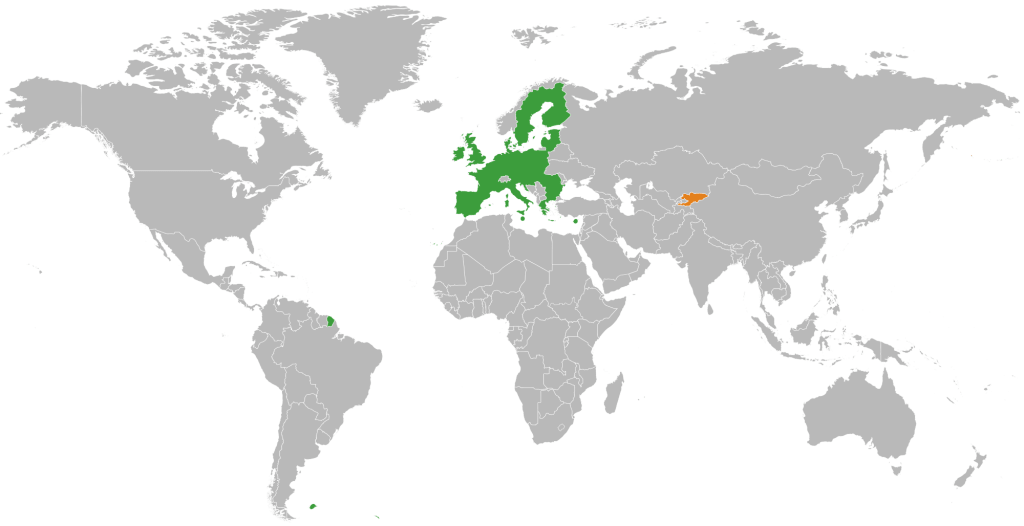
BISHKEK (TCA) — The European Union and the Kyrgyz Republic held their 15th Cooperation Committee meeting on 28 June in Bishkek. The Cooperation Committee reaffirmed their mutual commitment to continue and strengthen cooperation in a number of areas, political, security and sustainable economic development, the Delegation of the European Union to the Kyrgyz Republic reported.

Continue reading

Kyrgyzstan: President addresses the Parliament and nation

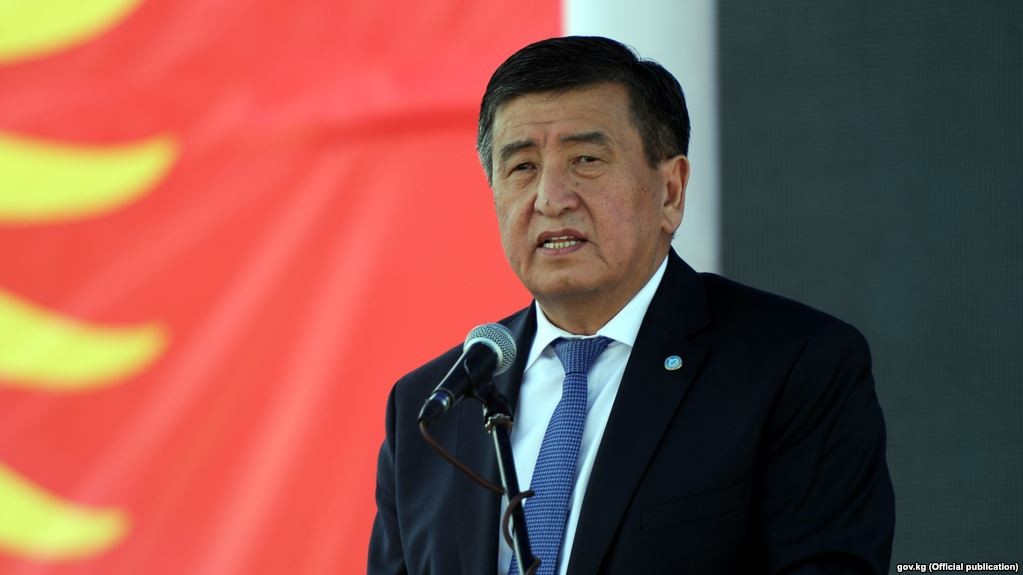
BISHKEK (TCA) — On June 27, at the end of the Parliament’s spring session, the President of Kyrgyzstan Sooronbai Jeenbekov addressed the Parliament and the people outlining priorities of the country’s development.

Tasks unfulfilled

The current situation in the country needs changes, President Jeenbekov said. Many tasks have been accumulated and require immediate resolution.

During the years of independence the country has not obtained the desired result in the economic development. There are no close economic ties between the regions and industries.

Despite good legislation, the investment attractiveness of the country leaves much to be desired. “It should be openly acknowledged that due to corruption, many investments went to other countries,” the President said.

The basis of the market economy — the property right protection and compliance with the terms of the contracts — are not always respected. There have been cases of raiding, Jeenbekov said.

In the state administration, there were cases of protection of economic interests of a narrow circle of persons. As a result, the interests of the country were damaged.

Radical reforms needed

It is necessary to build a state in which the rights of each citizen should be strictly observed. For this, it is necessary to carry out cardinal reforms, Jeenbekov said.

The judicial reform is the most important. In 2019, a new and crucial stage in the life of society and the State will begin. The results of judicial reform will lead society to positive changes.

New codes and laws regulating the judicial and legal sphere will come into force. Strong measures will be taken against those who will try to sabotage the reforms. The Government should allocate the necessary funds to implement these tasks.

Fighting corruption

The society is dissatisfied with the fact that state bodies designed to fight corruption “acted unfairly themselves”. The most important task — the reform of law enforcement bodies — has not been solved.

The tax and customs policy failed to ensure the transparent and non-corrupt work of the state bodies. Various shadow schemes damaged the state budget and adversely affected the solution of social problems.

“The political opponents will not be punished under the guise of anti-corruption struggle. This struggle will not be politically motivated. It will be directed against violations of the law and economic crimes,” the President stressed.

It is necessary to establish fair and transparent public administration and achieve transparency in the decision-making process. The people should see the results of this struggle in their daily lives including changes in public service, business and social life.

“Each person who violates the law, especially the ones who run their dirty hands into the state budget, whoever they are, must necessarily bear a severe punishment,” the President said.

From July 1, 2018, the verification of the authenticity of (tax) declarations of officials of the Office of the President, Government, Parliament, judges, and law enforcement agencies will begin. This is a very important component in the fight against corruption. “Each official should live by the means that he earned with honest labor,” Jeenbekov concluded.

Community support

The fight against corruption needs the society’s support, its conscious and active position. In the meantime, the following thinking predominates: “Maybe he is a thief, but he is our fellow countryman.” There were cases when population of villages protected corrupt persons, collected signatures and sent them with a request to release them from custody.

It is necessary to create a society in which a corrupt official should feel the hatred of all his compatriots, the President believes.

Civil servant salary

Salaries of civil servants should cover at least their minimum needs. The Government and Parliament should jointly resolve the issue of phased increase in wages, identifying sources of funding.

Employees of state and municipal bodies should be appointed to posts only through fair competition.

It is necessary to provide career growth for the best specialists and create a national personnel reserve. Technologies that ensure transparency in the decision-making process of state bodies will be widely used. The vast majority of public services will be transferred into electronic format.

Development of regions

The budgetary policy should be brought into line with the goals of regional development. It is especially important to attract foreign investments and grants and effectively use them. The Parliament and Government should adopt laws that expand the rights and responsibilities of local authorities.

A working group will be created, which will include representatives of all government branches. The WG will conduct a thorough analysis and objectively assess the benefits and risks of the reform.

National projects

In a market economy, the state should pay special attention to infrastructure. To improve its investment attractiveness, Kyrgyzstan needs to build roads and railways, improve power transmission lines and communications.

The country has to get out of the infrastructure impasse and become a transit country reaching China and Eurasian seaports. Therefore, Kyrgyzstan will actively participate in international projects within the Great Silk Road.

The President spoke about medium-term and long-term infrastructure projects including the China-Kyrgyzstan-Uzbekistan railway, North-South alternative motor road, motor road around Lake Issyk-Kul, as well as the restoration of domestic flights.

Mining industry

“It is necessary to fully use our advantages in the mining industry,” Jeenbekov said. The activities of this sector should be aimed at the development of small towns and villages.

It is necessary to eliminate factors that impede the mining development. “It is well known that many cases in this sphere are politicized and, as a consequence, have a negative impact on the investment climate in the country,” the President said, adding that relevant state bodies together with investors should actively conduct outreach work among local residents.

Investment climate

The most important thing for any investor is the honesty of authorities and fairness of the judicial system.

“It is necessary to stop groundless interference of inspection bodies in business affairs. If they [inspection bodies] prefer to perform the functions of a partner rather than a punitive body, then there will be good business conditions,” Jeenbekov said.

Officials who exert pressure on entrepreneurs with corruption motives, obstruct businesses, must be severely punished.

“We must stop choking business. If we achieve this, we can give a new impetus for business development,” he said.

Tax regulation should be transparent and understandable for each entrepreneur and convenient for execution. Tax policy should bring the economy out of the shadows and ensure investment growth.

Particular importance should be attached to the quality of education. The development of human capital, the training of specialists in demand on the labor market of the future is a priority.

Parliamentary elections

In 2020, the Parliamentary elections will be held, the President said, adding that he supports the development of parliamentary democracy in Kyrgyzstan.

All changes to the electoral legislation should be adopted one year before the election date.

Opinions

Many MPs believe that the President’s speech will be a good impetus to the country’s development. However, some MPs expected more from the speech. “I thought that the President would offer us ways of solving problems but there were just the problems mentioned,” MP Iskhak Masaliyev told Vesti.kg.

“We did not hear something radically new. Sooronbai Jeenbekov listed Atambayev’s projects,” Cholpon Ismailova, an independent journalist, told K-news. The only news was about the date of the next parliamentary elections in 2020, as there were rumors that the new presidential team planned early elections.

The previous presidents, Akayev, Bakiyev and Atambayev, said the same words about the intention to build a fair country and carry out structural reforms. There is still confidence in President Jeenbekov, but he should move from words to deeds.