• KGS/USD = 0.01143 -0%
  • KZT/USD = 0.00192 -0%
  • TJS/USD = 0.10820 0.19%
  • UZS/USD = 0.00008 0%
  • TMT/USD = 0.28575 0%
  • KGS/USD = 0.01143 -0%
  • KZT/USD = 0.00192 -0%
  • TJS/USD = 0.10820 0.19%
  • UZS/USD = 0.00008 0%
  • TMT/USD = 0.28575 0%
  • KGS/USD = 0.01143 -0%
  • KZT/USD = 0.00192 -0%
  • TJS/USD = 0.10820 0.19%
  • UZS/USD = 0.00008 0%
  • TMT/USD = 0.28575 0%
  • KGS/USD = 0.01143 -0%
  • KZT/USD = 0.00192 -0%
  • TJS/USD = 0.10820 0.19%
  • UZS/USD = 0.00008 0%
  • TMT/USD = 0.28575 0%
  • KGS/USD = 0.01143 -0%
  • KZT/USD = 0.00192 -0%
  • TJS/USD = 0.10820 0.19%
  • UZS/USD = 0.00008 0%
  • TMT/USD = 0.28575 0%
  • KGS/USD = 0.01143 -0%
  • KZT/USD = 0.00192 -0%
  • TJS/USD = 0.10820 0.19%
  • UZS/USD = 0.00008 0%
  • TMT/USD = 0.28575 0%
  • KGS/USD = 0.01143 -0%
  • KZT/USD = 0.00192 -0%
  • TJS/USD = 0.10820 0.19%
  • UZS/USD = 0.00008 0%
  • TMT/USD = 0.28575 0%
  • KGS/USD = 0.01143 -0%
  • KZT/USD = 0.00192 -0%
  • TJS/USD = 0.10820 0.19%
  • UZS/USD = 0.00008 0%
  • TMT/USD = 0.28575 0%
14 December 2025

High-ranking official caught taking half-million dollar bribe in Tajikistan

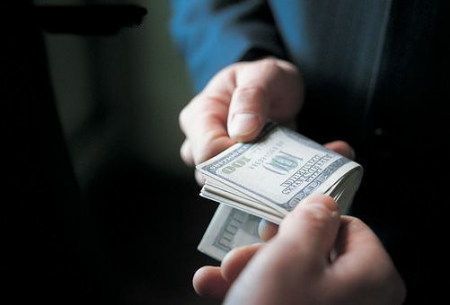
DUSHANBE (TCA) — Tajikistan’s Anticorruption Agency says a top government official has been caught while taking a $490,000 bribe, RFE/RL’s Tajik Service reports.

The agency said on October 3 that Askar Nuralizoda of the Economic Development Ministry’s department for investments was caught red-handed accepting the cash bribe in a restaurant in Dushanbe on September 28.

Investigators also found $10,000 in Nuralizoda’s home, the agency added.

It said that Nuralizoda requested a $1 million bribe and a three-room apartment from a resident of the Jaloliddini Balhi district.

In exchange, the official would have included the development of poultry production in the district in the 2016-2020 state investment program.

Authorities in the economically struggling Central Asian country launched an anticorruption crackdown in April, targeting officials and ex-officials of the Anticorruption Agency and the Customs Service.

Last month, a former top officer at the Anticorruption Agency, Firuz Holmurodzoda, was convicted on corruption charges and sentenced to 15 years in prison.

And in July, the Supreme Court sentenced former Anticorruption Agency Deputy Director Davlatbek Hairzoda and an ex-deputy chief of the Customs Service in Sughd Province, Faridun Benazirzoda, to 10.5 years in prison on similar charges.

Some analysts believe the ongoing anti-corruption campaign in Tajikistan is a part of the struggle of the elites amid the increasing efforts of the ruling family to consolidate their grip on power.

Destination CIS: India looks to trade with Central Asia

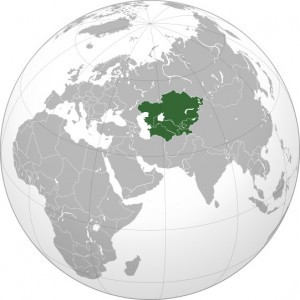
NEW DELHI (TCA) — How important the Central Asian Republics (CARs) are becoming to India was evident when a two-day long conference was held in the Indian capital New Delhi late in September to encourage trade and tourism with these countries. While titled ‘Destination CIS’, the emphasis was clearly on Kazakhstan, Kyrgyzstan, Uzbekistan and Tajikistan, which were also the partner countries of the conference. Only one single session was devoted to business with the Russian region of Rostov. The rest of the sessions of the conference, which was the first of its kind, were focused on the CARs mentioned above. Turkmenistan did not participate.

With India’s efforts to increase exports and make the country a manufacturing hub with different schemes like Make in India, Skill India and others, increasingly new opportunities are being created for enhancing international economic cooperation. “At this juncture, where the traditional and the developed markets are getting saturated, it is essential for the developing economies to find ways to boost trade and investment between them. The CIS region, one of the fastest growing regions of the world, offers India tremendous opportunities across various sectors,” explained Mr. Niraj, who is Secretary, International Affairs, of the PHD Chamber of Commerce, which had organized the conference.

What made the conference particularly opportune was that this year also marks the 25th anniversary of the establishment of diplomatic relations between India and most of the CIS countries.

The CARs have had trade and cultural links with India going centuries back. The current government of Prime Minister Narendra Modi is keen to revive these links to the resource rich region, formulating the Connect Central Asia policy. To that end he has visited all the CARs, with Kazakhstan being the most recent destination. With an increasing Chinese footprint in the region – with $10 billion in grants and aid – India is also keen to seize the opportunities present there. Indian trade turnover with the region on the other hand is only about 2.5 billion dollars.

Four major areas with great potential for bilateral trade and cooperation that were identified were: food security in the CIS countries, promotion of two way tourism, finance and logistics, and promotion and delivery of affordable world class healthcare.

While India offers the CARs a huge market for their goods – mainly dry fruits, handicrafts, and tourists, particularly those looking for affordable but quality healthcare, the country is also interested in the minerals and hydrocarbons of the Central Asia region.

A major drawback for the country to strengthen and enhance ties with the region is connectivity. India has no direct access to the CARs, and any overland route has to go through Pakistan, its arch rival.

To that end India is pinning its hopes on the International North South Transport Corridor which is to link India via Iran and the Caspian Sea through a multi-modal transport system to Central Asia, and beyond to Astrakhan and Russia.

India is also looking into a free trade agreement with the Eurasian Economic Union which will significantly increase trade profitability.

At the same time, as Dr. Ram Upendra Das, Head and Professor for Centre for Regional Trade, Department of Commerce, the Indian Ministry of Commerce and Industry, pointed out, for most Indian businesses the CARs were an alien entity with many even unable to pronounce the names properly.

The conference was therefore an attempt to bridge the information gap and clear misconceptions about doing trade with the region.

As Ms. Samargul Adamkova pointed out, manufacturing in the Kyrgyz Republic, for instance, would instantly find a ready market of 183 million people in the Eurasian Economic Union member countries, thereby offering huge incentives for Indian investments.

A parallel exhibition showcasing the achievements, tourism industry and handicrafts of the region added to the knowledge about the CARs that the conference sought to disseminate.

* Aditi Bhaduri is an independent journalist and political analyst specializing in international affairs and foreign policy. She writes for many national and international publications

Kyrgyzstan: smears soil election campaign

BISHKEK (TCA) — With less than two weeks left before the presidential poll in Kyrgyzstan, the election campaign is becoming even more tougher, employing black PR and so-called “administrative resources”. We are republishing this article on the issue, originally published by EurasiaNet.org:

Kyrgyzstan’s competitive presidential election campaign is taking a dirty turn, as strategists are relying heavily on smear tactics to sway undecided voters. One of the two front-runners, the multimillionaire former prime minister Omurbek Babanov, has been on the receiving end of much of the negative campaigning.

In the most sensational development to date, Kanatbek Isayev, an MP said to be backing Babanov’s presidential bid, was arrested on September 30 and is facing accusations that he plotted to foment riots. Prosecutors contend Isayev allegedly reached out to criminal groups, seeking assistance to provoke violent unrest under the guise of protesting the outcome of the October 15 election, in the event that his favored candidate did not prevail.

Babanov, speaking at an October 1 news conference, was outspoken in defending Isayev. “We have to clear up this situation. Law enforcement officials need to investigate this matter dispassionately,” Babanov said. “Kanat Isayev is a principled person who has a clear understanding of the law.”

The Isayev case marks the peak — so far — of the gloves-off battle against Babanov. His main rival for the presidency is former prime minister Sooronbai Jeenbekov, who is clearly the candidate preferred by the outgoing administration of Almazbek Atambayev.

The incumbent is stepping down due to a constitutionally mandated term limit. Jeenbekov is widely viewed as a candidate who would perpetuate the status quo.

In the south, Babanov’s opponents have resorted to stirring up the toxic issue of relations between the Kyrgyz and ethnic Uzbek communities. Clashes between the communities in 2010 left hundreds, mainly Uzbeks, dead.

Crowds of people in the cities of Osh and Jalal-Abad picketed Babanov’s local campaign headquarters on September 30 in protest over excerpts from a speech the candidate gave two days earlier in Osh. Sections of the speech circulated on social media in which Babanov appeared to utter the phrases “better to die standing than to live on your knees,” and “if any policeman touches an Uzbek, he will be fired.”

Both comments were interpreted as evidence of Babanov’s covert sympathy for the Uzbek minority — a politically fatal stance for any presidential hopeful in Kyrgyzstan.

Representatives of Babanov’s campaign insist the comments were taken out of context to distort their original meaning. “The people that edited and distributed this video should be brought to justice for inciting ethnic hatred,” Babanov’s campaign team said in a statement.

Instead, the State Committee for National Security, or GKNB, has lent official credence to the potential explosiveness of Babanov’s purported comments by opening a formal investigation into his speech.

Babanov claims that the spike in “black PR” against him is linked to public opinion polling supposedly undertaken on behalf of the GKNB that shows him likely winning the election in the first round. “Our analysis also confirms that I will win with 65 percent of the vote,” he said.

Although security service representatives typically refrain from public comments about strictly political matters, on this occasion they swiftly denied the claims. “Babanov’s statements do not reflect reality. Neither he nor any supposed election polls hold any interest for national security entities,” the GKNB said in a statement on October 2.

Dog-whistle messaging on ethnic themes is playing a prominent role in this campaign. Babanov’s online detractors on occasion raise the fact that he was at one time, in the 1990s, actually a citizen of Kazakhstan. This line was added pungency on September 19, when the office of Kazakhstan’s President Nursultan Nazarbayev announced he had met for talks with Babanov. Nazarbayev’s glowing remarks during the encounter, which were widely reported in Kazakhstani media, were widely interpreted as a tacit endorsement.

With the campaign entering its final weeks, Sheradil Baktygulov, an independent political analyst, said the last-minute attacks were intended to scare undecided voters away from Babanov. The Isayev case, in particular, strikes a sensitive nerve for many Kyrgyz, given the country’s history of violent street politics over the past decade or so. In addition to the interethnic rioting in southern Kyrgyzstan, uprisings in Bishkek have toppled two presidential administrations since 2005.

“People are tired of unrest, coups, looting, and so any claims about possible violations of public order will be perceived in an extremely negative light,” Baktygulov told EurasiaNet.org.

Political sciences professor Marat Kazakpayev agreed that recent developments are bad news for Babanov’s chances. “This is going to have a negative impact on his reputation. People will think that he really is mixed up corruption and all kinds of schemes,” he said.

Attacks in the other direction have tended to be more oblique.

The worst that is mostly said of the only other viable contender, Jeenbekov, is that he lacks charisma and is a puppet of the elite surrounding the outgoing Atambayev. Accordingly, some of the most direct attacks are being leveled at the recently appointed prime minister and Atambayev loyalist, Sapar Isakov. Although the office of the premier is ostensibly far lower in the pecking order than that of the president, the assumption is that Jeenbekov will, if he wins, have to share power with Isakov.

Around the time Isakov was named prime minister, in August, a slickly made video titled “Who Is This Sapar Isakov?” found its way onto YouTube. A grave-voiced narrator charged Isakov with responsibility for a recent failed hydropower dam deal, as well as bungling while acting as the chief of staff in the presidential administration.

It is not known who was behind the video, although its subject appeared to have an idea. Speaking to a friendly media outlet, Isakov described the hit-job as the work of “one of the candidates running for president who thinks that money decides everything and will not hesitate to stooping to such lows.” The comment was a clear reference to the multimillionaire Babanov, who has easily outspent his rivals in the campaign season.

In the absence of reliable polling, observers say it is difficult to gauge what kind of impact the various smears are having. Some, however, sense that resorting to rough tactics may backfire.

“Two weeks ago I thought that Babanov was a businessman who was better off just sticking to running shopping centers, instead of state affairs,” Daniyar Autman, an outspoken columnist, wrote on his Facebook page. “And then I heard that his mother was a Kurd, that his wife was a Chechen, and that he is no clean-blooded Kyrgyz and that he is an Uzbek separatist plotting to overthrow the government, and all of a sudden Babanov has begun to grow quickly into Gulliver in Lilliput.”

Kazakhstan striving to boost small and medium enterprise

ASTANA (TCA) — The Government of Kazakhstan aims to increase the share of small and medium enterprises (SMEs) in the country’s GDP up to 50% by 2050. As of 1 September 2017, the country had 1,158,680 SMEs that employed more than 3 million people. Compared with the same period last year, there was an increase in the number of SMEs by 6.3%, the official website of the Prime Minister of Kazakhstan reports.

Continue reading