• KGS/USD = 0.01144 0%
  • KZT/USD = 0.00210 0%
  • TJS/USD = 0.10438 0%
  • UZS/USD = 0.00008 0%
  • TMT/USD = 0.28490 0%
  • KGS/USD = 0.01144 0%
  • KZT/USD = 0.00210 0%
  • TJS/USD = 0.10438 0%
  • UZS/USD = 0.00008 0%
  • TMT/USD = 0.28490 0%
  • KGS/USD = 0.01144 0%
  • KZT/USD = 0.00210 0%
  • TJS/USD = 0.10438 0%
  • UZS/USD = 0.00008 0%
  • TMT/USD = 0.28490 0%
  • KGS/USD = 0.01144 0%
  • KZT/USD = 0.00210 0%
  • TJS/USD = 0.10438 0%
  • UZS/USD = 0.00008 0%
  • TMT/USD = 0.28490 0%
  • KGS/USD = 0.01144 0%
  • KZT/USD = 0.00210 0%
  • TJS/USD = 0.10438 0%
  • UZS/USD = 0.00008 0%
  • TMT/USD = 0.28490 0%
  • KGS/USD = 0.01144 0%
  • KZT/USD = 0.00210 0%
  • TJS/USD = 0.10438 0%
  • UZS/USD = 0.00008 0%
  • TMT/USD = 0.28490 0%
  • KGS/USD = 0.01144 0%
  • KZT/USD = 0.00210 0%
  • TJS/USD = 0.10438 0%
  • UZS/USD = 0.00008 0%
  • TMT/USD = 0.28490 0%
  • KGS/USD = 0.01144 0%
  • KZT/USD = 0.00210 0%
  • TJS/USD = 0.10438 0%
  • UZS/USD = 0.00008 0%
  • TMT/USD = 0.28490 0%

Kyrgyzstan to review its civil aviation policy

BISHKEK (TCA) — Bishkek-Tashkent-Bishkek air flight has been resumed late in December 2017, to run twice a week. In early 2018, it is also planned to resume the Osh-Tashkent-Osh flight.

The agreement on the resumption of air communications between Kyrgyzstan and Uzbekistan was reached during the official visit of Kyrgyzstan President Sooronbai Jeenbekov to Tashkent in December.

To expand the geography of air flights, Kyrgyzstan needs to improve conditions for its aviation development.

EU blacklist

It is a shame that the national airline company has only one plane, Prime Minister of Kyrgyzstan Sapar Isakov said recently at the Business Development and Investment Council meeting to discuss the country’s tourism development program.

According to Talgart Nurbayev, Director General of the state owned Air Manas airline, it is difficult for Kyrgyzstan to purchase aircraft through leasing because the country is blacklisted by the European Union. Staying on the EU blacklist increases leasing payments twice, he said.

To exit from the blacklist, Kyrgyzstan has to meet the requirements of the International Civil Aviation Organization (ICAO) and IATA Operational Safety Audit (IOSA), which requires large financial costs.

Prime Minister Isakov believes that transition to the open skies policy is necessary for Kyrgyzstan, so that citizens could fly to distant countries directly and without extra costs.

By the end of 2018, all ICAO recommendations will be fully implemented and Kyrgyzstan will be able to apply for the lifting of the flight restrictions in Europe by the end of 2019, Director of the Civil Aviation Agency of Kyrgyzstan (CAA) Kurmanbek Akyshev said.

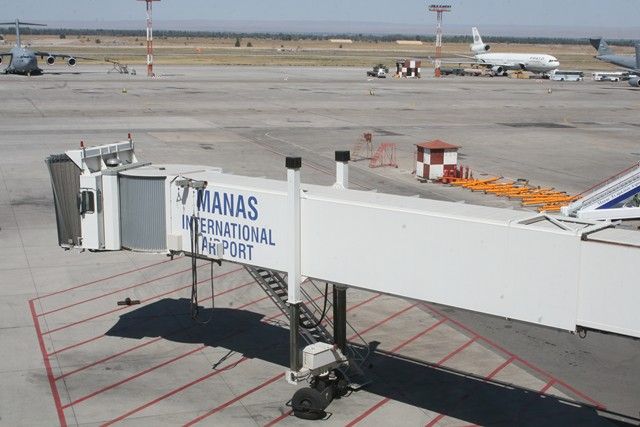
In December 2017, ICAO specialists checked the Manas International Airport (MIA), the country’s airlines and the CAA. The ICAO experts’ conclusions were much more positive than in previous years when two audits resulted in much criticism.

Kyrgyzstan’s airlines have been on the European Union blacklist since 2006.

Airports’ prospects

Passengers departing from Bishkek and Osh often have to travel to many foreign countries not directly but changing airlines, which is inconvenient and expensive.

For 26 years of independence, the state has not been able to fundamentally reform the aviation industry. The current airport management promised that with 8 billion soms of credit it would rectify the situation. But the loan would be a debt to be paid out by taxpayers. Even if the MIA receives this money, there is no guarantee that there will be a result and the quality of services will improve. Therefore, it would be better to assign this task on a reliable foreign investor.

The transfer of large airports to the trust management of a foreign company is a common international practice, and local citizens should not be afraid of this practice, the local business community says. In many countries, the state and private business work in partnership. The issue currently under discussion should be resolved within the public-private partnership. There are many companies in the world that have proven their professionalism, such as TAV from Turkey or companies from South Korea and Singapore.

Last November, Prime Minister Isakov met with Mustafa Sener, executive director of TAV Airports Holding, who said the holding, being among the leading airport operators in the world, had previously carried out large projects in Georgia and Macedonia. TAV Airports Holding is interested in investing in Kyrgyzstan, Sener said.

This issue was discussed in the Parliament of Kyrgyzstan.

“Kyrgyzstan is a landlocked country located in the mountains. For this reason, there are only two ways to go abroad — by air and by ground transport. So we need to develop aviation, and there is no other alternative,” Prime Minister Isakov said at the parliament.

Citizens of Kyrgyzstan should have a choice by which company to fly. “We fly to other countries through Moscow or Istanbul because we do not have a choice. I think this is wrong,” he said.

The State should review its civil aviation policy. “We should be realistic and understand that we will not be able to develop our airports ourselves,” Isakov said.

Many large companies are interested in Kyrgyzstan and TAV Airports Holding is among them. “We will definitely negotiate with them but it is MPs who will make a decision whether to give the MIA into the concession or not,” Prime Minister concluded.

The Investment Promotion and Protection Agency of Kyrgyzstan is studying the world experience in order to choose the model most acceptable for Kyrgyzstan. The Agency intends to select five large companies working in this field and hold a tender among them.

There are also discussions about the possible sale of a 79% state stake in the MIA JSC. The State Property Management Fund explained that the MIA will not be sold because it not only brings profit but also is a strategic facility.

‘No changes needed’

Some MPs and experts believe that nothing needs to be changed, and the Manas International Airport should continue to develop independently. The MIA is among the main taxpayers, paying at least 1.5 billion soms in dividends to the state budget annually. When the American airbase was leaving the MIA, many predicted that the airport would “wither” but thanks to the good management, it is among the main payers of dividends in the country. In addition, the MIA at its own expense began to reconstruct the airports in the country’s regions.

The international airport is a complex facility, where various bodies perform their functions, and the quality of passenger service depends on how well all these bodies interact, MIA Board Chairman Emir Chukuyev said. For instance, the State Border Service performs border control, and it depends on them whether passengers will pass border controls without delay.

Customs control is the competence of the State Customs Service. To meet international standards, it should create a so-called green corridor. The level of passenger service also depends on the airlines that perform flights. However, passengers used to blame the airport for all the inconveniences, Chukuyev said.

Over the past five years, the MIA has increased passenger traffic by 63%, the company said. The MIA includes 11 operating airports across Kyrgyzstan — five international and six regional ones.

According to the Kyrgyz CAA, 36 airlines are currently operating in Kyrgyzstan including 32 international and four domestic airlines.

The main obstacle to the development of the airport infrastructure is the Law on Public Procurement, experts say. Long bidding procedures and other legal complexities make the MIA not competitive even among the airports in Central Asia.

Kazakhstan: taxi industry a bellwether for the economy

ALMATY (TCA) — There is a tough competition in Kazakhstan’s taxi market, with the new taxi app players and unlicensed taxi drivers competing for each customer on the streets of the largest Kazakh cities. We are republishing this article by Almaz Kumenov on the issue, originally published by EurasiaNet.org:

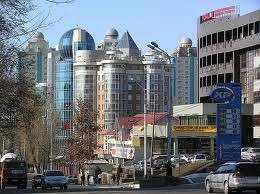
By Central Asian standards, Almaty has long been considered an expensive city. But the city’s taxi drivers may beg to differ: these days, you can get across the center for as little as a couple of dollars.

Kazakhstan is slowly crawling out of a slump induced in large part by falling oil prices, but this bellwether of the real economy tells a less straightforward story.

Aidyn, 53, an unlicensed taxi driver in Almaty, takes his passengers to work at rush-hour for just one dollar. Eurasianet.org has withheld Aidyn’s surname as unlicensed service workers fear the attention of tax inspectors.

“My passengers don’t get bored in traffic jams. I tell them jokes and interesting stories. My clients are happy that instead of being shoved about in a crowded bus they get to work in a warm car. And I barely charge them anything,” Aidyn told Eurasianet.

There are a few reasons for the low cost of taxis, not just in Almaty, but all across Kazakhstan. Foremost among them is the slide endured by the national currency over the second half of 2015, when the tenge slipped from 190 to around 380 to the dollar. Devaluation was accompanied by strict instructions from the government to enforce price controls on basic food items. The result has been a substantial fall in the cost of many goods and services in foreign currency terms.

The cost of taking taxis, however, has even fallen in tenge terms due to increasing competition. Taking a trip by car in most cities in Kazakhstan costs anywhere between 200 tenge ($0.60) and 2,000 tenge ($6) — the latter typically being the cost of a drive to the airport.

Most competitive of all are the “independent” taxi drivers. These drivers — bombila in their Russian nickname — are a staple of many post-Soviet cities, but seem particularly dominant in Kazakhstan. According to unofficial estimates, there are half a million people who will give rides in their car for some extra income. For a country of 18 million that is a remarkable number.

Because grabbing an unlicensed taxi is as easy as raising a hand while standing on the side of the road, official competitors, whose cars can take several minutes to reach a customer, struggle to compete.

One response from the authorities has been to pursue the punitive route. Police claim that they regularly stop bombila and slap fines of up to 45,000 tenge ($134) for tax avoidance.

The war on illegal drivers is cast as an effort to protect citizens’ interests.

“Many times, when the bombila are carrying female passengers, there have been disputes, and the customers have nowhere to address their complaints,” Bekmyrza Igenberdinov, the head of City Hall’s Transport Department in the capital, Astana, told reporters in September.

But for those who depend on income from operating a taxi illegally, the risk is acceptable. Aidyn said that being in his early 50s and unemployed, he has few other options. Every morning, he drives his minivan along a route picking up office managers at an appointed hour and takes them to their workplaces. “I’m lucky. I have regular passengers and a guaranteed daily income. I offer them a good tariff, I always arrive on time and they are pleased with that,” he told Eurasianet.

Even with taxi prices plummeting to seemingly impossible lows, two important market players arrived on the scene in the summer of 2016 — Uber and Russian-owned Yandex Taxi. The race to the lowest price intensified with these two companies around. In the first few months after they arrived, it became possible to take a 10-kilometer ride for around $1.

Aggressive pricing policies have given Uber and Yandex Taxi a dominant share in the taxi app market, according to industry specialists, although the picture is a little murky since the companies do not disclose how many users they each have.

And there is some overlap between the bombila model and the app market, since the former also often rely on an app called InDriver, which enables unlicensed taxis to access an Uber-style roll-call of passengers. While Uber and Yandex Taxi require a degree of standards compliance from the drivers that work with them, however, InDriver adopts a considerably more laissez-faire approach.

Inevitably, old-style taxi companies have been badly hit by all these developments.

Medet Kurmanov, chairman of the Astana Transport Companies Association, a lobbying group, said many taxi companies were pushed into bankruptcy. Out of the ashes, Kurmanov’s association last year oversaw the merging of Astana taxi companies into one brand — Astana Taxi — which is now trying to position itself as the provider of premier services in the city.

“Our cars come in a standard color, they have one dispatch center, one tariff and a uniform for the drivers. We take bank cards, the passengers are covered by insurance and we take responsibility for their security and the quality of service as a whole,” Kurmanov told Eurasianet.

In May, parliament approved legislation recognizing Astana Taxi vehicles as public transportation, thereby granting them access to bus lanes — a potentially decisive factor for attracting clients.

Astana resident Nurlan Mshanov said that he has seen a notable improvement in the quality of official taxis.

“Before, it took so long for taxi services to get cars to customers, and now they arrive and take you to your destination so much faster because they are able to go along empty lanes,” Mshanov said. “The only downside is that they are so expensive.”

In another useful endorsement, Astana City Hall announced on January 2 that it plans to do away with all its service cars and make officials travel by taxi instead. This “will allow for savings to the budget,” city hall said.

Back in Almaty, Aidyn fears that it is only a matter of time before city authorities adopt a cocktail of carrot-and-stick methods — subsidizing legal taxi companies and upping the distribution of fines — to squeeze out unlicensed drivers once and for all. It will be passengers that suffer the most, since they will end up paying more for getting around the city, he contended.

“Authorities make us out as some kind of criminals that passengers should be afraid of. But we aren’t criminals, but just regular people trying to make some money instead of sitting around and complaining that we don’t have jobs,” he said.