BISHKEK (TCA) — Bishkek-Tashkent-Bishkek air flight has been resumed late in December 2017, to run twice a week. In early 2018, it is also planned to resume the Osh-Tashkent-Osh flight.
The agreement on the resumption of air communications between Kyrgyzstan and Uzbekistan was reached during the official visit of Kyrgyzstan President Sooronbai Jeenbekov to Tashkent in December.
To expand the geography of air flights, Kyrgyzstan needs to improve conditions for its aviation development.
EU blacklist
It is a shame that the national airline company has only one plane, Prime Minister of Kyrgyzstan Sapar Isakov said recently at the Business Development and Investment Council meeting to discuss the country’s tourism development program.
According to Talgart Nurbayev, Director General of the state owned Air Manas airline, it is difficult for Kyrgyzstan to purchase aircraft through leasing because the country is blacklisted by the European Union. Staying on the EU blacklist increases leasing payments twice, he said.
To exit from the blacklist, Kyrgyzstan has to meet the requirements of the International Civil Aviation Organization (ICAO) and IATA Operational Safety Audit (IOSA), which requires large financial costs.
Prime Minister Isakov believes that transition to the open skies policy is necessary for Kyrgyzstan, so that citizens could fly to distant countries directly and without extra costs.
By the end of 2018, all ICAO recommendations will be fully implemented and Kyrgyzstan will be able to apply for the lifting of the flight restrictions in Europe by the end of 2019, Director of the Civil Aviation Agency of Kyrgyzstan (CAA) Kurmanbek Akyshev said.
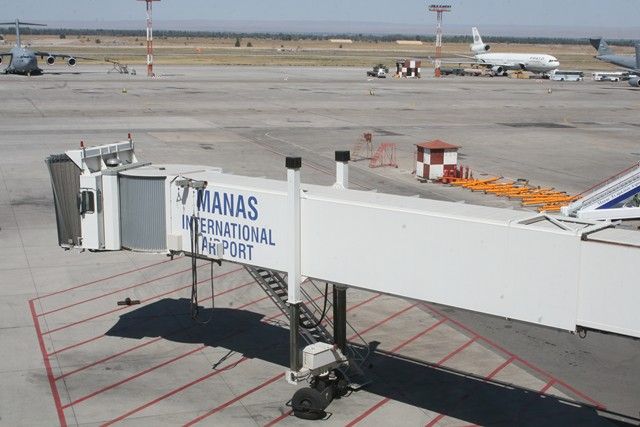
In December 2017, ICAO specialists checked the Manas International Airport (MIA), the country’s airlines and the CAA. The ICAO experts’ conclusions were much more positive than in previous years when two audits resulted in much criticism.
Kyrgyzstan’s airlines have been on the European Union blacklist since 2006.
Airports’ prospects
Passengers departing from Bishkek and Osh often have to travel to many foreign countries not directly but changing airlines, which is inconvenient and expensive.
For 26 years of independence, the state has not been able to fundamentally reform the aviation industry. The current airport management promised that with 8 billion soms of credit it would rectify the situation. But the loan would be a debt to be paid out by taxpayers. Even if the MIA receives this money, there is no guarantee that there will be a result and the quality of services will improve. Therefore, it would be better to assign this task on a reliable foreign investor.
The transfer of large airports to the trust management of a foreign company is a common international practice, and local citizens should not be afraid of this practice, the local business community says. In many countries, the state and private business work in partnership. The issue currently under discussion should be resolved within the public-private partnership. There are many companies in the world that have proven their professionalism, such as TAV from Turkey or companies from South Korea and Singapore.
Last November, Prime Minister Isakov met with Mustafa Sener, executive director of TAV Airports Holding, who said the holding, being among the leading airport operators in the world, had previously carried out large projects in Georgia and Macedonia. TAV Airports Holding is interested in investing in Kyrgyzstan, Sener said.
This issue was discussed in the Parliament of Kyrgyzstan.
“Kyrgyzstan is a landlocked country located in the mountains. For this reason, there are only two ways to go abroad — by air and by ground transport. So we need to develop aviation, and there is no other alternative,” Prime Minister Isakov said at the parliament.
Citizens of Kyrgyzstan should have a choice by which company to fly. “We fly to other countries through Moscow or Istanbul because we do not have a choice. I think this is wrong,” he said.
The State should review its civil aviation policy. “We should be realistic and understand that we will not be able to develop our airports ourselves,” Isakov said.
Many large companies are interested in Kyrgyzstan and TAV Airports Holding is among them. “We will definitely negotiate with them but it is MPs who will make a decision whether to give the MIA into the concession or not,” Prime Minister concluded.
The Investment Promotion and Protection Agency of Kyrgyzstan is studying the world experience in order to choose the model most acceptable for Kyrgyzstan. The Agency intends to select five large companies working in this field and hold a tender among them.
There are also discussions about the possible sale of a 79% state stake in the MIA JSC. The State Property Management Fund explained that the MIA will not be sold because it not only brings profit but also is a strategic facility.
‘No changes needed’
Some MPs and experts believe that nothing needs to be changed, and the Manas International Airport should continue to develop independently. The MIA is among the main taxpayers, paying at least 1.5 billion soms in dividends to the state budget annually. When the American airbase was leaving the MIA, many predicted that the airport would “wither” but thanks to the good management, it is among the main payers of dividends in the country. In addition, the MIA at its own expense began to reconstruct the airports in the country’s regions.
The international airport is a complex facility, where various bodies perform their functions, and the quality of passenger service depends on how well all these bodies interact, MIA Board Chairman Emir Chukuyev said. For instance, the State Border Service performs border control, and it depends on them whether passengers will pass border controls without delay.
Customs control is the competence of the State Customs Service. To meet international standards, it should create a so-called green corridor. The level of passenger service also depends on the airlines that perform flights. However, passengers used to blame the airport for all the inconveniences, Chukuyev said.
Over the past five years, the MIA has increased passenger traffic by 63%, the company said. The MIA includes 11 operating airports across Kyrgyzstan — five international and six regional ones.
According to the Kyrgyz CAA, 36 airlines are currently operating in Kyrgyzstan including 32 international and four domestic airlines.
The main obstacle to the development of the airport infrastructure is the Law on Public Procurement, experts say. Long bidding procedures and other legal complexities make the MIA not competitive even among the airports in Central Asia.



 TCA
TCA