• KGS/USD = 0.01144 0%
  • KZT/USD = 0.00212 0%
  • TJS/USD = 0.10456 0.19%
  • UZS/USD = 0.00008 0%
  • TMT/USD = 0.28490 0%
  • KGS/USD = 0.01144 0%
  • KZT/USD = 0.00212 0%
  • TJS/USD = 0.10456 0.19%
  • UZS/USD = 0.00008 0%
  • TMT/USD = 0.28490 0%
  • KGS/USD = 0.01144 0%
  • KZT/USD = 0.00212 0%
  • TJS/USD = 0.10456 0.19%
  • UZS/USD = 0.00008 0%
  • TMT/USD = 0.28490 0%
  • KGS/USD = 0.01144 0%
  • KZT/USD = 0.00212 0%
  • TJS/USD = 0.10456 0.19%
  • UZS/USD = 0.00008 0%
  • TMT/USD = 0.28490 0%
  • KGS/USD = 0.01144 0%
  • KZT/USD = 0.00212 0%
  • TJS/USD = 0.10456 0.19%
  • UZS/USD = 0.00008 0%
  • TMT/USD = 0.28490 0%
  • KGS/USD = 0.01144 0%
  • KZT/USD = 0.00212 0%
  • TJS/USD = 0.10456 0.19%
  • UZS/USD = 0.00008 0%
  • TMT/USD = 0.28490 0%
  • KGS/USD = 0.01144 0%
  • KZT/USD = 0.00212 0%
  • TJS/USD = 0.10456 0.19%
  • UZS/USD = 0.00008 0%
  • TMT/USD = 0.28490 0%
  • KGS/USD = 0.01144 0%
  • KZT/USD = 0.00212 0%
  • TJS/USD = 0.10456 0.19%
  • UZS/USD = 0.00008 0%
  • TMT/USD = 0.28490 0%

China-Pakistan Economic Corridor to be extended to Afghanistan

BISHKEK (TCA) — Foreign ministers of China, Pakistan and Afghanistan on December 26 agreed to discuss ways to extend the China-Pakistan Economic Corridor (CPEC) to Afghanistan, Xinhua reported. This would be part of China’s ambitious Belt and Road plan linking China with Asia and Europe.

“In the long run, through Afghanistan, we will gradually connect the CPEC with the China-Central and Western Asia Economic Corridor,” Chinese Foreign Minister Wang Yi told reporters after China-Afghanistan-Pakistan foreign ministers’ meeting in Beijing.

As important neighbor of China and Pakistan, Afghanistan has an urgent desire to develop its economy and improve people’s livelihood, and it is willing to integrate itself into the process of regional interconnection, said Wang.

Improving livelihoods in border areas may be an entry point for the extension, said Wang, noting that the three parties agreed to promote wider connectivity under the framework of the Belt and Road Initiative.

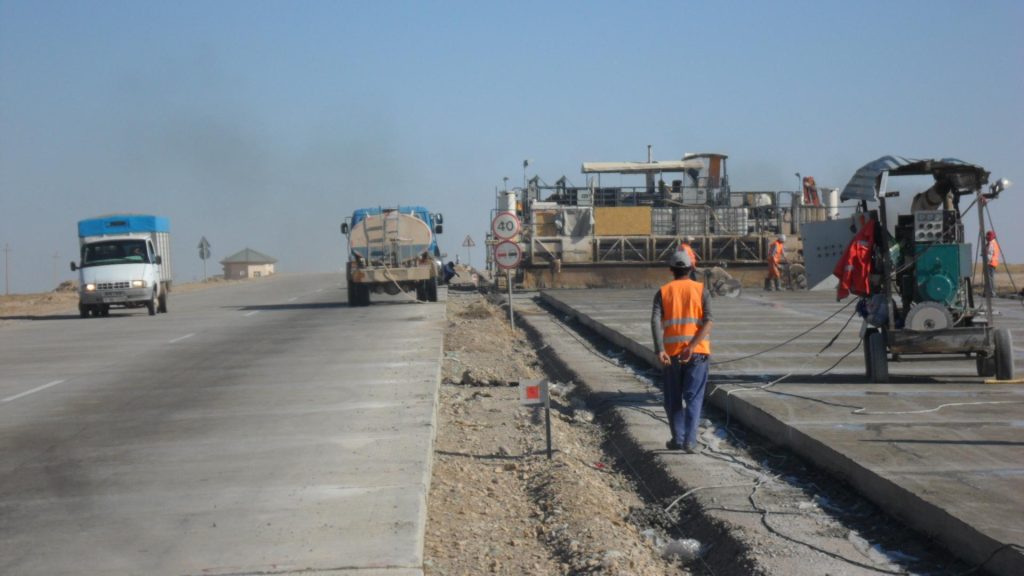
The CPEC is a network of highways, railways, pipelines and optical cables, and a flagship project under the Belt and Road Initiative, currently under construction throughout Pakistan.

The 3,000-km-long corridor starts from China’s Kashgar and ends at Pakistan’s Gwadar, connecting the Silk Road Economic Belt in the north and the 21st Century Maritime Silk Road in the south.

Wang said the CPEC has not targeted at any third party, but hopes to bring benefits to the entire region and become an important driving force for regional integration.

“The CPEC is an economic cooperation project and should not be politicized,” he said, noting that it has no relationship with existing disputes in the region, including territorial disputes.

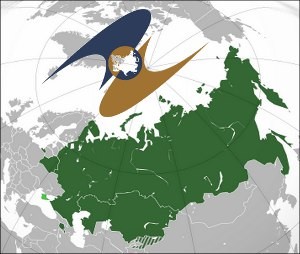
FDI growth in EEU member states from Asian countries expected in 2018

BISHKEK (TCA) — A significant growth of direct investments in Russia and other Eurasian Economic Union (EEU) member states — Armenia, Belarus, Kazakhstan, and Kyrgyzstan — is expected in 2018, according to the report by the Centre for Integration Studies of the Eurasian Development Bank “EAEU and Eurasia: Monitoring and Analysis of Direct Investments – 2017”.

Continue reading

Kyrgyzstan and Kazakhstan normalize relations

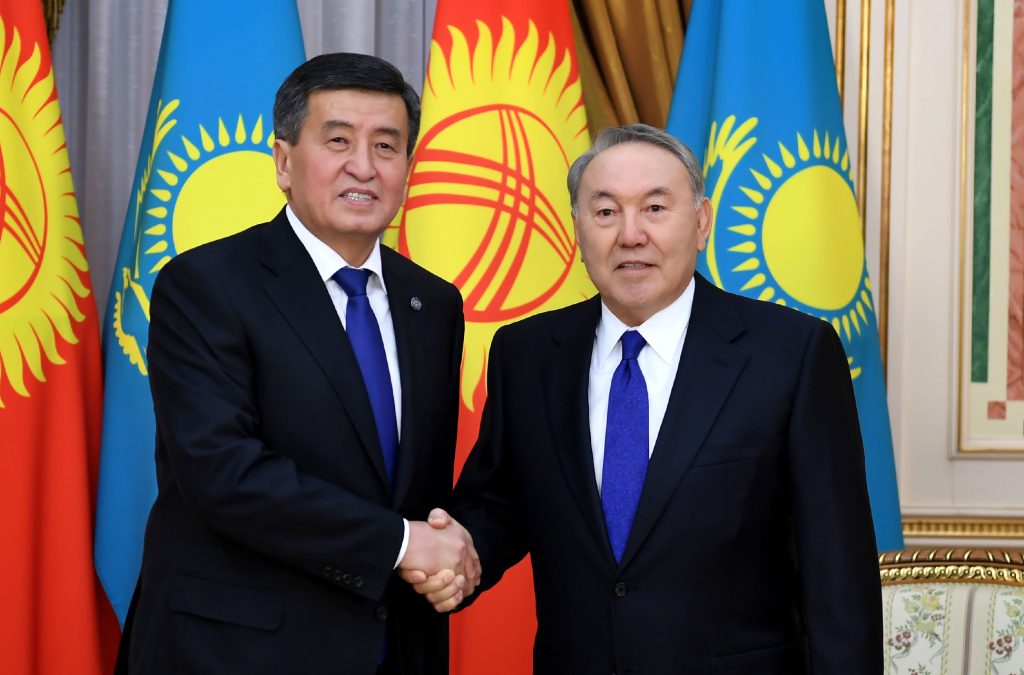
BISHKEK (TCA) — Kyrgyzstan will strengthen friendship and strategic partnership with Kazakhstan based on the principles of equality, mutual benefit and non-interference in internal affairs of each other, Kyrgyz President Sooronbai Jeenbekov told journalists after his talks with Kazakhstan President Nursultan Nazarbayev in Astana on December 25.

Jeenbekov was on his first official visit in Kazakhstan as Kyrgyzstan’s president, after relations between the two neighboring countries have been under strain.

“Today we have signed historic documents — the Agreement on demarcation of the Kyrgyz-Kazakh border and Agreement on the regime at the Kyrgyz-Kazakh border. We have thus completed the legal delimitation of the state border between our countries. I am confident that it will help to turn the border between Kyrgyzstan and Kazakhstan into the gates of confidence, good neighborliness and mutually beneficial cooperation,” Jeenbekov said.

In his turn, President Nazarbayev said Kyrgyzstan and Kazakhstan are fraternal and allied states. “There are no issues on which we could not find a mutually acceptable solution,” he said.

Nazarbayev said that since his last meeting with President Jeenbekov in Minsk, much work has been done on cooperation in phytosanitary, veterinary, transport, tax and customs control. All disputable issues have been normalized and there is no longer a transport bottleneck at the Kyrgyz-Kazakh border.

Relations between the two countries soured after Jeenbekov’s predecessor Almazbek Atambaev accused Kazakhstan of interfering in the campaign for Kyrgyzstan’s October 15 presidential election.

On October 7, Atambaev accused Kazakh authorities of “meddling in Kyrgyzstan’s internal affairs” and of openly supporting Omurbek Babanov, the chief election rival of Atambaev’s favored successor Jeenbekov, who ended up winning the election.

Kazakhstan subsequently stepped up checks at the Kazakh-Kyrgyz border on October 10, causing long lines and slowing the movements of travelers and vehicles.

In a meeting in Minsk on November 30, Jeenbekov and Nazarbayev agreed to work out a plan to resolve the two-month bottleneck at the border between their countries.

Starting from December 4, all vehicles started passing the Kyrgyz-Kazakh border without delays, RFE/RL’s Kyrgyz Service reported.

Speaking to journalists yesterday, Nazarbayev also said that Kazakhstan and Kyrgyzstan should increase their annual trade turnover up to $1 billion by 2020.