• KGS/USD = 0.01144 0%
  • KZT/USD = 0.00212 0%
  • TJS/USD = 0.10456 0.19%
  • UZS/USD = 0.00008 0%
  • TMT/USD = 0.28490 0%
  • KGS/USD = 0.01144 0%
  • KZT/USD = 0.00212 0%
  • TJS/USD = 0.10456 0.19%
  • UZS/USD = 0.00008 0%
  • TMT/USD = 0.28490 0%
  • KGS/USD = 0.01144 0%
  • KZT/USD = 0.00212 0%
  • TJS/USD = 0.10456 0.19%
  • UZS/USD = 0.00008 0%
  • TMT/USD = 0.28490 0%
  • KGS/USD = 0.01144 0%
  • KZT/USD = 0.00212 0%
  • TJS/USD = 0.10456 0.19%
  • UZS/USD = 0.00008 0%
  • TMT/USD = 0.28490 0%
  • KGS/USD = 0.01144 0%
  • KZT/USD = 0.00212 0%
  • TJS/USD = 0.10456 0.19%
  • UZS/USD = 0.00008 0%
  • TMT/USD = 0.28490 0%
  • KGS/USD = 0.01144 0%
  • KZT/USD = 0.00212 0%
  • TJS/USD = 0.10456 0.19%
  • UZS/USD = 0.00008 0%
  • TMT/USD = 0.28490 0%
  • KGS/USD = 0.01144 0%
  • KZT/USD = 0.00212 0%
  • TJS/USD = 0.10456 0.19%
  • UZS/USD = 0.00008 0%
  • TMT/USD = 0.28490 0%
  • KGS/USD = 0.01144 0%
  • KZT/USD = 0.00212 0%
  • TJS/USD = 0.10456 0.19%
  • UZS/USD = 0.00008 0%
  • TMT/USD = 0.28490 0%

Kyrgyzstan and Uzbekistan: friends forever?

BISHKEK (TCA) — At the invitation of President of Uzbekistan Shavkat Mirziyoyev, President of Kyrgyzstan Sooronbai Jeenbekov paid an official visit to Uzbekistan on December 13-14. The parties have close views on many issues, and “this has never been a history of Kyrgyz-Uzbek relations,” President Mirziyoyev said after the talks.

Continue reading

Kyrgyzstan: Switzerland will support OSCE Academy in Bishkek for next three years

BISHKEK (TCA) — An agreement in which Switzerland commits to allocate CHF 430,000 (approximately EUR 370,000) in support of the OSCE Academy in Bishkek over the next three years was signed by the Swiss Ambassador to Kyrgyzstan, Véronique Hulmann and the Head of the Organization for Security and Cooperation in Europe (OSCE) Programme Office in Bishkek, Pierre von Arx on December 14 in Bishkek. The grant will be used to strengthen the Academy’s research capacities.

Continue reading

EBRD helps promote safe and sustainable roads in Tajikistan

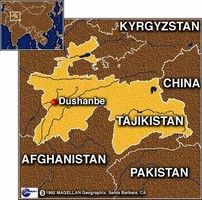
DUSHANBE (TCA) — As more than 1.3 million people worldwide are killed in traffic accidents each year (with 90% of them in low-income countries such as Tajikistan), the European Bank for Reconstruction and Development (EBRD), together with the Eastern Alliance for Safe and Sustainable Transport (EASST) and the Young Generation of Tajikistan (YGT), is running a road safety media and public awareness campaign in Tajikistan’s capital Dushanbe to promote the use of seat belts and highlight the benefits of eco-driving, the EBRD press office reported on December 14.

Passengers are twice as likely to die in a crash if they are not wearing a seat belt. But the use of seat belts in the Tajik capital, Dushanbe, is rare. Research carried out by the EBRD and its road safety partners revealed that fewer than one in eight drivers or passengers there actually wear them. Nearly two thirds of vehicles have seat belts that either do not work or cannot be reached by passengers.

As part of the campaign, posters, leaflets and billboards now inundate the city’s streets, illustrating the benefits of wearing a seat belt as well as saving fuel and protecting the environment through eco-driving.

Striking video messages are now playing on Tajik television as part of the campaign, showing the fatal consequences of not wearing a seat belt even on short journeys and at low speeds.

The campaign also stresses the benefits of eco-driving, rare amongst the city’s commuters.

Through colourful video animations, it explains that more efficient driving not only leads to lower carbon emissions and accident rates but also decreases fuel consumption – protecting the environment and cutting costs for motorists.

Creating a memorable road safety campaign is only half the battle. Education, solid stringent legislation and police enforcement are also key.

The project will see road safety education delivered to hundreds of school pupils to help improve their safety as pedestrians and will see the development of a ‘Youth Road Inspectors’ programme.

Local transport companies are already providing training on eco-driving skills and hosting awareness seminars, attracting an impressive turnout.

The country’s traffic police is also committed to the initiative and announced that new sanctions and enforcement regimes are being introduced for non-use of seat belts.

Final results will be assessed at the end of the campaign in 2018 to determine whether attitudes to seat belts and wearing rates have changed. But the transformation is already underway.

Over 50 key stakeholders attended the media campaign launch last month including the Deputy Mayor of Dushanbe, Mr Qurbon Saidzoda, and the Deputy Head of the Republican Traffic Police Mr Abdusattor Kholov.

Jamshed Rahmonberdiev of the EBRD Resident Office in Tajikistan welcomed participants and spoke of the Bank’s strong commitment to reducing road casualties in the region.

He emphasised that road safety is mandatory in all Bank investment projects.

“Tajikistan has a very fast growing motorisation rate. 80% increase in CO2 emissions from transport is projected by 2030 if nothing is done,” he said.

“EBRD investments are helping close the infrastructure gap and make sure that road projects are green and safe at the same time. As this technical cooperation project demonstrates, working jointly with public authorities and civil society is an effective means to achieve this goal.”

The public awareness campaign is being organised in close collaboration with the local authorities and civil society partners in Dushanbe dedicated to the ‘Year of Youth’ in Tajikistan.

The EBRD is supporting the road safety and eco-drive project in Tajikistan as part of its overall commitment to safe and sustainable transport in alignment with the UN “Decade of Action for Road Safety 2011-2020”, and in collaboration with the ADB (Asian Development Bank) and the Central Asia Regional Economic Cooperation Programme (CAREC).

Kazakhstan: economy rising, yet again driven by oil

ASTANA (TCA) — Kazakhstan’s economic growth estimate for 2017 has been revised upwards from 2.4% to 3.7%, reflecting a better-than-expected oil sector performance, driven by the launch of production at the Kashagan oil field and higher oil prices, says the World Bank’s fall edition of the Kazakhstan Economic Update. The report has a special focus on the private sector in Kazakhstan and highlights challenges that pose a significant barrier to unlocking the sector’s potential, the World Bank reported on December 14.

Continue reading

Caspian pact paves way for Turkmen gas exports to Europe – eventually

BISHKEK (TCA) — With China being the only buyer of Turkmen natural gas after the suspension of gas supplies to Iran early this year, Turkmenistan is striving to find new sales markets for its gas, and a planned trans-Caspian pipeline to Azerbaijan seems to be a promising option for Ashgabat. We are republishing this article by David O’Byrne on the issue, originally published by EurasiaNet.org:

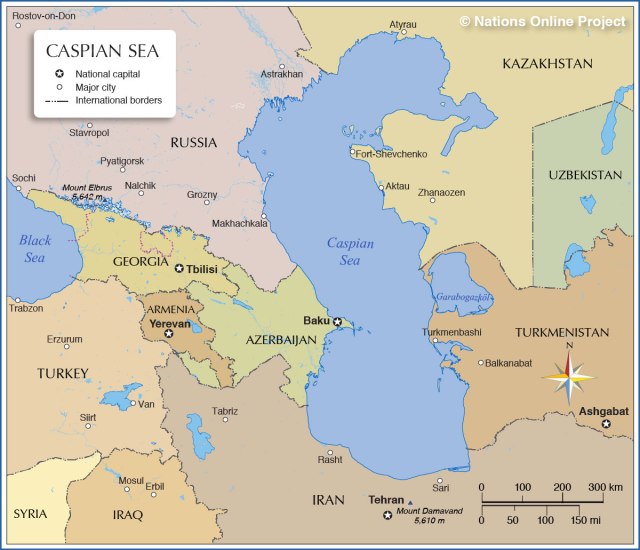
After close to 30 years of haggling over the legal status of the Caspian Sea, the five littoral states appear to have finally settled their differences and agreed on delineating their maritime borders. If finalized, the deal could pave the way for the export of Turkmenistan’s vast natural gas reserves to Europe.

Details of the agreement have not been released and some elements may only be finalized when the final text is signed next year by the heads of the five states: Russia, Kazakhstan, Turkmenistan, Iran and Azerbaijan.

“We have found solutions to all the remaining open, key issues related to the preparation of the draft Convention on the legal status of the Caspian Sea,” Russian Foreign Minister Sergey Lavrov said after a meeting with his Caspian counterparts in Moscow on December 5. “The text of the document is, in fact, ready.”

A compromise by Turkmenistan over how its maritime border with Azerbaijan is determined appears to be the breakthrough that made finalization of the pact possible.
Under the compromise, Ashgabat reportedly would drop its claim to part of Azerbaijan’s Azeri-Chirag-Guneshli oil field, and would also likely lead to talks over other disputed assets like Kapaz/Sardar, an oil and gas field located midway between Azerbaijan and Turkmenistan and claimed by both. “In the coming months the two countries will also start discussing joint oil and gas projects and perhaps some form of production sharing agreement regarding the Kapaz/Sardar field,” said Efgan Nifti, director of the Washington-based Caspian Policy Center.

The agreement also appears to remove the ability of Russia or Iran to block the development of a pipeline to transit Turkmen gas across the Caspian to Azerbaijan and possibly on to Europe.

Azerbaijani Deputy Foreign Minister Khalaf Khalafov said the deal that has been reached stipulates that pipeline projects only need to be approved by the countries whose waters the pipeline would traverse.

“At least on the legal level, no one can now object if Azerbaijan and Turkmenistan decide to build a pipeline,” Nifti said.

It’s not clear what might have led Russia, which has for years strenuously opposed the construction of a pipeline across the Caspian, to make this concession. Russian officials have not publicly addressed the issue. Alexander Knyazev, a pro-Kremlin analyst, told the newspaper Nezavisimaya Gazeta that Russia could resort to old-fashioned saber-rattling techniques to disrupt the construction of any pipeline that Moscow opposed.

“The issue [of a pipeline] isn’t eliminated, but if the project is realized, conflict could take place, most likely, in less civilized forms,” Knyazev said. “And in that case, the Russian Caspian Flotilla, which de facto dominates the sea, does not require the agreement of other countries.”

Proposals for a pipeline to carry Turkmen gas to Europe are nothing new. Such plans first surfaced in the late 1990s, when the European Union started seeking to open a “Southern Gas Corridor” (SGC) as a means of lessening European dependence on Russian gas.

Backed by a consortium of Bechtel, Shell and GE plans for a “Trans Caspian Pipeline” (TCP) progressed as far as Turkey signing a deal in 1999 for state gas importer Botas to take 16 billion cubic meters per year of Turkmen gas. But those plans were shelved after the discovery of Azerbaijan’s Shah Deniz gas field led Baku to develop its own reserves instead.

Interest in Turkmen gas surfaced again in 2009, during negotiations over the Nabucco pipeline project, which was backed by the EU under its SGC ambitions. Ultimately, Turkmenistan and Azerbaijan never came to an agreement.

Eventually Nabucco, too, was shelved and Baku opted to develop its own pipeline routes: the Trans-Anatolian Pipeline (TANAP) across Turkey, and the Trans-Adriatic Pipeline (TAP) through Greece and across the Adriatic to Italy.

Under current arrangements, TANAP will carry 16 billion cubic meters of gas per year from Azerbaijan’s Shah Deniz field, of which 6 billion cubic meters will go to Turkey and the remaining 10 billion to Italy via TAP. That leaves some spare capacity in the pipelines: 15 bcm/year for TANAP and 10 bcm/yr for TAP. Both pipelines could, under their current legal frameworks, accept Turkmen gas.

Any moves to develop a pipeline to feed Turkmen gas into TANAP and on to Europe would be sure to receive the full support of the EU.

However much has changed since the various trans Caspian proposals were first mooted.

“Declining gas demand across Europe, new interconnector construction in the Balkans and rising liquid natural gas capacity have reduced prices and increased competition. The landscape is very different from that when TCP was first envisaged,” said William Powell, editor in chief of Natural Gas World.

In short, Turkmen gas would face strong competition for customers in what is currently a declining market dominated by Russia’s Gazprom.

In addition, because TAP is being developed under EU rules that require the pipeline to be open to any suppliers, Gazprom could fill any extra capacity, thus leaving Turkmen gas with no route to European markets.

Even if European gas markets eventually recover, Turkmen gas would still be more likely to be sold, in fact, in Azerbaijan. “Azerbaijan has committed so much gas for exports that it can’t keep pace with domestic demand,” said John Roberts, an independent consultant specializing in Caspian energy issues.

“And with the next big investment in Azeri upstream not likely for another eight to 10 years, the only source available is Turkmen,” Roberts said.