• KGS/USD = 0.01144 0%
  • KZT/USD = 0.00192 -0%
  • TJS/USD = 0.10849 0.37%
  • UZS/USD = 0.00008 0%
  • TMT/USD = 0.28571 0.28%
  • KGS/USD = 0.01144 0%
  • KZT/USD = 0.00192 -0%
  • TJS/USD = 0.10849 0.37%
  • UZS/USD = 0.00008 0%
  • TMT/USD = 0.28571 0.28%
  • KGS/USD = 0.01144 0%
  • KZT/USD = 0.00192 -0%
  • TJS/USD = 0.10849 0.37%
  • UZS/USD = 0.00008 0%
  • TMT/USD = 0.28571 0.28%
  • KGS/USD = 0.01144 0%
  • KZT/USD = 0.00192 -0%
  • TJS/USD = 0.10849 0.37%
  • UZS/USD = 0.00008 0%
  • TMT/USD = 0.28571 0.28%
  • KGS/USD = 0.01144 0%
  • KZT/USD = 0.00192 -0%
  • TJS/USD = 0.10849 0.37%
  • UZS/USD = 0.00008 0%
  • TMT/USD = 0.28571 0.28%
  • KGS/USD = 0.01144 0%
  • KZT/USD = 0.00192 -0%
  • TJS/USD = 0.10849 0.37%
  • UZS/USD = 0.00008 0%
  • TMT/USD = 0.28571 0.28%
  • KGS/USD = 0.01144 0%
  • KZT/USD = 0.00192 -0%
  • TJS/USD = 0.10849 0.37%
  • UZS/USD = 0.00008 0%
  • TMT/USD = 0.28571 0.28%
  • KGS/USD = 0.01144 0%
  • KZT/USD = 0.00192 -0%
  • TJS/USD = 0.10849 0.37%
  • UZS/USD = 0.00008 0%
  • TMT/USD = 0.28571 0.28%
11 December 2025
Uncategorized

A Guy From the Bronx and His Contribution to Uzbekistan’s Boxing Gold

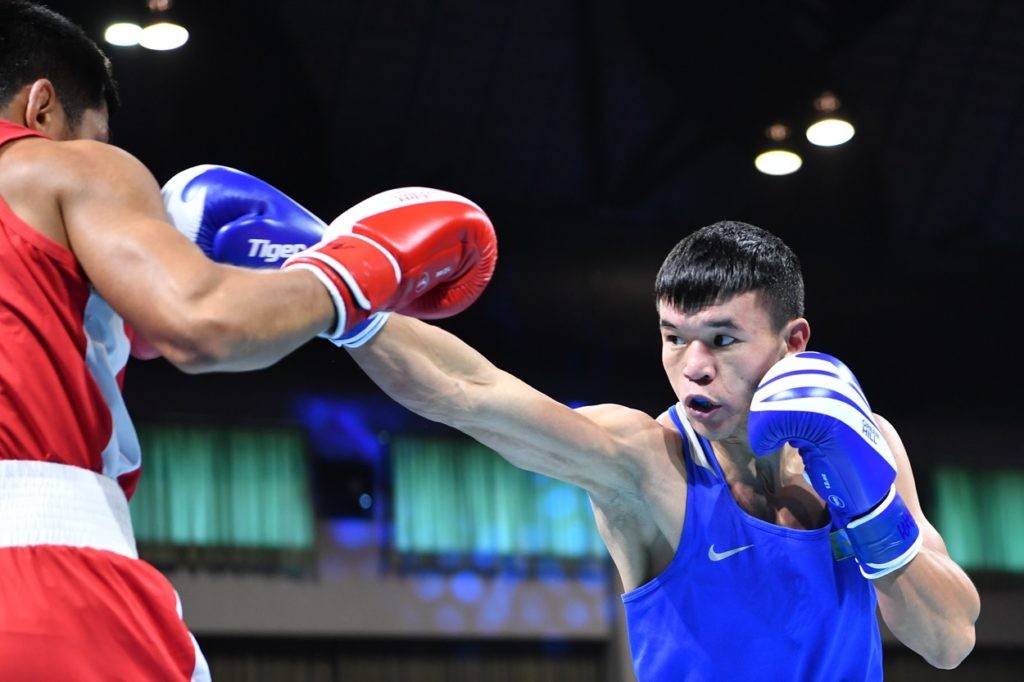
Uzbekistan’s five gold medals in boxing at the Paris games owe something to Sidney Jackson, an accomplished boxer from a poor Jewish family in the Bronx, New York City, who is credited with introducing the sport to Central Asia in the early 1920s.

That’s the view of Uzbekistan’s ambassador to the United States, Furqat Sidiqov, and other people in Uzbekistan who know about the country’s evolution as an Olympic boxing power.

“This remarkable success is tied to Sidney Jackson, founder of Uzbekistan’s boxing school,” Sidiqov said on the X platform. He said Jackson’s legacy is still shaping champions today and urged people to watch a documentary about the American that was released in 2022 with the backing of the Uzbek government.

Jackson, a beloved figure in Uzbekistan who died in Tashkent in 1966, started boxing when he was a boy, won featherweight titles in the United States and joined a boxing tour in Europe just before World War I. He dropped out of the tour because of an injury, traveled to Russia and then diverted to Tashkent when fighting erupted in Europe. Short of money, he stayed there, found a job, joined an international brigade that fought in the civil conflict sweeping Central Asia and the Caucasus after the Russian Revolution, and opened a threadbare boxing club in Tashkent after the war ended.

Sketch of Sidney Jackson by Rifkat Azihanov


Over the years, he trained Russian and Central Asian boxers who had international success as representatives of the Soviet Union. Jackson laid foundations for athletes including Russian middleweight boxer Valeri Popenchenko, who won gold at the Olympics in Tokyo in 1964, and Rufat Riskiyev, an Uzbek middleweight boxer who won silver at the 1976 Olympics in Montreal.

Uzbekistan’s boxing federation was founded in 1928, and Jackson served as its chairman for more than 20 years. The history of boxing in Uzbekistan is “inextricably linked” with Jackson, according to Uzbek boxing officials.

“To call Sidney Jackson the grandfather of boxing in Uzbekistan is accurate, but still undersells his impact on the sport,” the asianboxing.info website said in 2020. “And whilst it may have been more than 50 years since he died, his impact is still felt there, and always will be for any Uzbek stepping between the ropes.”

Uncategorized

ADB Grants $71 million for Business Reforms and HPP Reconstruction in Tajikistan

As reported by the Avesta Information Agency, Minister of Finance of Tajikistan, Faiziddin Kahkhorzade, and Shani Campbell, the permanent representative of the Asian Development Bank (ADB) in the country, have signed contracts for two grants totaling $71 million.

The first grant of $50 million is aimed at improving  Tajikistan’s business environment, including digitization, reforms to boost exports, improved infrastructure management, and increased financial transparency. Small and medium-sized enterprises will also be supported in adapting to climate change.

The second grant of $21 million will replace the fourth unit at the Head HPP located near the city of Levakant (formerly Sarband) in Tajikistan’s Khatlon region, which failed in 2019. As a result of the upgrade, the installed capacity of hydropower is expected to increase from 240 megawatts in 2012 to 274 megawatts by 2026.

Since Tajikistan became a member of the ADB in 1998, the bank has provided more than $2.6 billion in assistance to the country, including more than $2 billion in grants. These funds were directed to the development of transport and energy infrastructure, healthcare, education, agriculture, and other important sectors of the economy.

Uncategorized

Turkmenistan Requests Deportation of Fifty Activists and Journalists

The Chronicles of Turkmenistan reports that Turkmenistan has sent a list to several countries comprising 50 people, asking that they not be permitted to enter their territory, or to have them deported to Turkmenistan. The appeal was sent to Belarus, Russia, Azerbaijan, Kazakhstan, Uzbekistan, Tajikistan, Kyrgyzstan, Turkey, Iran, Moldova, Georgia, and Armenia. According to the authorities, the index lists civil activists, journalists, independent media, and opposition representatives as threatening state security. Turkmenistan has prioritized the return of nine people from this list.

It remains to be seen whether the aforementioned foreign countries will execute the Turkmen authorities wishes. However, Turkmen.news journalist Ruslan Myatiev, who went to Turkey on summer vacation with his family on July 25, was not allowed to enter the country. After several hours of interrogation by the Turkish National Security Service, Myatiyev was deported to Turkmenistan.

The Times of Central Asia previously reported that the daughter of a Turkmen activist was not allowed to fly to Turkey. This follows on from an increasing number of cases where Turkmen citizens have been removed from flights abroad without explanation; the same thing is reportedly happening when attempting to cross the border by land.

Uncategorized

Uzbekistan and UAE to Build Modern Wastewater Facility

The United Arab Emirates company “Sustainable Water Solutions” (SWS) is to cooperate with Uzbekistan on the construction of a modern wastewater facility in Tashkent.

The project includes building a facility with a daily capacity of 1.0 million cubic meters of water and a 42-kilometer wastewater collector in the territory of the Surum mahalla, an administrative centre in Tashkent’s  Lower Chirchik district.

Regarding the scheme, Ahmed Al-Shamsi, head of the SWS company announced: “Our next initiative will prevent water wastage in Uzbekistan. The capacity of the joint facility will be 1,000,000 cubic meters per day at the first stage and 1.5 million cubic meters later. The estimated project cost is one billion dollars.”

According to reports, the quality of wastewater service provided to 1.5 million people will increase, and more than 500,000 residents and over a hundred enterprises and organizations will be provided with centralized wastewater service. The construction of a 42-kilometer collector allows efficient collection and transportation of wastewater for further treatment.

SCADA, a data management and collection system, and GIS,a geographic information system, will be introduced, ensuring effective monitoring and management of cleaning and transportation processes. As a result of this large-scale project, 10 million kilowatts of electricity will be saved, and the sanitary-epidemiological and ecological situation in the Sergeli, Bektemir, and Yangi Hayot districts of Tashkent city will be improved.

Uncategorized

Kazakhstan Delivers Oil to Europe via Russia

Kazakhstan has begun supplying oil to Europe via the Druzhba oil pipeline system through Russia.

The first oil shipments have already arrived in Germany, where amid current geopolitical challenges, it has become an important part of the country’s energy security .

Acting through its Kazakh subsidiary Agip Caspian Sea, the Italian company Eni, has shipped the first 20,000 tons of oil as part of a test delivery via the Atyrau-Samara route, with further transportation via the Druzhba pipeline.

Kazakhstan now plans to deliver up to 1.2 million tons of oil to Germany via this system this year, following an agreement with the Russian side, to ensure uninterrupted supplies to Europe despite the sanctions restrictions on Russian oil.

Historically, the pipeline has been one of the largest routes for Russian oil supplies to Europe, but its use has undergone significant changes in recent years due to sanctions.

Faced with these changes, Kazakhstan’s proposals to increase oil supplies through this route, could not only play a key role in ensuring energy stability in the region but also demonstrate the country’s strategic importance as a major player in the global oil market and its ability to adapt to changes in global energy policy.

Uncategorized

U.S. Ambassador to Kazakhstan: We Never Make Kazakhstan Choose Between “Us Or Them”

In an interview with the KazTAG agency, U.S. Ambassador to Kazakhstan Daniel Rosenblum discussed relations between the U.S. and Kazakhstan.

In the two years since his appointment, Rosenblum noted significant progress in developing diplomatic and economic ties between the countries. In particular, he emphasized the importance of Kazakhstani President Kassym-Jomart Tokayev’s visit to New York for the C5+1 platform summit, as well as the visits of the U.S. Secretary of State to Kazakhstan and the Kazakhstani Foreign Minister to the United States.

Rosenblum also highlighted key support programs initiated by the U.S. in Kazakhstan, including USAID projects to resolve commercial disputes and decentralize public administration. These initiatives help strengthen the business environment and increase foreign investors’ confidence in Kazakhstan, which, he said, helps attract more investment.

Economic relations between the U.S. and Kazakhstan have shown steady growth, with trade exceeding $4 billion in 2023, a 30% increase over the previous year. The U.S. remains one of the largest investors in Kazakhstan, second only to the Netherlands. In recent years, U.S. companies have shown interest in new sectors, including transportation and critical minerals. For example, Wabtec has invested in locomotive production in Kazakhstan, and Pepsi Co. has invested $160 million to build a plant to produce potato chips and other snacks in Almaty region.

The ambassador also discussed democratization and human rights, noting positive developments in Kazakhstan, such as the establishment of the Constitutional Court, and the expanded role of the ombudsman institution. He emphasized that Kazakhstan has worked to improve freedom of speech, assembly, and fair elections.

On security issues, the ambassador reiterated the U.S.’ commitment to protecting Kazakhstan’s independence and sovereignty. He emphasized the importance of joint exercises and programs to strengthen defense and law and order in Kazakhstan.

Regarding sanctions against Russia, Rosenblum said that the U.S. respects President Tokayev’s position of adhering to international sanctions but does not apply its sanctions against Russia. The U.S. is engaging with the Kazakh government to minimize the impact of these sanctions on the country’s economy and to find alternative markets for Kazakh goods.

“We know that Kazakhstan needs to maintain good relations with its neighbors. It is natural to have positive trade relations and other types of relations to ensure peace and stability. We recognize and respect that it is not only the right but probably the duty of Kazakhstan to maintain such relations. We never put Kazakhstan before “either us or them” situations; we do not have such an approach to relations. Kazakhstan pursues a multi-vector policy, and we count on being one of the right vectors,” the ambassador said.

U.S. policy toward Kazakhstan is unlikely to change significantly, even if a Republican president wins the next U.S. election, Rosenblum said. The basic principles of supporting sovereignty and stability in Central Asia will remain unchanged, regardless of the political administration in Washington.