• KGS/USD = 0.01144 0%
  • KZT/USD = 0.00198 -0%
  • TJS/USD = 0.10857 -0.18%
  • UZS/USD = 0.00008 0%
  • TMT/USD = 0.28571 0%
  • KGS/USD = 0.01144 0%
  • KZT/USD = 0.00198 -0%
  • TJS/USD = 0.10857 -0.18%
  • UZS/USD = 0.00008 0%
  • TMT/USD = 0.28571 0%
  • KGS/USD = 0.01144 0%
  • KZT/USD = 0.00198 -0%
  • TJS/USD = 0.10857 -0.18%
  • UZS/USD = 0.00008 0%
  • TMT/USD = 0.28571 0%
  • KGS/USD = 0.01144 0%
  • KZT/USD = 0.00198 -0%
  • TJS/USD = 0.10857 -0.18%
  • UZS/USD = 0.00008 0%
  • TMT/USD = 0.28571 0%
  • KGS/USD = 0.01144 0%
  • KZT/USD = 0.00198 -0%
  • TJS/USD = 0.10857 -0.18%
  • UZS/USD = 0.00008 0%
  • TMT/USD = 0.28571 0%
  • KGS/USD = 0.01144 0%
  • KZT/USD = 0.00198 -0%
  • TJS/USD = 0.10857 -0.18%
  • UZS/USD = 0.00008 0%
  • TMT/USD = 0.28571 0%
  • KGS/USD = 0.01144 0%
  • KZT/USD = 0.00198 -0%
  • TJS/USD = 0.10857 -0.18%
  • UZS/USD = 0.00008 0%
  • TMT/USD = 0.28571 0%
  • KGS/USD = 0.01144 0%
  • KZT/USD = 0.00198 -0%
  • TJS/USD = 0.10857 -0.18%
  • UZS/USD = 0.00008 0%
  • TMT/USD = 0.28571 0%
05 December 2025

Our People > Times of Central Asia

Times of Central Asia's Avatar

Articles

Reuters News Agency Pulls Report on Tajik-Russian Talks on Guarding Afghan Border

The Reuters news agency has withdrawn a story, denied by Tajikistan, that Tajikistan was negotiating with Russia about joint patrols along its troubled border with Afghanistan.  The removal of the news story comes as China urges Tajikistan to upgrade security along the border, where security officials say five Chinese workers were killed in two separate attacks launched into Tajikistan from Afghanistan last week. Tajik President Emomali Rahmon met senior security officials in his government this week to discuss border security.  “A Reuters story about Tajikistan holding talks with Russia about helping guard its Afghan border has been withdrawn following a post-publication review showing insufficient evidence. There will be no substitute story,” Reuters said in a statement from Almaty, Kazakhstan.  Tajikistan has previously said it seeks to collaborate with the Collective Security Treaty Organization (CSTO), a regional group in which Russia is the most powerful member, on efforts to conter threats along its border with Afghanistan. As far back as 2013, the organization said it was planning to provide “military-technical assistance” to Tajikistan’s border of nearly 1,400 kilometers with Afghanistan.  But Tajikistan's Ministry of Foreign Affairs denied the Reuters report about “alleged discussions between Tajikistan and the Collective Security Treaty Organization regarding the involvement of Russian military personnel” in joint patrols along the Tajik-Afghan border. “The Ministry emphasizes that this publication is untrue and that the dissemination of such false information misleads the international audience,” the ministry said on Wednesday.  Tajikistan is “constantly” taking steps to strengthen the border with Afghanistan and that the situation there “remains stable and is under the full control of the competent authorities” in the country, according to the foreign ministry. Even so, Chinese media reported that the Chinese embassy in Tajikistan has urged its nationals to urgently leave the border area.  The ruling Taliban in Afghanistan condemned the border attacks and pledged to collaborate in efforts to find those responsible. Mohammad Naeem, the deputy foreign minister, told Zhao Xing, China’s top diplomat in Afghanistan, during a meeting in Kabul that investigations were underway, the Afghan government said Wednesday.   

1 day ago

Amid Global Unrest, the Trans-Caspian Corridor Faces a Crucial Test

The COVID-19 pandemic, geopolitical conflicts, and the ongoing shipping crisis in the Red Sea caused by Houthi attacks have severely disrupted global trade and logistics. These events have exposed the vulnerabilities of traditional supply chains and underscored the urgent need for diversification. For countries along the Trans-Caspian International Transport Route (TITR), this presents a unique opportunity to solidify the corridor’s position as a key global logistics artery. But are they prepared to capitalize on this moment, and can the existing infrastructure sustain the rising flow of cargo? Integration and Infrastructure in Focus For landlocked nations, the value of an efficient overland route cannot be overstated. The development of the Trans-Caspian route depends on synchronized multimodal logistics, the elimination of infrastructure bottlenecks, the implementation of digital solutions, expedited customs procedures, and a transparent tariff policy. Experts note that the TITR has evolved from a transport project into a strategic initiative. Its future growth hinges on the quality of intergovernmental coordination. In the past five years, transit volumes along the route have increased sixfold. The upward trend continues in 2025, with 2.6 million tons transported by rail in the first ten months alone. More than 400 types of goods now move along the corridor, including high-value items such as vehicles, electronics, clothing, and textiles. These products, which require timely delivery, signal the route’s growing integration into global supply chains. Demand from Chinese shippers is also rising, with shipments expanding beyond China’s interior to include Southeast Asian countries. At the VII International Transport and Logistics Business Forum “New Silk Way,” Wang Lixin, Deputy Director General of China Railway, announced a new route under development: Southeast Asia-China-Central Asia-Europe. Bottlenecks That Threaten Growth A comprehensive audit conducted in mid-2025 revealed key barriers to expansion. In Kazakhstan, the primary constraint is railway capacity, currently limited to 12 container trains per day. National rail operator KTZ plans to raise this to 20 by 2027 through upgrades and new construction. The maritime segment, particularly the Caspian Sea, remains a persistent risk. Aktau port can currently handle five trains, but the completion of the second phase of its container hub is expected to raise this to eight. The first phase alone will boost capacity by 140,000 TEU this year, bringing the port’s total capacity to 240,000 TEU. However, falling water levels in the Caspian pose a serious challenge. In September 2025, Kazhydromet reported a drop to -29.31 meters off Kazakhstan’s coast, limiting shiploads and raising the threat of “shallow water restrictions.” In response, Kazakhstan has expedited dredging to restore design depths by the end of Q1 2026. Fleet shortages compound the issue. Kazmortransflot operates just three 350 TEU container ships and two dry cargo vessels. In January 2025, the company signed an agreement with Abu Dhabi Ports Group to build shallow-draft container ships with over 500 TEU capacity and larger ferries. KTZ also plans to acquire six vessels (up to 9,000 tons deadweight) by 2027. Challenges in Azerbaijan and Georgia The western segment of the route faces similar constraints....

2 days ago

Opinion: Kazakhstan Bets Big on AI to Power Local and Global Growth

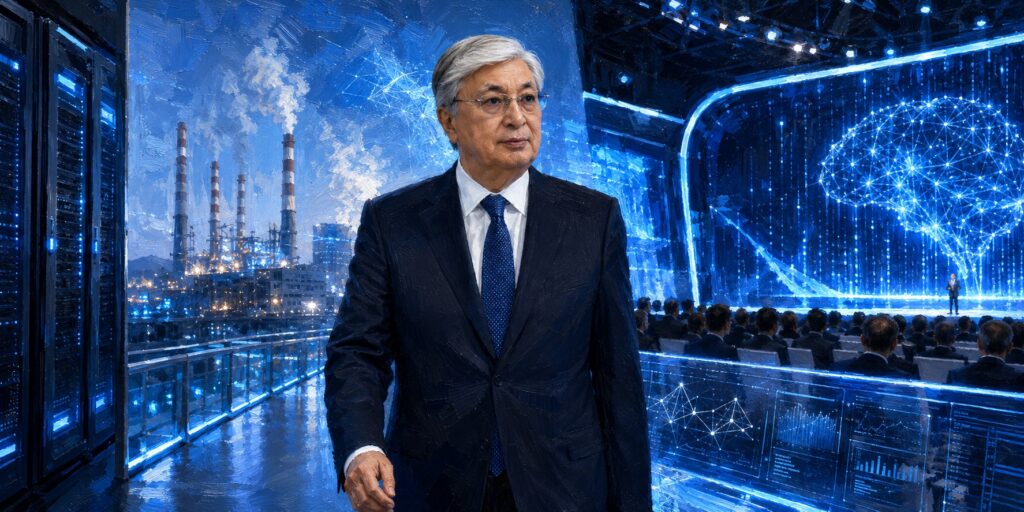
A bold vision for Kazakhstan’s future In his recent State of the Nation address, the President of Kazakhstan articulated a bold and ambitious future for the country. He presented a new vision, central to which was the announcement of artificial intelligence adoption and digitization as new national priorities, positioning them as essential for the country’s economic modernization and long-term competitiveness. The speech marked a significant moment for the government. Historically, much of its policy focus has been on managing risk and navigating regulatory uncertainty. Now, the administration is pivoting to focus instead on high-growth, innovation-led initiatives to build a more competitive and resilient Kazakhstan that can thrive in a rapidly changing global economy. In his address, President Tokayev announced the creation of the Ministry of Artificial Intelligence and Digital Development. Its initial mandate is to develop the Digital Code, a comprehensive framework that will set out how every sector of the economy, from finance and energy to education and healthcare, will integrate AI and digital tools in a structured and sustainable way. Leapfrogging into the digital economy Kazakhstan is embracing leapfrog innovation to harness tools such as AI and blockchain technologies to help accelerate economic growth and diversify its economy. This bet will ensure that the nation remains competitive for generations to come in a digital-led global landscape where technology leadership increasingly defines prosperity. Central to the project’s long-term success is the evolution of Kazakhstan’s educational system, and the country has recently approved its first national framework for integrating AI into its curriculum, signaling a major shift toward future-ready learning. This initiative covers areas including ethics, legal regulation, personal data protection, and academic integrity. Kazakhstan is now one of the first countries to adopt its own national approach in this field, having drawn on the recommendations of UNESCO, OECD, and the EU’s work to ensure global best practices. Building tomorrow’s AI leaders today From the 2025–2026 academic year, AI is being integrated throughout the curriculum with the aim of converting classrooms into technology-literate talent pipelines. Students will benefit from new online courses, while teachers will be supported with professional development programs (with over 11,000 teachers already trained and more to follow). Globally, the adoption of AI in education is surging. According to AllAboutAI, in 2025, 86% of students worldwide use AI in their studies, and half of all teachers will leverage AI for lesson planning. The market for AI in education is projected to reach over $2.7 trillion by 2033, having been valued at $177 billion in 2023. With nearly 30% of Kazakhstan’s population under the age of 15 and a median age of just 29, the country is well placed to transform its students into a new generation of professionals ready to contribute to the country’s technological evolution and global competitiveness. Universities such as the Astana IT University (AITU), International Information Technology University, and the Kazakh-British Technical University, all part of the NNEF ecosystem, are at the forefront of integrating AI across their curricula, ensuring that students gain the skills they need for the digital economy and innovation-driven...

2 days ago

Central Asia’s Digital Currency Ambitions: New Opportunities and Old Constraints

Central Asia is entering a period of accelerated financial transformation. Kyrgyzstan has launched one of the world’s first state-backed gold-backed stablecoin, USDKG, a digital asset fully backed by physical gold and issued under the direct supervision of the Ministry of Finance. Simultaneously, Kazakhstan is advancing one of the most mature central bank digital currency (CBDC) initiatives in the post-Soviet space: the digital tenge (national currency). Uzbekistan is developing its own digital economy framework, while Tajikistan and Turkmenistan are slowly initiating financial modernization. Amid these developments, Central Asia is emerging as a surprisingly bold laboratory for digital finance. This raises a pressing question: can the region develop a unified digital currency ecosystem that reduces dollar dependency, facilitates cross-border transactions, and enhances economic sovereignty? Strategic Logic of Digital Integration The idea of a regional digital currency is no longer utopian. Central Asia is one of the world's most significant hubs for cross-border remittances. In 2024 alone, migrants sent back a record $5.8 billion to Tajikistan (45% of GDP), approximately $15 billion to Uzbekistan, $2.9 billion to Kyrgyzstan, and $258 million to Kazakhstan. The current system is costly, slow, and heavily reliant on the dollar. Digital currencies could drastically reduce transaction costs for both migrant workers and businesses. In remote areas, where banking infrastructure is underdeveloped, cash still dominates. CBDCs could allow citizens to access state payment services directly, bypassing commercial banks. Digital finance also offers protection against external economic shocks, sanctions, and volatility. Coupled with the digitalization drives in Kazakhstan, Uzbekistan, and Kyrgyzstan, and regional integration ambitions, such as Uzbek President Shavkat Mirziyoyev’s proposal to create a Central Asian Community, conditions are forming for financial cooperation. Diverse National Models Approaches to digital currency vary significantly. Kazakhstan’s digital tenge, led by the National Bank, emphasizes institutional stability, security, and integration with existing banking systems. A full launch is expected by the end of 2025. Kyrgyzstan has taken a more unconventional route. Its USDKG stablecoin, built on the Tron blockchain and backed by gold, aims to assert financial autonomy. However, it raises concerns about transparency, sustainability, and the reaction of traditional banks. A gold-backed stablecoin also directly challenges dollar dominance. Crypto analysts such as Ryan Adams speculate that Washington may be monitoring Kyrgyzstan’s experiment closely, fearing it could inspire similar moves in India, China, and Brazil. Uzbekistan is advancing its digital economy cautiously. While its government maintains strict cryptocurrency controls, this regulatory clarity may lay groundwork for a CBDC, though it limits space for innovation. Tajikistan and Turkmenistan remain on the sidelines, but rising demographic pressures, migration, and logistics projects are nudging both toward digital finance. The lack of coordination among these models represents both an opportunity for experimentation and a barrier to integration. Key Challenges Despite growing momentum, the road to a unified digital architecture in Central Asia remains fraught. The first major obstacle is regulatory fragmentation. Digital currencies require legal reforms across currency legislation, taxation, customs, and anti-money laundering/counter-financing of terrorism (AML/CFT) protocols. At present, each state operates independently, making regional harmonization...

3 days ago

How the Russian Relocation Wave Reshaped Kazakhstan’s Economy

In September 2022, northern Kazakhstan’s border crossings experienced huge surges as tens of thousands of Russians fled mobilization for the war in Ukraine. In Almaty and Astana, rental prices soared to historic highs, and social infrastructure came under intense pressure. At the time, the influx seemed poised to destabilize the country’s established equilibrium. Two years on, the situation has transformed. The initial surge subsided, and spontaneous migration underwent a natural filtering process. Many who saw Kazakhstan as a temporary stop have moved on or returned to Russia. Those who made a conscious decision to stay have legalized their status and integrated into the local economy. Despite initial fears, the mass relocation did not damage Kazakhstan’s economy. On the contrary, the so-called "Russian exodus" accelerated Almaty and Astana’s evolution into cosmopolitan urban centers, while introducing lasting economic shifts. A New Diaspora Understanding the impact of the mass migration requires distinguishing transient travelers from those who settled. During the peak in autumn 2022, more than 400,000 Russian citizens crossed the border, though most quickly departed Kazakhstan. According to Kazakhstan’s Interior Ministry, from January 2023 to September 2024, more than 80,000 Russian citizens received residence permits for work. Including family members and remote workers, the core of the relocated population can be estimated at 100,000–120,000 people. Those who remained form a skilled urban middle class, IT specialists, engineers, doctors, and entrepreneurs, largely aged 25 to 40. When the “visa run” legal loophole allowing stay extensions by briefly exiting the country was abolished in January 2023, many were forced to legalize their presence. The rule change pushed many relocants to formalize their stay through work contracts or business registration, which in turn made their economic activity more visible to the state. By the end of 2023, the number of registered legal entities with Russian participation exceeded 18,000, a 70% increase. In 2024, that number rose to more than 23,000. The “Cappuccino Effect” The arrival of tens of thousands of solvent consumers brought not only capital, but also the consumption habits of Russia’s megacities. International institutions, including the IMF, have acknowledged that Kazakhstan’s 2023 GDP growth was supported in part by robust domestic demand. Spending surged in restaurants, delivery services, taxis, and gyms, especially in Almaty and Astana. This boost helped small and medium-sized businesses recover from the pandemic. Russian entrepreneurs, opening everything from coffee shops to architecture firms, raised service standards and intensified competition. Local businesses responded by improving their quality and digitalizing operations. However, this also pushed up consumer prices, contributing to inflation and affecting local purchasing power. Housing remains the most visible pressure point. While the panic of late 2022 has passed, rents remain well above pre-crisis levels. Analysts estimate that average house prices are still 40% higher than in 2021. This has fueled gentrification, with central Almaty’s “Golden Square” and elite areas of Astana becoming expat enclaves. Students, public sector workers, and young families have increasingly been pushed to the outskirts, increasing commuting times and straining public transport. Many relocants are...

3 days ago

Trump and Tokayev Secure a Historic $4.2 Billion Locomotive Deal

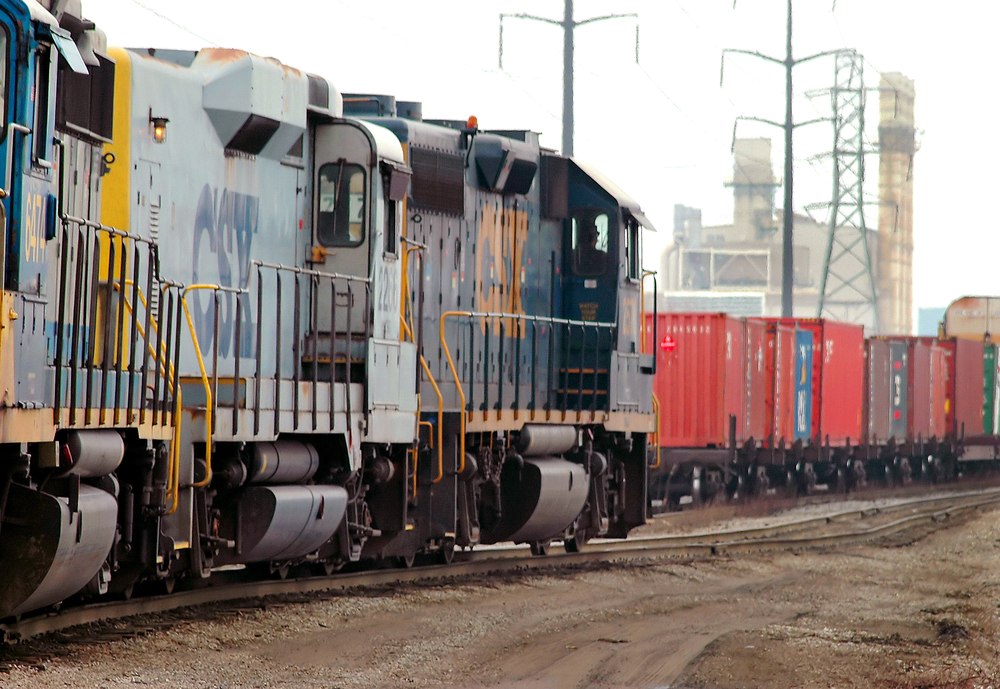
Washington, D.C. – The United States and Kazakhstan have finalized the largest locomotive agreement in history, a $4.2 billion deal that underscores American industrial strength and deepens ties between the two nations. The announcement came following a call between President Donald Trump and Kazakhstan’s President Kassym-Jomart Tokayev, which officials say directly helped bring the deal across the finish line. The U.S. Department of Commerce confirmed that Pennsylvania-based Wabtec will supply about 300 Evolution Series locomotives, in kit form, to Kazakhstan’s state railway over the next decade. Commerce Secretary Howard Lutnick emphasized the scale of the export package, writing on X that the deal is “more than just a huge success story. It’s about American innovation leading the world, supporting thousands of jobs in TX & PA, and strengthening the U.S.–Kazakhstan partnership.” For Trump, the Pennsylvania tie is notable — the state is both home to Wabtec and a perennial battleground in presidential politics. What Trump and Tokayev said President Trump celebrated the breakthrough personally on Truth Social: “I just concluded a wonderful call with the Highly Respected President of Kazakhstan, Kassym-Jomart Kemeluly Tokayev. They have signed the largest Railroad Equipment Purchase in History, $4 Billion Dollars Worth of United States Locomotives and Rail Equipment”. He continued: “Congratulations to President Tokayev on his great purchase. This Country, and the World, was built on reliable, beautiful Railroads. Now they will be coming back, FAST!” Earlier in September, Trump had told reporters he had a “great conversation” with Tokayev — a remark that signaled improving ties between Washington and Astana ahead of the deal. On Sept. 22, the Commerce Department formally confirmed the $4.2 billion agreement. Commerce Secretary Howard Lutnick, in a separate statement on X, emphasized that the leaders’ engagement helped pave the way and argued the deal strengthens an enhanced strategic partnership while embedding American technology in Eurasian connectivity. President Tokayev, for his part, has emphasized transport and logistics as central to Kazakhstan’s role as a “link between Europe and Asia,” calling for expanded rail infrastructure and modern customs systems. In July, amid tariff tensions, he assured Trump in a letter that Kazakhstan was “ready for constructive dialogue” and was confident a compromise could be reached — a posture that laid groundwork for the closer economic cooperation reflected in this deal. Why It Matters: Unlocking Regional Corridors to the West The locomotives will reinforce capacity along the Trans-Caspian “Middle Corridor,” a trade route carrying goods from Central Asia through the South Caucasus and into Europe—an alternative to Russian and Iranian transit that governments have accelerated since 2022. A critical gap in that chain was addressed through U.S.-brokered diplomacy in August 2025, when President Trump hosted Armenian Prime Minister Nikol Pashinyan and Azerbaijani President Ilham Aliyev at the White House. The two leaders signed a peace declaration after decades of conflict and committed to reopening transport links, most notably a 42-kilometer passage through Armenia’s Syunik province, commonly called the Zangezur corridor or the Trump Route for International Peace and Prosperity (TRIPP). By...

2 months ago